Article
7 min read
How Enterprise Businesses Can Scale AI Engineering Teams by Hiring in Latin America
AI
Contractor management
Global hiring

Author
Deel's Content team
Last Update
June 09, 2026

Table of Contents
Why LATAM's AI engineering talent pool deserves attention now
The top LATAM markets for AI engineering talent: a blended ranking
The compliance risk hiding in cross-border AI contractor hiring
How Deel Contractor of Record enables compliant LATAM AI hiring
A 5-step COR engagement playbook for hiring AI engineers in LATAM
Protecting IP when hiring AI engineers as contractors
Key takeaways
- LATAM's AI/ML engineering talent base is growing faster than most enterprise hiring pipelines have caught up with, and data from Coursera, Stack Overflow, and LinkedIn Talent Insights puts measurable numbers behind the opportunity.
- Not every LATAM market offers the same combination of talent depth, English proficiency, and compliance complexity. A blended ranking across eight countries helps HR teams prioritize where to engage first.
- Deel Contractor of Record removes the entity-setup and compliance barriers that prevent most enterprises from hiring AI engineers in LATAM, enabling compliant engagement in days rather than quarters.
The demand for AI engineers is outpacing supply in nearly every established tech hub. Median time-to-fill for senior machine learning roles in the US exceeded 70 days in 2024, according to LinkedIn Talent Insights, and compensation benchmarks keep rising as the candidate pool stays shallow. For HR leaders at enterprise organizations, that means the same competitive dynamics (recruiter fees, compensation inflation, and long vacancies) are recurring quarter after quarter with no structural change in sight.
Latin America represents a genuine structural change in that equation: over the past five years, LATAM has produced a meaningful and measurable cohort of AI and ML engineers, trained through a combination of regional universities, Coursera's free and paid programs, and industry bootcamps with strong employer connections. Stack Overflow's annual developer surveys have tracked this growth consistently. Yet most enterprise talent acquisition teams still treat LATAM as a market for nearshore software development generalists rather than a source of specialized AI talent.
That gap between what the data shows and where enterprise pipelines actually point is where this article begins. The sections that follow lay out the evidence base, a ranked comparison of the eight strongest LATAM markets for AI hiring, the compliance risks that make ad-hoc contractor arrangements dangerous, and a five-step playbook for using Deel Contractor of Record to stand up a compliant LATAM AI engineering function in weeks.
Global Expansion
Why LATAM's AI engineering talent pool deserves attention now
The argument for LATAM AI talent is no longer anecdotal. Multiple third-party data sets now corroborate the same trend: the region's AI and ML engineering community is growing faster than comparable tech communities in Eastern Europe or Southeast Asia, with a talent base concentrated in a handful of markets that combine university output, industry demand, and English fluency.
Coursera's Global Skills Report has identified Brazil and Argentina as two of the fastest-improving countries in technology skills uptake, with AI-related course enrollment growing well above global averages in both markets. Stack Overflow's Developer Survey consistently places Mexico, Brazil, and Argentina among the highest-represented Latin American countries in its global respondent base, with a growing share identifying machine learning and data science as primary disciplines. LinkedIn Talent Insights data shows that the supply of AI/ML professionals in LATAM's top five tech markets grew by approximately 35% between 2021 and 2024, while enterprise demand in those same markets grew more slowly, meaning there is still a window where talent availability exceeds local employer absorption.
Three forces are sustaining that window. First, world-class technical universities in São Paulo, Buenos Aires, and Monterrey are producing computer science graduates at a rate that continues to outpace regional employer demand. Second, remote work normalization during and after the pandemic created a generation of LATAM engineers who are accustomed to async collaboration with North American and European teams, reducing the onboarding friction that historically made timezone mismatches a genuine obstacle. Third, compensation arbitrage remains real: a senior ML engineer in Argentina or Colombia commands a fraction of the total compensation cost of an equivalent hire in San Francisco or New York, even after accounting for contractor margins and standard benefits.
None of this means LATAM AI hiring is simple or risk-free. The talent pool is real, but it is concentrated. Not every country in the region offers the same depth, compliance simplicity, or English proficiency. The next section applies a blended scoring approach to help HR teams focus their efforts.
LATAM AI/ML talent supply: the growth story in numbers
LinkedIn Talent Insights data shows the supply of AI/ML professionals across LATAM's top five tech markets grew by approximately 35% between 2021 and 2024, while enterprise demand in those same markets grew more slowly. That gap is the window enterprise hiring teams need to act on.
Global Hiring Toolkit

The top LATAM markets for AI engineering talent: a blended ranking
Choosing a LATAM market for AI engineering hiring requires weighing three distinct variables: talent pool depth (how many qualified candidates are available), compliance complexity (how difficult it is to engage workers legally without a local entity), and quality-per-cost ratio (the relationship between seniority, English fluency, and compensation benchmarks). These variables do not always point in the same direction. A market with a very large talent pool may have higher local demand and therefore narrower compensation advantages. A market with low compliance complexity may have a smaller available talent pool.
The ranking below applies a blended score across these three dimensions. Where two markets score closely on the blended metric, total addressable talent pool size is the tie-breaker, a practical decision for enterprise teams that need to build functions rather than hire individual contributors.
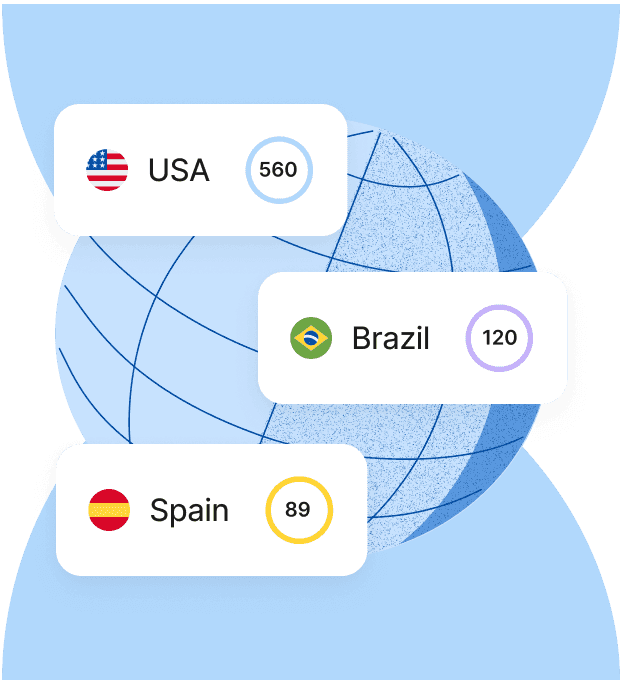
Brazil scores highest on talent pool depth by a significant margin. São Paulo alone has more working AI and ML engineers than most other LATAM cities combined, and the country's major tech companies and startups have built an engineering culture that produces candidates with strong production-ML credentials. Compliance complexity is moderate, as engaging contractors requires careful classification and local tax compliance, but Deel COR handles both. Compensation arbitrage relative to the US is strong, particularly for mid-to-senior ML engineers.
Mexico is the second-largest market by talent pool and benefits from the strongest timezone alignment with US-based teams. Monterrey, Mexico City, and Guadalajara each have active AI/ML communities. Compliance complexity is manageable, English proficiency is high among tech professionals, and cultural fit with US enterprise teams tends to be strong. Mexico is the natural recommendation for enterprises that weight collaboration hours heavily.
Argentina ranks third overall. On a quality-per-cost basis, Buenos Aires-trained engineers consistently rank among the strongest in the region, with university programs at UBA and ITBA producing graduates with rigorous mathematical and statistical foundations that translate well to AI and ML roles. The talent pool is smaller than Brazil or Mexico, but Argentina edges out Chile on this metric, and the compensation arbitrage is among the most significant in the region, particularly given current economic conditions that have increased engineer availability. Argentina's contractor compliance framework requires attention, but it is well-understood and navigable with the right partner.
Chile offers a high quality-per-cost ratio and strong English proficiency. The talent pool is smaller than Argentina's, but Santiago has a concentrated tech ecosystem with above-average AI/ML representation. Compliance complexity is low relative to peers, making Chile a sound entry point for enterprises that want to test LATAM hiring with minimal legal overhead.
Colombia is a fast-growing market. Bogotá and Medellín have both developed active tech communities in recent years, and AI/ML representation is increasing. English proficiency varies more than in Chile or Argentina, but the senior end of the Colombian talent market tends to have strong bilingual capability. Compensation benchmarks are competitive.
Peru, Ecuador, and Uruguay round out the top eight. Each offers a smaller but meaningful talent pool, with lower competition from local enterprise employers that can make sourcing faster. Uruguay in particular has a compliance environment that is notably straightforward, making it attractive for enterprises that want to move quickly with limited administrative overhead.
For most enterprise teams building an AI engineering function rather than filling a single role, the practical recommendation is to open pipelines in Brazil or Mexico first for scale, then layer in Argentina or Chile for specialized senior roles where quality-per-cost matters more than throughput.
Global Hiring Toolkit

Ranking tie-breaker: talent pool size wins
When blended scores across talent depth, compliance complexity, and quality-per-cost are close, total addressable talent pool size is the deciding factor. This is a practical choice for enterprise teams building an engineering function rather than filling a single role.
The compliance risk hiding in cross-border AI contractor hiring
Enterprise AI hiring teams often assume that engaging a LATAM engineer as an independent contractor is a straightforward transaction: a Statement of Work, a wire transfer, and a delivery milestone. That assumption is accurate only if the engagement is genuinely independent in the eyes of the local jurisdiction. In most LATAM countries, the criteria for true independent contractor status are more restrictive than many enterprises expect.
The specific risk in most ad-hoc arrangements is misclassification. If a LATAM AI engineer works exclusively or primarily for one enterprise client, receives direction from that client's managers, uses client-provided tools, and operates within a client-defined schedule, most LATAM labor regulators and courts will view that relationship as de facto employment, regardless of what the contract says. Misclassification findings in Brazil, Argentina, and Mexico can trigger back-payment of social contributions, penalties, and in some cases personal liability for the hiring manager who signed the agreement.
Beyond misclassification, there is a structural tax issue. Many LATAM countries require contractors who perform services for foreign companies to invoice through a registered local entity or comply with specific tax withholding frameworks. An enterprise that pays a LATAM contractor directly without understanding the local withholding rules may be creating undocumented tax liability in both the contractor's country and, potentially, the enterprise's home jurisdiction.
IP ownership adds a third layer of complexity. In several LATAM countries, default IP rules under employment or contractor law do not automatically transfer ownership of work product to the hiring company. An enterprise that builds a proprietary AI model using LATAM contractors without well-drafted IP assignment clauses in the contractor agreement may find that ownership of that model is contested, a serious exposure for any business treating its AI assets as a competitive differentiator.
Taken together, these risks are not reasons to avoid LATAM AI hiring. They point instead to the importance of structuring engagements correctly from the outset, and that is precisely where having the right compliance infrastructure matters.
Compliance
How Deel Contractor of Record enables compliant LATAM AI hiring
Deel Contractor of Record addresses the structural problem at the center of most enterprise LATAM hiring challenges: an enterprise wants to engage LATAM AI engineers on terms that work for its organization, but doing so compliantly normally requires either establishing a local entity (which takes months and creates permanent overhead) or relying on ad-hoc contractor arrangements that carry the misclassification and tax risks described above.
Deel COR provides a middle path between those two options. When an enterprise hires a LATAM AI engineer through Deel COR, Deel acts as the Contractor of Record in the local jurisdiction. Deel handles entity requirements, local tax withholding and reporting, contractor agreement drafting to local legal standards, IP assignment structuring, and ongoing compliance monitoring. The enterprise team gets direct access to the engineer's work product and full control over deliverables and priorities. The engineer receives compliant compensation consistent with local norms. Deel absorbs the legal and administrative overhead in between.
For enterprise AI teams, this means the timeline from identifying a candidate in Argentina to having that engineer onboarded and contributing to the model is measured in days rather than quarters. There is no entity-setup process, no local legal counsel engagement, no multi-month compliance review. Deel's team has already established the infrastructure in each of the markets ranked above.
Deel COR also resolves the IP ownership issue directly. Contractor agreements structured through Deel include IP assignment provisions that are drafted to be enforceable under local law, giving enterprise legal teams the clean chain of title they need for proprietary AI assets. This is a non-trivial advantage: sourcing those provisions independently, in the correct local language and legal form, is a weeks-long legal project that Deel reduces to a standard contract term.
Deel Hire

What Deel Contractor of Record handles for enterprise teams
- Entity requirements in the local jurisdiction
- Local tax withholding and reporting
- Contractor agreement drafting to local legal standards
- IP assignment provisions enforceable under local law
- Ongoing compliance monitoring and regulatory updates
- Contractor onboarding, payments, and expense management
A 5-step COR engagement playbook for hiring AI engineers in LATAM
The following playbook is designed to be shared with legal and finance teams on the same day that HR commits to a LATAM AI hiring strategy. Each step has a clear owner and a clear output.
Step 1: Role scoping
Before selecting a market, define the role with precision. For AI engineering specifically, this means distinguishing between ML infrastructure engineers (who build training pipelines and model-serving systems), applied ML engineers (who fine-tune models for specific product use cases), and research-oriented ML engineers (who work closer to novel architecture development). Each role type has a different talent distribution across LATAM markets, and the distinction affects both sourcing strategy and compensation benchmarking. A vague job description will generate an unfocused candidate pool and slow time-to-hire.
Step 2: Market selection
Using the blended ranking above as a starting framework, select one or two primary markets. Apply the tie-breaker rule (talent pool size) where blended scores are close. For most enterprise teams running a first LATAM AI hiring initiative, starting in one market and expanding later is more manageable than attempting simultaneous multi-country sourcing. Brazil or Mexico is the typical first choice, with Argentina or Chile following for senior specialized additions.
Step 3: Compliance setup via Deel COR
Engage Deel's Contractor of Record service for each target market before the first offer is extended. This step involves no entity registration, since Deel's existing legal infrastructure in each country handles the compliance layer. Work with Deel's team to confirm that the contractor agreement template for the target market includes the IP assignment language required for AI work product. This conversation takes hours, not weeks.
Step 4: Onboarding
Structure onboarding to match the engineer's actual working context. LATAM engineers joining enterprise AI teams remotely benefit from clear documentation of the technology stack, model architecture, and team communication norms. Async-first communication reduces timezone friction for teams spread across multiple regions. Deel's platform handles contractor onboarding administration (payments, contracts, and expense management), so HR teams can focus onboarding attention on technical and cultural integration.
Step 5: IP protection and ongoing compliance monitoring
After onboarding, IP protection requires two ongoing practices. First, ensure that all work product (model weights, training data processing pipelines, and prompt templates) is created in enterprise-owned repositories and environments, not contractor-owned tooling. Second, have legal review contractor status on a scheduled cadence. Deel's compliance monitoring surfaces regulatory changes in local contractor law that could affect the engagement structure, reducing the risk that a rule change goes unnoticed until it creates liability.
Live Demo
Get a live walkthrough of the Deel platform
Protecting IP when hiring AI engineers as contractors
IP protection deserves specific attention for enterprise AI teams because the assets being created (foundation model fine-tunes, proprietary training datasets, and inference pipelines) often represent significant competitive value. Losing clean title to those assets because of a poorly drafted contractor agreement is a business risk, not merely a legal formality.
The most common IP vulnerability in cross-border AI contractor arrangements is a missing or unenforceable assignment clause. A standard work-for-hire clause is insufficient in most LATAM jurisdictions because local law does not recognize work-for-hire doctrine in the same way US law does. An explicit IP assignment provision, written in the contractor's local language, governed by local law, and signed before work begins, is the required baseline.
Deel COR contractor agreements include these provisions by default, drafted for enforceability in each supported country. Enterprise legal teams should still review these agreements in full, but they are starting from a compliant baseline rather than drafting from scratch in an unfamiliar legal system.
Beyond contracts, enterprise teams should enforce technical controls: AI engineers working on proprietary models should work within enterprise-controlled development environments, use enterprise-provisioned accounts for all model development tooling, and commit work product to enterprise-owned repositories from day one. These controls are not about distrust but about maintaining a clean chain of custody for IP that may need to be demonstrated to investors, acquirers, or regulators at a later date.
Global Hiring Toolkit

The LATAM AI engineering talent window is open now, and the enterprises that move first will have hiring and cost advantages that compound over time. The evidence from Coursera, Stack Overflow, and LinkedIn Talent Insights supports this as a current-state observation: the talent exists, the quality is real, and the compensation arbitrage is meaningful. The remaining obstacle for most enterprise teams is compliance, and that is precisely where Deel Contractor of Record removes friction. Deel COR enables compliant engagement with LATAM AI engineers in days, with IP protection built into every agreement and no entity setup required. If scaling an AI engineering function is on the roadmap, speaking with Deel's team is a productive next step toward turning that plan into a compliant, scalable reality.
Deel Hire
Find, hire, and manage anyone, anywhere

FAQs
What is Deel Contractor of Record and how does it work for LATAM hiring?
Deel Contractor of Record is a service where Deel acts as the compliant legal entity engaging a contractor in their local jurisdiction, handling tax withholding, agreements, and IP assignment, while the enterprise client retains full control over the work and deliverables.
Which LATAM countries are best for hiring AI engineers?
Brazil and Mexico offer the largest talent pools and are the best choice for enterprises building teams at scale. Argentina and Chile offer strong quality-per-cost ratios for senior specialized roles.
Does using a Contractor of Record eliminate misclassification risk?
Deel COR significantly reduces misclassification exposure by structuring the engagement within local legal frameworks, though the enterprise should also ensure the working relationship reflects genuine contractor independence in practice.
How does Deel handle IP assignment for AI work product?
Deel COR contractor agreements include IP assignment clauses drafted for enforceability under local law in each supported market, giving enterprise clients a defensible chain of title for AI assets created by LATAM contractors.
Is Deel COR the same as an Employer of Record?
No, Deel's Contractor of Record service is specifically designed for contractor engagements, while an Employer of Record covers full employment relationships. The right structure depends on the nature of the engagement and local labor law.
Related Deel resources
Deel's content team covers topics that matter most to global businesses, from workforce trends and compliance to HR technology and the future of work.