Article
4 min read
Women are leaving the workforce as men return to office

Author
Kim Cunningham
Published
March 08, 2026

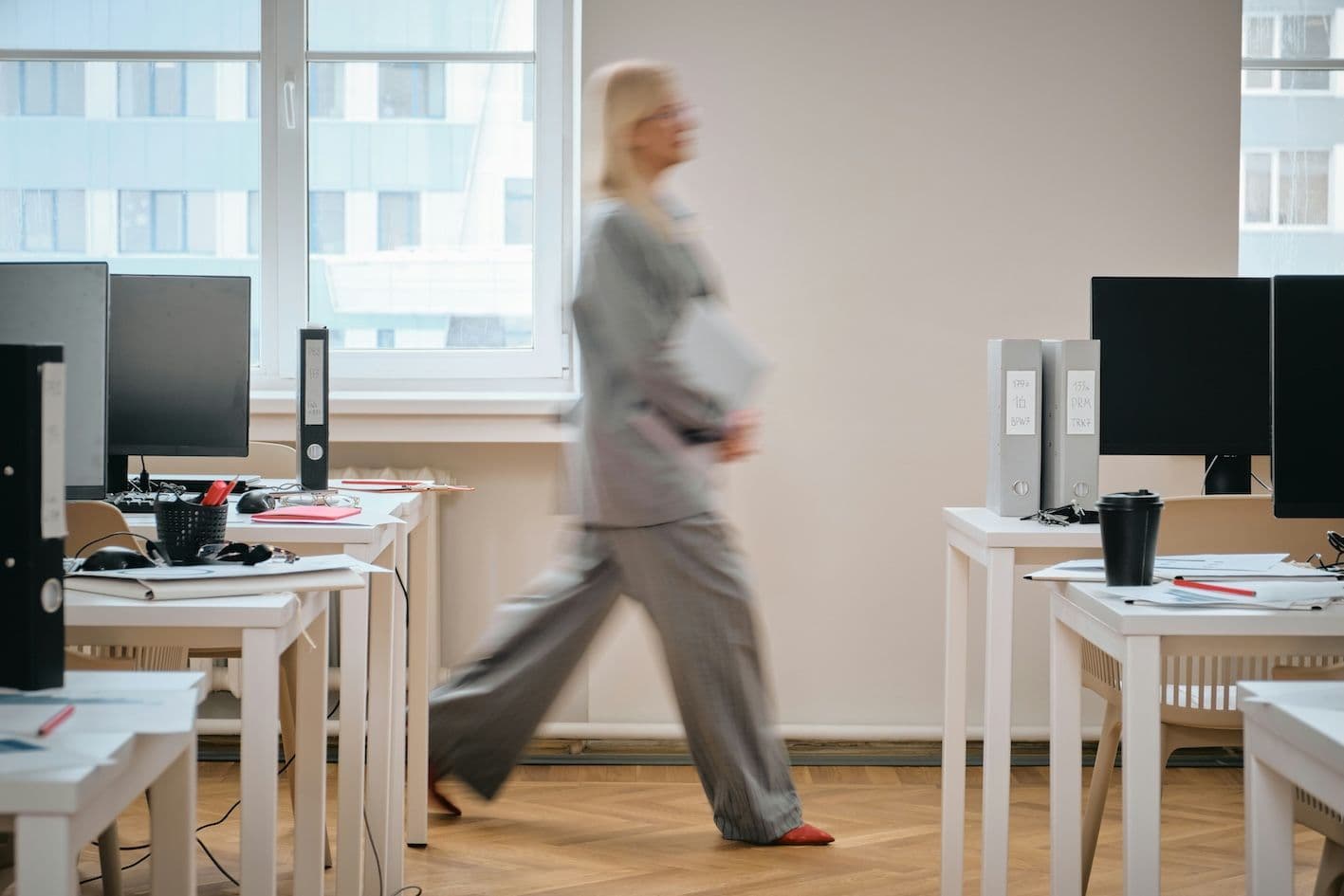
Throughout 2025, more than 212,000 women aged 20 and older left the U.S. workforce between January and June while 44,000 men joined it, marking a sharp reversal of pandemic-era gains as companies enforced strict return-to-office mandates. The exodus was concentrated among mothers with young children, whose labor force participation dropped from 69.7% to 66.9% in the first half of the year, a three-percentage-point decline in six months.
The pattern revealed a growing gender divide in how workers responded to the end of remote work flexibility. Men's remote work dropped from 34% to 29% between 2023 and 2024 according to Department of Labor surveys, while women's remained unchanged at 36%. But staying remote carried career consequences: 86% of U.S. CEOs surveyed by KPMG in summer 2024 said they would reward in-office attendance with favorable assignments, raises, and promotions. As of February 2026, the latest comprehensive labor force data available, women's overall participation rate (16 and over) fell to 57.2%, down 0.3 percentage points from a year earlier. This suggests the exodus that began in 2025 continued into early 2026.
The mandate acceleration
Corporate America's pivot back to the office accelerated sharply in 2025. Full-time office requirements among Fortune 500 companies jumped to 24% in the second quarter of 2025, up from 13% at the end of 2024, according to the Flex Index, which tracks workplace policies across thousands of companies. Amazon, JPMorgan Chase, and AT&T moved to five-day in-office mandates. The federal government ordered employees back full-time in January.
Prime-age women's labor force participation hit a record 78.4% in August 2024, then began falling as RTO mandates spread. By May 2025, it stood at 77.7%. College-educated women saw an even sharper drop, falling from 70.3% in September 2024 to 67.7% in July 2025.
The discrimination data
Research published in Organization Science helps explain why women didn't return. Laura Doering and András Tilcsik of the University of Toronto surveyed 1,091 professional women in hybrid jobs and found that 31% reported experiencing gender discrimination in a typical month in the office, compared to 17% when working from home.
The gap is especially pronounced for younger women and those working mostly with men. Women in male-dominated environments face a 58% likelihood of experiencing discrimination on-site versus 26% when working remotely. The discrimination ranged from having ideas ignored or stolen to being excluded from social activities and experiencing sexual harassment.
Remote work doesn’t eliminate these issues, but it reduces their frequency and intensity. The researchers called remote work "a protective shield" against everyday gender discrimination, while cautioning against using it as a substitute for addressing workplace bias directly.
The CEO acknowledgment
Corporate leaders recognized the gendered impact. One 2024 survey found that nearly two-thirds of C-suite executives said return-to-office mandates caused a "disproportionate number" of women to quit. Many reported struggling to fill positions because of that talent loss and said overall workforce productivity declined as a result.
Yet RTO mandates continued throughout 2025, often justified by appeals to collaboration, innovation, and culture. What became clear was that rigid mandates pushed out experienced employees, many of them women, creating retention problems that undermined the collaboration they were meant to enhance.
The caregiving calculation
Women still perform twice as much unpaid care work as men across OECD countries, totalling about four hours daily compared to two hours for men. Remote work made those responsibilities manageable alongside employment. Strict RTO policies in 2025 forced impossible logistics like long commutes, inflexible schedules, and childcare costs.
The three-percentage-point drop in participation among mothers with young children in 2025 reversed pandemic-era gains that had taken years to achieve. The implications extend beyond individual careers as women's labor force participation drives economic growth, household income, and tax revenue.
The visibility penalty
Women who remained in remote or hybrid arrangements faced career advancement that increasingly depended on physical presence. The KPMG data showing 86% of CEOs rewarding office attendance suggested that women choosing flexibility were choosing slower career trajectories, whether or not their performance warranted it.
This created a bind. Women value flexibility more than men according to data from McKinsey, not because they are less ambitious but because workplaces have been designed around the assumption of a worker with minimal caregiving responsibilities.
The phenomenon isn’t limited to mothers. Women without children at home show nearly the same preference for flexibility as women with children, suggesting the issue extends beyond childcare to broader questions of workplace culture and design.
What happened in 2025
2025 wasn't a return to pre-pandemic norms. The period from 2020 to 2024 demonstrated that many jobs could be done effectively from anywhere, and workers restructured their lives around that reality. Some moved away from expensive urban centers, while others took on caregiving responsibilities they could manage alongside remote work but couldn't with long commutes.
RTO mandates in 2025 forced a reckoning. Workers who'd built lives around flexibility either had to undo those arrangements—moving back to cities, finding new childcare, accepting longer commutes—or leave their jobs. The data shows that many women chose to leave, while many men chose to return.
Whether the pattern that began in 2025 persists into 2026 will depend on how companies respond to the retention problems last year revealed. Some had already softened mandates or created exceptions for top performers by year-end. Others held firm, betting that workers would eventually comply or be replaced. For women, the calculation involves weighing career opportunities against quality of life, a tradeoff that shouldn't exist but increasingly does. Full-year 2026 data will show whether companies adjust course or whether women's workforce exodus continues to accelerate.
Kim Cunningham leads the Deel Works news desk, where she’s helping bring data and people together to tell future of work stories you’ll actually want to read.
Before joining Deel, Kim worked across HR Tech and corporate communications, developing editorial programs that connect research and storytelling. With experience in the US, Ireland, and France, she brings valuable international insights and perspectives to Deel Works. She is also an avid user and defender of the Oxford comma.
Connect with her on LinkedIn.