
Article
7 min read
Balancing Security and Access for Global Teams: What Actually Works
IT & device management

Author
Michał Kowalewski
Last Update
August 04, 2025

Table of Contents
Shadow IT: The risk you can’t manage if you can’t see it
Zero trust: A security model that fits how people actually work
Flexible access without losing control
Compliance without chaos
What happens when security and usability aren’t in conflict
Key takeaways
- Unapproved tools and devices introduce risk when IT lacks visibility and control. Addressing this starts with centralized identity and access management.
- Instead of relying on location or networks, smart security now depends on verifying identity, device health, and context before granting access.
- With Deel IT and JumpCloud, companies can automate provisioning, enforce policies, and stay audit-ready across a global workforce, without slowing anyone down.
Security and access are often treated as a tradeoff. Lock everything down and your team grinds to a halt. Make everything open and easy, and you invite risk.
For remote-first companies, that tradeoff gets harder to manage. Teams work across time zones, on different devices, from unsecured networks. Traditional perimeter-based security models just don’t hold up.
We invited JumpCloud’s Chase Doelling to share his knowledge on how global companies are adopting zero-trust strategies that prioritize both security and usability. From tackling shadow IT to securing endpoints without bottlenecks, he shares practical ways to give employees fast, flexible access, without sacrificing control.
Meet the expert
Chase Doelling, Director of PMM at JumpCloud - Organizational sales and partnership leader, specializing across B2B SaaS from Identity, Security, Integrations, DevOps, and Agile. Chase drives global partnerships and go-to-market strategies while educating teams on zero-trust security, IT infrastructure, and modern access management.
Shadow IT: The risk you can’t manage if you can’t see it
Most security issues in remote companies don’t begin with a breach. They begin with a blind spot.
Someone signs up for a new tool to move faster. They create a personal account, invite teammates, and start sharing files. There is no malicious intent, just a shortcut to get work done. But the tool isn’t approved, monitored, or centrally managed. And when that person leaves the company, no one remembers the account exists.
This is shadow IT: the collection of apps, devices, and accounts that live outside of IT’s control. It is a growing problem for distributed teams, where autonomy is high and guardrails are difficult to enforce.
The risk goes beyond unused licenses or duplicate software. Without visibility into who is using what, IT teams cannot:
- Apply security policies consistently
- Detect risky behavior
- Lock down access when someone leaves
- Provide documentation during audits
How Deel IT and JumpCloud help
Shadow IT is not just a software problem. It’s a visibility problem. Deel IT and JumpCloud help teams regain control without slowing people down.
Here’s how:
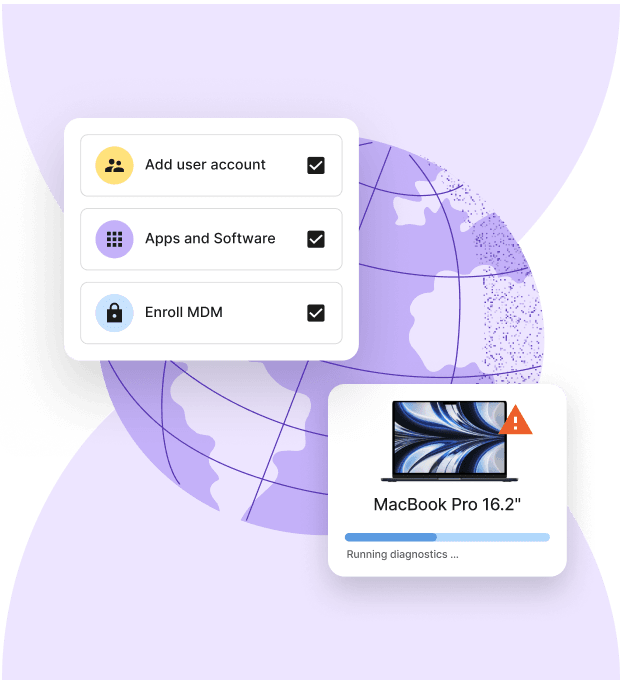
- Devices and user identities are tracked from onboarding through offboarding
- App access is assigned based on roles and removed automatically when someone leaves
- Employees get the tools they need through secure single sign-on
- IT gains a full view of which tools are in use and who is using them, across the entire organization
This level of visibility makes your environment safer. It also helps you manage vendors, track licenses, and reduce unnecessary costs, while giving IT teams back their time.
Device Lifecycle Management
Zero trust: A security model that fits how people actually work
In traditional office setups, IT could rely on a trusted network. If someone was inside the office, using a company laptop, connected to company Wi-Fi, they were considered safe.
That model no longer works. Today’s teams work from anywhere, on any device, at any time. Relying on location or network access to determine trust creates gaps that bad actors can exploit.
Zero trust flips the model. Instead of assuming someone is safe because they are "inside," access is granted only after verifying multiple factors, including identity, device health, and context.
This doesn’t mean locking everything down and making access difficult. When done right, zero trust security is invisible to the user and automatic for IT.
See also: 4 Reasons to Use Zero Touch Deployment to Supply Devices to Remote Workers
How Deel IT and JumpCloud help
Deel IT and JumpCloud make it easier to implement zero trust by handling verification at every point of access, without adding friction for the user.
Here’s how:
- Device management is built into onboarding, so only trusted devices are allowed
- Single sign-on and multi-factor authentication make logins secure and simple
- Policies can be applied across Mac, Windows, Linux, and mobile environments
- Access is conditional based on device trust, user role, and location
Instead of relying on a VPN or shared passwords, every login attempt is evaluated in context. That means remote teams stay secure even when people are working from home, coworking spaces, or across borders.
This reduces reliance on outdated perimeter-based thinking and helps companies move toward a modern, more resilient security posture.
Flexible access without losing control
One of the biggest challenges in global IT is giving people access to the tools they need, without opening the door to unnecessary risk.
Employees expect to work from anywhere, on any device. Contractors may only need access for a few weeks. Some teams operate in countries with strict data rules. Others have highly sensitive systems that require tighter controls.
It’s easy to default to two extremes. Either everything is open and fast but insecure, or everything is locked down and inefficient. Neither approach works at scale.
The solution is access that adapts to context. That means the right people get the right tools, for the right reasons, and nothing more.
See also: 13 Identity and Access Management Best Practices
How Deel IT and JumpCloud help
Deel IT and JumpCloud provide the flexibility to support different access levels across your workforce, from full-time employees to contractors, vendors, and hybrid teams.
Here’s how:
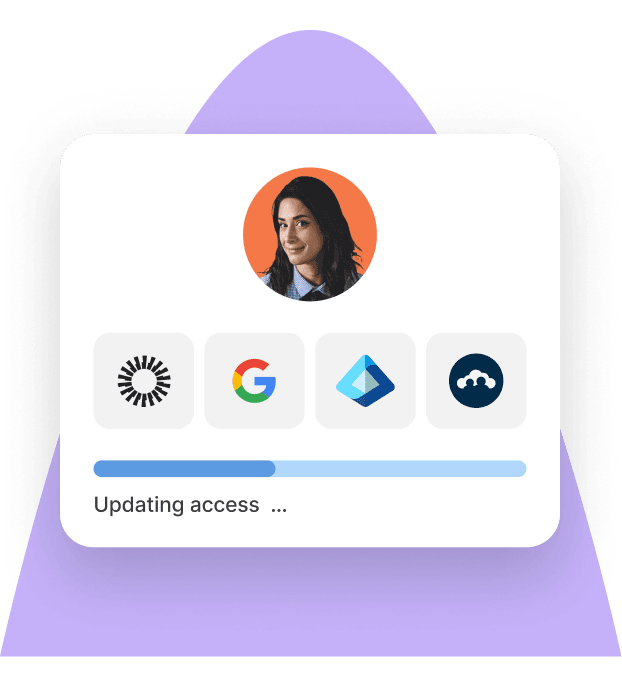
- Access can be configured based on role, device health, and location
- Contractors can be given time-bound or scoped access to only what they need
- Remote lock and wipe tools help manage offboarding and lost hardware
- Access logs and user activity reports give you a full audit trail
This lets you stay in control without adding friction. Users get fast access to what they need, and IT keeps the ability to monitor, adjust, and revoke access in real time.
Whether you’re supporting engineers in Berlin, freelancers in Manila, or new hires in New York, you can enforce consistent policies without slowing anyone down.
Identity Access Management
Compliance without chaos
Most compliance problems aren’t about bad intent. They happen because data is scattered, policies aren’t enforced consistently, and nobody has a clear record of who accessed what.
For global teams, this gets harder. You may have employees, contractors, and vendors across multiple jurisdictions, each with its own rules on data privacy, security, and retention. Without centralized systems, staying compliant turns into a high-stakes guessing game.
IT teams often get stuck chasing logs, screenshots, and email threads just to prepare for audits. It’s stressful, slow, and error-prone. And when offboarding fails or access is missed, the risks multiply.
How Deel IT and JumpCloud help
Deel IT and JumpCloud simplify compliance by giving you control and visibility across the full identity, device, and access lifecycle.
Here’s how:
- All devices and users are tracked from day one
- Policy enforcement is built into onboarding and provisioning workflows
- Access is automatically revoked when someone changes roles or leaves
- Audit-ready reporting shows who had access, when, and from which device
This makes it easier to comply with data protection laws, industry regulations, and internal standards, without relying on disconnected tools or last-minute fixes.
With one system managing identity, access, and assets, compliance becomes less reactive and more routine.
What happens when security and usability aren’t in conflict
Managing access. Enforcing policies. Preparing for audits. These are not just technical checkboxes, they are critical for running a secure, compliant, and fast-moving company.
The problem isn’t that teams don’t care about security. It’s that the tools they rely on weren’t built for distributed work. They create friction, require constant oversight, and break down as the organization scales.
Deel IT and JumpCloud offer a more integrated approach. From onboarding to offboarding, you get the visibility and control you need, without slowing your people down or layering on complexity.
Want to see how Deel IT can help you secure your team without sacrificing speed? Book a demo today.
Michał Kowalewski a writer and content manager with 7+ years of experience in digital marketing. He spent most of his professional career working in startups and tech industry. He's a big proponent of remote work considering it not just a professional preference but a lifestyle that enhances productivity and fosters a flexible work environment. He enjoys tackling topics of venture capital, equity, and startup finance.


