
Guide
How to Communicate Benefits Changes When Switching Employers of Record (EOR)
Employer of record
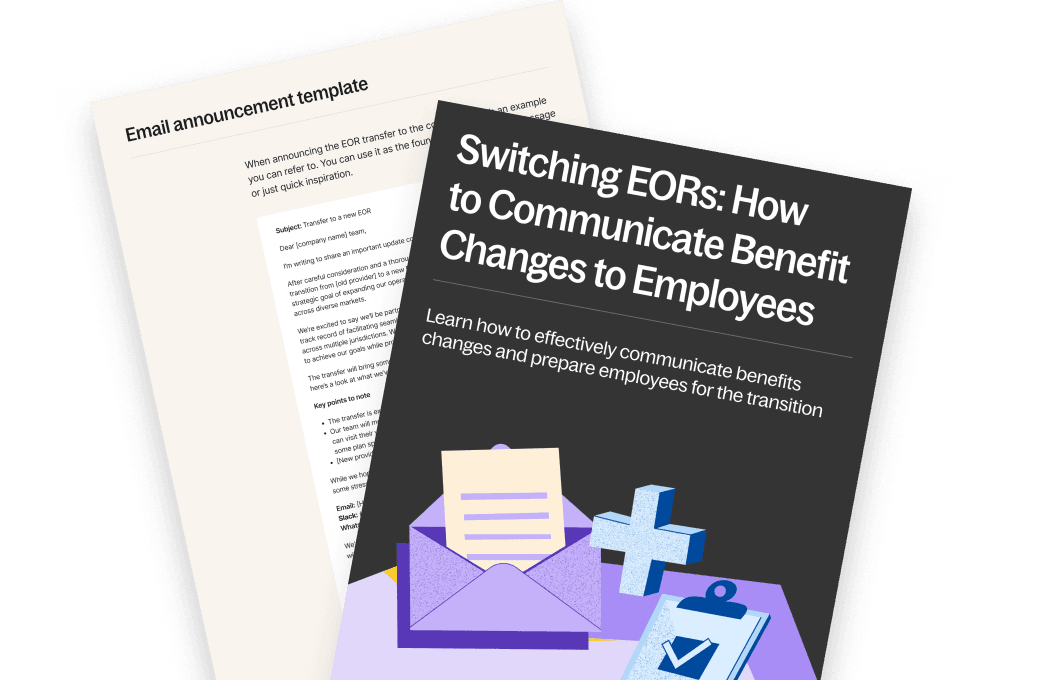
Get the resource for free
Key takeaways
- Switching EORs can disrupt employee experience if comms aren’t handled well. Benefits changes create uncertainty—especially for global hiring teams spread across regions and time zones.
- This guide gives you a step-by-step communication plan. Learn what to say, when to say it, and how to keep employees confident throughout the EOR transition.
- Get practical templates and best practices. Use ready-to-adapt messaging to explain what’s changing, reinforce stability, and protect employee satisfaction.
Switching employers of record (EOR) is often the right move—better global coverage, stronger local expertise, improved customer support, or a more scalable EOR solution.
But for your team members, it can feel like a major change—especially when benefits are involved. In many cases, employees will need to sign new employment contracts with a new legal employer and re-enroll in benefits, even if day-to-day work stays the same.
This guide helps you communicate benefits changes clearly and confidently so you can protect employee experience, maintain trust, and support a smooth transition across multiple countries and jurisdictions.
What makes this guide different?
This isn’t generic change-management advice.
It’s built specifically for switching EOR scenarios, with a focus on:
- How to explain the role of the legal employer (what changes vs. what stays the same)
- How to communicate benefits package updates without eroding employee satisfaction
- Key timing considerations, including notice periods and sequencing communications
- How to support global hiring teams across different regions and local labor laws
- What information to share (and how) while protecting sensitive employee data
- How your new EOR services provider can support contracts, compliance, and onboarding during the transition
Who will benefit from this guide?
- HR and People leaders managing an EOR transition
- Total rewards and benefits teams planning benefits package changes
- Global mobility and global hiring teams supporting international employees
- Ops leaders coordinating cross-border change programs
- Legal and compliance teams aligning employment contracts with local labor laws
- Anyone responsible for employee communications and experience during EOR changes
What’s inside?
- A step-by-step plan to communicate benefits changes during a switching EOR process
- Messaging guidance to reinforce stability and reduce uncertainty
- Best practices for timing, channels, and stakeholder alignment
- Tips to improve employee experience and protect employee satisfaction
- Templates you can reuse for announcements, FAQs, and manager talking points
More resources
FAQs
Why do benefits change when switching EORs?
Because employees move to a new legal employer, benefits administration and providers can change—even if compensation and day-to-day work stay the same.
Do employees need new employment contracts?
Often, yes. In many EOR transitions, employees will sign updated employment contracts with the new EOR as legal employer.
How much notice should we give employees?
It depends on country requirements and your transition timeline, but earlier is better—especially when benefits elections, enrollment windows, or waiting periods may apply.
How do we protect employee experience during the change?
Communicate early, be clear about what’s changing vs. staying the same, provide support channels, and equip managers with FAQs and scripts.
What role should the new EOR provider play?
A strong EOR solution should provide local expertise, support compliant contract changes, and help you manage benefits transitions with minimal disruption.