
Article
10 min read
Top 3 automation wins for HR and IT in 2025
IT & device management

Author
Michał Kowalewski
Last Update
December 20, 2025

Table of Contents
1. App access management: driven by HR, automated by IT
2. Bring order to device chaos
3. Keep people and assets in sync
What happens when HR and IT actually work together
Key takeaways
- Automating app access through HR data eliminates delays, reduces risk, and improves license control across distributed teams.
- Centralized device logistics cut manual work by 75%, ensuring secure, on-time delivery and management of hardware in over 130 countries.
- A shared platform for HR and IT keeps people, devices, and permissions in sync, reducing overhead and lowering IT spend per employee.
Every time HR moves, IT flinches.
Hire someone? IT ships a laptop. Promote a manager? IT updates app access. Offboard an employee? IT recovers devices, revokes permissions, and wipes data.
But in most companies, HR and IT systems don’t talk to each other. That means manual handoffs, Slack messages, ticketing queues, and spreadsheets trying to track it all. The result: delays, missed steps, and unnecessary risk.
Sam Oliver, Principal PMM at Deel IT, shared three major areas where automation is cutting through the noise and helping companies scale smarter in 2025. Here’s what we learned.
Meet the experts behind Deel IT
Sam Oliver is the Principal Product Marketing Manager at Deel IT, and has just over a decade of experience working across various technology, cybersecurity, and biotechnology companies. Sam works very closely with the Deel product team to build solutions that streamline global employee device and app management.
1. App access management: driven by HR, automated by IT
Let’s say you’re hiring someone. They accept the offer and are set to start Monday. HR sends a message to IT: "Can you give them access to Slack, Notion, and Salesforce?" IT creates a ticket. Maybe someone provisions it. Maybe they forget. Maybe they assign the wrong tools. Maybe that person ends up waiting until Wednesday to actually start working.
Now imagine this happening across dozens of hires, promotions, transfers, and exits every month. It’s slow. It’s messy. And it creates real risk.
Here’s why:
- People get access to tools they don’t need
- They keep access even after switching roles or leaving
- IT has no reliable system to track who has what
- Licenses go unused, or worse, oversubscribed, triggering extra costs
This isn’t just an IT problem. It’s an organizational one. And it stems from the fact that HR and IT don’t share a common system for managing tools, permissions, or access. That disconnect doesn’t just slow people down, it opens the door to real security threats. If someone still has access to sensitive systems after leaving the company, one missed offboarding step can turn into a data breach.
As we explored in A lost laptop is an inconvenience, a stolen identity is a catastrophe, the real cost of weak access management isn’t just operational. It’s reputational, financial, and sometimes even legal.
The systems that govern those changes don’t speak to one another. Everything ends up relying on human-to-human handoffs, and that’s not just inefficient, it’s a risk.
—Sam Oliver,
Principal PMM at Deel IT
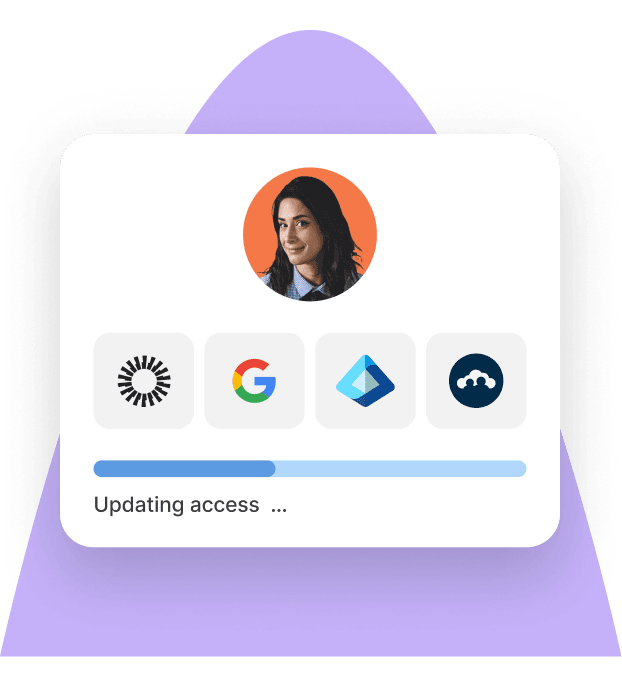
Deel IT fixes this by linking app access to the HRIS
Deel IT connects app provisioning directly to your HR data.
That means access is no longer a ticket someone has to remember to open. It becomes an automated workflow powered by a shared source of truth.
Here’s how it works:
- You define rules based on role, department, or location
- When HR updates an employee record, such as a new hire, promotion, or transfer, the right IT actions are triggered automatically
- The right tools are provisioned instantly, without anyone needing to take action
- When someone leaves, access is revoked across all connected systems without delay
You can also buy and assign licenses through Deel’s built-in marketplace, with integrations into tools like Google Workspace, Slack, Notion, GitHub, and more.
So HR doesn’t need to follow up. IT doesn’t have to guess. And your teams get what they need, exactly when they need it.
And if you're tired of chasing down vendors? Deel IT has its own built-in marketplace for tools like Slack, Google Workspace, and JumpCloud, so you can buy, assign, and manage licenses from one place.
Identity Access Management
2. Bring order to device chaos
Every employee needs a device to work. But for most companies, getting that device to the right person, on time, and fully configured is a logistical headache.
Here’s how it usually goes:
- HR hires someone
- IT orders a laptop from a vendor
- A third-party ships it (maybe)
- IT tries to configure it remotely after the fact
- Tracking happens in a spreadsheet (if at all)
If that sounds like a patchwork process, it’s because it is. Managing devices this way is slow, expensive, and prone to human error. It also creates compliance issues, especially when people are hired across different regions, each with its own procurement quirks and security standards.
Deel IT consolidates all of it
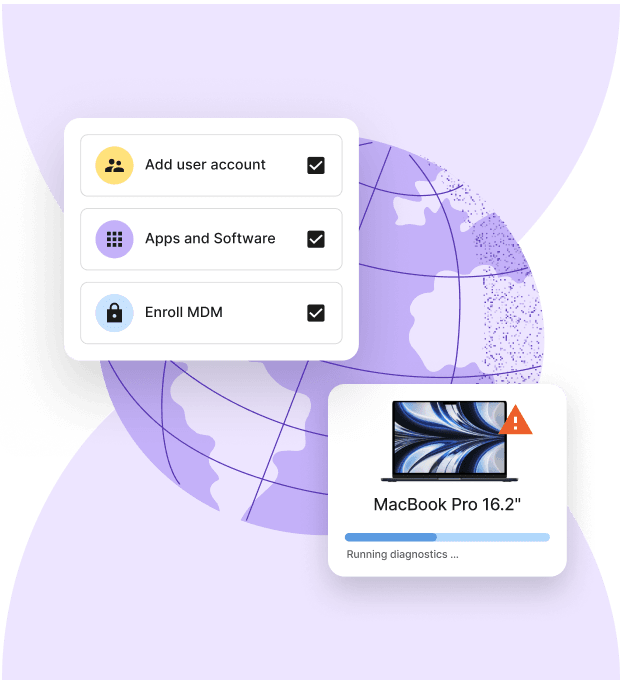
Deel IT brings together everything related to device logistics. That includes procurement, shipping, setup, tracking, and security. All of it runs through one system that connects directly to your HR platform.
Here’s how it works:
- You define what devices each role or region should receive
- Deel automatically ships the right hardware to the right location, anywhere in the world
- Devices are pre-configured and secured before they arrive, using built-in MDM capabilities
- Everything is logged in the Deel Asset Tracker and kept up to date throughout the employee lifecycle
Already have a fleet of devices in use? No problem. You can bulk upload your inventory or sync devices via Deel Agent to bring them into the platform and apply the same level of control and visibility.
Need to enforce security? You can:
- Remotely lock or wipe a device in seconds
- Apply encryption and policy controls globally
- Ensure compliance without juggling multiple tools
Device Lifecycle Management
3. Keep people and assets in sync
In most companies, employee data lives in one system, and device data lives in another. App licenses might be tracked in a spreadsheet, while access permissions are managed manually through IT tools or not tracked at all.
This disconnect becomes a problem the moment someone changes roles, leaves the company, or joins a new team. Nothing updates automatically. IT teams have to hunt down information, chase people for clarification, and manually adjust records across multiple systems.
When you scale that across dozens of employees in different countries, it becomes nearly impossible to know:
- Who has access to what
- Which devices are in use, lost, or sitting idle
- Whether you’re still compliant with local regulations
Deel IT fixes this by creating a shared source of truth.
Deel IT connects your HR and IT systems into one integrated platform. That means every person, every device, and every app license stays in sync, automatically.
Here’s how it works:
- As people are hired, promoted, relocated, or offboarded, their records are updated in the HR system
- Deel instantly reflects those changes across your IT environment
- Devices, app access, and permissions are adjusted without tickets or manual oversight
- You get real-time visibility into every asset assigned to every worker, across 130 countries
The system also tracks the full lifecycle of each device, from shipping and setup to return, reuse, or secure disposal. Every update is logged and accessible in one place.
Deel integrates with more than 100 HR tools and over 20 IT platforms, so there’s no need to replace your existing systems. You simply connect what you already use, and the automation runs on top of it.
All of this efficiency doesn’t just improve workflows. It reduces spend. When you compare the total cost of traditional IT operations with Deel IT, the savings are clear.
| Category | Traditional Stack | Deel IT Stack |
|---|---|---|
| IT ops time | $500 | $167 |
| App access + procurement | $1,068 | $936 |
| Device lifecycle + logistics | $1,000 | $1,250 |
| Total per employee/year | $2,568 | $2,353 |
These numbers don’t just look good on paper. They reflect real savings from streamlining operations, cutting integration overhead, and reducing waste. Deel IT helps companies scale faster without bloating their tech stack or budget.
What happens when HR and IT actually work together
Simplifying app access. Streamlining device logistics. Keeping people and assets in sync. These are not isolated wins. They form the foundation of a smarter, faster, and more secure way to run IT operations at scale.
The traditional approach, built on spreadsheets, ticket queues, and disconnected tools, cannot keep up with today’s pace of growth. It breaks down quickly when teams are global, onboarding is frequent, and compliance requirements are constantly changing.
Deel IT offers a better way forward. By connecting HR and IT in one platform, it automates the manual work that slows companies down. That means faster onboarding, fewer errors, stronger security, and more time for strategic initiatives.
Want to see how Deel IT can help your team work smarter across borders? Book a demo today.
Michał Kowalewski a writer and content manager with 7+ years of experience in digital marketing. He spent most of his professional career working in startups and tech industry. He's a big proponent of remote work considering it not just a professional preference but a lifestyle that enhances productivity and fosters a flexible work environment. He enjoys tackling topics of venture capital, equity, and startup finance.


