
Article
19 min read
A Complete Guide to Endpoint Protection with Real‑Time Monitoring and Incident Response
IT & device management

Author
Anna Grigoryan
Last Update
December 24, 2025
Table of Contents
Understanding endpoint protection and its importance
Core technologies for endpoint protection
Key capabilities of modern endpoint protection
Designing and implementing an endpoint protection program
Operational considerations and performance metrics
How Deel IT supports endpoint protection and incident response
Key takeaways
- Modern endpoint protection relies on real-time monitoring and automated incident response to detect and contain threats before they spread.
- Technologies like EDR and XDR continuously collect endpoint telemetry and use behavioral analytics to identify suspicious activity across devices.
- Integrating endpoint protection with SIEM, SOAR, and threat intelligence improves visibility, speeds response, and preserves evidence for audits.
- Aligning endpoint protection with device inventory and workforce workflows helps organizations scale monitoring, response, and compliance across distributed teams.
Modern endpoint protection combines always-on monitoring with fast, automated incident response, delivered through EDR/XDR platforms and, when needed, managed detection and response (MDR) services. In practice, that means choosing tools that continuously collect endpoint telemetry, flag suspicious behavior, and isolate or remediate threats in seconds. For distributed and regulated teams, this integrated approach ensures endpoints are monitored, incidents are contained quickly, and evidence is preserved for audits and lessons learned.
Deel IT complements this approach by unifying device inventory and policy enforcement, simplifying agent deployment and evidence workflows so security teams can turn strategy into day‑to‑day execution faster.
Understanding endpoint protection and its importance
Endpoint protection refers to solutions that secure devices such as laptops, servers, and mobile phones using real-time monitoring, detection, and automated response. Modern tools—often described as EDR or XDR—focus on stopping ransomware, malware, and hands-on-keyboard intrusions by watching behavior and acting automatically when risk rises, a model broadly described by vendors and analysts across the industry.
As remote work and BYOD accelerated, organizations added far more devices, access methods, and networks, expanding the attack surface and complicating oversight. Analysts note that distributed workforces require tighter control across diverse device fleets and platforms without sacrificing usability or speed to value. This shift pushed the industry from legacy antivirus to integrated platforms that combine behavioral analytics, automation, and incident investigation, with EDR engines at the core and orchestration across the stack.
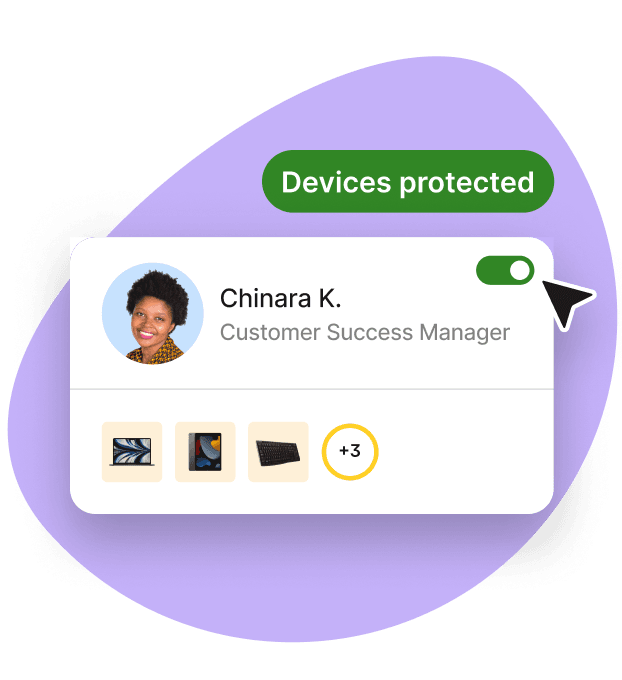
Deel IT supports this shift by giving security and IT a shared, global view of endpoints and automated workflows to enforce baselines and deploy or verify EDR/XDR coverage at scale.
Endpoint Protection
Core technologies for endpoint protection
Endpoint detection and response (EDR)
EDR tools continuously monitor endpoints, capture rich telemetry, and apply analytics to detect and remediate threats in real time. Practically, this includes process and network visibility, behavioral analytics, and the preservation of forensic data for investigation and compliance. Mature EDR platforms support automated responses—like network isolation and process termination—to reduce attacker dwell time and contain lateral movement.
Extended detection and response (XDR)
XDR extends the EDR model by unifying telemetry from endpoints, networks, identity, and cloud workloads. By correlating signals across domains, XDR provides full attack context, improves alert fidelity, and prioritizes what matters most.
EDR vs. XDR at a glance:
| Category | EDR | XDR |
|---|---|---|
| Primary data sources | Endpoint processes, file activity, registry, local network connections | Endpoints plus identity, cloud, email, and network telemetry |
| Detection / response scope | Endpoint-focused detection and automated remediation | Cross-domain correlation and coordinated response |
| Typical deployment complexity | Moderate (agent rollout, policy tuning) | Higher (broader integrations, data engineering) |
| Best use cases | Fast endpoint containment, threat hunting, forensic visibility | Full kill-chain visibility, alert consolidation, complex environments |
Security information and event management (SIEM)
SIEM centralizes log collection, analysis, and correlation across infrastructure to give a holistic view of security events and trends. Beyond a unified dashboard, SIEM adds context to alerts, supports regulatory log retention, and serves as the system of record for investigations. When integrated with EDR/XDR and automated workflows, SIEM helps reduce alert fatigue and streamlines triage by elevating the most relevant, high-confidence incidents.
Security orchestration, automation, and response (SOAR)
SOAR platforms automate and coordinate incident response across disparate tools. Teams encode repeatable playbooks—collecting evidence, enriching alerts, isolating endpoints, resetting credentials—so routine tasks execute consistently and at machine speed. By integrating SOAR with SIEM for signal intake and EDR/XDR for enforcement, organizations can contain threats quickly and scale response across global, distributed teams with fewer manual steps.
Threat intelligence ontegration
Threat intelligence delivers up-to-date data on emerging adversaries, tools, and infrastructure, enabling proactive blocking and faster investigation. Integrating commercial feeds, open-source indicators, and industry-specific sharing groups helps enrich telemetry, accelerate detection of novel and zero-day techniques, and minimize dwell time across SMB and enterprise environments.
Common intelligence sources:
- Commercial feeds (e.g., curated indicators, adversary profiles)
- Open-source feeds (e.g., community IOCs, YARA rules)
- Industry ISACs/ISAOs (sector-specific sharing and context)
- Internal discoveries (red team findings, incident retrospectives)
Key capabilities of modern endpoint protection
Real-time telemetry and continuous monitoring
Continuous collection and retention of endpoint protection events—process execution, file access, network connections, registry and configuration changes—enable proactive threat hunting and fast, high-fidelity investigations. Persistent visibility is essential for early detection and for meeting regulatory expectations around auditability and evidence.
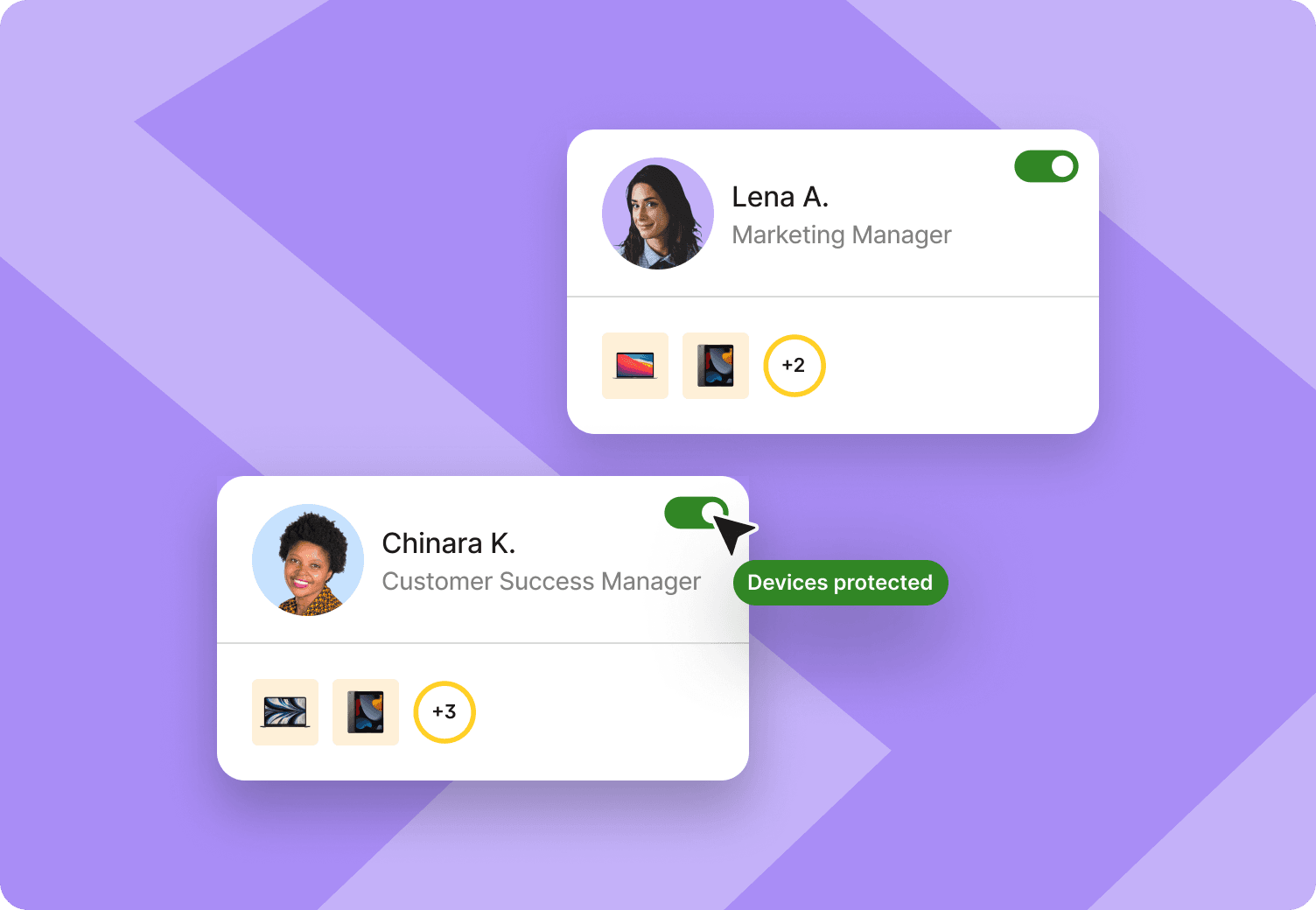
Deel IT can enrich this visibility with device inventory, ownership, and business context to prioritize investigations.
Behavioral and AI-driven threat detection
Behavioral detection identifies suspicious activity by patterns and context rather than signatures alone, surfacing fileless attacks, living-off-the-land tactics, and novel malware. AI and analytics drive down false positives, improve triage, and adapt to evolving adversary behavior.
Signature vs. behavioral detection:
| Approach | How it works | Strengths | Limitations |
|---|---|---|---|
| Signature-based | Matches known patterns/hashes | Fast, efficient for known threats | Misses novel/fileless techniques |
| Behavioral / AI | Detects abnormal patterns and context | Finds unknown and stealthy threats | Requires tuning, quality telemetry |
Automated containment and remediation
Automated containment instantly isolates compromised endpoints, kills malicious processes, quarantines files, and can roll back malicious changes. This sharpens mean time to respond (MTTR), limits lateral movement, and reduces business impact. Endpoint platforms that pair analytics with reliable, one-click or fully automated actions are consistently cited as lowering detection-to-containment times and incident costs.
Deel IT helps operationalize these actions by routing pre-approved playbooks to IT/SecOps and ensuring device ownership and location are up to date for swift decisions.
Forensics and evidence preservation
Endpoint tools should capture and preserve evidence—event logs, process trees, memory and disk snapshots, persistence changes—to support audits, legal holds, and root-cause analysis. For distributed teams, standardized evidence retention policies and chain-of-custody procedures are essential for compliance and post-incident learning.
Deel IT can assist by automating evidence retention workflows tied to assets and users, and by maintaining custody records during employee transitions.
What to retain by regulation focus:
| Regulation | Evidence to retain | Notes |
|---|---|---|
| GDPR | Access logs, data processing records, change history, incident reports | Retain only what’s necessary and proportionate; document lawful basis |
| PCI DSS | Authentication logs, system and audit logs, file integrity data, incident records | Ensure centralized, protected storage and timely availability for review |
| HIPAA | Access controls, audit trails, system activity, incident documentation | Safeguard PHI-related logs; maintain integrity and traceability |
Integration across endpoint, network, cloud, and identity data
Combining endpoint telemetry with network flows, cloud workload events, and identity signals provides end-to-end attack-chain visibility and faster root-cause analysis. Correlated data exposes lateral movement and misuse of credentials that might be invisible in any single system. For high-growth, distributed organizations, priority integrations typically include identity providers, collaboration apps, cloud infrastructure, and data protection tools to ensure coverage where sensitive work happens.
Deel IT supports these integrations by aligning endpoint policy enforcement with identity and access changes and by surfacing asset criticality to SIEM and SOAR.
Designing and implementing an endpoint protection program
Step 1: Define scope, objectives, and compliance requirements
Inventory all endpoints, understand data sensitivity and business processes, define likely threat models, and map regulatory duties (such as PCI DSS, GDPR, or sector-specific rules). Establish controls for log retention, access management, and reporting as part of your security objectives.
Asset and risk inventory template:
| Device type | Owner | Location | Data sensitivity | Controls required |
|---|---|---|---|---|
| Laptop / Server / Mobile / VDI | Employee / Contractor | Country / Region | Low / Moderate / High | EDR agent, disk encryption, MFA, DLP, logging |
Step 2: Select core tools and technologies
Prioritize EDR/XDR for endpoint coverage, SIEM for centralized visibility and retention, SOAR for automated response, and threat intelligence for enrichment. Consider cloud vs. on-prem deployment, stack compatibility, total cost of ownership, and whether a managed option (MDR) aligns with your resources and risk tolerance.
Deel IT complements these choices by centralizing device inventory and software baselines, orchestrating EDR/XDR agent deployment, and integrating with SIEM/SOAR to shorten time-to-value.
Decision guide:
| Capability | Why it matters | Selection criteria |
|---|---|---|
| EDR / XDR | Core detection, telemetry, automated response | OS coverage, telemetry depth, response breadth, performance |
| SIEM | Centralized analytics and retention | Ingest scale, parsing quality, correlation, and reporting |
| SOAR | Speed and consistency of IR | Playbook library, integrations, human-in-the-loop controls |
| Threat intel | Proactive and enriched detection | Feed quality, deduplication, relevance to your industry |
Step 3: Deploy agents and centralized logging systems
Roll out agents with standardized policies, validate multi-OS support, and securely stream logs to a central repository. Watch for performance impacts, deployment gaps (off-network devices), and privilege constraints. Establish health checks and coverage dashboards to confirm agents remain active across your fleet.
Step 4: Develop incident response playbooks and automation
Tie playbooks to established frameworks like NIST and SANS to standardize investigation, containment, remediation, and evidence collection. Document decision trees, pre-approvals for automated actions, and roles and responsibilities across security, IT, and business stakeholders.
Step 5: Optimize detection rules and minimize alert fatigue
Tune severity thresholds, suppress noisy but benign activity, and enrich alerts with context (user identity, asset criticality, recent changes). Use aggregation and deduplication to group related events, and centralize triage in dashboards that highlight cross-domain correlations—an approach widely recommended to surface the most critical threats.
Leveraging Deel IT’s asset context (owner, role, region, sensitivity) can help prioritize triage and response.
Step 6: Conduct testing and tabletop exercises
Validate readiness with regular tabletop simulations and live-fire drills (e.g., phishing and ransomware scenarios). Define objectives upfront—gap discovery, SLA validation, staff training—and track outcomes to improve processes and tooling over time.
Step 7: Maintain runbooks, evidence retention, and post-incident reviews
Keep runbooks current, align evidence retention with regulatory requirements, and conduct blameless post-incident reviews to capture lessons learned. Maintain a centralized log of improvements—detection content, playbook changes, and training updates—to steadily raise your security baseline across regions and teams.
Operational considerations and performance metrics
Measuring detection and containment times
Track mean time to detect (MTTD) and mean time to contain (MTTC) in real time and review them after every incident. Automated response and remediation are repeatedly shown to shrink the gap from detection to containment, reducing impact and recovery costs. Visualize these metrics in dashboards and set quarterly improvement targets.
Deel IT can surface coverage and readiness metrics alongside device criticality to focus improvement efforts where they matter most.
Managing false positives and coverage
Reduce noise with behavioral analytics, contextual rules, and allowlists for known-good activity. Perform periodic coverage audits—what percentage of endpoints are monitored, healthy, and compliant—and create feedback loops between analysts and content engineers to refine detections.
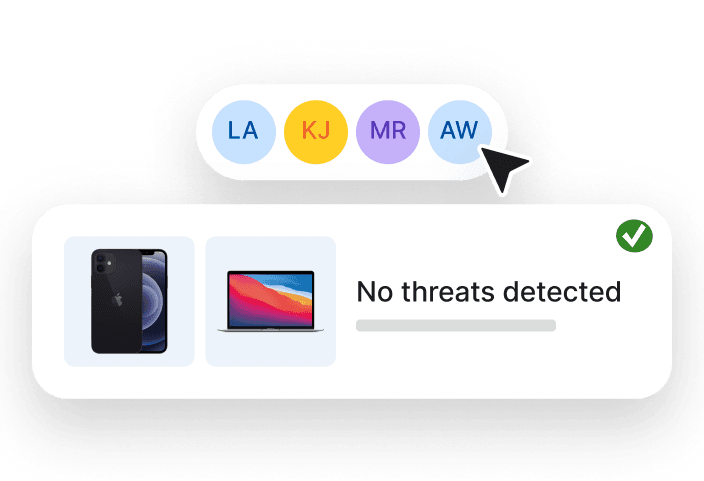
Deel IT’s coverage dashboards and automated policy checks help verify that required agents and controls remain active across the fleet.
Models for scaling: Co-managed, MSSP, and centralized dashboards
Different operating models fit different stages of growth and risk.
| Model | Pros | Cons | Best for |
|---|---|---|---|
| In-house centralized SOC | Deep control, context, and customization | Higher staffing and tooling costs | Large, regulated enterprises |
| Co-managed (MDR + internal team) | 24/7 coverage with internal context | Requires clear runbooks and roles | Mid-size, high-growth orgs |
| MSSP fully managed | Faster time-to-value, predictable cost | Less customization, potential context gaps | Resource-constrained teams |
Centralized dashboards enable efficient oversight, multi-tenancy for regional units, and consistent enforcement across policies and playbooks.
Deel IT supports these operating models by providing shared device context and standardized workflows that MDRs and internal SOCs can use to act quickly.
Compliance and regulatory logging requirements
Regulations like PCI DSS, GDPR, and CCPA require protecting personal and financial data and maintaining auditable records of access and system activity. Map each requirement to endpoint telemetry, retention, and reporting processes, and verify evidence integrity through periodic audits. Connect compliance KPIs directly to your SIEM and EDR/XDR reporting.
How Deel IT supports endpoint protection and incident response
Deel IT is built for distributed teams and regulated environments, helping security and IT operationalize endpoint protection from day one.
Common pain points and how Deel IT helps:
- Fragmented visibility across global device fleets: Centralize device inventory, ownership, and posture in one place; verify EDR/XDR agents and encryption are deployed and healthy.
- Slow or inconsistent agent rollout: Automate zero-touch provisioning and policy enforcement during onboarding; push EDR/SIEM collectors and required configs at scale.
- Alert fatigue without business context: Enrich alerts in your SIEM/SOAR with asset criticality, user role, and region from Deel IT to prioritize what matters.
- Compliance and evidence gaps: Automate evidence retention workflows and chain-of-custody records tied to devices and users; map controls to frameworks like GDPR, PCI DSS, and HIPAA.
- **Distributed incident response: **Route playbooks to the right responders with pre-approved actions (e.g., trigger isolate via your EDR), and log every step for audits.
Works with your stack:
- EDR/XDR: Deploy and validate coverage for leading platforms (e.g., Microsoft Defender for Endpoint, CrowdStrike, SentinelOne) while maintaining unified device posture.
- SIEM/SOAR: Feed asset context and approvals into your SIEM/SOAR to improve correlation and ensure actions are auditable.
- MDR and SOC partners: Provide shared dashboards and workflows your MDR or SOC can use to act quickly with full device and owner context.
Value by audience:
- Security leaders: Faster time-to-value, measurable coverage improvements, and auditable workflows that reduce MTTC and compliance risk.
- IT and operations: Fewer manual steps with zero-touch provisioning, standardized baselines, and automated remediation tasks routed to the right owners.
- HR and People Ops: Seamless onboarding/offboarding with security controls applied from day one and evidence preserved during transitions.
- Finance and procurement: Predictable device lifecycle management and license governance that minimize tool sprawl and total cost of ownership.
Outcome: Teams get enterprise-grade execution—coverage, control, and compliance—without slowing down hiring or global operations, and without replacing your preferred EDR/XDR, SIEM, SOAR, or MDR providers.
FAQs
What Is Endpoint Protection and How Does It Work?
Endpoint protection secures devices like laptops and servers by monitoring for threats in real time and responding automatically to block malware, isolate threats, and support investigations.
How Does Endpoint Detection and Response Differ from Traditional Antivirus?
EDR uses real-time behavioral analysis and automated actions for advanced threats, while traditional antivirus relies on known signatures and periodic scans, making EDR better suited for modern, complex attacks.
What Are the Essential Features of Effective Endpoint Protection?
Key features include continuous monitoring, AI-driven threat detection, automated containment, forensics capabilities, and integration with broader security tools.
How Can Automation Improve Incident Response?
Automation enables faster threat containment and recovery by instantly isolating devices or rolling back malicious changes, reducing manual effort and minimizing damage.
What Steps Should Organizations Take to Implement Endpoint Protection Successfully?
Organizations should inventory endpoints, select integrated security tools, deploy monitoring agents, develop incident response playbooks, conduct regular testing, and continually optimize their processes.
Anna Grigoryan is an SEO and Content Manager with 6+ years of experience in digital marketing and content strategy. She specializes in optimizing & creating high-impact, search-driven content in the tech and HR space, with a focus on global work, people operations, and the evolving world of employment. When she’s not optimizing content for growth, she’s exploring new trends in marketing and technology. Connect with her on Linkedin.


