Global Work Glossary
- Results for "undefined"
Table of Contents
What is workforce analysis?
Key components of workforce analysis
Benefits of workforce analysis
Why run a workforce analysis?
How to run a workforce analysis
Optimize your workforce with Deel
What is workforce analysis
What is workforce analysis?
Workforce analysis is the process of assessing employee data to determine the most effective way to hire and deploy human resources. It involves evaluating a company's current workforce capabilities and comparing them against future business needs to identify areas for development and strategic growth.
For example, imagine that a global retail company plans to expand into three new countries over the next 18 months. By undergoing a workforce analysis, leadership can move beyond "gut feeling" to learn exactly which technical and linguistic skills are missing, where they are likely to face high turnover, and how many new contractors they need to hire to meet local demand. From these insights, they might decide to launch a targeted reskilling program for existing staff or adjust payroll budgets to offer more competitive rates in high-demand regions.
Key components of workforce analysis
The goal of workforce analysis is ultimately to understand how the makeup of the current workforce matches future business needs. To that end, a thorough workforce analysis should focus on several core areas:
- Current state: Assessing the demographics, distribution, and existing skills within the current employee population.
- Demand forecasting: Predicting future staffing requirements based on long-term business goals, such as market expansion or new product launches.
- Supply forecasting: Analyzing the internal and external labor market to anticipate the availability of required talents.
- Gap analysis: Identifying the differences between current capabilities and future needs to highlight where recruitment or training is necessary.
Benefits of workforce analysis
Optimized employee performance: By identifying the specific training and development needs of individual workers, managers can tailor learning programs that directly improve productivity.
Reduced labor costs: Accurate analysis helps prevent overstaffing, which inflates costs, or understaffing, which can lead to burnout and operational strain.
Enhanced strategic planning: Workforce analysis provides leaders with evidence-based insights to make informed decisions about resource allocation and building a resilient, future-ready workforce.
Improved talent management: Understanding existing skill gaps allows talent acquisition teams to create targeted hiring strategies, ensuring they recruit the right people for the right roles at the right time.
Why run a workforce analysis?
There is more than one way to assess the current setup of a workforce. Here’s how workforce analysis compares to other common assessments:
Workforce analysis vs. workforce management
Workforce management focuses on day-to-day operations like scheduling and attendance. Workforce analysis is a broader, strategic subset of workforce planning that looks at long-term data to guide these daily activities.
Workforce analysis vs. workforce forecasting
Workforce forecasting is the specific practice of predicting future needs based on historical data. Workforce analysis is the foundational assessment of the current workforce that makes accurate forecasting possible.
How to run a workforce analysis
For an effective workforce analysis, it’s important to understand what questions you want the answers to and what you’ll do with the insights it gives you.
- Identify future requirements: Evaluate your organization's 3-to-5-year goals and determine what roles and skills will be needed to meet them.
- Assess the current workforce: Gather data on employee tenure, skill sets, and performance to understand your baseline capabilities.
- Conduct a gap analysis: Compare your current data to your future needs to find missing competencies or underrepresented roles.
- Develop an action plan: Create strategies for reskilling, upskilling, or global hiring to bridge the identified gaps.
- Monitor and adjust: Use HR analytics to regularly review your progress and adjust your plans as market conditions shift.
Timing is important. For example, a retail company analyzing its workforce before the holiday season might use operational data to determine exactly how many temporary contractors are needed to handle increased customer volume.
Optimize your workforce with Deel
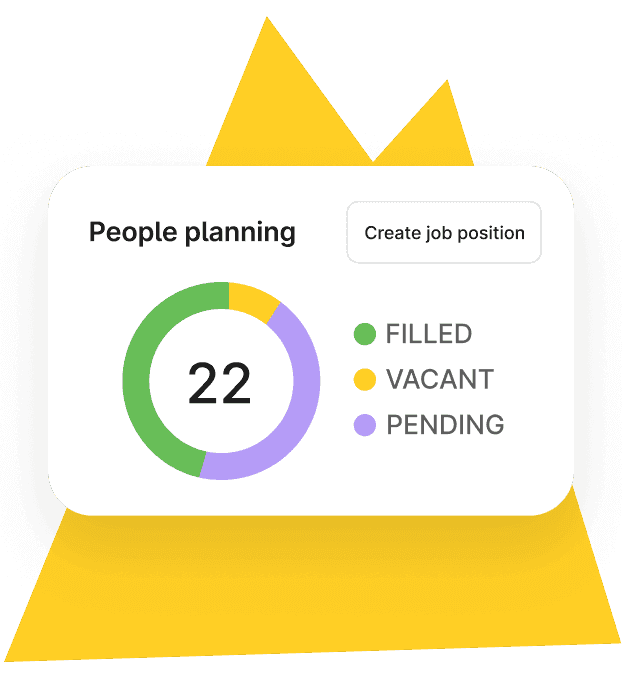
Building a data-driven workforce strategy is simpler when all your team data is in one place. Deel's global HRIS and workforce planning module allow you to track headcount, visualize skill gaps, and model future hiring scenarios with ease.
Book a demo to see how Deel can help you understand and scale your global team.