
Article
5 min read
5 Predictions About the Future of IT (And What Smart Companies Are Doing Now)
IT & device management

Author
Michael Ginzo
Last Update
August 20, 2025
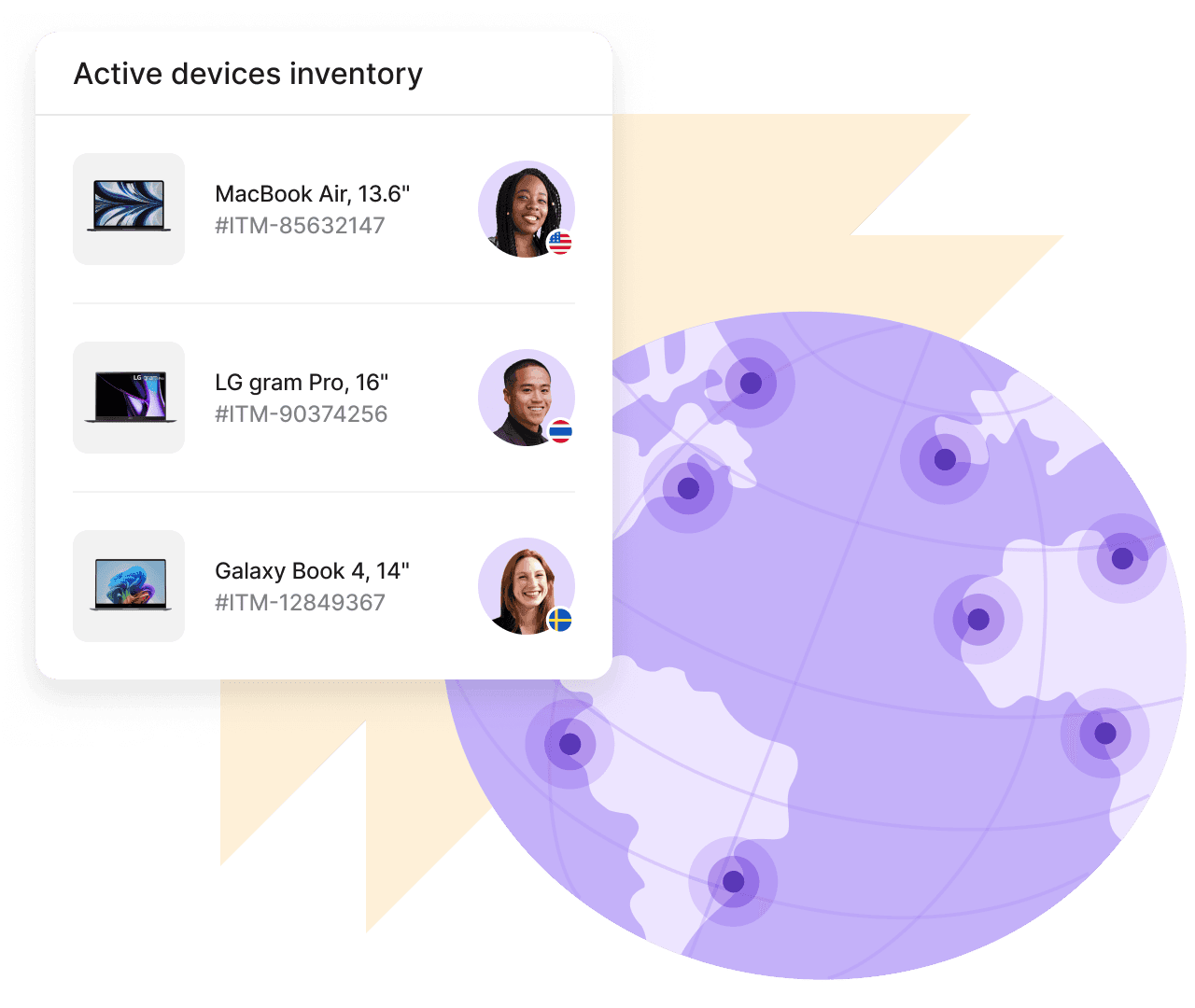
Table of Contents
1. Complete automation of IT operations stack
2. Small and mid-size businesses will delay investment in IT service management tools (ITSMs)
3. IT teams will go global to support global work
4. Growing companies will adopt mature IT stacks from day one
5. AI will raise the bar for IT talent
Future-ready IT starts with Deel
About the author
Michael Ginzo is Senior Director of Product at Deel, where he leads the team building Deel IT, the end-to-end device and app management platform for distributed workforces. Before Deel, he co-founded Hofy, scaling it from a startup to a global leader in remote equipment management. Michael is focused on creating tools that remove friction and empower teams everywhere.
For years IT was reactive by design. Today, it’s shifting into something much more strategic.
It’s becoming less about troubleshooting and more about automating the provisioning of the tools team members need to get their jobs done. As AI handles more routine work and global teams become the norm, the way companies build and run IT is being redefined.
Smaller teams are adopting mature IT stacks from day one. Bundled platforms are replacing traditional tools. And the people being hired into IT roles are expected to think strategically, not just solve tickets.
These changes aren’t coming soon. They’re already happening, and the teams that are adapting early have the edge.
1. Complete automation of IT operations stack
IT operations is no longer a standalone system. It’s becoming a layer of automation that quietly runs underneath the business. The boundary between HR and IT is already blurry. Employee provisioning, access control, security monitoring, and device setup are increasingly triggered by a role change or workflow rather than the creation of a helpdesk ticket.
This shift is being driven by a new generation of tools:
- Unified APIs like Merge abstract away complexity of connecting multiple HR and IT systems
- Middleware like Zapier and Nango, or n8n connect fragmented systems across procurement, identity, and support
- B2B super apps like Deel IT turn onboarding into an automated chain reaction
- Managed connectivity providers let global hardware workflows run in the background
- AI scripting tools translate natural language into real workflows, eliminating repetitive IT tasks
It’s not a hypothetical future. 98% of organizations plan to expand automation initiatives in 2025 and platforms like Zapier are now used by over 100,000 businesses to orchestrate tasks that used to require hands-on work. Adoption of no-code and API-first platforms continues to grow, especially among fast-scaling companies.
The result? IT teams are designing and maintaining systems, but not ‘running’ them in the traditional sense. Provisioning, offboarding, security escalations happen automatically. Less ticket-handling, more orchestration. Less tool sprawl, more leverage.
2. Small and mid-size businesses will delay investment in IT service management tools (ITSMs)
In large enterprises, IT service management (ITSM) platforms (think ServiceNow, Jira, or Freshservice) still serve as the system of record for tickets, incidents, approvals, and asset tracking. These tools are designed to centralize how IT teams handle requests, resolve issues, manage assets, and maintain internal workflows across the business.
But smaller and mid-sized companies are pushing that investment further down the road. Instead of adopting a dedicated ITSM platform early on, they’re turning to integrated tools that already handle most of the core IT functions they need. Tools like JumpCloud, Deel IT, combine device and app management, identity, and hardware support in a single system. These platforms act as a single source of truth (SSOT) for user and device data, without the complexity of stitching multiple tools together.
The shift is clear. Most mid-sized companies still rely on a patchwork of tools to manage the employee lifecycle. According to a recent report by Jumpcloud, 37% use five to ten different apps for onboarding, access, support, and provisioning, and 22% use more than ten. At the same time, 75% of IT admins say they would rather manage all of it through a single platform.
That gap between what teams use and what they want is where the disruption will likely happen. Bundled platforms like JumpCloud and Deel IT are stepping in as the simpler alternative. They’re bound to replace early-stage ITSM adoption with integrated tools that cover the same ground, with far less overhead.
Deel IT

3. IT teams will go global to support global work
The way companies build their IT orgs is changing. It’s no longer enough to run support from a single office or one time zone. As teams hire internationally, IT needs to expand alongside them. This enables round-the-clock coverage and a better understanding of local requirements for compliance, logistics, and connectivity.
This change is already happening. According to Deel’s 2024 hiring report, 82% of all hires were remote (albeit a biased sample of Deel customers), and cross-border hiring of full-time employees grew by 42% year over year. Companies aren’t just hiring internationally for niche roles. They’re building entire teams distributed across continents.
This forces IT teams to do the same:
- Support needs to run 24/7, without burning out a central team
- Devices have to be procured, shipped, and recovered in multiple countries
- Compliance requirements vary by region, from data privacy laws to e-waste handling
- Security, identity, and access must work across borders without slowing people down
In the past, global IT often meant outsourcing. Now, it means building distributed teams with ownership across time zones and regions.
Soon, this won’t be a strategic decision. It’ll be the default. Companies that invest early in distributed IT gain coverage, speed, and resilience, not to mention the ability to support a truly global workforce from day one.
4. Growing companies will adopt mature IT stacks from day one
Early-stage companies used to delay serious IT investment. Security, compliance, and device provisioning were treated as problems to solve later, once headcount or complexity increased.
That is no longer the case.
Today, a startup with 25 employees can run a modern IT stack that includes device management, identity, endpoint protection, and global provisioning. And they can do it without building a custom system or hiring a full IT team.
This shift is powered by platforms that package core IT infrastructure as a service. Deel IT, JumpCloud, offer out-of-the-box tools that include:
- Global device provisioning means company-issued laptops are shipped to employees in any country, fully preconfigured for day-one use.
- Single sign-on (SSO) to let employees log into multiple applications with a single set of credentials
- Mobile device management (MDM) to configure, monitor, and secure laptops and phones
- Multi-factor authentication (MFA) to protect accounts with additional verification steps beyond just a password
- Endpoint security and automatic patching for security and stability
These features are no longer exclusive to enterprises. According to JumpCloud’s 2024 survey, 87% of organizations use single sign-on and 83% require MFA across the organization. That level of security maturity used to be reserved for large enterprises. Now it’s becoming standard.
In the years ahead, launching with a mature IT stack won’t stand out. It will be the default, even for small and growing teams.
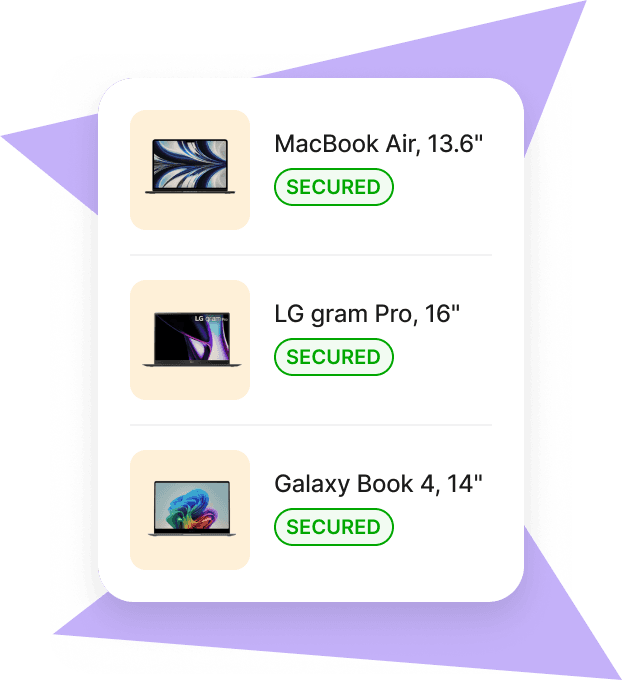
Mobile Device Management
5. AI will raise the bar for IT talent
The nature of entry-level IT work is changing. Tasks like account provisioning, password resets, and basic troubleshooting are increasingly handled by automation and AI tools. These used to be the foundation of junior roles.
This shift is reshaping how companies build IT teams. Instead of hiring for routine support, they are looking for people who can connect systems, automate workflows, and prevent problems before they happen. Strategic thinking, platform fluency, and clear communication are becoming essential skills.
85% of IT teams now use AI weekly for tasks like provisioning, troubleshooting, and workflow scripting. These are exactly the kinds of tasks that once defined the junior IT job.
As the workload changes, expectations will rise. Companies will pay more for IT professionals who can work across tools, teams, and priorities. That is where the real value will be.
This is also why we launched Deel AI Workforce to give teams AI-powered tools that take on repetitive work and free IT professionals to focus on higher-value, strategic problems.
Future-ready IT starts with Deel
The smartest companies aren’t waiting for the future. They’re building towards it in real-time. Deel IT gives you the infrastructure to act on every trend covered in this article, from AI-driven operations to device circularity and global zero-trust security.
With Deel IT, you can:
- Automate device provisioning, tracking, and refresh cycles across 130+ countries
- Sync identity and access to HR records for true zero-trust enforcement
- Reduce downtime with 24/7 global support and on-demand loaners
- Extend device life with secure recovery, certified data erasure, and reuse
- Manage procurement and leasing through a single, global-first platform
- Monitor device health and trigger workflows before tickets even open
If you’re ready to operationalize the future of IT, book a demo and see how Deel IT makes it real.

Michael Ginzo is Senior Director of Product at Deel, where he leads the team building Deel IT. Before Deel, he co-founded Hofy, scaling it into a global leader in remote equipment management. He focuses on creating tools that reduce friction and empower teams worldwide.


