Article
4 min read
Rebuilding Middle Management for a Leaner, AI-Driven World
AI

Author
Alice Burks
Last Update
October 28, 2025

About the author
Alice Burks is the Director of People Success at Deel. She has a passion for transforming the workplace, and is dedicated to creating a new world of work where individuals have access to the best global opportunities and organizations can connect with top-tier talent. Prior to Deel, Alice was Global Head of Learning at DICE and Global Leadership Development Partner at Trustpilot.
Middle management has a problem. For a position already known for blurry responsibilities and higher attrition, AI’s potential to automate up to 30% of managerial tasks has some questioning the need for middle managers. Some are calling for the trimming down of middle management in favor of flatter org structures.
In my opinion, that’s a huge mistake. While it’s important to remove genuinely redundant positions, if we remove too many middle managers from our organizations, there is a price to pay. Even if AI takes over more routine tasks such as performance tracking and reporting, middle managers remain critical for strategy, mentorship, coaching, conflict resolution, and other human-first functions that businesses cannot do without.
Instead of removing the role entirely, what we need is to redesign middle management for the age of AI.
Rethinking the traditional manager
A rebranding of middle management comes at a good time, with managers citing ‘role ambiguity’ as a top stressor. This comes from the traditional manager’s place in the org chart, bridging the gap between leadership and the rest of the workforce. They manage people as well as projects, being the go-to person for overcoming blockers and solving disputes while also tracking people’s performance and reporting to department heads. Being pulled in so many different directions has historically been one of the key challenges for this role – and the introduction of AI tooling (while bringing opportunity) also adds to the complexity.
For example, Gartner predicts that 20% of businesses in the US are planning to use AI to flatten their organizational structure by removing half of their middle management positions. Workflow automation tools now handle much of their workload, with AI now capable of project analytics, reporting, and many of the HR functions previously left to managers.
The fallout is that managers now have less authority, more accountability, and even less clarity on where their role starts and ends than before.
Middle management’s role in the future of work
I’d like to make a case in defence of middle managers who provide significant business value. They’re able to zoom in and see how things work on the ground, and then zoom out to see the vision for the future. Then they connect the dots between the two and translate corporate strategy into team action. With AI tooling in their hands, this group should be better enabled to focus on the true work of managers (driving results with and through their teams) versus drowning in administration and manual work.
The impact of managers goes well beyond their individual contributions. Research shows that 70% of team engagement is influenced by the manager. Without mentorship and guidance, it’s easy for teams to lose sight of the ‘why’ behind their workload and lose focus. AI isn’t replacing the inspiration and motivation that an effective leader can provide to a team – and it’s this that can be the real secret sauce to company performance.
There’s also a career path benefit to maintaining a management layer. Middle management is a vital stepping stone between junior and senior roles. If these positions are cut too aggressively, companies risk leaving too few people ready to step into senior leadership as others move on, creating a talent gap.
As AI joins the workforce in other ways, middle managers shouldn’t be at risk of losing their jobs. They should be empowered to spend less time on the busy work of overseeing a team. Essentially, the role is transforming from being admin-heavy to one that’s more strategic and more focused on people rather than spreadsheets.
Deel AI
Leaner leadership models in practice
Leaner doesn’t mean leaderless. It means more adaptive and decentralized. Many organizations are already experimenting with a flatter, AI-assisted org structure, without resorting to eliminating middle management.
Spotify has been steadily flattening its hierarchies and redefining managers as “enablers,” who focus on helping teams make decisions, remove roadblocks, and stay aligned on goals. This organizational structure emphasizes distributed decision-making and promotes autonomy across the workforce.
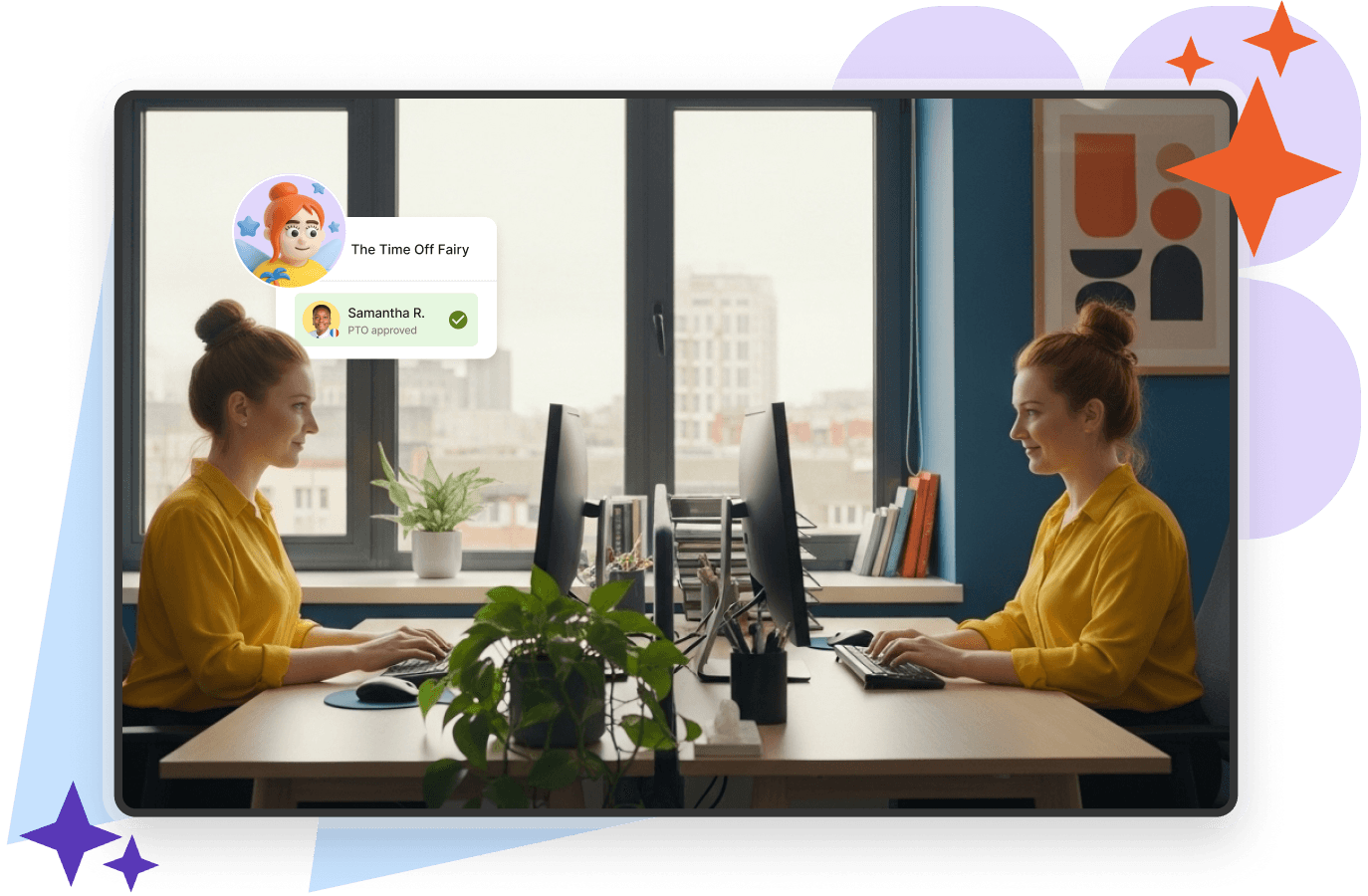
At Deel, we’ve benefitted from implementing AI tools and workflows across our organization. Our recently launched AI Workforce allows our managers to offload repetitive and menial tasks to AI agents. For example, The Time Off Fairy consolidates PTO requests and flags conflicts, winning back time for managers while also ensuring no coverage gaps in their teams.
Giving managers their time back with Deel
Technology allows middle managers to focus on what matters most: connecting people, tools, and strategy. Deel streamlines every part of that process, from hiring and onboarding to asset management and daily team operations.
With [Deel Engage[(https://www.deel.com/hr/engage/) you can:
- Approve time-off requests and oversee coverage gaps, without getting lost in spreadsheets and calendars
- Run performance reviews and feedback cycles, with automated reminders rather than constant manual nudges
- Create competency frameworks in minutes, making career paths visible and facilitating career growth
- Build training courses in minutes, without going through a provider
Book your 30-minute demo to see how to win back time for your managers.
Helpful resources:
Live Demo
Get a live walkthrough of the Deel platform

Alice Burks is the Director of People Success at Deel. She has a passion for transforming the workplace, and is dedicated to creating a new world of work where individuals have access to the best global opportunities and organizations can connect with top-tier talent. Prior to Deel, Alice was Global Head of Learning at DICE and Global Leadership Development Partner at Trustpilot.