
Article
8 min read
9 Best Software License Manager Tools for 2025
IT & device management

Author
Michał Kowalewski
Last Update
January 29, 2026
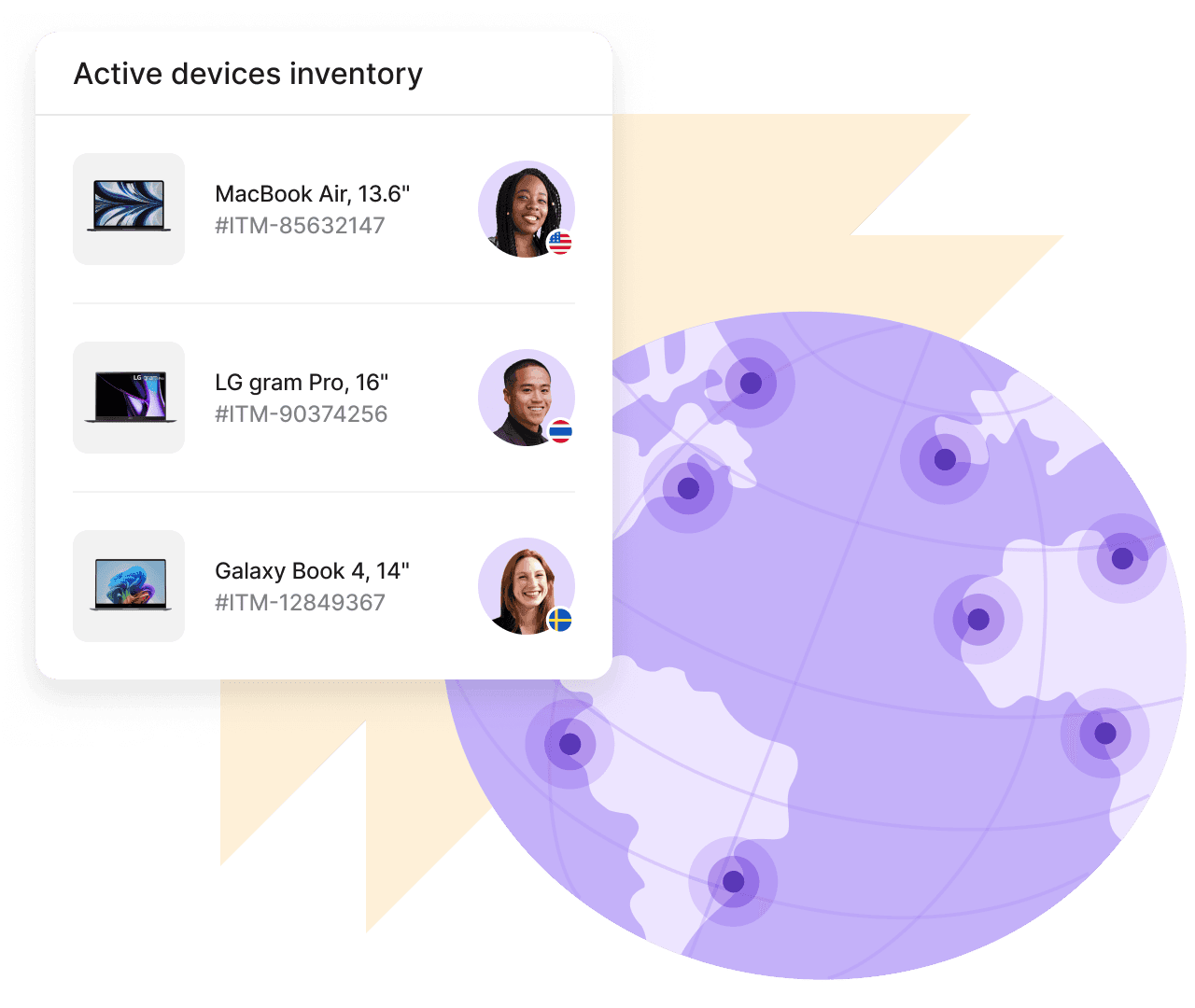
Table of Contents
What is a software license?
How we evaluated software license managers
At a glance: Top software license managers in 2025
The 9 best software license managers in 2025
1. Deel IT
2. Zluri
3. Zylo
4. Flexera FlexNet Manager
5. Snow License Manager
6. ServiceNow Software Asset Management
7. ManageEngine AssetExplorer
8. Jamf
9. Torii
Cost considerations for software license management
Deel IT for smarter license management
Key takeaways
- A software license manager centralizes how applications and entitlements are tracked, provisioned, and revoked, reducing waste and audit risk.
- The right tool depends on company size: SMBs need quick setup and affordability, while enterprises require deep audit readiness and SAM capabilities.
- Deel IT integrates license management with HR and IT workflows, ensuring software, devices, and access stay in sync across 130+ countries.
oftware has become one of the biggest line items in IT budgets. From SaaS subscriptions to enterprise platforms, licenses pile up quickly, and without oversight, costs balloon and compliance risks grow. Many IT and finance leaders still rely on spreadsheets to track renewals and usage, which leaves gaps during onboarding, offboarding, and audits.
Software license managers solve this by centralizing how licenses are tracked, allocated, and optimized. The right tool not only prevents overspend but also keeps your organization audit-ready and aligned with compliance requirements. In this guide, we break down 9 of the best license management tools in 2025, from SaaS-first platforms to enterprise-grade systems.
What is a software license?
A software license is a legal agreement that defines how you can use a piece of software. It specifies the terms under which the software can be installed, accessed, or shared, including how many users or devices are allowed, what features are included, and what restrictions apply.
Common types of software licenses include:
- Per-user licenses: Grant access to individual users, often on a subscription basis
- Per-device licenses: Tie usage rights to specific machines or hardware
- Concurrent licenses: Allow a set number of users to access the software at the same time
- Subscription vs. perpetual licenses: Subscriptions are recurring (monthly or annual), while perpetual licenses are one-time purchases that may include separate support fees
A software license manager is the tool or platform used to do this. These systems centralize license data, track usage, issue alerts for renewals, and in many cases automate provisioning and deprovisioning. By consolidating license information in one place, license managers reduce waste, strengthen compliance, and provide IT and finance teams with visibility into costs and usage.
In a business context, license terms matter for cost control, compliance, and security. Failing to respect license limits can lead to wasted spend, failed audits, or even legal penalties. This is why software license managers play a critical role in modern IT operations.
Deel IT

How we evaluated software license managers
The best software license management tools go beyond tracking spreadsheets. We assessed platforms based on the features that matter most for IT, finance, and HR teams working together.
- Discovery and inventory: Ability to automatically detect installed software, SaaS subscriptions, and license entitlements across devices and cloud services
- Usage monitoring: Tracking how often licenses are used, which users are inactive, and where costs can be reclaimed
- Compliance and audit readiness: Reports and alerts that ensure the organization stays within license limits and is prepared for software audits
- Automation: Tools that automate provisioning, deprovisioning, and reclamation of unused licenses to reduce manual work
- Integrations: Connectivity with single sign-on (SSO), human resources information systems (HRIS), mobile device management (MDM), procurement, and finance platforms
- Scalability: Support for cloud-based deployments, multi-region operations, and large enterprise environments with complex license types
- Analytics and reporting: Dashboards that highlight spend, renewal timelines, and optimization opportunities
- User experience: Clear interfaces for IT staff, finance managers, and HR teams involved in onboarding and offboarding
- Pricing and total cost of ownership (TCO): Transparency around per-user or per-agent pricing, hidden costs like connectors or add-ons, and implementation effort
See also: 5 Predictions About the Future of IT (And What Smart Companies Are Doing Now)
At a glance: Top software license managers in 2025
| Tool | Best for | Standout features | Limitation to note |
|---|---|---|---|
| Deel IT | Distributed teams with global HR–IT workflows | Automated provisioning and revocation tied to HR events, global device recovery, certified data erasure | Not a full traditional SAM suite; complements ITSM/IAM |
| Zluri | SaaS-heavy mid-market companies | App discovery via SSO and finance, usage analytics, renewal workflows | Focused on SaaS; limited depth in on-prem licenses |
| Zylo | Enterprise SaaS spend optimization | Deep spend analytics, contract management, executive reporting | Less suited for smaller orgs without big SaaS budgets |
| Flexera FlexNet Manager | Large enterprises with complex vendor entitlements | Effective license position (ELP), Microsoft/Oracle/SAP audit defense | Expensive and complex to implement |
| Snow License Manager | Hybrid estates needing software asset management | Discovery agents, usage metering, datacenter + SaaS optimization | Requires dedicated resources for rollout |
| ServiceNow Software Asset Management | Enterprises already using ServiceNow | Native ITSM/CMDB integration, SaaS + on-prem publisher support | High licensing and admin overhead |
| ManageEngine AssetExplorer | Value-focused IT teams | License store, under/over licensing alerts, accessible pricing | Less advanced automation and reporting |
| Jamf | Apple-focused environments | Inventory, license tracking, compliance on macOS/iOS devices | Limited beyond Apple ecosystem |
| Torii | Fast-growing SaaS-first companies | Automated reclaim, usage insights, renewal tracking | SaaS-centric; not a fit for heavy on-prem estates |
See also: Best IT Asset Management Software of 2025: Top 15 Picks
The 9 best software license managers in 2025
Choosing the right software license manager depends on your size, stack, and goals. Some platforms focus on SaaS discovery and cost control, while others specialize in enterprise compliance and audit readiness. A few, like Deel IT, take a different approach by embedding license management directly into the employee lifecycle. Here are nine of the best options to consider in 2025.
1. Deel IT
Best for: Organizations of all sizes seeking to manage employee applications, licenses, devices, and access in one place—fully aligned with the employee lifecycle.
Deel IT acts as a software license manager by centralizing how applications and licenses are provisioned, tracked, and revoked across a distributed workforce. Unlike point solutions that only track SaaS usage, Deel IT integrates license management into onboarding, role changes, and offboarding. This ensures employees always have the right access, and unused licenses are reclaimed automatically.
Key capabilities:
- Centralized license visibility: View all employee applications, entitlements, and usage across regions in a single dashboard
- Automated application access provisioning: Licenses and permissions are assigned and revoked automatically when employees join, change roles, or exit
- End-to-end device provisioning and shipping: Procure, configure, and ship devices globally, with 99.5% on-time delivery
- Real-time device tracking: Maintain full visibility into device location, status, and ownership across the entire lifecycle
- Audit-ready compliance: Detailed logs show when application access and licenses are assigned and removed, providing clear evidence for software license audits
- Global application and device management: Manage SaaS, desktop applications, and endpoints for employees in 130+ countries, with device and access controls built in
- Secure offboarding: Reclaim licenses alongside device recovery and certified data erasure to reduce spend and eliminate compliance risk
- 24/7 global IT support (https://www.deel.com/blog/benefits-of-24-7-it-support/): Hands-on support for device issues, access changes, and licensing questions—available around the clock
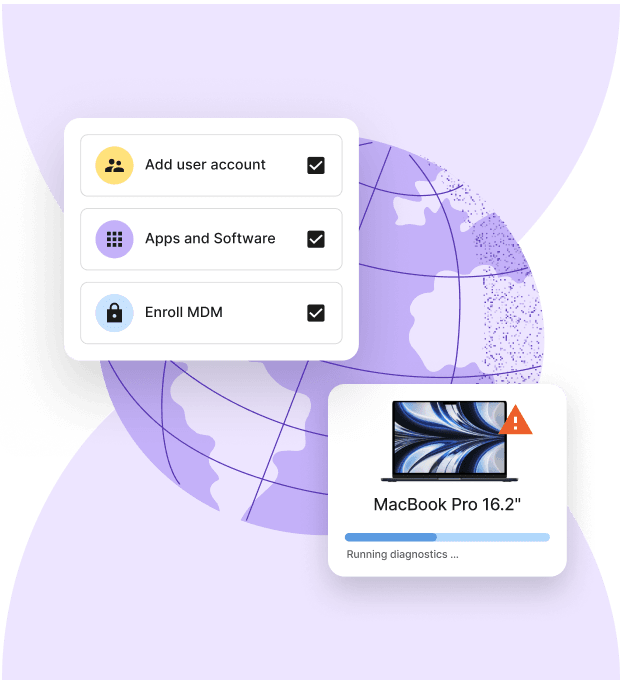
Deel IT also supports the full device lifecycle, from global shipping and setup to repairs, redeployment, and recovery. Devices arrive pre-enrolled in mobile device management (MDM), making posture checks part of the access process. HR and IT workflows are linked, so the same platform that tracks licenses also ensures that employees have secure devices, the right access, and consistent support worldwide.
Most license managers help you prepare for audits. Deel IT prevents audit risk altogether by embedding license and access control into everyday operations.
2. Zluri
Best for: SaaS-heavy mid-market companies looking to reduce costs and regain visibility over application usage.
Zluri is a SaaS management platform that doubles as a software license manager by automatically discovering all applications in use across the organization. It connects to single sign-on (SSO) tools, finance systems, and browser extensions to identify both sanctioned and unsanctioned applications. Once discovered, Zluri maps owners, monitors usage, and flags underutilized licenses that can be reclaimed.
The platform includes automated workflows for provisioning and deprovisioning, renewal calendars, and approval processes that prevent last-minute contract renewals. IT and finance teams get clear visibility into software spend, which makes it easier to consolidate tools and negotiate better pricing with vendors.
Zluri’s main limitation is that it is SaaS-focused. It does not provide deep coverage for traditional on-premises software or complex enterprise publishers. For mid-market organizations where SaaS dominates the stack, it delivers fast time to value.
3. Zylo
Best for: Enterprises that want to treat SaaS spend and license optimization as a finance-driven initiative.
Zylo focuses on the financial side of license management. It aggregates software invoices and contracts, tracks application overlap, and surfaces cost-saving opportunities before renewals. The platform provides deep analytics and reporting, making it a favorite for CIOs and CFOs who want actionable insights into SaaS budgets.
In addition to tracking usage and entitlements, Zylo helps organizations assign application owners, set policies, and benchmark their portfolios against peers. Its dashboards highlight underused or redundant tools, and its renewal playbooks support negotiation with major SaaS vendors.
Because Zylo is primarily a SaaS optimization and governance tool, it may be less suitable for smaller companies without large SaaS budgets or enterprises that need robust compliance reporting for on-premises software. For large enterprises, it excels at aligning IT and finance around spend control.
4. Flexera FlexNet Manager
Best for: Large enterprises with complex licensing environments and high audit exposure.
Flexera FlexNet Manager is one of the most established names in enterprise software asset management (SAM). It specializes in managing licenses for major publishers such as Microsoft, Oracle, IBM, and SAP, where compliance requirements are strict and audits are common. FlexNet builds an effective license position (ELP) by reconciling entitlements with actual usage, helping enterprises avoid over- or under-licensing.
The platform includes strong discovery and normalization capabilities, ensuring that entitlement data is accurate across datacenter, desktop, and cloud environments. Flexera also provides audit defense by generating detailed compliance reports and modeling license scenarios before vendor negotiations.
The trade-off is cost and complexity. FlexNet requires skilled administrators, dedicated resources, and significant time to implement. For enterprises with large software estates, however, its depth makes it an indispensable tool for staying compliant and reducing financial risk during audits.
5. Snow License Manager
Best for: Hybrid IT estates that need comprehensive visibility into desktop, datacenter, and SaaS licenses.
Snow License Manager provides broad software discovery across endpoints, servers, and cloud environments. Its agents and connectors help IT teams build a detailed inventory, track actual usage, and identify optimization opportunities across the portfolio. The platform is well-suited for organizations with a mix of traditional infrastructure and modern SaaS applications.
Snow’s analytics surface unused or underutilized software, highlight redundant tools, and generate reports that support compliance and audit preparation. The platform also integrates with broader IT operations and asset management tools, making it part of a larger governance framework.
As with Flexera, Snow’s breadth comes with complexity. Implementing and maintaining the platform requires dedicated time and resources. For organizations willing to invest, Snow delivers strong insights that balance cost optimization with audit readiness.
6. ServiceNow Software Asset Management
Best for: Enterprises already running ServiceNow ITSM that want license management integrated into existing workflows.
ServiceNow’s Software Asset Management (SAM) module builds on its powerful IT service management and configuration management database (CMDB). It allows organizations to track entitlements, monitor usage, and manage renewals directly within the ServiceNow platform. By connecting license data to the CMDB, ServiceNow gives IT teams a single view of assets, applications, and their relationships.
The platform supports both SaaS and on-premises publishers, with prebuilt content libraries that help normalize software data and improve compliance reporting. ServiceNow SAM also leverages the platform’s workflow engine, enabling automated provisioning, deprovisioning, and approval processes.
The limitation is cost and complexity. ServiceNow SAM is best suited to enterprises that are already invested in the ServiceNow ecosystem and have the resources to manage a full CMDB. For those organizations, it offers seamless integration and enterprise-scale governance.
7. ManageEngine AssetExplorer
Best for: SMBs and mid-market companies that want affordable license tracking as part of broader IT asset management.
ManageEngine AssetExplorer is a lighter-weight option that combines hardware and software asset tracking in a single platform. It allows IT teams to create a software license store, track usage, and receive alerts when they are under- or over-licensed. Its reporting features give organizations visibility into compliance and potential cost savings.
The tool integrates with directory services and other ManageEngine products, making it a good fit for companies already using the ecosystem. It also offers both on-premises and cloud deployment options, which adds flexibility for different IT policies.
AssetExplorer is not as advanced in automation or analytics as enterprise-grade SAM platforms like Flexera or Snow. However, its accessible pricing and straightforward functionality make it a strong choice for organizations that need to move beyond spreadsheets without over-investing.
8. Jamf
Best for: Apple-first organizations that need tight control of licenses and applications across macOS and iOS devices.
Jamf is best known for Apple device management, but it also provides strong software license tracking for organizations with Mac and iOS fleets. It gives IT teams visibility into what applications are installed and used, helps enforce compliance with software usage rights, and automates deployment or removal of applications across Apple devices.
The platform integrates with Apple Business Manager and volume purchasing programs, making it easier to assign and reclaim licenses for purchased software. This ensures that applications are deployed consistently while avoiding wasted spend on unused seats. Jamf’s focus on Apple also means its reporting and compliance controls are tailored for that ecosystem.
The limitation is coverage. Jamf is not designed to manage Windows or datacenter software, so it usually needs to be paired with another license management solution for mixed environments. For Apple-centric organizations, however, it is the clear leader.
9. Torii
Best for: Fast-growing, SaaS-first companies that want automation to handle license sprawl without heavy administration.
Torii specializes in SaaS license management, helping IT teams discover all applications in use, track spend, and reclaim unused licenses. It integrates with single sign-on (SSO) platforms, finance systems, and expense data to uncover shadow IT and consolidate software usage into a single view.
The platform automates deprovisioning for inactive users, assigns application owners, and provides renewal reminders to avoid surprises at contract time. Usage dashboards give visibility into which tools are delivering value and which are candidates for consolidation.
Torii is SaaS-focused, so it does not offer the depth of audit and compliance coverage found in enterprise SAM suites. For lean IT teams that need quick wins in SaaS management, it delivers strong automation and cost savings.
See also: Top 10 MDM Solutions for Improving Device Security and Workforce Efficiency
Device Lifecycle Management
Cost considerations for software license management
Pricing for software license management platforms varies widely depending on whether the focus is SaaS optimization, enterprise SAM (software asset management), or a hybrid of both. Understanding how vendors price can help you avoid surprises.
- Per admin or agent licensing: Many tools charge based on the number of IT staff or admins who use the system. This works well for smaller teams but can add up as more admins are onboarded.
- Per employee or user coverage: SaaS-first platforms often price according to the number of employees being monitored. This model scales with company size, but costs rise quickly in large organizations.
- Tiered subscription plans: Some vendors bundle features into flat monthly or annual tiers. Entry plans may cover discovery and tracking, while advanced tiers unlock automation, analytics, and compliance reports.
Hidden costs to consider:
- Connectors and integrations: Linking to HRIS, finance, or identity systems sometimes requires premium add-ons.
- Implementation: Enterprise SAM suites such as Flexera and Snow can take months to deploy and often require consulting support.
- Audit packs: Detailed compliance and audit-ready reports are sometimes an extra module.
For SMBs, cost-effective SaaS management platforms like Zluri, Torii, or ManageEngine provide strong value with quick setup. For enterprises, deep compliance and audit requirements often justify the higher costs of Flexera, Snow, or ServiceNow SAM. Deel IT sits between these worlds, preventing license waste during onboarding and offboarding while providing global device and compliance coverage.
See also: IT Services For Small Business: What You Actually Need in 2025
Deel IT for smarter license management
Most software license managers help you track usage and prepare for audits. Deel IT goes further by preventing waste and compliance risk before they occur. By tying license and application access management directly to HR and IT workflows, it ensures that employees always have the right access and that unused licenses are reclaimed the moment someone leaves.
How Deel IT makes license management more effective:
- Stop overspending: Licenses are provisioned and revoked automatically during onboarding, role changes, and offboarding, reducing shelfware and ghost licenses
- Stay audit-ready: Detailed records of access combined with certified data erasure simplify compliance and audit preparation
- Manage applications and devices together: SaaS and desktop applications are controlled alongside globally shipped, MDM-enrolled devices so license and hardware data remain in sync
- Operate across regions: With logistics and IT support in 130+ countries, software and device access stay consistent worldwide
- Link IT and HR: Application access aligns directly with hiring and exit workflows, cutting manual handoffs and missed steps
For companies scaling globally, license management is only one piece of the puzzle. Deel IT provides the end-to-end operational layer that connects device lifecycle, application access, compliance, and support. This allows IT and HR teams to work together to keep costs under control, reduce risk, and deliver a better experience for every employee.
Book a demo to see how Deel IT helps you manage software licenses and IT operations on a global scale.

Michał Kowalewski a writer and content manager with 7+ years of experience in digital marketing. He spent most of his professional career working in startups and tech industry. He's a big proponent of remote work considering it not just a professional preference but a lifestyle that enhances productivity and fosters a flexible work environment. He enjoys tackling topics of venture capital, equity, and startup finance.


