
Guide
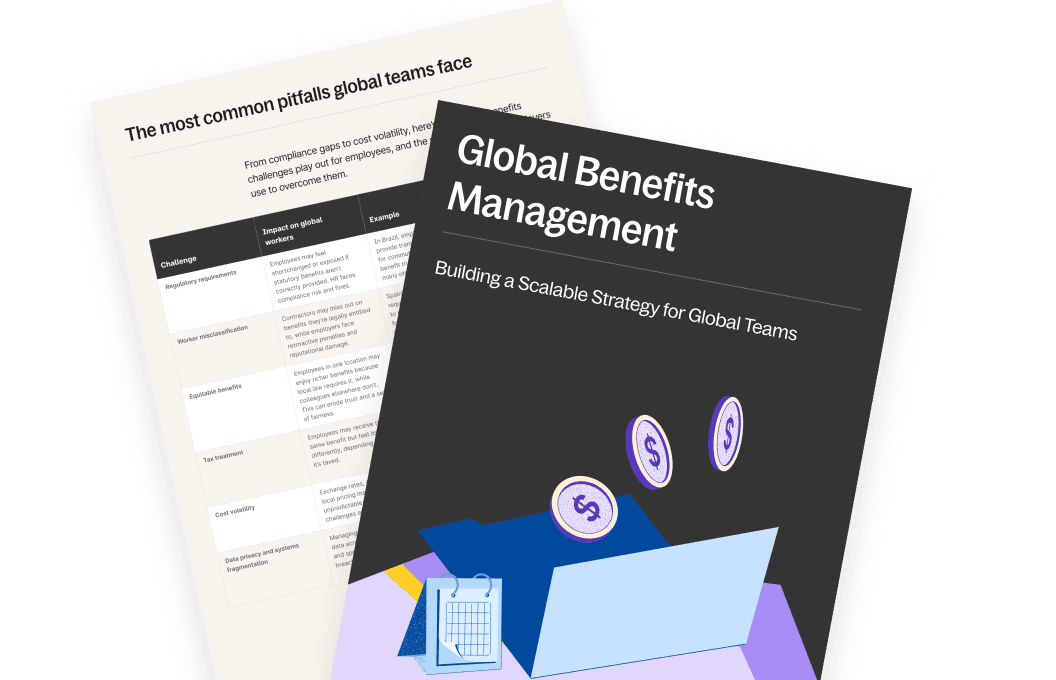
Global Benefits Management: Building a Scalable Strategy for Global Teams
Global HR
Get the resource for free
Managing benefits for a global team is a balancing act between compliance, cost, and care. Every country comes with its own rules, vendors, and expectations, making it challenging to offer fair, consistent, and compliant coverage across borders.
Without the right systems, global benefits quickly become a patchwork of spreadsheets and manual approvals, leaving employees feeling undervalued and HR teams overwhelmed.
This guide will help you move from fragmented processes to a unified, scalable benefits strategy that supports your people and drives business growth, no matter where your teams are based.
Guide overview: What you’ll learn
Inside this guide, you’ll explore how to design, manage, and optimize benefits for a truly global workforce. You’ll learn how to:
- Understand the fundamentals of global benefits management and what sets it apart from local administration
- Navigate regional differences in compliance, culture, and employee expectations across key markets
- Balance global consistency with local relevance to ensure fairness while honoring local norms
- Avoid common pitfalls such as inequity, misclassification, and fragmented vendor management
- Use technology to centralize and simplify administration, reporting, and cost control
- Prepare for the future of benefits, including personalization, holistic wellbeing, and AI-driven insights
Who is this guide for
Whether you’re managing five or 150 countries, this guide will provide you with the clarity and structure to design benefits that truly work, both globally and locally. This guide is designed for:
- HR and People leaders managing distributed or hybrid global teams
- Total rewards and compensation specialists tasked with ensuring fairness and scalability
- Finance and Operations executives looking to control costs while maintaining compliance
- Founders and HR tech decision-makers expanding into new international markets
Download the guide to learn how to design a scalable, compliant, and people-centered benefits strategy, no matter where your teams work.
FAQs
What is global benefits management?
Global benefits management is the process of designing, administering, and optimizing employee benefits programs across multiple countries. It includes ensuring compliance with local laws, maintaining equity and competitiveness, and delivering a consistent experience for global employees.
What is the purpose of benefits management?
The purpose of benefits management is to design, implement, and oversee employee benefit programs that:
- Support employee wellbeing and satisfaction
- Align with business goals
- Ensure compliance with legal requirements
- Help attract, retain, and engage talent
- Manage benefits-related costs and risks
Why is global benefits management important?
Global benefits management ensures that companies can:
- Comply with diverse local regulations (i.e., different jurisdictions will have different employee benefits required by law)
- Attract and retain talent globally
- Maintain internal equity and consistency
- Reduce administrative overhead by centralizing processes
- Deliver a coherent employer value proposition worldwide
How can a global benefits strategy impact employee productivity and engagement?
A well-designed global benefits strategy directly influences employee productivity and engagement by meeting diverse needs, reinforcing trust, and aligning with what talent values most across markets. Here’s how:
- Improved wellbeing and focus: Benefits such as healthcare, mental health support, and paid time off help employees feel supported, which reduces burnout and increases focus at work.
- Stronger trust and loyalty: When employees see their employer investing in meaningful, locally relevant benefits, it boosts their sense of belonging and fairness, key drivers of engagement.
- Reduced attrition: Consistent, competitive benefits across regions help retain top talent and avoid productivity losses from turnover.
- Clearer value proposition: A unified benefits strategy makes it easier to communicate the company’s culture and values, especially during onboarding or expansion.
How is global benefits management different from local benefits management?
While local benefits management focuses on country-specific laws and norms, global benefits management must:
- Harmonize offerings across multiple geographies
- Balance central strategy with local compliance
- Manage multiple providers, currencies, and data sources
- Scale operations while remaining sensitive to cultural expectations
- Ensure consistent benefit experiences for all workers, regardless of location
What challenges do companies face with global benefits?
Some of the most common challenges companies face with global benefits are:
- Managing multiple benefits providers and currencies without centralized visibility
- Keeping pace with constantly changing compliance and tax regulations
- Ensuring equity and fairness between countries with vastly different standards
- Coordinating multiple benefit types efficiently
- Overcoming administrative overload from manual tracking and reporting
- Aligning benefits with culture and retention goals while staying within budget
What are examples of global employee benefits?
Some examples of global benefits programs include:
- Paid time off
- Health and wellness stipends available globally
- Life insurance for employees and their families
- Retirement plans
- Equity or stock options with region-specific tax handling
- Remote work setup allowances
- Mental health support (e.g., counseling access in multiple countries)
- Global parental leave policies with localized minimums
- Learning and development budgets available across regions
What are global life benefits?
Global life benefits typically refer to life insurance and related protections offered to employees across multiple countries. These can include:
- Life insurance coverage
- Accidental death and dismemberment (AD&D)
- Survivor benefits
- Funeral assistance
These benefits are usually managed to provide a baseline of financial protection globally, while allowing for regional customization based on legal requirements and cultural expectations.
How can technology help with global benefits management?
Global benefits management tech helps with the following:
- Centralizes benefits data and reporting
- Automates compliance checks by jurisdiction
- Streamlines provider management and cost tracking
- Offers employees self-service portals for clarity and access
- Supports consistent rollout of benefits at scale with local adaptations
What is a global employee benefits platform?
A global employee benefits platform like Deel Benefits Admin is a centralized software solution that allows companies to:
- Administer and track benefits across multiple countries
- Standardize core benefits while allowing local flexibility
- Ensure compliance with local laws
- Manage vendors and data in one place
- Give employees access to their benefit information in a localized, user-friendly way
How can companies balance global consistency with local flexibility in benefits management?
To balance global consistency with local flexibility in benefits administration and management, companies need to:
- Define a global benefits philosophy or framework
- Establish “core” global benefits (e.g., wellness, parental leave) and allow regional add-ons
- Use local experts to adapt and administer programs within set guidelines
- Use technology to unify administration while supporting local compliance
- Regularly benchmark local offerings to maintain competitiveness