
Remote Work Glossary
- Results for "undefined"
Table of Contents
What is the primary purpose of endpoint management?
What are the main functions of endpoint management?
What are the key benefits of endpoint management?
What are the different types of endpoint management?
How much does endpoint management cost?
What are the best endpoint management tools?
Endpoint management vs endpoint security
Endpoint management vs device lifecycle management (DLM)
Endpoint management vs mobile device management (MDM)
Endpoint management vs mobile application management (MAM)
Endpoint management vs unified endpoint management (UEM)
Endpoint management vs extended detection and response (XDR)
Deel IT delivers endpoint management at scale
What is endpoint management?
Endpoint management is the process of monitoring, securing, and maintaining all devices that connect to a company’s network. These devices, called “endpoints,” include laptops, desktops, smartphones, tablets, servers, and even Internet of Things (IoT) equipment.
The goal of endpoint management is to make sure every device that has access to company data is properly configured, protected, and updated. Without it, each endpoint can become a weak spot that attackers may exploit.
What is the primary purpose of endpoint management?
The primary purpose of endpoint management is to give IT teams visibility and control over every device employees use for work. It ensures that:
- Company data stays protected, even on remote or mobile devices
- Security policies and software updates are applied consistently
- Compliance requirements are met across all regions
- Lost or stolen devices can be locked or wiped remotely
In short, endpoint management helps organizations balance productivity with security by keeping devices safe and employees connected, no matter where they work.
What are the main functions of endpoint management?
Endpoint management combines several IT practices into one system of control. The most important functions include:
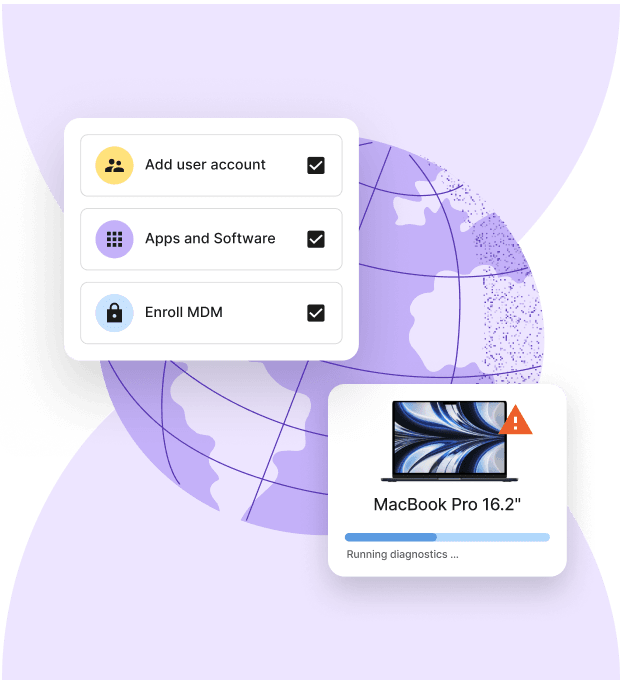
- Device provisioning and setup: Preparing laptops, phones, and other devices with the right operating systems, apps, and access policies before employees start using them.
- Configuration management: Enforcing security settings such as encryption, firewalls, and access permissions to keep devices compliant with company standards.
- Patch and update management: Rolling out software updates and security patches quickly to reduce vulnerabilities.
- Monitoring and reporting: Tracking device health, usage, and compliance status to identify risks before they become problems.
- Remote support: Allowing IT teams to troubleshoot issues, lock devices, or erase data when needed, even if the device is in another country.
- Integration with identity systems: Connecting endpoint management with single sign-on (SSO), multi-factor authentication, or hardware keys like YubiKey to strengthen security.
What are the key benefits of endpoint management?
Implementing endpoint management gives organizations a more secure and efficient way to handle devices across the workforce. The main benefits include:
- Centralized control: IT teams can oversee all company devices from one dashboard, instead of managing them manually or region by region.
- Stronger security: Encryption, patching, and consistent security settings reduce the chances of breaches or unauthorized access.
- Regulatory compliance: Automated controls and reporting make it easier to meet requirements such as GDPR, HIPAA, or SOC 2.
- Operational efficiency: Zero-touch deployment and remote management save time and reduce IT overhead.
- Improved employee experience: Devices arrive pre-configured and ready to use, so employees can start working right away without delays.
Device Lifecycle Management
What are the different types of endpoint management?
Endpoint management has grown more complex as workplaces shifted from office-based systems to mobile and remote-first setups. The main types are:
- Traditional endpoint management: Focused on desktops, laptops, and servers inside the office network. IT teams install software and updates directly, often using on-premises servers and tools. This approach works well for centralized offices but struggles with distributed teams.
- Mobile device management (MDM): Designed for smartphones and tablets. MDM lets IT enforce passcodes, control app installations, separate work and personal data, and remotely lock or wipe devices. It is especially useful when employees use personal devices under a BYOD policy.
- Unified endpoint management (UEM): Expands beyond MDM by covering all device types in one platform, including laptops, desktops, mobile devices, and even IoT equipment. UEM provides a single interface to apply consistent security and compliance rules across the organization.
- Cloud-based endpoint management: A modern approach built for hybrid and global teams. Devices are configured, updated, and secured over the internet without requiring physical access. This enables zero-touch deployment, real-time monitoring, and seamless integration with cloud identity systems.
Many organizations use a combination of these approaches. For example, a company may rely on MDM for employee smartphones, UEM for laptops and desktops, and cloud-based tools to manage remote workers around the world.
See also: Top 10 MDM Solutions for Improving Device Security and Workforce Efficiency
How much does endpoint management cost?
The cost of endpoint management varies widely depending on the size of the workforce, the type of solution, and the level of support required.
Most providers follow a subscription model that charges per device, per month. Typical ranges are:
- Basic cloud solutions: around $3–$5 per device per month
- Mid-range platforms: $6–$10 per device per month
- Enterprise-grade suites: $12–$15 or more per device per month, often with advanced security and compliance features
In addition to software licensing, organizations should consider:
- Setup and training costs for IT staff and employees
- Integration costs if the system needs to connect with HR, identity, or procurement tools
- Support and maintenance fees for ongoing updates and troubleshooting
What are the best endpoint management tools?
There are many endpoint management platforms on the market, ranging from lightweight solutions for small businesses to enterprise-grade suites. The “best” tool depends on your company’s size, device mix, compliance needs, and budget.
When comparing options, IT teams usually look for:
- Scalability: Can the tool handle hundreds or thousands of devices across multiple regions?
- Integration: Does it connect with identity systems, HR platforms, and security tools already in use?
- Automation: Does it support zero-touch deployment, remote updates, and automated patching?
- Compliance support: Does it help meet standards such as SOC2, ISO27001, GDPR, or HIPAA?
- User experience: Does it provide employees with a seamless setup while minimizing IT workload?
For deeper review, read our guide on the Best IT Asset Management Software of 2025
Endpoint management vs endpoint security
Endpoint management is about managing devices, while endpoint security is about protecting them. Think of management as maintaining and monitoring your car, while security is the alarm system that stops someone from stealing it. Both are needed for a complete defense.
Endpoint management vs device lifecycle management (DLM)
Endpoint management keeps devices secure and compliant while they’re in use. Device lifecycle management covers the full journey: procurement, setup, maintenance, and retirement. In practice, endpoint management is one stage of the broader DLM process.
Endpoint management vs mobile device management (MDM)
Endpoint management covers all devices: laptops, desktops, phones, and more. MDM focuses only on mobile devices like smartphones and tablets. Many companies start with MDM and later move to broader endpoint management solutions.
Endpoint management vs mobile application management (MAM)
Endpoint management controls the entire device. Mobile application management only controls specific work apps on a device, often in BYOD setups. This way, IT protects company data without intruding on personal files or apps.
Endpoint management vs unified endpoint management (UEM)
Endpoint management is one piece of the puzzle. Unified endpoint management expands the scope to include laptops, desktops, mobile devices, and IoT under a single platform. UEM gives IT teams one dashboard to manage every type of device in the organization.
Endpoint management vs extended detection and response (XDR)
Endpoint management provides visibility and control over devices. XDR focuses on detecting and responding to attacks across endpoints, networks, and cloud environments. When combined, they create both preventive and responsive security.
Endpoint Protection
Deel IT delivers endpoint management at scale
Managing endpoints becomes more complex when your workforce is global. Devices need to be shipped, configured, secured, and eventually recovered across multiple countries and time zones. Traditional IT setups often struggle to deliver consistent results at that scale.
Deel IT simplifies endpoint management by combining procurement, configuration, compliance, and support in one platform. With Deel IT, companies can:
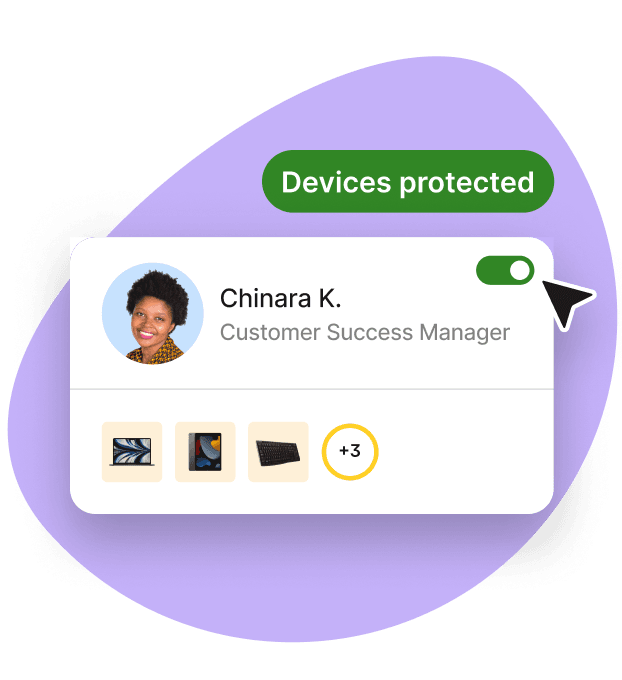
- Ship laptops and other devices pre-configured to employees anywhere in the world
- Enforce security policies and compliance standards across regions
- Manage repairs, replacements, and returns without local IT bottlenecks
- Recover and securely wipe devices during offboarding
By integrating endpoint management into the broader employee lifecycle, Deel IT helps organizations keep their devices secure and their teams productive, no matter where people work.
Schedule a demo with Deel IT to see how global endpoint management can work in practice.