Global Work Glossary
- Results for "undefined"
Table of Contents
Working legally as an expat
Key facts
FAQ
What is an expat?
An expat, short for expatriate, is a person who lives or works outside their country of origin, usually for professional reasons. Business and HR circles use "expat" as the everyday informal term. The expatriate entry covers the legal, employment, and immigration context in full.
Two groups most commonly carry the expat label. Corporate expats are employees on international assignments arranged by their employer, moving from the company's home country to a host location for a role or project. Self-initiated expats are professionals who relocate on their own, either taking up local employment or continuing remote work from a new country.
Working legally as an expat
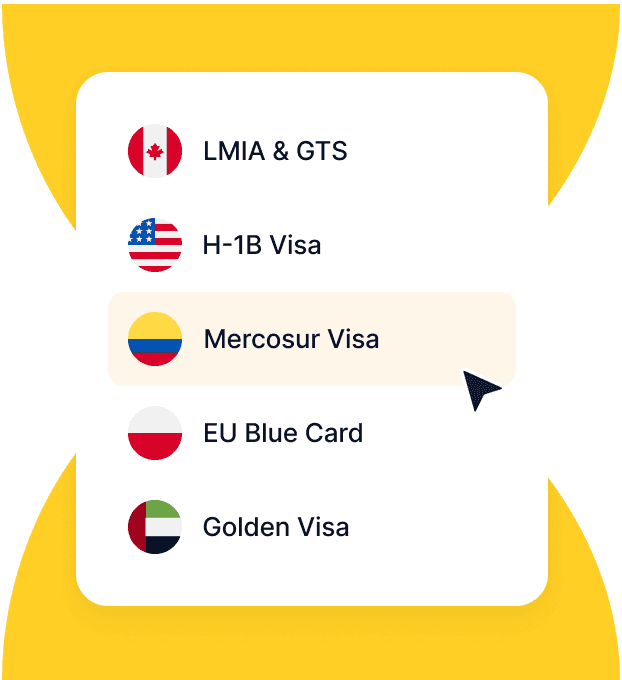
Expats working in their host country typically need a work visa or work permit to stay and work legally. The exact requirement depends on the host country, the worker's nationality, and the employment type.
Companies sending staff abroad can employ expats through an Employer of Record (EOR) in the host country, which acts as the legal employer without requiring a local entity. Deel Mobility covers visa support, in-country compliance, and payroll coordination for cross-border assignments.
Deel Mobility
Get worldwide visas without the legwork
Key facts
"Expat" is the informal form of expatriate, and both words describe the same person.
The term applies to employer-arranged international assignments and independent relocations alike.
Most expats need a work visa or work permit to work legally in the host country.
EOR employment is a common route for companies employing expats without opening a local entity.
The expat's overall move falls under global mobility, the practice of deploying workers across countries.
FAQ
Is there a legal difference between an expat and an immigrant?
No legal distinction exists. "Expat" typically implies a temporary relocation, while "immigrant" usually refers to someone settling more permanently. The line is blurry and the terms sometimes overlap.
Do expats need a work visa?
Most do. Working legally in a host country requires a work visa or work permit issued by the host country's immigration authority. Requirements vary by nationality and country.
Can a company employ an expat without setting up a local entity?
Yes. An EOR acts as the legal employer in the host country, handling compliance and payroll so the company avoids entity setup.
What is the difference between an expat and a digital nomad?
Both live and work outside their home country, but an expat typically has a defined location, an employment contract, and a fixed-term posting. A digital nomad moves more freely and often works independently, without a fixed host country or employer-arranged assignment.
Immigration requirements for expats vary by host country and nationality, and the relevant national immigration authority sets the rules that apply.
Deel Mobility
Get your immigration and mobility questions answered