Check-ins
Make every 1:1 count, not just happen
Most 1:1s run on good intentions and a half-remembered agenda. Checkins gives every conversation a shared structure, captures what was agreed automatically via Google Meet, and tracks follow-through, so the meeting actually changes something.
Trusted by 40,000+ companies from startups to enterprise


























STRUCTURED 1:1S
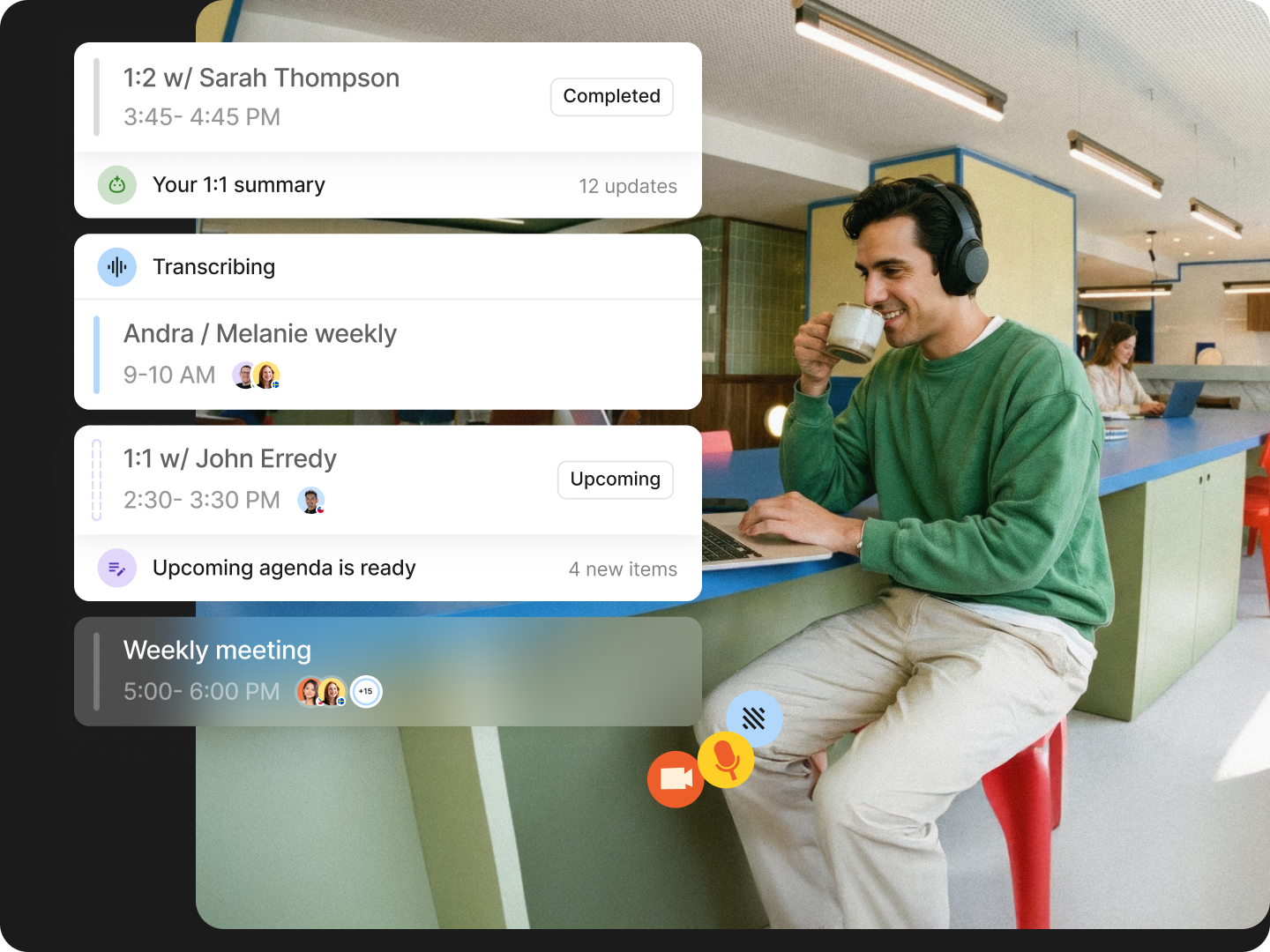
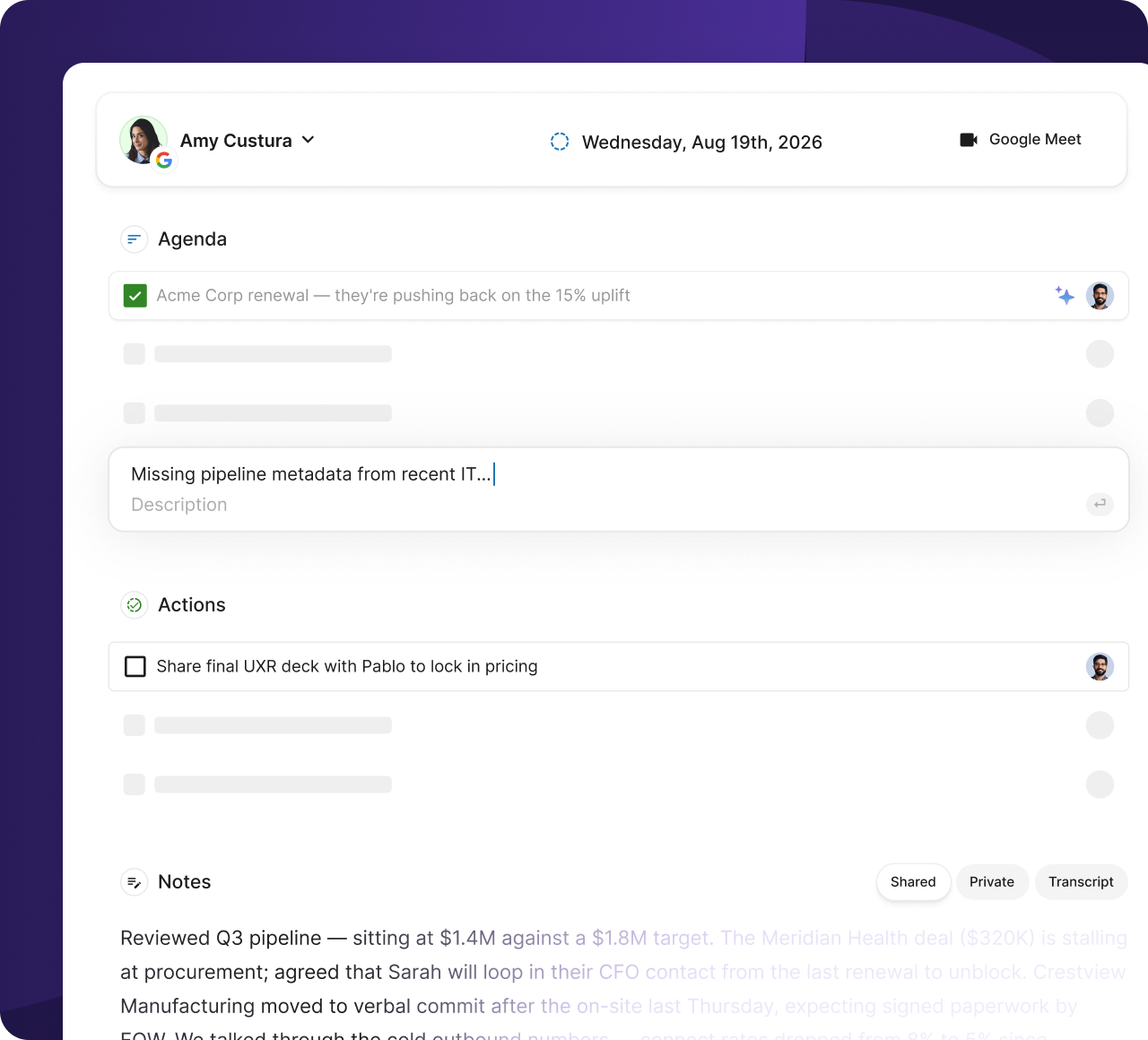
Give every meeting a shared agenda both people use
When both people show up to a 1:1 prepared, the conversation is worth having. Checkins gives every manager–direct report pair a shared canvas. Recurring talking points, open action items carried forward, space for anything new ensure neither person is scrambling to remember what to cover.


AI-POWERED DOCUMENTATION
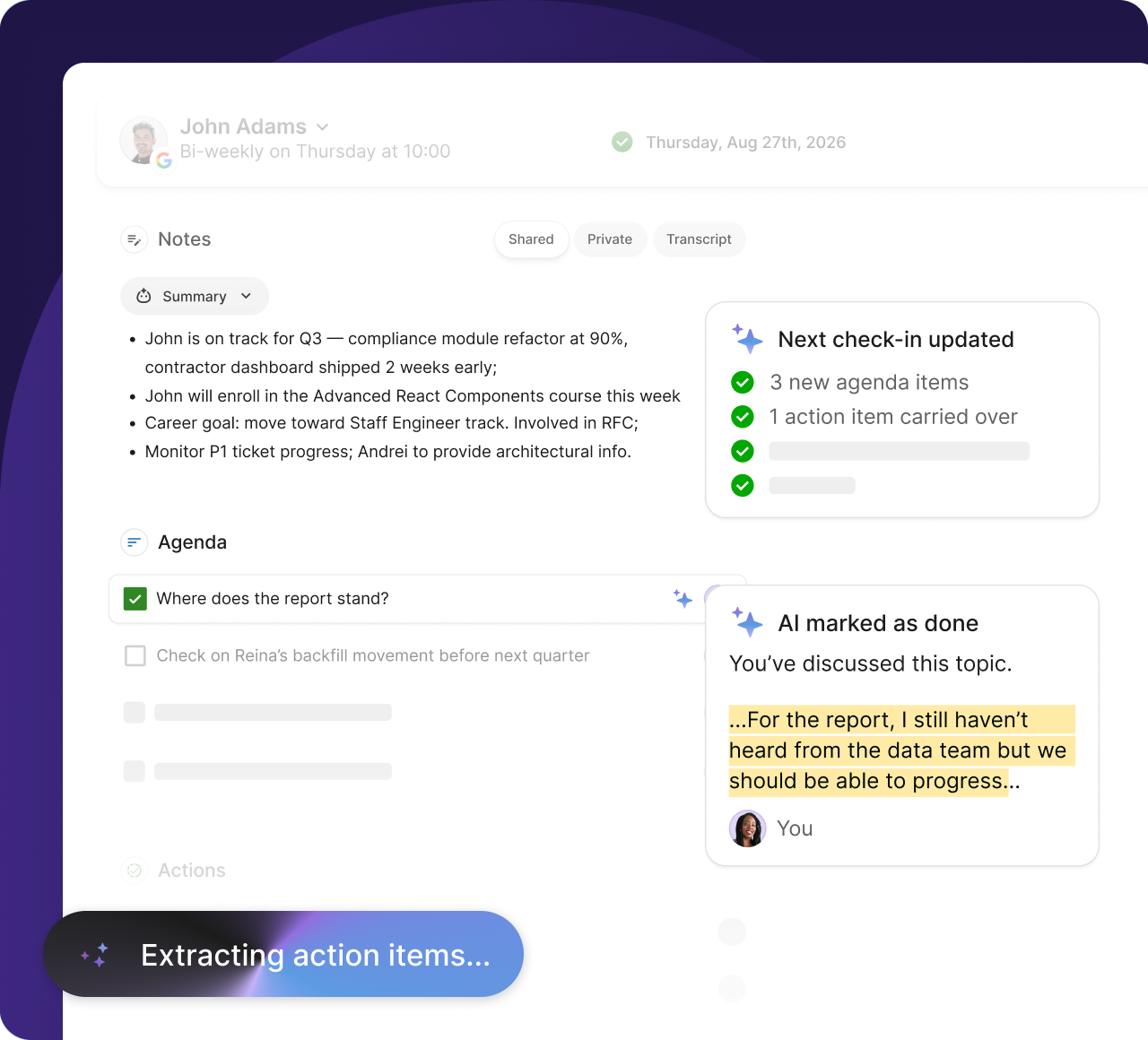
The meeting summary writes itself
After a Google Meet call ends, Checkins automatically fetches the transcript, extracts key points and commitments, and populates your notes and action items. Managers open the check-in after the meeting to review and adjust, not to transcribe. The raw transcript is always one tab away.
PERFORMANCE & GRowth EVIDENCE YEAR-ROUND
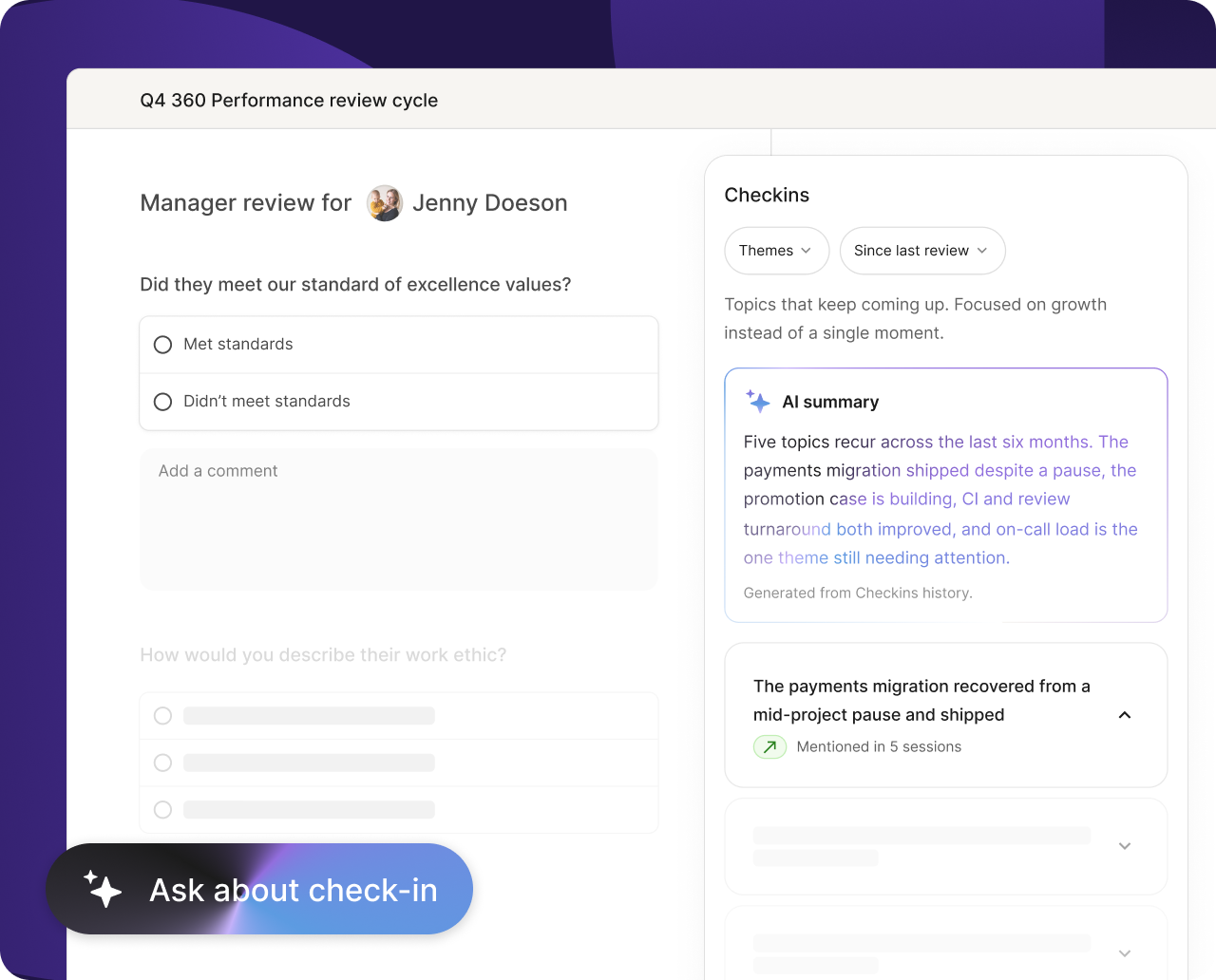
Turn every 1:1 into context your reviews can actually use
Every Checkins session is logged: what was discussed, what was committed to, what changed. By the time review season opens, managers have a full year of documented conversations ready to summarize. The AI can do that part too.
INTEGRATED TALENT MANAGEMENT
All your talent management tools, connected in Engage
FAQs
How is Checkins different from using a shared doc?
A shared doc captures what you remember to write down. Checkins in Deel captures what actually happened, and connects it to the performance workflow where it matters. The AI transcript prepares meeting notes from the Google Meet call. No write-up, no memory tax, no gap between what was said and what got logged. Managers open the check-in after the call to review and adjust, not to reconstruct from memory. But the bigger difference is where the record goes. A shared doc is a dead end. Checkins is part of Deel HR, so the conversations that happen between reviews connect directly to goals, reviews, and development plans. The 1:1 isn't just documented, it contributes to a worker’s growth and compensation trajectory.
What are the key features of Checkins?
Check-ins is built so the 1:1 runs itself, and the record it builds actually goes somewhere. Here's what that looks like in practice:
Zero setup for the most common 1:1 relationship. Sessions are generated automatically for every manager–direct report pair when Checkins is enabled. No configuration needed.
A shared agenda both people build together. Add talking points, reorder them, carry recurring items forward, so neither person shows up improvising.
Action items that don't fall through the cracks. Follow-ups live in the check-in with checkboxes and automatic carry-forward until they're closed.
Private notes for honest preparation. Visible only to the author, for personal prep, sensitive observations, or anything not ready to share yet.
The meeting notes itself. After a Google Meet call, Checkins fetches the transcript and uses AI to populate notes and action items automatically.
An agenda that remembers what you left open. AI suggests talking points based on unresolved items from past sessions, the prep does itself.
A one-click session summary. After each session, AI generates a summary from notes, action items, and transcript content, useful for async follow-up or review prep.
Skip-level and peer check-ins. Any worker can create a check-in with anyone in the org, not just their direct manager, with a configurable cadence.
What does Checkins change for managers day-to-day?
Most managers run 1:1s with good intentions and almost no structure: a half-remembered agenda, notes in a personal doc, follow-ups that live in someone's head. Checkins changes three specific things:
Preparation is built in. Both participants can add talking points before the meeting. Recurring items never have to be re-added. Unresolved items from the last session carry forward automatically, so the agenda builds itself.
Documentation is no longer a task. After the Google Meet call, Checkins fetches the transcript and populates notes and action items automatically. The manager's job is to review and adjust, not to write from 0.
The performance record accumulates without effort. Every session adds to a worker’s performance and growth context. When review season arrives, managers aren't trying to remember what happened months before, they're reading a record that already exists.
What are the benefits of Checkins for individual employees?
For individual workers, Checkins turns a calendar invite into something more reliable:
A predictable space to be heard. A recurring, structured check-in signals that their manager has made time for them, not just squeezed them in. Blockers, growth conversations, and project updates have a place to land.
Follow-ups that actually get tracked. Action items agreed in the meeting live in the check-in and carry forward until they're closed. Employees don't have to chase their manager to remember what was discussed.
Private space to prepare. Private notes let individuals prep for the conversation honestly, noting what they want to raise, how they're feeling about something, without it being visible to the manager until they choose to share.
A record of their own development. Past sessions are browsable. Employees can look back at what was discussed, what was committed, and how things have progressed, useful context for their own review conversations.
Can Checkins be purchased individually?
No, Engage tools like Checkins cannot be purchased individually. Engage is a system that includes check-ins, reviews, goals, surveys, development plans, learning, and career management. There's no requirement to use all, but they are more powerful when used together to create one coherent talent management strategy.
Why companies around the world use Deel for talent management

“On Engage, within each goal you see who’s responsible, what needs to be done, and you can upload progress evidence.”

Lucía Rodriguez
Head of HR

“Our employees love having everything accessible in one place—their docs, reviews, time off, expenses. It’s all in Deel now.”

Dario Valiant Casilli
Operations Manager

“We were drowning in spreadsheet reviews—a big mess that was a drain on time and morale. Engage is how we turn that painful process into a strategic, joyful one.”

Christian Burri
Cofounder & Chief Product Officer
Deel makes growing remote and international teams effortless
150+
countries
+40,000
customers
$20B+
compliantly processed global payroll
90+
NPS for enterprise customers