
Article
10 min read
Boost Security and Reduce Staffing Costs with Auto‑Scaling Endpoint Protection
IT & device management

Author
Anna Grigoryan
Last Update
December 22, 2025

Table of Contents
Understanding auto‑scaling endpoint protection
How auto‑scaling enhances security
Reducing staffing costs through automation
Implementing auto‑scaling endpoint protection
How Deel IT enables auto‑scaling endpoint protection
Key technologies behind auto‑scaling solutions
Future trends in endpoint protection automation
Ket takeaways
- Auto-scaling endpoint protection platforms automatically adjust security coverage as device fleets grow or shrink, reducing the need for manual intervention.
- Cloud-native EPP/EDR solutions improve security outcomes by delivering real-time updates, behavior-based threat detection, and automated response at scale.
- Automation in endpoint protection lowers staffing costs by reducing manual tasks like agent deployment, patching, and alert triage.
- Integrating endpoint protection with identity, device management, and HR systems helps ensure every device is protected from day one through offboarding.
Security teams are tasked with protecting more devices, in more regions, with the same or fewer team members. The most effective solution is a cloud-native auto-scaling endpoint protection platform—EPP/EDR that automatically provisions, updates, and adjusts protection as your device fleet changes. This means your organization gains real-time protection without needing to expand IT roles.
Independent reviews of leading endpoint security solutions show a clear trend toward AI-driven, cloud-managed platforms that scale effortlessly across global environments, allowing teams to manage more endpoints per admin while improving overall outcomes.
For buyers wondering what endpoint protection platform can scale devices quickly without increasing staff: select a cloud-first, auto-scaling EPP that integrates with your identity stack, supports zero-touch provisioning, and offers centralized, automation-friendly controls.
Teams using Deel IT can implement this model faster by standardizing global device onboarding, enforcing device trust with IAM, and automating EPP/EDR rollout without increasing headcount.
Endpoint Protection
Understanding auto‑scaling endpoint protection
Auto-scaling endpoint protection is a system that dynamically adjusts security resources—such as agent capacity, analysis engines, and enforcement—to match changing device or network loads, ensuring consistent coverage without manual oversight. Endpoint protection focuses on safeguarding devices like laptops, mobiles, and servers from threats targeting network entry points, typically through an endpoint protection platform (EPP) paired with detection and response capabilities (EDR), as defined in the Fortinet glossary of endpoint protection platforms.
Compared with traditional methods, auto-scaling shifts the operating model:
- Provisioning: Manual installs and fixed capacity versus elastic, zero-touch onboarding for new and transient devices.
- Updates: Periodic, admin-driven updates versus continuous, cloud-delivered intelligence and policy updates.
- Threat handling: Reactive triage versus behavior-based, automated detection with autonomous containment.
- Operations: Ticket-heavy, siloed tooling versus centralized dashboards, API-first workflows, and workload-based scaling.
For organizations standardizing globally, solutions like Deel IT help connect these operating model shifts to day-to-day execution by automating zero-touch enrollment, mapping devices to identity, and orchestrating EPP/EDR agent deployment across regions and worker types.
How auto‑scaling enhances security
Spikes in user activity, seasonal hiring, or M&A device onboarding can overwhelm static defenses. Auto-scaling addresses these gaps by expanding protection as demand rises and contracting as it falls—without human intervention.
Continuous, real-time cloud-based updates combined with behavior-based detection enable platforms to spot and neutralize emerging threats early. Modern EPP/EDR employs anomaly detection and behavioral analytics to identify suspicious process chains, lateral movement patterns, and data exfiltration behaviors before signatures exist, thereby strengthening scalable security and enabling dynamic endpoint protection. Industry guidance emphasizes these capabilities as foundational to proactive, real-time protection in cloud-managed environments.
In practice, pairing your chosen EPP/EDR with Deel IT’s zero-touch device onboarding and IAM-based controls ensures new and transient endpoints are protected the moment they come online, even across new regions and contractor populations.
Reducing staffing costs through automation
Automation offloads routine tasks—such as agent deployment, policy updates, patch and configuration checks, and alert triage—so that teams can focus more on strategy and less on maintenance. Security experts highlight that automation in endpoint security diminishes operational burdens and enables staff to concentrate on higher-value initiatives, directly impacting operating expenses. Endpoint hardening toolkits further demonstrate how automation reduces manual effort across common workflows, from patching to compliance reporting.
Deel IT complements this by automating device enrollment, enforcing baseline configurations, and coordinating EPP/EDR rollout via MDM/UEM and identity-driven workflows—reducing tickets, manual touch, and onboarding time.
Where manual processes scale linearly with headcount, auto-scaling platforms streamline ongoing maintenance:
| Process | Manual approach | Automated / auto-scaling approach | Staffing impact |
|---|---|---|---|
| Agent deployment | Imaging scripts, per-device installs | Zero-touch provisioning via MDM/UEM and enrollment links | Fewer tickets, faster onboarding |
| Patch / compliance | Periodic scans and spot fixes | Continuous posture checks with automated remediation | Less hands-on time |
| Threat monitoring | Human triage of alerts | AI-driven correlation and autonomous containment | Lower alert fatigue |
| Capacity planning | Forecasting and over-provisioning | Pay-per-use scaling up/down by demand | Reduced over-provisioning and management overhead |
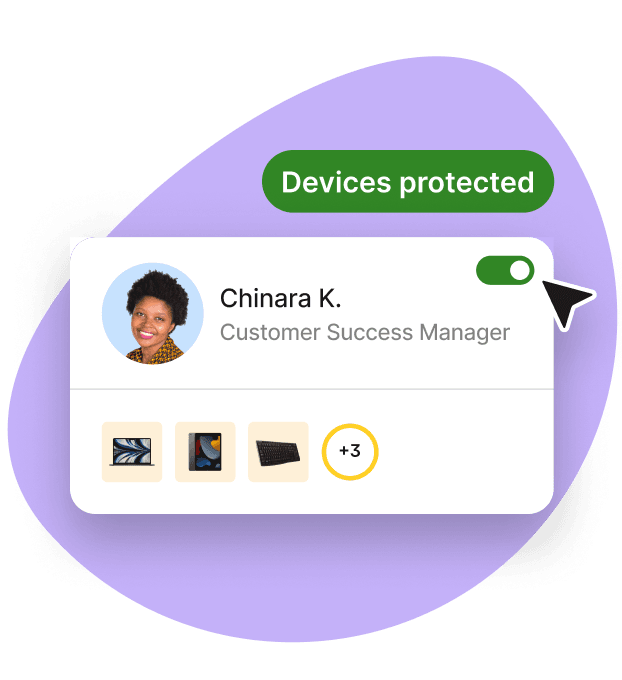
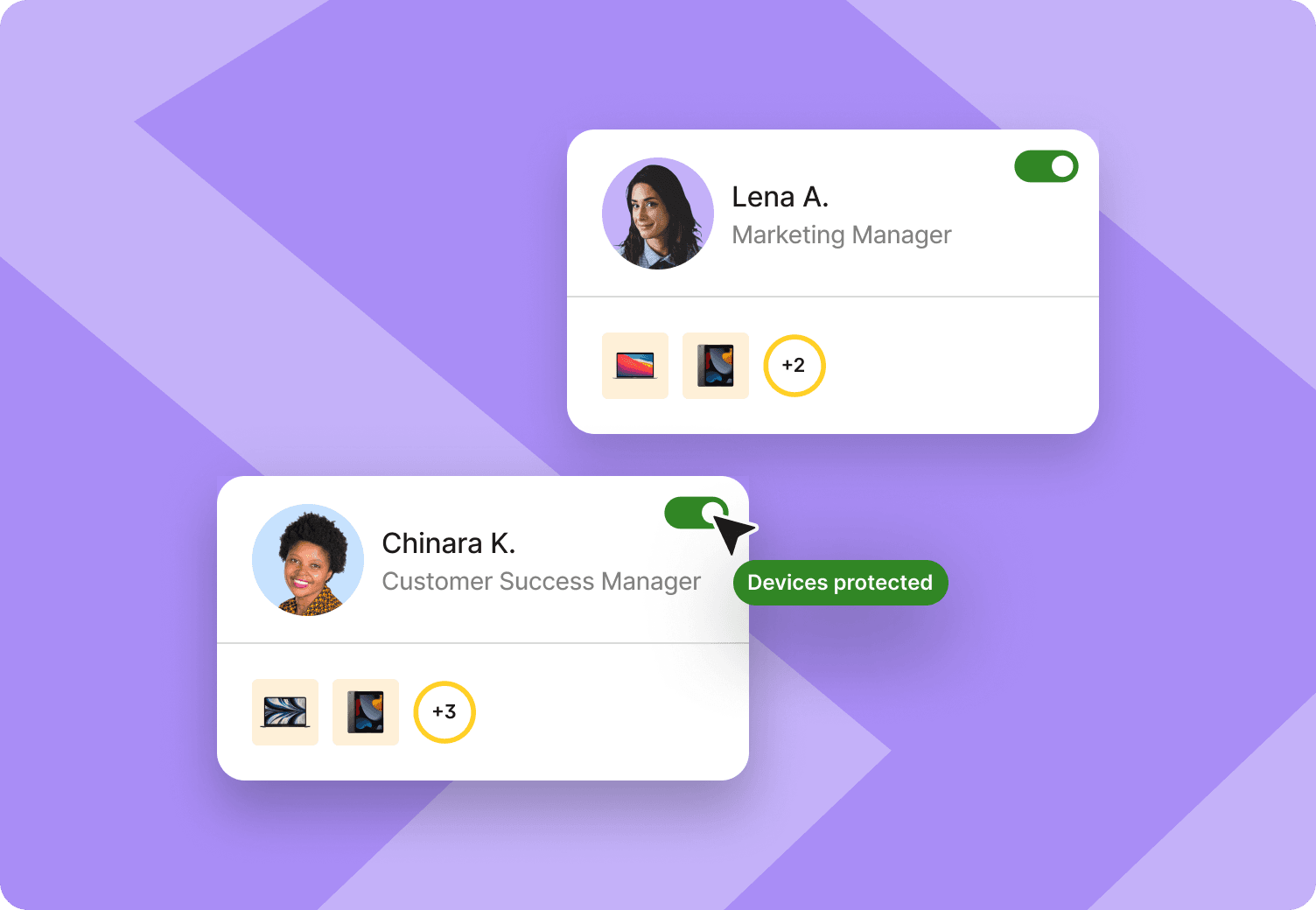
Operationally, Deel IT ties these outcomes together by unifying device inventory, compliance status, and identity posture so SecOps and IT can see which endpoints are protected, which require remediation, and which actions have been automated—without adding headcount.
Deel IT

Implementing auto‑scaling endpoint protection
A pragmatic rollout plan accelerates benefits:
- Inventory and segment endpoints by OS, location, sensitivity, and management state (managed vs. BYOD).
- Choose a compatible, cloud-native, auto-scaling platform; validate coverage for your OS mix, offline devices, and remote workers.
- Integrate with identity and access management (IAM) for least-privilege policies and device-based conditional access.
- Define escalation policies for automated responses—what to quarantine automatically, when to notify, and when to require human approval.
- Enable centralized dashboards, API access, and notifications for scale events, policy drift, and anomalous activity.
- Pilot with a high-variance group (contractors, new regions) before a global rollout; measure MTTR, false positive rates, and admin time saved.
- Tune policies and automation thresholds; document runbooks for exceptions.
Cost model tip
Pay-per-use elasticity helps avoid over-provisioning and scales down during low demand to reduce cloud expenses, as documented in cloud security auto-scaling guidance.
Teams running Deel IT typically accelerate Steps 1–5 by syncing HRIS and identity data to device inventory, automating zero-touch provisioning, and enforcing conditional access tied to device compliance.

How Deel IT enables auto‑scaling endpoint protection
Deel IT helps organizations operationalize auto-scaling endpoint protection globally by connecting people, devices, and identity to your chosen EPP/EDR. It orchestrates zero-touch provisioning, automates agent deployment, enforces baseline policies, and centralizes visibility across contractors and full-time employees in any region—so you scale protection without scaling headcount.
Key capabilities:
- Zero-touch deployment at global scale: Ship pre-configured devices, auto-enroll in MDM/UEM, and install EPP/EDR agents on first boot.
- Identity-driven device trust: Map devices to users via IAM, enforce conditional access, and gate app access until endpoints meet compliance.
- Unified inventory and compliance: Real-time view of device posture, agent health, and policy drift across OSs, regions, and worker types.
- Automation and workflows: Trigger remediation, ticketing, and notifications via APIs and
- SOAR playbooks; document and audit every action.
- Global operations alignment: Standardize baselines and exceptions across subsidiaries, geographies, and M&A roll-ins without manual rework.
- Cost control: Avoid over-provisioning with pay-per-use elasticity from cloud EPP/EDR and reduce tickets through automation.
Who benefits and how:
- IT and SecOps: Faster onboarding, fewer tickets, consistent baselines, and instant visibility into agent coverage and compliance.
- Finance and Procurement: Predictable costs with elastic licensing and fewer idle seats due to automated reclamation and scale-down.
- HR and Operations: Streamlined joiner–mover–leaver workflows that automatically grant, adjust, or revoke device/app access.
- Regional and Business Leaders: Consistent protection and auditing across markets, vendors, and contractor engagements.
Key technologies behind auto‑scaling solutions
Auto-scaling refers to the ability to add or remove computing resources automatically based on demand. In endpoint security, that translates to elastically scaling analytics engines, telemetry pipelines, and enforcement across a variable fleet.
Core building blocks include:
- Cloud-native platforms for centralized policy, updates, and analytics
- Virtual machine and container orchestration to scale compute for threat analysis
- Real-time monitoring and telemetry streaming for rapid detection
- Workload automation frameworks to trigger policy enforcement and remediation
- Infrastructure integrations such as AWS Auto Scaling groups or OCI Instance Pools for burst capacity
Platforms such as Deel IT connect these building blocks to device lifecycle and identity, ensuring EPP/EDR capacity is matched with real-time onboarding and compliance enforcement.
Role of AI and machine learning
Machine learning and behavioral analysis automate endpoint security at scale, minimizing human workload and capturing unknown threats. Behavioral analysis models normal user and process activity to flag deviations, enabling predictive threat modeling and automated anomaly detection across diverse environments. Mature platforms extend this with autonomous response systems that can contain and remediate threats—terminating processes, isolating hosts, or rolling back changes—without waiting for a human operator.
Integration with existing security systems
Endpoint solutions must integrate with SIEM, SOAR, and identity tools to avoid creating security blind spots. SIEM aggregates and correlates security events; SOAR orchestrates cross-tool automation and playbooks. When endpoint data, identity context, and response actions are unified, organizations benefit from context-aware protection and consistent policy enforcement across hybrid environments.
Practical integration points include:
- HRIS: automate joiner-mover-leaver workflows to grant and revoke device access
- IAM/MFA: enforce device compliance for conditional access and step-up authentication
- SIEM/SOAR: stream telemetry, enrich alerts, and trigger playbooks for containment
- UEM/MDM: push agents, policies, and OS baselines at scale
- ITSM: auto-create and resolve tickets tied to security actions
Deel IT centralizes these integrations so that endpoint coverage, identity posture, and automated actions are visible and consistent across regions and worker types.
Future trends in endpoint protection automation
Anticipate ongoing advancements toward behavior-based detection and fully autonomous, self-healing endpoint security that reverses malicious changes and restores the normal state without tickets. Current guidance on endpoint management underscores the importance of consolidation, zero-touch provisioning, and unified management as core enablers of next-generation endpoint security.
Reported outcomes from AI-driven platforms indicate significantly faster detection and response rates; for instance, users have noted 63% faster threat detection and 55% lower mean time to respond, emphasizing the operational gains that become available as automation evolves.
Platforms like Deel IT align with these trends by focusing on global zero-touch provisioning, identity-driven device trust, and unified operations.
FAQs
What is auto-scaling in endpoint protection?
Auto-scaling in endpoint protection is an automated process that dynamically increases or decreases security resources based on real-time demand, ensuring consistent protection without manual intervention.
How does auto-scaling reduce operational costs?
It aligns resources with actual usage, minimizing over-provisioning while alleviating the routine workload for IT teams—lowering both cloud expenses and staffing-dependent operations. Tools like Deel IT further reduce ticket volume by automating onboarding, policy enforcement, and remediation workflows.
Can auto-scaling replace human IT security staff completely?
No. While it eliminates repetitive tasks and accelerates response, human staff are still essential for strategic planning, oversight, and managing complex or high-risk incidents. Deel IT augments teams by automating routine execution while preserving human-in-the-loop approvals for sensitive actions.
What are the main benefits of integrating AI with endpoint protection?
AI enhances real-time threat detection, automated responses, and proactive risk mitigation, leading to improved efficacy while decreasing manual effort.
How do organizations ensure visibility when using automated security systems?
Integrate endpoints with centralized SIEM/SOAR systems and continuously monitor scale events, policies, and alerts across all devices to maintain comprehensive visibility. Deel IT helps unify this visibility by correlating device posture, identity context, and automated actions across your fleet.
Anna Grigoryan is an SEO and Content Manager with 6+ years of experience in digital marketing and content strategy. She specializes in optimizing & creating high-impact, search-driven content in the tech and HR space, with a focus on global work, people operations, and the evolving world of employment. When she’s not optimizing content for growth, she’s exploring new trends in marketing and technology. Connect with her on Linkedin.


