
Article
8 min read
Business Visa or Visa on Arrival (VoA): Which Is Right for You?
Immigration

Author
Angeles Varas Schaer
Last Update
September 06, 2025

Key takeaways
- Business visas are designed for professional activities and provide greater legitimacy, longer validity periods, and multiple entry options. While they require advance planning and documentation, they significantly reduce the risk of complications at border control and ensure compliance with local regulations for formal business engagements.
- A Visa on Arrival offers convenience for short, low-stakes trips but comes with significant limitations. They're typically restricted to brief stays, may not cover formal business activities like contract negotiations or conferences, and create uncertainty since approval depends on immigration officers' discretion at the border.
- Choose your visa type based on your trip's purpose and complexity. High-stakes business travel involving contracts, negotiations, or formal meetings requires a business visa for reliability and compliance. Quick, informal visits like market scouting may work with a VoA, but always research destination-specific requirements before deciding.
Planning an international business trip, but not sure which visa to choose? Many professionals face this dilemma when choosing between a business visa and a Visa on Arrival (VoA). Choosing the wrong option can mean delays, limited travel permissions, or even being turned away at the border.
The truth is, both visa types serve different needs. A VoA is often convenient for short trips, but it may not fully cover your business activities. On the other hand, a business visa is designed for professional travelers who want to ensure a smooth, compliant trip.
Deel Mobility has helped countless companies and professionals secure the right business visas. As a result, they’ve been able to travel with confidence and complete their work abroad without any hurdles. Whatever the purpose of your business trip, we know which visa works and why.
If you’re a global professional looking to get it right the first time, this guide is for you. We’ll discuss when to choose a business visa over a VoA, the pros and cons of each, and practical tips for getting it right.
We’ve been there too. Business travel can be overwhelming. But with the right approach to visa acquisition, it doesn’t have to be.
What is a business visa?
A business visa is an official travel document that allows working professionals to enter a country for specific business-related activities, such as attending meetings, conferences, training sessions, or negotiating contracts. Unlike a tourist visa, a business visa is designed to support formal, work-related engagements.
Obtaining a business visa typically involves some preparation before you set off. Travelers are often required to submit documentation, such as:
- An official invitation letter from a host company or event organizer
- Proof of employment
- A valid passport
- Evidence of financial means
- Onward or return travel plans
Some countries also require pre-approval from their immigration authorities, which can take days or weeks to process.
In many cases, a business visa is mandatory. For example, if you’re leading a sales presentation, signing legal agreements, or attending a trade show where official registration is required. It’s also often the preferred route for professionals who want a seamless travel experience without worrying about last-minute complications at immigration.
See also: Business Travel Checklist: Essentials for Every Trip
What is a Visa on Arrival?
A Visa on Arrival is a type of visa that travelers can obtain directly at their destination airport or border checkpoint, rather than applying for a visa in advance. It’s often used for short stays—usually for tourism or casual business visits—and is typically limited to citizens of specific countries with reciprocal agreements in place.
To qualify for a VoA, travelers usually need to meet certain criteria, such as holding a valid passport from an eligible country, proving the purpose of their visit (e.g. attending a short business meeting), and demonstrating that their stay will not exceed a set number of days (VoAs are often valid for 30 days or less). Upon entry, you may also be required to show supporting documents like hotel reservations or proof of onward travel.
A VoA isn’t always suitable for formal business activities, such as attending large conferences, signing contracts, or conducting negotiations, as some countries restrict these under tourist-oriented VoA schemes.
VoAs are common in countries like Indonesia and Vietnam, making them convenient options for travelers seeking a quick, short-term solution. However, they’re not ideal if you need certainty and flexibility for professional travel plans.
Business visa vs. Visa on Arrival: Key differences
When choosing between a business visa and a Visa on Arrival, the right choice often depends on how much preparation you want to do and how critical your trip is.
A business visa is typically arranged before departure and reduces the risk of being denied entry at the border. On the other hand, a VoA is usually more common for spontaneous or short visits but comes with limitations and uncertainty.
Processing time
Business visas require pre-approval, which can take days or weeks, while a VoA is issued at the international airport upon arrival.
Documentation and compliance
Business visas involve more paperwork, such as invitation letters or proof of company affiliation, to ensure compliance with local laws. VoAs have minimal checks but may not cover formal business activities.
Length of stay and renewals
Business visas often allow longer stays or multiple entries, whereas VoAs are limited to shorter durations.
Professional impression
Arriving with a proper business visa signals professionalism and preparedness—while using the wrong visa can risk entry denial
Costs
Business visas have upfront fees but fewer surprises, while VoAs can involve additional charges or unpredictable costs on arrival.
| Factor | Business Visa | Visa on Arrival |
|---|---|---|
| Processing Time | Apply before your trip (days/weeks) | Obtained at the airport (instant) |
| Documentation | Extensive (invitations, documentation) | Minimal (passport, fee) |
| Length of Stay | Longer validity, possible extensions | Short-term |
| Professional Use | Designed for official business travel | May not cover certain business activities |
| Cost | Upfront, predictable fees | Arrival fees, sometimes variable |
See also: Business Travel Visas: Guide to Fast, Compliant Employee Travel
Deel Mobility

Pros and cons of a business visa
A business visa is usually the most reliable option for professional travelers, but it has advantages and disadvantages.
Pros
- Greater legitimacy and fewer risks at border control: Business visas are specifically designed for professional activities, so you’re much less likely to encounter complications at border control.
- Longer validity and multiple entries: Many business visas allow you to stay for more than 30 days and can be extended. Some also allow multiple visits over a defined period, making them ideal for frequent international travel.
- Easier for formal business activities: A business visa ensures you’re covered for common business engagements, such as signing contracts and attending high-level meetings.
Cons
- Requires extensive planning and documentation: Applying for a business visa often involves gathering a host of supporting documents (such as invitation letters or proof of employment) and submitting them in advance.
- Higher initial cost and processing time: Business visas can be more expensive upfront and may take days or even weeks to process, making them a less viable option for last-minute travel.
Pros and cons of a Visa on Arrival
A Visa on Arrival is convenient for travelers who need quick, short-term access to certain countries, but it’s not always the best fit for professional business trips.
Pros
- Fast and convenient: You can obtain a VoA directly at the airport upon arrival. As a result, it’s a good (or the only) option for last-minute or unplanned travel.
- Lower upfront preparation: There’s no need for pre-approval or extensive paperwork before you fly. Just ensure you meet the basic eligibility requirements.
- Cost-effective for short stays: Fees for VoA are often lower than those for a full business visa, especially if you only need to stay for a few days.
Cons
- Limited validity and stay duration: VoAs are typically valid for shorter stays and are often single-entry visas, meaning they don’t allow you to come and go on the same visa.
- Not always suitable for business activities: Some countries restrict formal business activities, such as attending conferences or negotiating contracts, when under a VoA.
- Uncertainty at the border: Since approval is at the discretion of immigration officers, there’s a risk of being denied entry if your purpose of travel is unclear.
Who should choose which option?
Whether you should choose a business visa or a Visa on Arrival depends on your business purpose and the length of your trip.
When a business visa is best
A business visa is the best option for travelers with structured agendas, like confirmed meetings or contract signings. It signals legitimacy and often lasts longer than a VoA. An executive flying to Singapore for a week of negotiations, for example, benefits from having paperwork approved in advance to avoid last-minute issues at the border.
When a VoA is best
A VoA is better for short, low-stakes trips. It suits quick visits like scouting markets or meeting contacts informally. An independent consultant flying to Indonesia for a two-day workshop might pick a VoA because it’s simple and requires less paperwork upfront.
In short, if your business trip is high-stakes, involves formal contracts, or spans multiple entries, a business visa is the clear choice. If it’s a brief, low-risk visit where flexibility is key, a VoA can be a practical alternative, though it comes with limitations.
We are using Deel to help us enter new talent markets and to drive the expansion of our business. Deel’s hands-on support, its speed to get things done, and its global presence are what set them apart.
—Chantal Madi,
Head of People Operations, Immutable
Why Deel recommends a business visa
For most professional trips, a business visa is the safest and most reliable option. It reduces the risk of delays or complications at border control and ensures you’re fully compliant with local regulations.
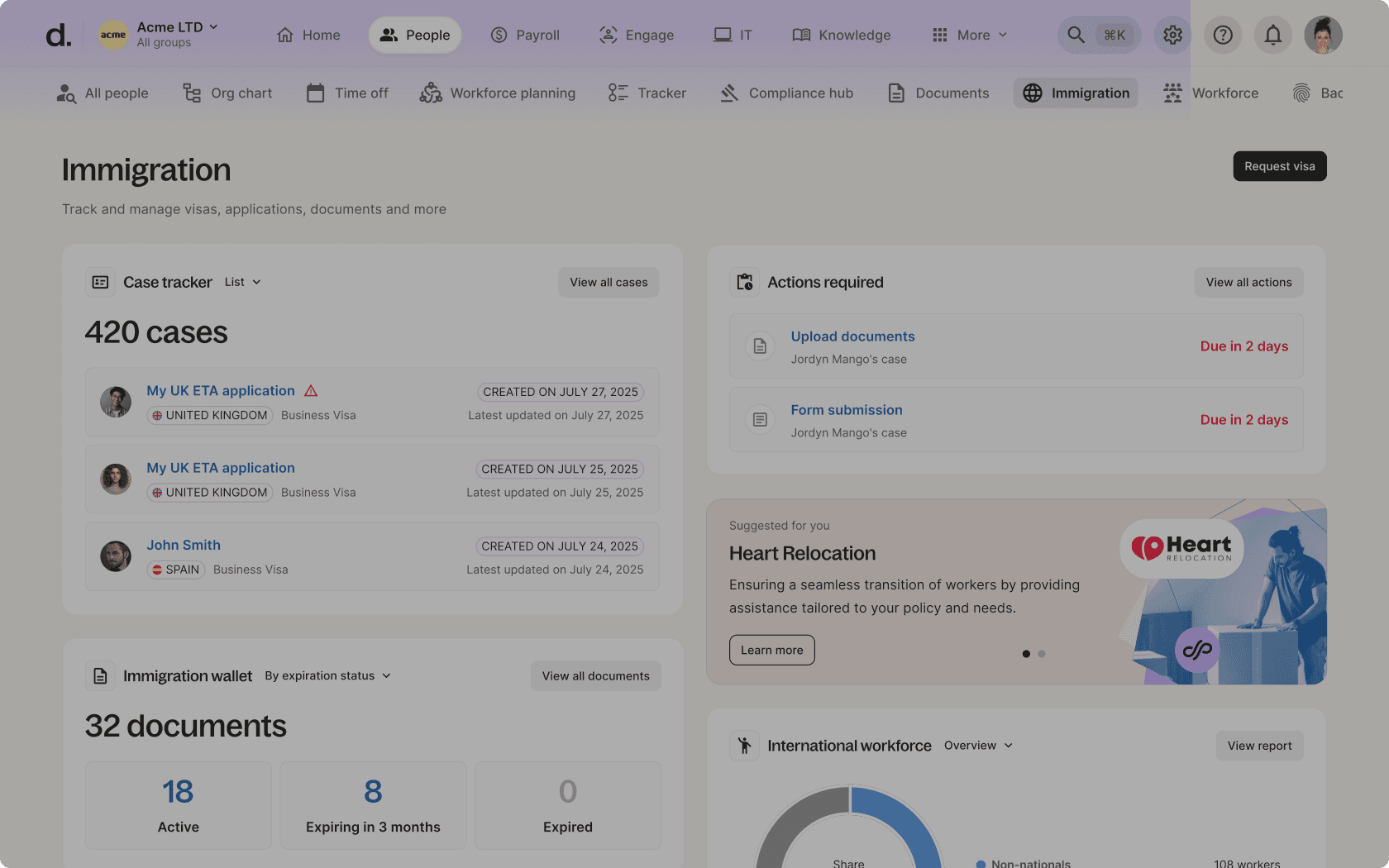
With Deel Mobility, securing a business visa is faster and simpler. Our platform allows you to upload documents, track application status, and receive expert guidance every step of the way.
Practical tips for choosing the right visa
Before booking your flight, take the time to research which visa best suits your trip.
Start by researching your destination country’s entry requirements. Some nations strictly enforce business visa rules, whereas others allow limited activities on a Visa on Arrival. You also need to check that your passport has at least six months’ validity, as this is a common requirement.
If your trip involves formal business activities, like signing contracts, attending conferences, or conducting negotiations, apply for a business visa early to avoid last-minute stress. In your application, clearly define the purpose of your visit. This is crucial because entering on the wrong visa type can lead to fines and delays, or you could even be refused entry.
For peace of mind, consult with Deel Mobility. We make sure every detail is handled correctly, so your business trip is smooth and compliant.
See also: Handle the Visa Process for Your Whole Team With Deel Mobility
Discover how financial technology company, Zip Co, championed worker mobility with Deel.
Deel helps me get things done quicker, easier, and more cost-effectively. We can offer unparalleled worker mobility and flexibility, which our team values.
—Emma Leipold,
Senior Global Mobility and Total Rewards Partner, Zip Co
Simplify visa management for business trips with Deel Mobility
Securing a business visa shouldn’t be a hassle. Deel Mobility streamlines business visa processing across 150+ countries. Our experts handle documentation, applications, and tracking so you can focus on your business objectives rather than immigration requirements.
With Deel, you know you’re getting the right visa for your trip. No wasted time. No wasted money. Guaranteed peace of mind.
Sounds like the ideal solution?
More resources
Angeles Varas Schäer is a global mobility specialist with a background in international law and years of experience helping professionals and companies navigate complex immigration processes.


