Article
2 min read
How AI Tools Are Changing the Laptops Your Employees Actually Need
IT & device management

Author
Dr Kristine Lennie
Last Update
September 17, 2026

Table of Contents
The laptop your engineers ordered in 2022 was never designed for this
AI is making hardware planning less predictable
Why AI adoption metrics tell only half the story
The end of one-size-fits-all laptop standards
How Deel IT helps you turn AI hardware strategy into action
Key takeaways
Traditional laptop standards were built for browsers, productivity software, and video calls. As AI becomes part of everyday work, many organizations are discovering their existing device fleets no longer match employee workloads.
Building an AI-ready fleet starts with understanding how employees actually use AI, then updating procurement standards around processor generation, memory, NPU availability, and role-specific hardware requirements.
Deel IT helps organizations put those standards into practice with global device procurement, provisioning, fleet visibility, lifecycle management, and refresh workflows that keep hardware aligned with evolving AI workloads.
The first wave of enterprise AI was about software. Organizations raced to evaluate copilots, choose vendors, and roll out new tools across the workforce.
The next question is less obvious: what happens when AI becomes part of everyday work on hardware that was never selected with AI in mind?
Many employees are now expected to use AI every day on laptops that were purchased years before AI became part of everyday work. According to HP research, 80% of workers say device performance affects their AI readiness. So, the quality of an organization's AI rollout increasingly depends on more than the software it deploys: it also depends on whether employees have devices that can keep pace with the way AI is changing their work.
The laptop your engineers ordered in 2022 was never designed for this
A typical engineering laptop purchased in 2022 was expected to handle IDEs, browser tabs, video calls, local builds, and everything else that came with the job. There was little reason to provision beyond that. Most organizations expected those devices to remain productive for three to five years, and for the workloads they were designed to support, they still can.
Then AI became part of the workday.
Developers now run coding assistants throughout the day. Designers generate creative assets with AI tools. Analysts use LLMs to explore data. These AI-assisted tasks rarely replace existing work: they expand it, placing sustained demands on the same device employees already rely on.
Gartner predicts that by the end of 2026, 40% of software vendors will prioritize investments in AI capabilities that run directly on PCs, up from just 2% in 2024. As more workplace software is designed to take advantage of on-device AI, organizations can no longer assume that hardware purchased for yesterday's workloads will deliver the same employee experience tomorrow.
The biggest risk for a company that waits too long to upgrade its fleet for AI workloads is a terrible employee experience. No one wants to work at a company with laptops that are always crashing and slowing them down from doing their best work.
—Michael Ginzo,
Sr. Product Director of Deel IT
The bottom line: AI is redefining what makes a laptop fit for purpose. For IT leaders, the question is no longer just "How long will this device last?" but "How long will it remain the right device for the work it's expected to support?"
AI is making hardware planning less predictable
One reason enterprise laptop standards have worked for so long is that employee workloads were relatively predictable. Job title was usually a good proxy for hardware requirements. A finance analyst, a marketer, or a software engineer all had a fairly consistent set of applications, making it possible to standardize devices with confidence.
That predictability is beginning to disappear.
AI isn't arriving as a single application that every employee uses in the same way. Some people use it occasionally to summarize meetings or draft documents. Others rely on coding assistants throughout the day, generate creative assets, or work with local models. The difference isn't the job title: it's how AI becomes part of the work itself.
That makes hardware planning more dynamic than ever before. Two employees in the same function may need very different levels of performance, while someone who barely used AI six months ago may depend on it every day after a new workflow or product rollout.
The implication? AI is changing what job title can tell us about hardware requirements. Increasingly, it's how employees work—not what role they have—that determines the device they need.
Why AI adoption metrics tell only half the story
One of the easiest ways to overestimate the success of an AI rollout is to look only at adoption. Licensing tells you who has access to AI tools. Usage tells you how often they're opened. Neither tells you whether employees are getting an experience that's fast enough, reliable enough, and seamless enough to become part of the way they work.
Imagine you've rolled out GitHub Copilot—or another AI coding assistant—to your engineering team. Adoption is growing, and on paper the rollout looks like a success. A few weeks later, developers begin saying Copilot feels sluggish, their laptops run hotter than they used to, and AI suggestions interrupt their flow more than they help it. The software hasn't changed, but the employee experience has.
That's the kind of problem traditional IT metrics rarely surface. Employees don't usually raise a ticket because their laptop has become just slow enough to make AI frustrating. Instead, they adapt. They wait a little longer for responses, close applications more often, use AI more selectively, or abandon features that interrupt their workflow. From IT's perspective, adoption remains high. From the employee's perspective, the value of AI has quietly diminished.
This is where older hardware often becomes the hidden constraint. Laptops with limited memory, older processors, or no NPU may still run modern AI tools, but the experience is fundamentally different from running them on devices designed for sustained AI workloads. The investment in AI software has been made, yet part of the expected productivity gain never materializes because the hardware can't consistently support it.
That's why AI readiness can't be measured through software adoption alone. It also depends on whether the devices employees use allow those tools to become a natural part of the workday rather than another source of friction.
The end of one-size-fits-all laptop standards
Standardization has always been one of enterprise IT's biggest strengths. It simplifies procurement, reduces support complexity, and makes device management easier to scale.
AI is exposing where that approach starts to break down. Employees may all use AI, but they don't use it in the same way. A customer success manager summarizing meetings and drafting follow-up emails places very different demands on a laptop than a developer relying on an AI coding assistant throughout the day or a designer generating images and video.
As those workloads diverge, a single hardware standard becomes harder to justify. Leading IT teams are responding by defining role-based hardware profiles that balance employee experience with operational simplicity, ensuring employees have the performance they need without overprovisioning the entire fleet.
The same thinking applies to refresh planning. A laptop that's only halfway through its expected lifecycle may no longer be the right fit if an employee's workload has fundamentally changed. Rather than accelerating refreshes across the entire organization, IT teams can prioritize upgrades for the roles where AI has had the greatest impact on day-to-day work.
An AI-ready laptop isn't defined by a particular processor or amount of RAM. It's defined by whether employees can use AI as part of their everyday workflow without performance becoming a source of friction. The right hardware standard depends less on universal specifications than on understanding how different teams actually work.
Michael Ginzo, Sr. Product Director of Deel IT, provides guidance on how enterprises can optimize their devices for AI by explaining, “You have to ask yourself which of the three groups each team member is within:
Writing code and developing production software
Prosumer developer writing apps for themselves or small teams
Basic user using pre-built, native applications or web-only apps
The answer will dictate how much RAM and storage you need in the device. Everything else is secondary from a performance perspective.
For each group, I’d advise adding 50-100% of the maximum expected RAM consumption as your budget. For example, if you expect 24 GB of RAM usage, go with a device that has 48+ GB of RAM. This is because, on average, 25-30% of users will be power users who do things in parallel or push beyond what’s expected. Additionally, a device running under its total RAM and CPU capacity day to day will tend to last longer. This results in longer refresh cycles, lower spending on hardware over a three-to-five-year period, and better employee experience.”
The bottom line: Organizations will get more value from AI when laptop standards are built around employee workloads rather than a single device specification.
See also: Best Laptops for Engineers for a deeper look at matching hardware to technical roles.
How Deel IT helps you turn AI hardware strategy into action
Knowing which employees need different hardware is only part of the challenge. IT teams still need to source devices globally, configure them consistently, manage refreshes, and maintain visibility across the fleet—all without creating more operational overhead.
Deel IT brings those workflows together in a single platform, helping organizations put role-based hardware standards into practice.
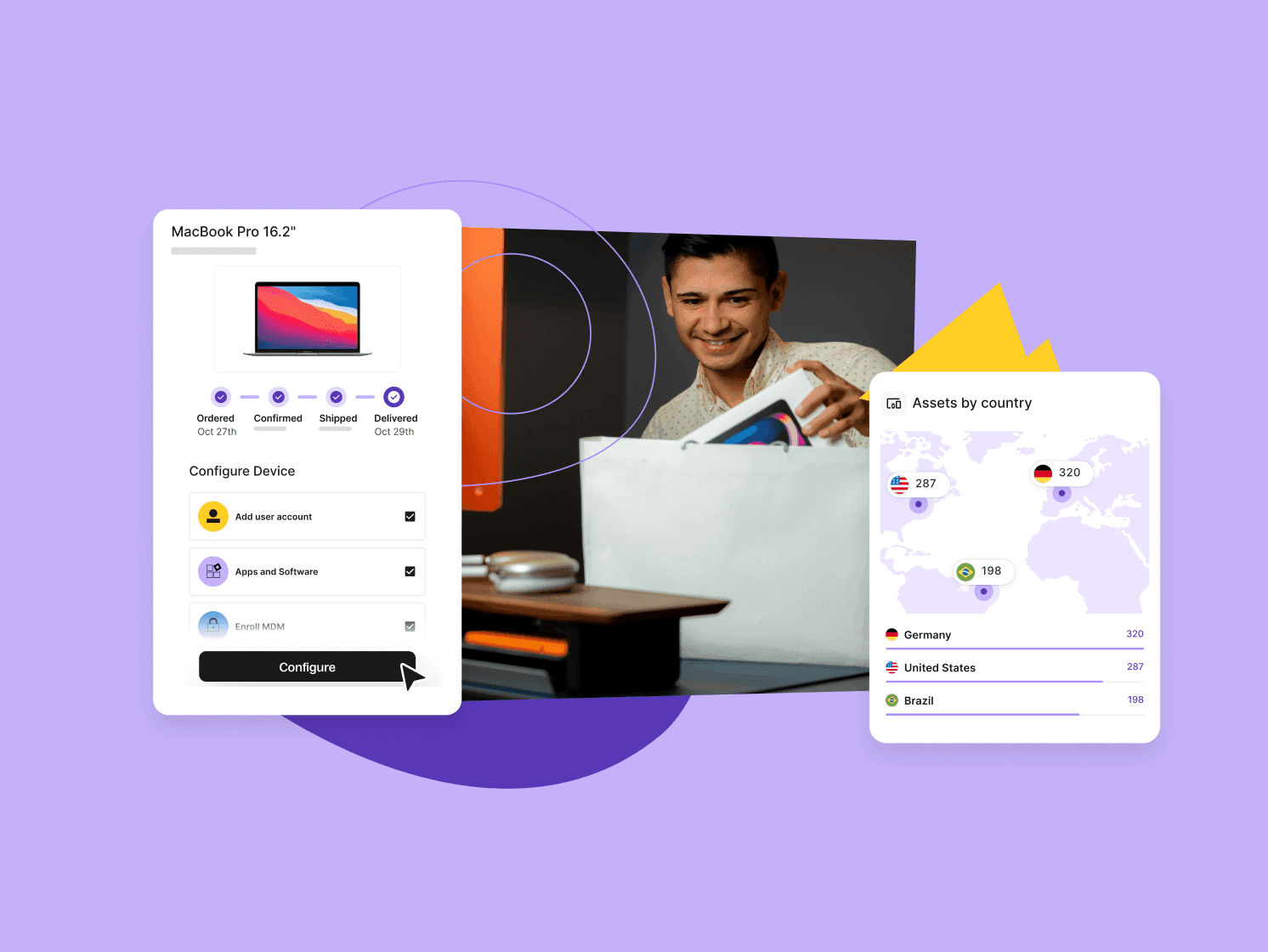
Global procurement and provisioning: Choose from a global catalog of laptops, accessories, and peripherals, then source, configure, and ship devices to employees in more than 130 countries, ready to use from day one.
Role-based device standards: Provision the right hardware for each role with MDM enrollment, security policies, and required software already in place.
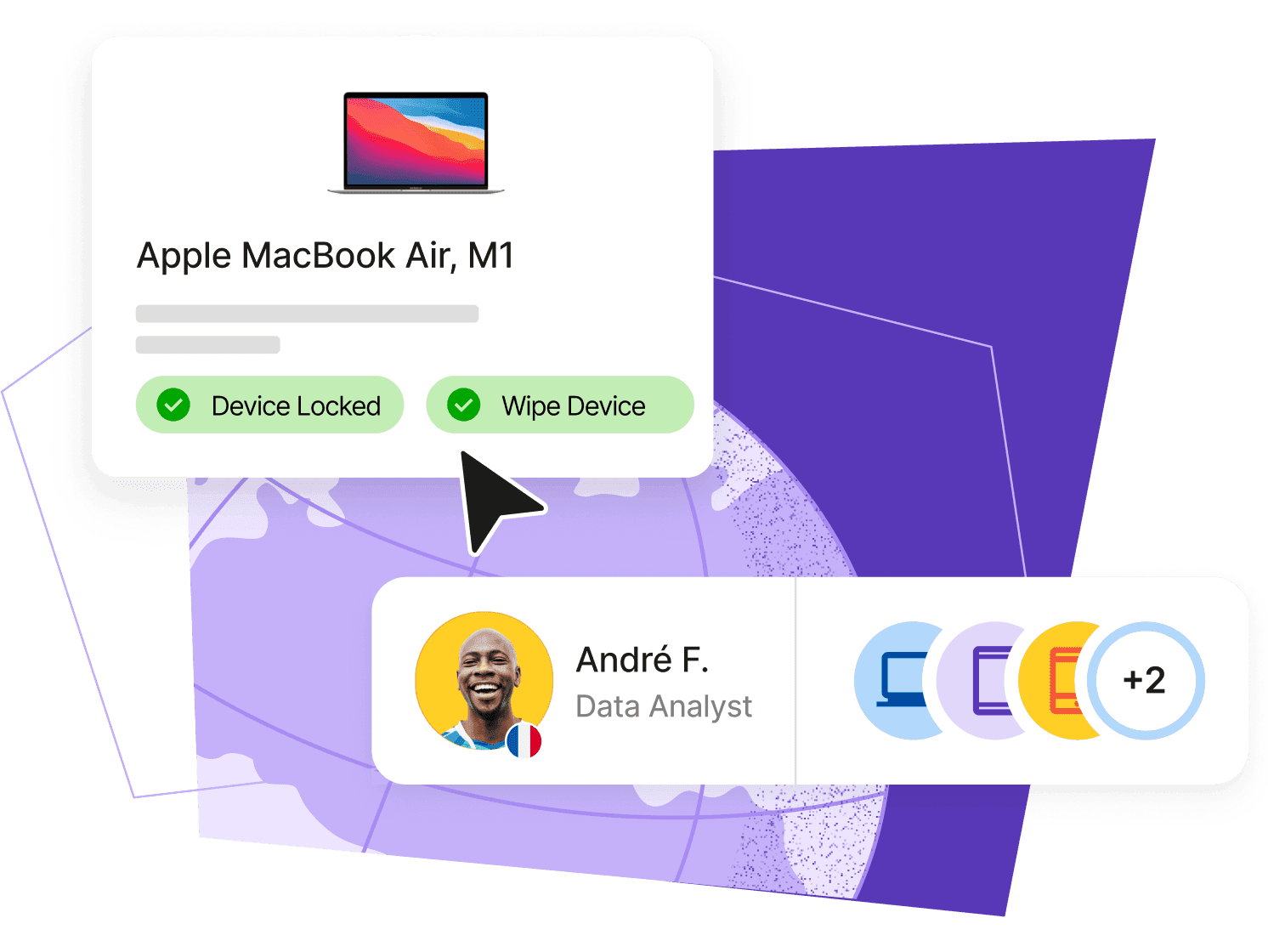
Fleet visibility and lifecycle management: Track device specifications, age, and status across the fleet, making it easier to identify employees whose hardware no longer matches their workloads.
Refresh and recovery: Replace devices where workload requirements have changed, recover outgoing hardware, and securely erase data as part of a coordinated lifecycle process.
Global IT support: Help employees troubleshoot device and performance issues through 24/7 support, wherever they're located.
Book a demo to see how Deel IT helps organizations build and manage hardware standards for an AI-enabled workforce.
Deel IT
Procure, deliver, manage, and secure devices anywhere

FAQs
What specs should a laptop have to run AI tools effectively?
For most AI-assisted workflows, you'll want at least 16GB of RAM (32GB if running local models), a dedicated GPU or integrated NPU, and a modern multi-core processor. Storage speed matters too — an NVMe SSD helps reduce latency when AI tools are reading and writing data in the background.
What is an NPU and do employees actually need one?
An NPU, or Neural Processing Unit, is a chip designed specifically to handle AI inference tasks efficiently without draining the CPU or battery. Not every AI workflow requires one, but for employees running on-device AI assistants, real-time transcription, or background inference tasks, an NPU can meaningfully improve performance and battery life compared to offloading that work to the CPU.
How do I know if my current laptop fleet is underpowered for AI workloads?
Start by mapping your most common AI tools — code assistants, meeting summarizers, local models — against the hardware requirements those tools actually publish. If a significant portion of your fleet falls below 16GB RAM or lacks a discrete GPU or NPU, that's a reliable signal that employees are running demanding workloads on hardware that was specced for lighter use.
Should companies buy new laptops now or wait for AI PC standards to mature?
If your team is already using AI tools daily and experiencing slowdowns, waiting isn't a neutral choice — it has a real productivity cost. That said, procurement decisions made today should prioritize devices with NPUs and at least 32GB RAM, since those specs are increasingly the baseline for AI-ready hardware rather than a premium tier.
Dr Kristine Lennie holds a PhD in Mathematical Biology and loves learning, research and content creation. She had written academic, creative and industry-related content and enjoys exploring new topics and ideas. She is passionate about helping create a truly global workforce, where employers and employees are not limited by borders to achieve success.