Article
4 min read
Managed Endpoint Security: The Cost‑Effective Path for Scaling Companies
IT & device management

Author
Anna Grigoryan
Last Update
October 07, 2026
Managed endpoint security can make protection easier to deploy and manage as companies add more employees and devices, combining centralized control with ongoing monitoring and support. Deel IT brings CrowdStrike-powered endpoint protection, device management, automation, and global IT support into one platform, helping growing teams roll out and manage security consistently as they scale.
Fast-growing companies face more devices, users, locations, and security risks as they scale. Managed endpoint security can make that growth easier to handle by combining endpoint protection with ongoing monitoring and management, reducing the amount of day-to-day security work handled internally.
For scaling companies, the best approach balances security with operational simplicity and cost. This guide explains the benefits of managed endpoint security, the capabilities to look for, and how to choose a solution that is easy to deploy and manage as your company grows.
Why endpoint protection matters for growing companies
As companies grow, they add more employees, devices, locations, and applications to protect. For lean IT teams, managing endpoint security across a growing and distributed device fleet can quickly become difficult.
Managed endpoint security reduces that operational burden by combining endpoint protection with ongoing monitoring and management. Instead of building a large internal security function, growing companies can use external expertise and centralized tools to maintain protection as their device fleet expands.
Key benefits include:
Lower operational overhead: Reduce the amount of endpoint monitoring and security administration handled internally.
Easier scalability: Extend protection to new devices and users without expanding the security team at the same rate.
Centralized management: Monitor endpoints and apply policies consistently across a distributed workforce.
More predictable costs: Shift some security tooling and staffing requirements toward a more predictable service model.
Ongoing security coverage: Access monitoring and response capabilities without building equivalent in-house coverage.
For growing companies, the choice often comes down to how much endpoint security they want to manage internally:
| Approach | Management | Costs | Scalability |
|---|---|---|---|
| Self-managed | Internal teams manage tools, policies, alerts, and response | Software plus internal staffing and administration | Depends on internal resources |
| Managed | Provider handles some or most ongoing security operations | Typically subscription-based | Easier to extend as the device fleet grows |
Endpoint Protection
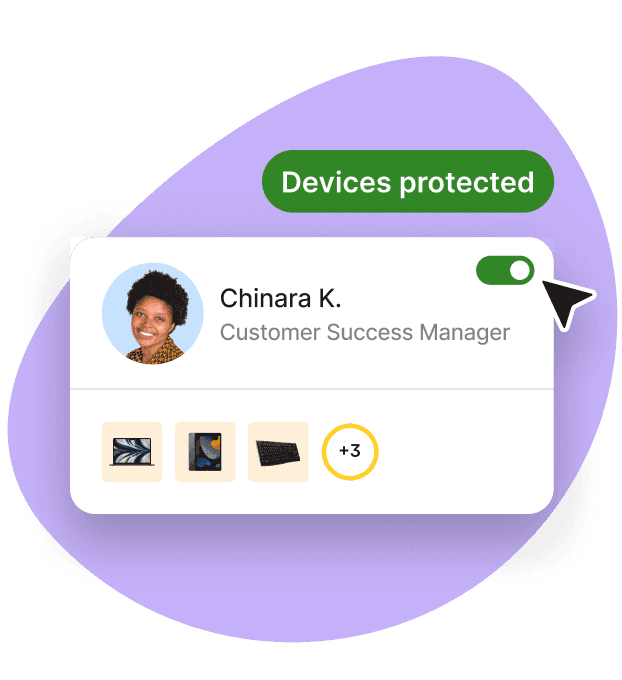
Built-in device protection from day one
Security capabilities to consider when deploying endpoint protection
Ease of management shouldn't come at the expense of protection. Depending on your security requirements, managed endpoint solutions may include technologies such as Extended Detection and Response (XDR), which connects endpoint data with other security signals, and Zero Trust controls that verify users and devices before granting access.
For growing companies, the important question is how easily these capabilities fit into the existing environment. Look for centralized visibility and integrations that improve protection without adding more disconnected tools or manual processes.
How to choose the easiest endpoint protection system to deploy and manage
For growing companies, endpoint protection should be secure without becoming harder to operate every time the workforce expands. When comparing providers, consider:
Ease of deployment: How quickly can you enroll devices and apply security policies?
Centralized management: Can your team monitor devices, policies, alerts, and security status from one place?
Device coverage: Does the solution support the operating systems and device types your workforce uses?
Integrations: Does it work with your existing identity, device management, HR, and security tools?
Automation: Which routine deployment, policy, monitoring, and response tasks can be automated?
Managed support: What does the provider handle, and what remains your team's responsibility?
Pricing: How will costs change as you add employees, devices, or additional capabilities?
Service levels: Review support availability, response expectations, escalation processes, onboarding timelines, and contract terms.
Watch for overlapping agents, disconnected consoles, unclear responsibilities, and additional modules that can make a seemingly simple solution harder or more expensive to manage.
For scaling companies, the easiest system is usually one that minimizes day-to-day administration while fitting into the IT environment they already have.
How Deel IT simplifies endpoint protection for growing companies
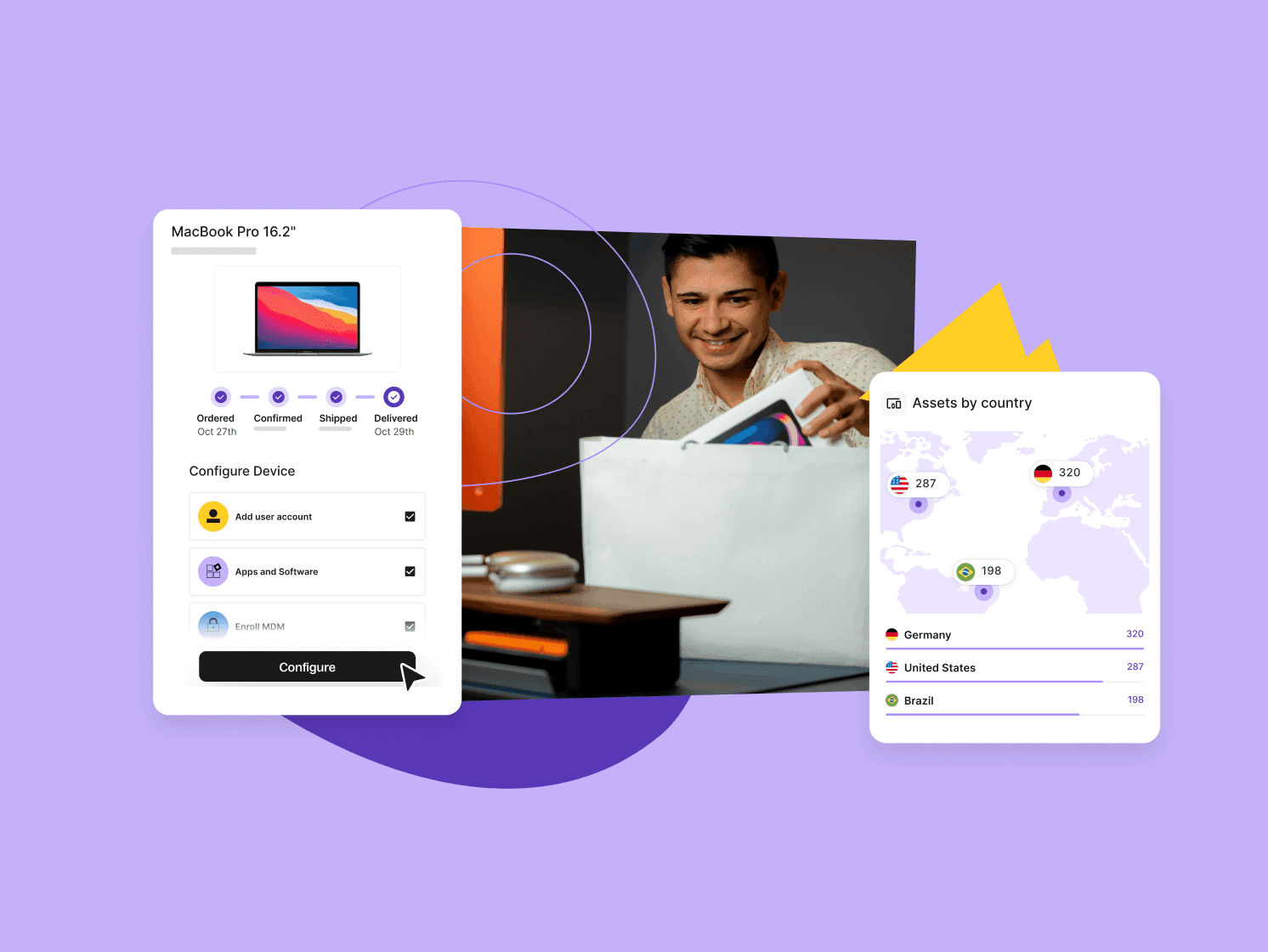
Deel IT is a global IT operations solution that runs device, application access, security, support, and recovery workflows across the worker lifecycle — from onboarding through offboarding. It brings devices, access, security, software management, and IT support together in one platform, reducing the need to manage these areas through disconnected tools and processes.
As employees join, change roles, or leave, IT actions can follow those lifecycle events. This helps teams maintain consistent security while reducing manual work across a growing, distributed workforce.
With Deel IT, teams can:
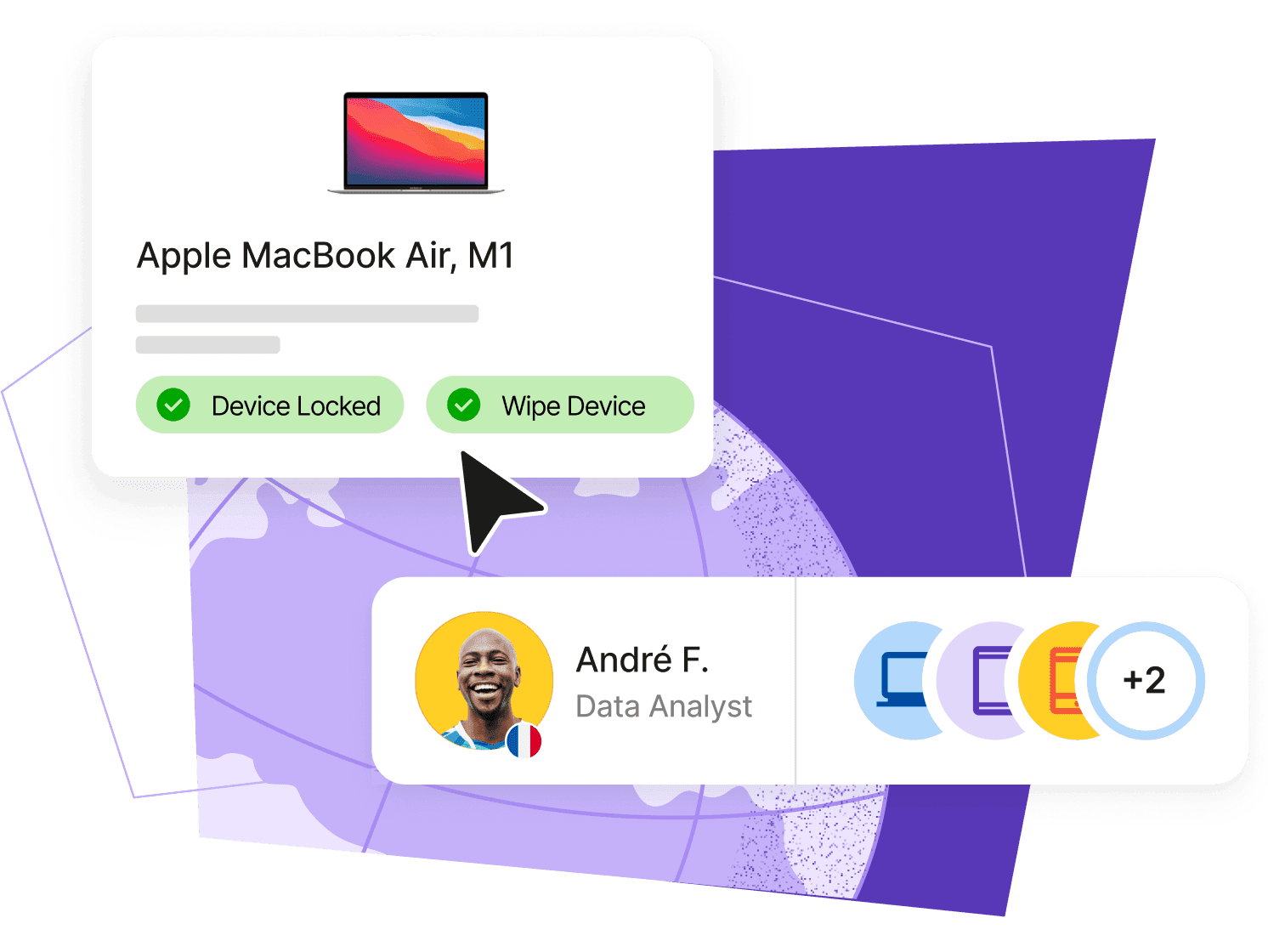
Protect and manage devices: Apply device policies and endpoint protection — built in and powered by CrowdStrike — from a centralized platform.
Automate routine security work: Automate tasks such as policy creation and endpoint alert triage while keeping IT teams in control.
Connect IT to the worker lifecycle: Coordinate device, access, and security actions as people join, change roles, and leave, with automations triggered by HRIS-connected worker lifecycle events.
Manage devices globally: Procure, deploy, repair, recover, store, and reuse devices across 130+ countries, with a 99.5%+ on-time delivery rate.
Provide 24/7 global IT support: Support distributed teams across all time zones without adding the same operational burden internally.
Book a demo to see how Deel IT can simplify endpoint security and global IT operations as your workforce grows.
Deel IT
Procure, deliver, manage, and secure devices anywhere

FAQ
What is the easiest endpoint protection system to deploy and manage for growing companies?
Deel IT simplifies deployment and ongoing management by combining CrowdStrike-powered endpoint protection with centralized device management, automation, and support. For growing companies, this means security can scale with the device fleet without introducing separate processes for every new employee or device.
How quickly can managed endpoint protection be deployed?
Deployment depends on your device fleet, operating systems, existing tools, and enrollment method. Automated enrollment and policy assignment can speed up rollout by applying the required security configuration as devices are provisioned rather than configuring each endpoint manually.
Does managed endpoint protection work for remote and distributed teams?
Yes. Devices can be monitored, secured, and managed centrally regardless of where employees work. Deel IT also connects endpoint protection with device operations across 130+ countries, allowing companies to coordinate security with the deployment, support, and management of distributed devices.
What should growing companies look for in a managed endpoint security provider?
Prioritize straightforward deployment, centralized visibility, automation, operating system coverage, integrations, threat monitoring and response, and reliable support. Just as importantly, understand which responsibilities the provider handles and which security tasks remain with your internal team.
Is managed endpoint security more cost-effective than managing it in-house?
It can be. A managed service may reduce the internal resources required for deployment, monitoring, administration, and response, but the economics depend on your fleet size and existing security team. Compare the full cost of software, staffing, administration, and support rather than subscription prices alone.
How does Deel IT differ from a standalone endpoint protection tool?
Deel IT makes endpoint protection part of the broader device and worker lifecycle. CrowdStrike-powered protection sits alongside device lifecycle management, application access, automation, and 24/7 IT support, so companies can manage security together with the IT workflows that surround each employee and device.
Anna Grigoryan is an SEO and Content Manager with 6+ years of experience in digital marketing and content strategy. She specializes in optimizing & creating high-impact, search-driven content in the tech and HR space, with a focus on global work, people operations, and the evolving world of employment. When she’s not optimizing content for growth, she’s exploring new trends in marketing and technology. Connect with her on Linkedin.