
Guide
How to Build High-Performing Teams in the Era of AI
AI
Global HR
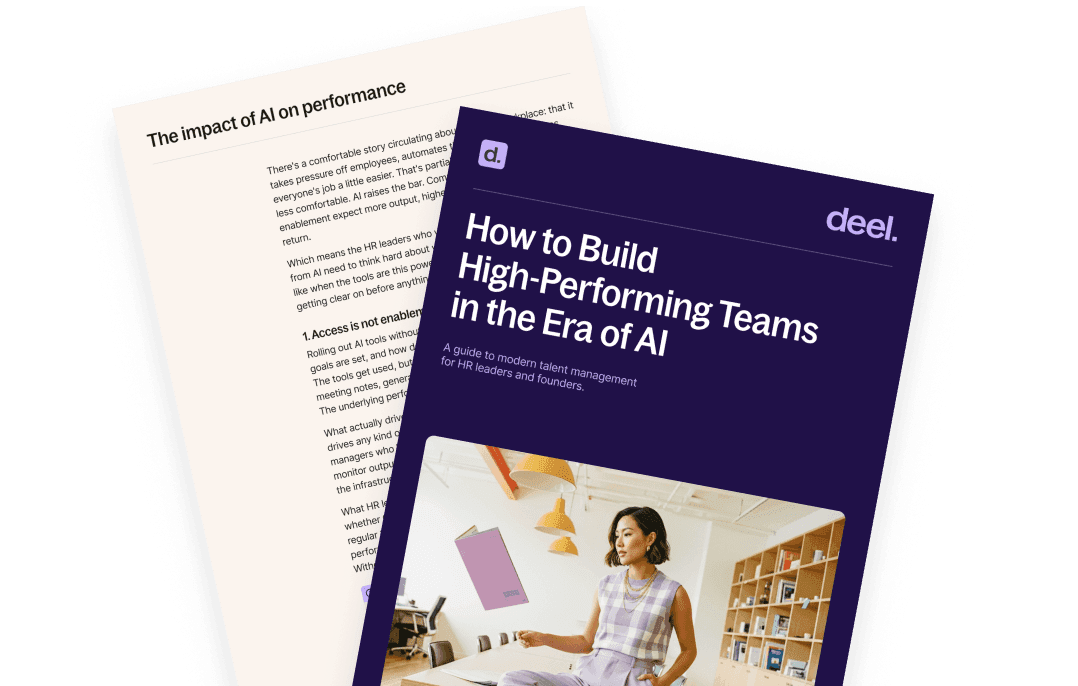
Get the resource for free
Performance management is broken. Your teams have access to better tools than ever. Your people ops stack is smarter. But your performance numbers aren't moving.
Companies have already made the tools available to their teams, but gaps remain in training, confidence, and culture. When AI handles the tracking, scheduling, and reporting, what's left is what actually determines performance. Coaching. Feedback. Difficult conversations. Reading a team's dynamics and responding to it.
This guide shows HR leaders how to build the management infrastructure that scales when technology changes.
What's inside:
How AI changes what you expect from your team and what your managers actually need to become good at
The performance management infrastructure that scales
Why your best companies treat this as a people initiative, not a technology initiative
How to invest in your management layer for measurable returns
According to research, 57% of HR departments struggle with their workloads. Building the right structure now is the highest-leverage move you can make.
—Alice Burks,
Director of People Success at Deel
Inside the guide
This guide is built for HR leaders at an inflection point. It walks through what high-performing teams have in common and how to build the infrastructure to support them.
What AI changes about performance expectations: Where it relieves pressure and where it raises the bar for your managers
Building the management layer: Investing in manager capability through structured development, better feedback frameworks, and deliberate 1:1 practices
Infrastructure for AI-powered performance: The systems and processes you need to scale performance management globally
Making the case for consolidation: How unified tools and platforms compound your returns
Practical examples: Real results from companies like Freeletics and PostHog
The guide includes concrete examples from organizations that have made this shift, along with a prioritized roadmap for getting started.
Who is this guide for?
HR leaders and CHROs building global teams and responsible for performance management infrastructure at the company level
People operations leaders managing payroll, hiring, compliance, and talent development across borders
Founders and startup leaders building HR foundations that scale
If your team is growing and you're asking whether your performance management approach is ready for what comes next, this guide was built for you.
FAQs
What skills do managers need now that AI is handling administrative work?
The administrative work is gone or automated. What remains is what was always hard: coaching people on their growth, giving specific feedback, having difficult conversations clearly, and reading your team's dynamics. Most managers were promoted because they were good at their jobs, not because they were trained to lead. That's the capability gap you fix now.
How is AI adoption different from performance management?
AI adoption measures how many tools are being used. Performance management is what you actually do with those tools. You can have high adoption and still see poor results if the foundation isn't there. The real work is making sure your managers know how to use those tools effectively.
Why should we consolidate HR tools?
Fragmented tools create fragmented data, which means your managers are working with incomplete information. It also means your HR team is spending time reconciling systems instead of developing people. When your data is unified, managers see the full picture and your HR team can focus on what matters.
How do I know if my managers are actually developing?
Track employee engagement, retention in high-performer segments, internal promotion rates, and how often managers give substantive feedback. These metrics tell you whether your development work is creating real change.
What is Engage?
It's a leadership development module within Deel HR that turns feedback into action. Instead of annual reviews that sit in a file, it creates structured development plans tied to actual business outcomes with regular check-ins that matter.
How does AI in Engage help your HR team?
AI consolidates feedback, surfaces patterns across your organization, and flags at-risk talent automatically. This frees your HR team from administrative work so they can focus on coaching managers and building retention strategies.
Where do we start if our performance management is fragmented?
Start with an honest look at where your managers spend their time. If it's still administrative, move that to tools first. Once that's handled, you can measure what your managers are actually doing and build capability from there.
How long until we see results?
Efficiency gains happen quickly. Once administrative work moves to tools, your HR team has more capacity immediately. Culture change and real performance improvement take six to twelve months as managers learn new skills and teams experience better feedback.