
Article
12 min read
Business Travel Checklist: Essentials for Every Trip
Immigration

Author
Jemima Owen-Jones
Last Update
September 06, 2025

Key takeaways
- Successful business travel depends on early planning that accounts for visa processing times, complex logistics, and destination-specific requirements. Start preparing for your trip weeks in advance, so you have enough time to secure your visa or other documentation and book accommodation with business-friendly amenities.
- Documentation is your lifeline when traveling internationally for business. Ensure your passport has at least six months’ validity; otherwise, you may not be able to travel. You also need to check specific visa requirements for your destination, and carry both digital and physical copies of all critical documents.
- Pack intentionally with versatile, wrinkle-resistant clothing and keep all essentials in your carry-on. Stick to a neutral color palette for easy mixing and matching, bring one extra outfit for unexpected situations, and ensure critical items like chargers, medications, and work documents stay with you to avoid losing anything essential in the event of lost luggage.
Have you ever had a last-minute panic, just hours before a trip, that you’ve forgotten something important? You’re not alone—and you’re in the right place.
Business travel can be exciting, but it also comes with high stakes. Forgotten items or visa complications can derail important business opportunities and damage professional relationships.
If you’re reading this, you’re likely looking for a comprehensive business travel checklist—one that actually prepares you for the real-world challenges of corporate travel. At Deel, we support thousands of global professionals every year as they move across borders for work. In this guide, we’ve turned all our knowledge into a comprehensive checklist that goes beyond anything you’ll find elsewhere.
This business travel checklist is for remote workers, executives, consultants, and anyone who travels for business, whether it’s your first trip or your fiftieth. We’ll cover what to plan, what to pack, how to handle immigration, and how Deel can help make your travels stress-free.
Through Deel Mobility, we’ve helped countless professionals secure business travel visas quickly and compliantly, often under tight timelines or in complex jurisdictions. We know how stressful international travel can be when documents and logistics aren’t crystal clear. This guide is designed to give every traveler the confidence and clarity they need before they board the plane.
Let’s make sure your next trip is your smoothest one yet.
Pre-trip planning essentials
Planning early is essential for a successful business trip. That means coordinating your travel dates with your team and clients, securing all necessary travel documents (including visas), booking accommodation that supports productivity, and building a clear itinerary for your trip. Skipping any of these steps can be detrimental. Think missed meetings, added costs, and a great deal of stress.
Choose your travel dates and destination
Start by considering the purpose of your trip. Who do you need to meet, and what do you need to achieve while you’re there?
Confirm your travel dates with all key stakeholders. Keep in mind visa processing times, internal approvals, and any local holidays. Time zones can also impact your schedule, so plan accordingly.
If possible, try to avoid traveling on weekends, as many business services and visa offices are closed. Also, check for public holidays, political events, or travel restrictions that might affect your plans.
If you’re traveling on a business visa, make sure your travel dates fit within the visa’s validity period. Deel Mobility can assist you in managing your visa quickly and efficiently.
Because Deel makes the immigration process extremely straightforward, myself and the rest of the TalentQL team are able to focus on the core aspects of our operations, without expending too much time or resources. You simply upload everything to the dashboard, and Deel’s team takes it from there.
—Adewale Yusuf,
Co-Founder, TalentQL and CEO of AltSchool Africa
Book flights and accommodation
Book your flights early to secure the best times and prices. Choose flights that fit around your meeting schedule and give you enough time to settle in before any important events. Where possible, avoid connections that risk delays or long layovers. And remember to check baggage allowances and any restrictions related to business equipment or documents you may be carrying. If you need to arrange airport transfers on either side, it’s a good idea to organise these in advance, too.
It’s best to choose accommodation close to where you’ll be spending most of your time. Booking a hotel an hour away from where your meetings or events are only adds unnecessary travel time. We also recommend booking accommodation with suitable amenities like reliable Wi-Fi, quiet workspaces, and easy access to public transport.
To avoid any last-minute stress, make sure you keep your booking confirmations and travel details safe and organized. Travel apps like TripIt are great for keeping everything in one place.
See also: Top Business Visa Destinations for Corporate Off-Sites
Prepare your travel documents and visas
Before you travel, make sure all your documents are in order. This includes your passport, business visa, invitation letters, and any company paperwork required by the destination country. Keep both digital and physical copies of any document you can. Having backups can save you from unexpected issues if anything goes wrong during your trip.
Check your passport’s expiration date—it should be valid for at least six months beyond your return date. Many countries won’t let you enter if your passport is close to expiring.
Business visas can take time to process, sometimes several weeks, so start the application early and gather all the documents you need to avoid delays that put your trip at risk. Some countries require an invitation letter from the host company or proof of your travel itinerary.
Deel Mobility can help you get to grips with specific visa requirements for your destination, so if you’re unsure about visa rules or need help navigating the process, we’re here to help.
See also: Business Visa or Visa on Arrival (VoA): Which Is Right for You?
Case study: How Deel revolutionized processes for the Nomic Foundation
The Nomic Foundation is a nonprofit supporting Ethereum developers. They needed a faster and easier way to manage visa applications for key team members. Managing the process alone was slow, costly, and complicated. But Deel Mobility made the process simple.
With Deel, Nomic secured a visa for a senior employee quickly and without the costly legal fees. Everything was handled in one place, saving the company time and money.
"The process was very smooth and simple. If it hadn't been for this solution, we would've ended up spending thousands of dollars and time engaging with other local providers.”
—Manuel Freire, Head of Legal and Finance, The Nomic Foundation
Organize your meetings and itinerary
Create a detailed itinerary before you leave. This should include all meetings, travel times, and important deadlines. It’s easy to lose track of time and tasks while you’re traveling, so having it all noted down will help you ensure nothing gets missed.
Confirm appointments with anyone you’re meeting ahead of time. Double-check times, dates, and locations to avoid any accidental missed appointments. And if you’ll be missing any of your regular meetings while you’re away, remember to inform your clients or colleagues.
Don’t forget to build in buffer time between meetings. Traffic, delays, or unexpected issues can (and often do) happen. Having some wiggle room will save you the stress in the event of any delays.
Before you go, save any phone numbers and emails you might need. For example, your accommodation provider, anyone you’re meeting, and local taxi numbers.
Visas and essential documentation
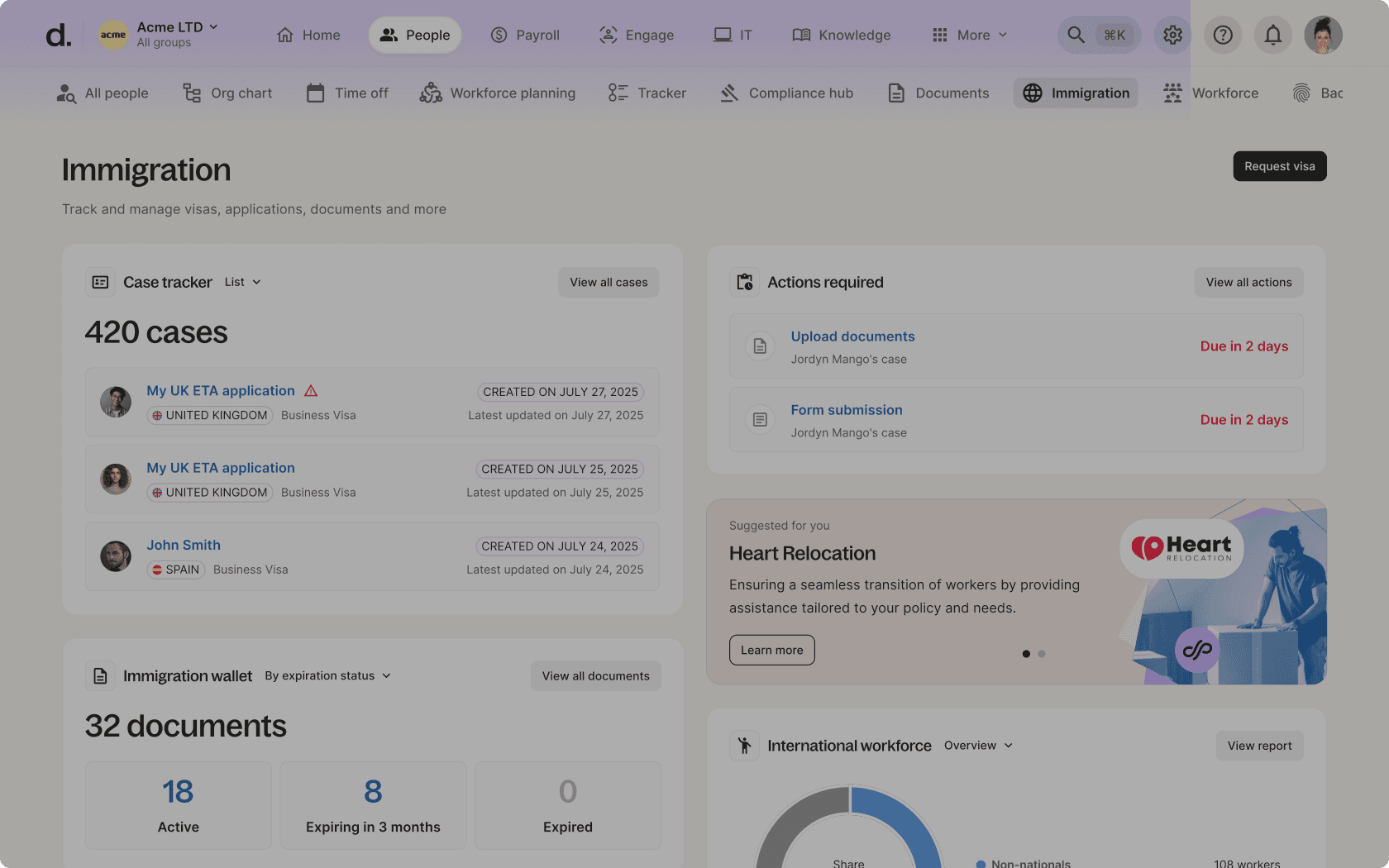
Travel disruptions often come down to problems with visas or other essential documentation. One missing document can delay a meeting, or worse, cancel the trip altogether. Before traveling, it’s essential to check your passport validity and the visa requirements of your destination. If you need any support or guidance, Deel can help by handling the visa process from start to finish.
Deel helps me get things done quicker, easier, and more cost-effectively. We can offer unparalleled worker mobility and flexibility, which our team values.
—Emma Leipold,
Senior Global Mobility and Total Rewards Partner, ZipCo
Check passport validity and visa requirements
Before you book anything, check your passport expiry date. We can’t stress this enough.
Many countries require at least six months of passport validity beyond your travel dates. If yours is due to expire soon, renew it before applying for a visa. Otherwise, your visa may not be approved, and you’ll have to start the process all over again with your new passport.
Bear in mind that visa requirements vary widely. Some countries allow short-term business travel without a visa. Others require official invitation letters, detailed itineraries, or government pre-approval.
Start the visa process early. Don’t leave it to the last minute. Delays in approvals are common, especially during peak travel seasons.
If you’re unsure what type of visa you need or how to apply, Deel Mobility can help.
Deel Mobility

Emergency documentation
Things can go wrong. Be prepared.
Carry printed and digital copies of:
- Your passport and visa
- Travel insurance details
- Invitation letters or proof of meetings
- Emergency contacts (personal and company)
- Any required health documents (vaccination certificates, etc.)
We recommend storing copies in a cloud folder with offline access and keeping a printed set in your hand luggage.
Packing for a business trip
Pack with intention. That means packing light. Bring only what you need, and make sure it's organized and accessible. Prioritize versatile clothing and don’t forget essential documents, tech, and personal care items. Here’s everything you need to consider when packing for a work trip.
Packing strategy
Before we dive into what to pack, a quick note on how to pack.
Start with a carry-on. It saves time and avoids baggage delays. If your trip is longer or includes formal events, a checked bag may be necessary, but only pack what you know you’ll actually use.
Choose versatile clothing and gear—stick to a neutral color palette to make mixing and matching easier. Roll your clothes to reduce wrinkles and save space. You can also use packing cubes to keep items organized. And don’t forget—always check the local weather forecast and dress norms.
Keep essentials in your carry-on bag. That includes your passport, visa, laptop, chargers, work documents, and anything else that’s hard to replace. You should also carry local currency and a debit or credit card in your carry-on bag. Checked bags can get lost—don’t risk losing your essential items.
Finally, don’t assume your destination will have what you need—always bring items like phone chargers, medication, and power adapters.
Professional clothing
Pack for the meetings you’re attending—not just the climate.
Include a blazer or jacket, wrinkle-resistant shirts or blouses, formal trousers or skirts, and professional shoes. Add one outfit that’s client-facing and another that’s more casual but still polished.
If your trip includes networking dinners or events, bring one smart-casual evening outfit. Layers are helpful if you’re moving between climates or working in air-conditioned spaces.
Stick to items that are easy to maintain and avoid fabrics that crease easily or require dry cleaning.
And just in case, always bring one extra outfit.
Casual clothing
Not every moment of a business trip is spent in meetings. You’ll also need casual clothes for travel days, downtime, or informal team events.
Pack a suitable number of casual outfits for the length of your trip. If your trip includes a weekend, check whether your schedule allows you to get out and explore the local area. Dress codes vary by country, so take the time to research and ensure your clothing is respectful of the local culture.
And remember: you’re likely to be on your feet a lot of the time while traveling, so packing comfortable shoes is essential.
Personal items
Only bring what you need—but don’t forget the essentials.
Start with a basic toiletry kit: toothbrush, toothpaste, deodorant, skincare, and other personal items. If you're flying carry-on only, make sure liquids meet airline restrictions.
Pack any medications you take regularly, along with basic first-aid items like plasters, pain relief, and hand sanitizer.
Depending on your destination, you might also want to bring insect repellent or sunscreen.
If you have specific health needs—like food allergies or chronic conditions—carry documentation in case of an emergency.
Travel comfort and extras
A few small extras can make travel a lot more comfortable.
Bring a travel pillow, eye mask, and earplugs for rest on long flights. A reusable water bottle keeps you hydrated without relying on single-use plastics, and light snacks are a good thing to have in case of delays or long workdays.
Include a small notebook or planner for quick notes, as well as a pen for customs forms and meeting sign-ins.
If you’re working across time zones, don’t forget to update your watch or mobile phone (if it doesn’t automatically update).
Keep everything you need regularly easily accessible. You don’t want to be digging through your bag while boarding or rushing between meetings.
Business packing checklist
Essential items
- Passport or ID card
- Driver’s license
- Boarding pass
- Visa documents
- Business travel insurance documents
- Local currency
- Credit and debit cards
- Prescriptions and medication
Other travel documents and essentials
- Hotel reservation booking confirmation
- Business or presentation materials
- Travel itinerary
- Diary or calendar
- Business cards
Electronic devices
- Laptop and charger
- Mobile phone and charger
- Headphones or earphones
- A portable phone charger or power bank
Clothes
- Formal business wear
- Casual clothing for downtime
- Formal pair of shoes
- Casual pair of shoes
- Workout clothes
- Pyjamas
- Undergarments
Toiletries
- Toothbrush and toothpaste
- Soap
- Shampoo and conditioner
- Deodorant
- Razor and shaving cream
- Hairbrush
- Makeup (optional)
- Paracetamol or ibuprofen
Other personal items
- Notepad and pen
- Water bottle
- Hand sanitizer
- Earplugs and eye mask
- Neck pillow
- First aid kit
Looking after yourself while traveling for business
Traveling can be exhausting. And you’re not just traveling—you’re also working.
Long flights, irregular meals, and packed schedules can all take a toll. Prioritizing your well-being helps you show up at your best.
You can manage jet lag by adjusting your schedule before you travel. Then, use daylight, hydration, and short naps to adapt more quickly when you land.
Wherever possible, stick to a routine—sleeping, eating, and working at roughly the same times each day. And if you can, try to stay active by using hotel gyms or bodyweight workouts in your room. Even a 10-minute stretch can reset your focus after a long day.
Managing business trip expenses
The trip doesn’t end when you land. Wrapping up travel expensing quickly and accurately makes things easier for you and your finance team. Always keep your receipts well organized and submit them promptly to avoid any long delays in being compensated.
Keep your receipts organized
Don’t wait until the end of your trip to track expenses.
Use apps, like Deel’s integrated expense tools, to log receipts in real time. Take photos, upload them to your system, and tag expenses correctly as you go.
Keep notes on business-related mileage, meals, and incidentals. It’s easier to capture these daily than to try to remember them later.
Submit reports promptly
Submit your expense report as soon as you’re back—or even before you land. Quick reporting means faster reimbursement and less follow-up. It also closes the loop on your trip while the details are still fresh.
If your company uses Deel, you can manage expenses effortlessly, including receipts, per diems, and reimbursements. Deel’s platform supports global teams and automates compliance based on local requirements.
Streamline business travel with Deel Mobility
Getting a business visa shouldn’t slow you down.
Deel Mobility is your all-in-one partner for global mobility and work visas. We help companies and professionals navigate the business visa process with speed and confidence. Whether you’re traveling for meetings, expansion, or project work, Deel simplifies complex visa requirements so you don’t have to figure them out on your own.
We offer fast, compliant visa processing thanks to our local expertise across 150+ countries. You’ll benefit from end-to-end support, meaning there’s no chasing documents or translating forms.
Less paperwork, fewer days, and complete peace of mind knowing that your visa process is on track.
Sounds like the ideal solution?
More resources
Jemima is a nomadic writer, journalist, and digital marketer with a decade of experience crafting compelling B2B content for a global audience. She is a strong advocate for equal opportunities and is dedicated to shaping the future of work. At Deel, she specializes in thought-leadership content covering global mobility, cross-border compliance, and workplace culture topics.


