Article
4 min read
International Device Provisioning 101: What It Is and How It Differs From Procurement
IT & device management

Author
Dr Kristine Lennie
Last Update
November 19, 2026

Table of Contents
Device procurement: getting the right hardware to the right place
Device provisioning: making hardware ready to use
Device procurement vs. provisioning at a glance
How procurement and provisioning work together
How to make procurement and provisioning work internationally
Bring procurement, provisioning, and device management together with Deel IT
FAQ
Device procurement and provisioning are related but distinct: procurement gets the right hardware to the right employee, while provisioning ensures it arrives configured, secured, and ready to use. Deel IT handles both across 130+ countries in one platform, and with Deel IT Self-Serve you can start ordering right away with just a credit card to equip your hires.
Device procurement and device provisioning are often used interchangeably. It’s easy to see why: both are part of getting a new hire the equipment they need. But ordering and delivering a laptop is not the same as getting it set up and ready for work.
The difference becomes even more important when you’re hiring internationally, where the device, delivery process, and setup requirements can vary from country to country. This guide explains what procurement and provisioning each cover, how they work together, and what changes when you’re equipping employees around the world.
Device procurement: getting the right hardware to the right place
Device procurement is the process of sourcing, buying, and delivering hardware to an employee. In simple terms, it’s about choosing the right equipment and making sure it reaches the right person, in the right place, at the right time.
When you’re procuring devices internationally, there’s more to consider. Hardware availability, keyboard layouts, local requirements, costs, and delivery options can all vary depending on where the employee is based.
Device procurement typically covers:
Hardware sourcing: Finding laptops, monitors, accessories, and other equipment through global, regional, or local suppliers
Device selection: Choosing the right model and specifications for the employee’s role and location, including memory, storage, operating system, and keyboard
Purchasing and cost management: Ordering the equipment and accounting for costs such as taxes, duties, and delivery
Customs and import requirements: Handling the documentation and requirements that may apply when devices are shipped across borders
Shipping and delivery: Coordinating fulfillment, tracking the shipment, and getting the equipment to the employee
Asset registration: Recording the device and assigning it to the employee so it can be tracked throughout its lifecycle
Why it matters: Getting procurement right means employees receive the equipment they actually need, when they need it. When hiring internationally, the wrong device, an unsuitable keyboard, or a delayed delivery can hold up onboarding before provisioning even begins.
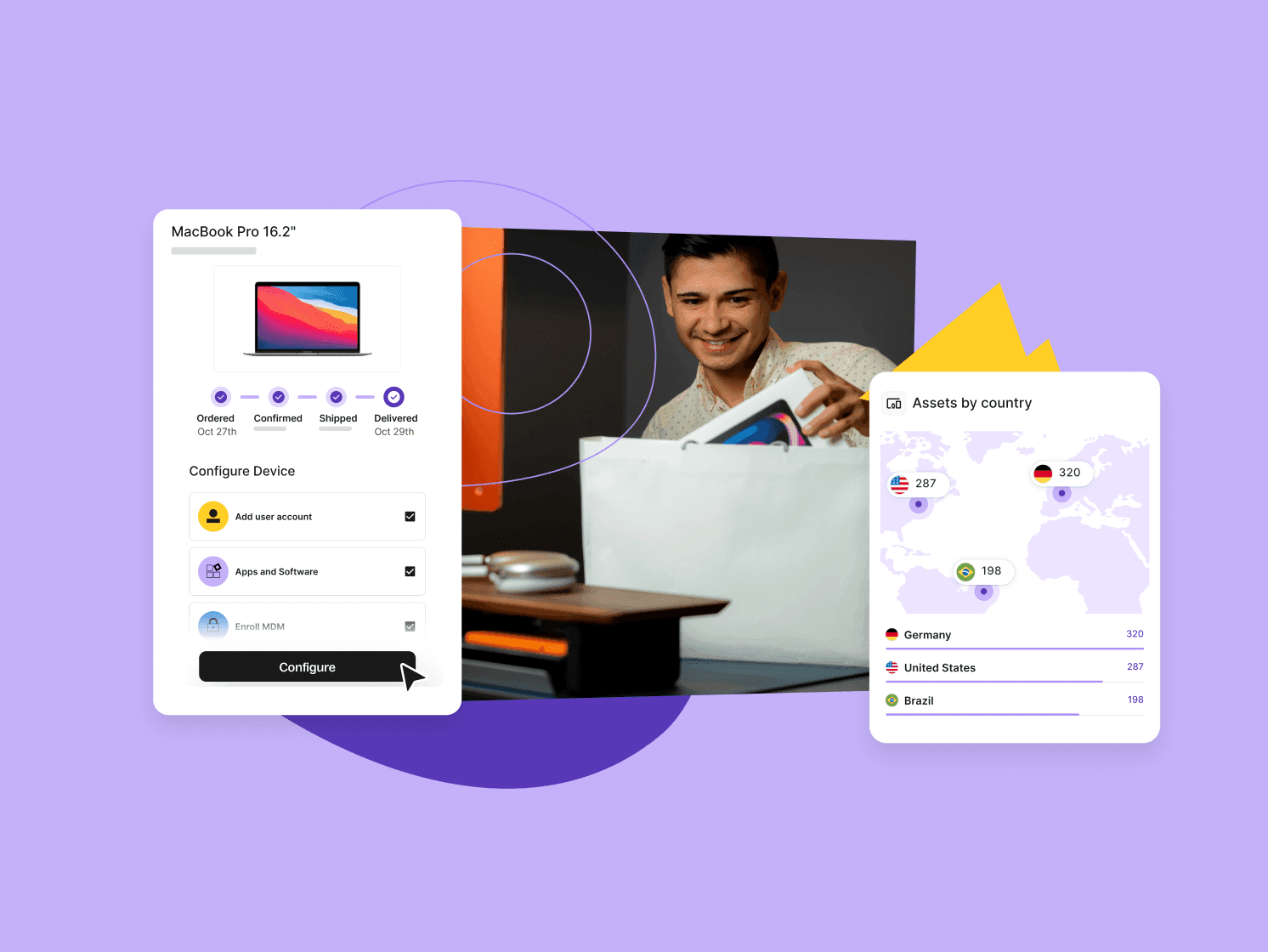
With Deel IT: Teams can procure laptops and accessories across 130+ countries from one platform, without having to find and coordinate different hardware suppliers every time they hire in a new country. Deel IT Self-Serve also lets teams browse equipment available for an employee’s location and place orders online.
See also: Top IT Procurement Challenges and How to Solve Them
Need to equip someone right now? Try Deel IT Self-Serve → Browse devices and accessories, configure for the destination country, and check out by credit card — no sales call, no contract, no seat minimum. Your first order can ship today.
Device provisioning: making hardware ready to use
Device provisioning is the process of setting up a device so an employee can use it for work. It covers the settings, applications, and security requirements that turn a new laptop or other device into one that is ready for the employee.
When you’re provisioning devices internationally, employees may need different operating systems, languages, keyboard settings, applications, or other configurations depending on their role and location. Provisioning can happen before delivery, during the employee’s initial setup, or through a combination of both.
Device provisioning typically covers:
Mobile Device Management (MDM) enrollment: Enrolling the device in the company’s MDM so IT can apply policies, manage settings, monitor the device, and take supported remote actions
Operating system and device configuration: Applying the right operating system settings, language, keyboard layout, and other configurations for the employee
Application setup: Installing or making available the applications the employee needs for their role
Security policies: Applying requirements such as encryption, screen locks, firewall settings, and other security controls
Verification and handoff: Checking that the device has been enrolled and the required settings, applications, and policies are in place before the employee starts using it
Device provisioning can also work alongside access management. Provisioning gets the device ready; access management makes sure the employee has the right access to company applications and systems. Connecting the two can help employees start with both the equipment and access they need.
Why it matters: Receiving a laptop doesn’t necessarily mean an employee can start working. If the device still needs to be enrolled, configured, or secured after it arrives, onboarding can be delayed. This can be even harder for international teams, where IT may not be able to set up or troubleshoot the device in person.
With Deel IT: Devices can be enrolled and set up in MDM during provisioning, helping employees receive hardware with the required settings, applications, and security policies already in place. Deel IT can also connect device management with access workflows across onboarding, role changes, and offboarding.
Read: Identity and Access Management with Deel IT
Device procurement vs. provisioning at a glance
Device procurement and provisioning are connected, but they solve different problems. Procurement focuses on acquiring and delivering the hardware; provisioning focuses on preparing that hardware for secure, productive use. Here is an at-a-glance summary of what each does:
| Capability | Procurement | Provisioning |
|---|---|---|
| Hardware sourcing and purchasing | ✓ | — |
| Device and specification selection | ✓ | — |
| Customs and import requirements | ✓ | — |
| Shipping and last-mile delivery | ✓ | — |
| Asset registration | ✓ | — |
| MDM enrollment | — | ✓ |
| OS and locale configuration | — | ✓ |
| Application setup | — | ✓ |
| Security policy application | — | ✓ |
| Day-one readiness verification | — | ✓ |
The key distinction:
Procurement answers “Do we have the right device, and can we get it to the employee?”
Provisioning answers “Is the device configured, secured, and ready to use?”
Both need to work together for a smooth onboarding experience.
How procurement and provisioning work together
The best results come when procurement and provisioning are planned as one connected process. The information needed to set up a device — such as who it is for, what they need, and when they start — should be considered while the device is being ordered and delivered.
The table below shows how procurement and provisioning work together at each stage of getting a new hire’s device ready for day one:
Procurement and provisioning don’t happen one after the other. They overlap during onboarding: procurement gets the right device ordered and delivered, while provisioning prepares it for work. The table below shows where each process comes in and how they work together.
| Stage | Procurement | Provisioning | How they work together |
|---|---|---|---|
| Choose the device | Select the right hardware and specifications for the employee | Identify any setup requirements that could affect the device choice | The device is chosen with both the employee’s hardware and setup needs in mind |
| Order the device | Purchase the hardware and arrange delivery | Prepare the required applications, settings, and security policies | Provisioning can be planned while the device is being sourced and delivered |
| Prepare the device | Keep the order and delivery on track | Enroll and pre-configure the device where supported | The device can be prepared for work before it reaches the employee |
| Deliver the device | Manage delivery to the employee | Confirm the required setup has been applied | Delivery and setup come together so the employee receives a work-ready device |
| Day one | Confirm the employee has received the right equipment | Verify the device is managed, secure, and ready to use | The employee has both the hardware and setup they need to start work |
How to make procurement and provisioning work internationally
International hiring raises the stakes for both procurement and provisioning. Hardware availability, local requirements, delivery options, and device setup can all vary by country, and those differences become harder to manage as your team grows across more locations.
A consistent approach helps teams manage that complexity at scale, get employees ready for day one, and equip new hires without having to rebuild the process for every country.
To make procurement and provisioning work across countries:
Source hardware based on location: Find suitable devices where employees live, taking into account availability, keyboard layouts, power adapters, and other local requirements
Plan for local delivery requirements: Consider shipping options, customs, taxes, duties, and delivery times before the device is ordered
Standardize how devices are set up: Set consistent requirements for applications, security policies, and device management across countries and operating systems
Configure devices for each employee: Apply the right language, keyboard, time zone, applications, and other settings based on the employee’s role and location
Prepare devices before delivery where possible: Enroll and configure supported devices during provisioning so employees have less setup to do when their equipment arrives
The aim is for every employee to receive the right device, with the right setup, wherever they work.
See also: 5 Things Most Companies Get Wrong About International IT Logistics
Bring procurement, provisioning, and device management together with Deel IT
Managing devices across countries is much easier when the entire process is connected. Deel IT brings procurement, provisioning, device management, access, support, and offboarding into one platform, giving teams one place to manage devices from order to recovery and reuse.
With Deel IT, global teams can:
Procure hardware across 130+ countries: Browse laptops and accessories available for each employee’s location and manage global orders without coordinating separate suppliers in every market.
Prepare devices before delivery: Where supported, enroll and pre-configure devices in MDM with the required settings, applications, and security policies before they reach employees.
Manage access throughout employment: Connect application access with onboarding, role changes, and offboarding, with Single Sign-On (SSO) and Multi-Factor Authentication (MFA) as part of the wider identity and access workflow.
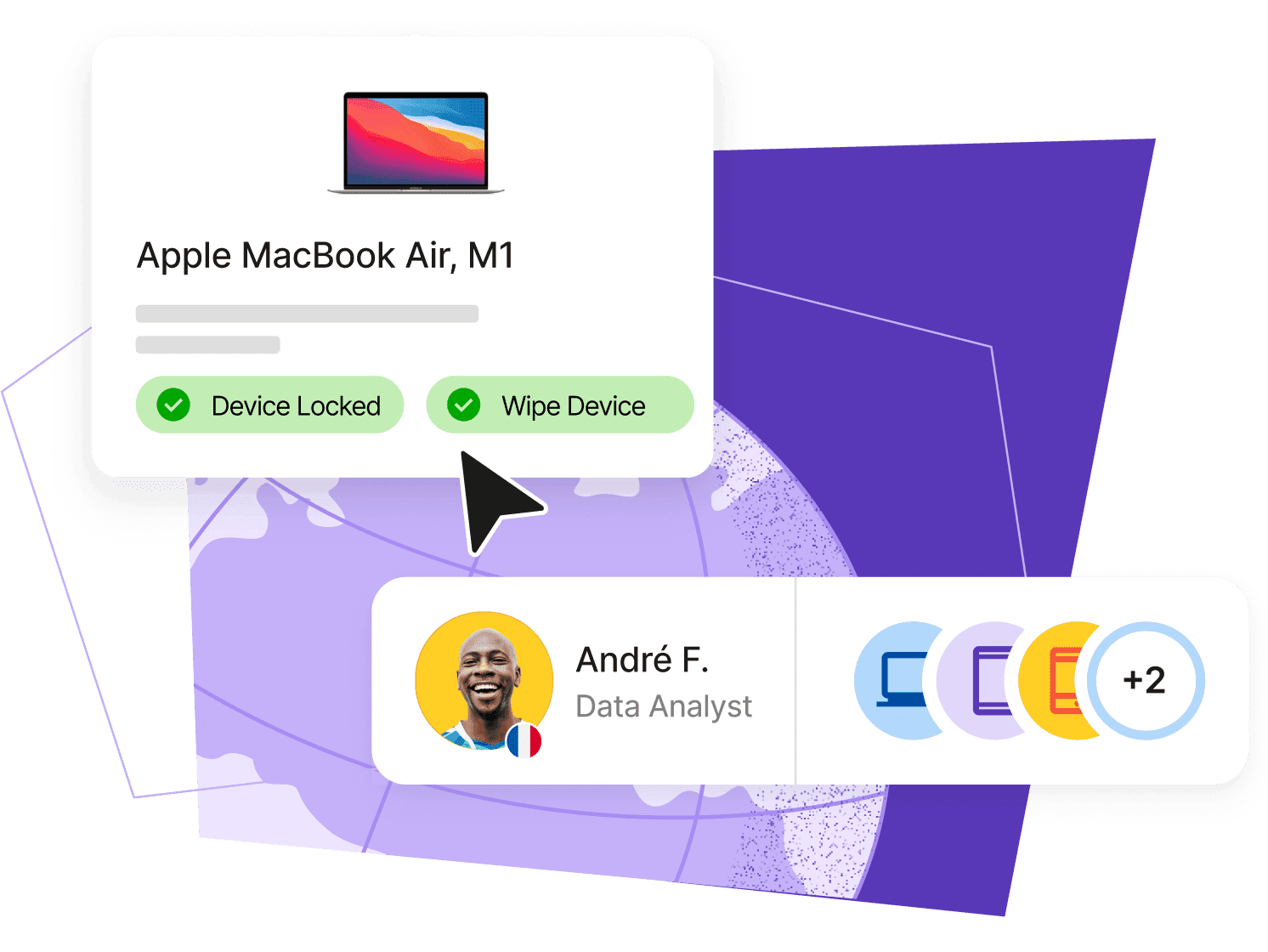
Support and manage devices remotely: Track equipment, manage devices, provide IT support, and coordinate repairs wherever employees are based.
Recover and reuse devices: Coordinate device collection, secure storage, and reuse when employees leave, or equipment needs to be reassigned.
Buy without a contract or seat minimum: Browse a global device catalog, configure for the destination country, and check out by credit card
By bringing these steps together, Deel IT helps teams build a consistent device process that can scale as they hire across more countries. Book a demo to see how.
Deel IT
Procure, deliver, manage, and secure devices anywhere

FAQ
What is the difference between device provisioning and device configuration?
Device configuration is one part of provisioning. Configuration covers settings such as the operating system, applications, language, and keyboard layout. Provisioning is the broader process of preparing the device for use, including MDM enrollment, configuration, security policies, and readiness checks.
Does MDM enrollment have to happen before a device is delivered?
Not necessarily. Depending on the device and deployment method, MDM enrollment can happen before delivery or during the employee’s initial setup. Where supported, enrolling and pre-configuring devices during provisioning can reduce manual setup and help IT apply required policies before the employee starts using the device.
Who manages device provisioning if a company does not have a dedicated IT team?
Responsibility varies by organization. It may sit with an IT administrator, operations team, or another person responsible for employee equipment. For smaller teams, automating enrollment and configuration can reduce the amount of manual setup required for each new hire.
How does international device provisioning differ from domestic provisioning?
The core process is similar, but international teams often have more variation to manage. Devices may differ by operating system, keyboard layout, language, and regional settings, while employees may be distributed across locations where hands-on IT support is not available. A standardized provisioning process helps IT apply consistent configurations and security policies across a distributed fleet.
About the author
Dr Kristine Lennie holds a PhD in Mathematical Biology and loves learning, research and content creation. She had written academic, creative and industry-related content and enjoys exploring new topics and ideas. She is passionate about helping create a truly global workforce, where employers and employees are not limited by borders to achieve success.