Article
12 min read
5 Things Most Companies Get Wrong About International IT Logistics
IT & device management

Author
Dr Kristine Lennie
Last Update
May 08, 2026

Table of Contents
Problem #1: Treating international procurement as a domestic process with extra steps
Problem #2: Enrolling devices after delivery instead of at provisioning
Problem #3: Managing access provisioning separately from device delivery
Problem #4: Assuming a single compliance policy covers every country
Problem #5: Treating device recovery as a logistics problem rather than a security event
What are the real costs of poor international IT logistics?
How Deel IT solves international IT logistics
Key takeaways
International IT logistics often breaks down in the same areas: procurement becomes fragmented across regions, onboarding timelines drift out of sync, devices arrive without proper enrollment, and IT teams lose visibility as the global fleet grows.
As companies expand internationally, those small operational gaps become harder to control and significantly more expensive to fix across procurement, onboarding, security, and compliance workflows.
Deel IT helps companies eliminate the operational failures of international IT logistics by handling procurement, shipping, device enrollment, and compliance across 130_ countries from a single platform, so distributed teams get the right equipment, configured correctly, without customs delays or unmanaged endpoints.
Managing IT logistics across a single country is operationally straightforward. Managing it across five, ten, or twenty is a different problem entirely, one that most IT teams discover only after something has already gone wrong.
Most logistical failures happen when domestic IT processes are stretched across a global workforce. As companies expand into more countries, procurement, provisioning, compliance, and recovery become harder to coordinate, and the operational gaps compound.
Here are the five most common ways international IT logistics break down.
Problem #1: Treating international procurement as a domestic process with extra steps
Most enterprise IT teams begin international expansion by extending their existing procurement model: the same vendors, the same configuration standards, the same lead time assumptions, but taken into new markets. It works for the first hire in a new country. It tends to stop working at the second.
International device procurement isn't a variation of domestic procurement. It's another operational problem altogether: from different customs and import requirements, to unfamiliar local regulations, availability constraints, and even keyboard layouts and power standards.
Here are the most common issues that IT teams encounter:
Single-vendor relationships don't extend globally: Most domestic hardware vendors have limited or no fulfillment capability outside their home market, forcing IT teams to source new resellers for each country
Lead times become unpredictable by region: Shipping timelines that are reliable domestically diverge significantly across international markets, making it impossible to guarantee device arrival before a new hire's start date
Hardware configuration standards start fragmenting by country: Keyboard layouts, power adapters, and local compliance requirements make it difficult to maintain one consistent device configuration across every market
Import duties and customs clearance are handled ad hoc: Without established customs processes per country, devices get held at borders (sometimes for days), with no visibility into status or resolution timeline
Procurement costs are absorbed rather than tracked: When each country runs its own sourcing process, spend is distributed across departments and vendors with no consolidated view of what international logistics actually costs
The result: International procurement becomes fragmented across vendors, regions, and workflows, creating inconsistent device setups, delayed deliveries, and operational overhead that grows with every new market.
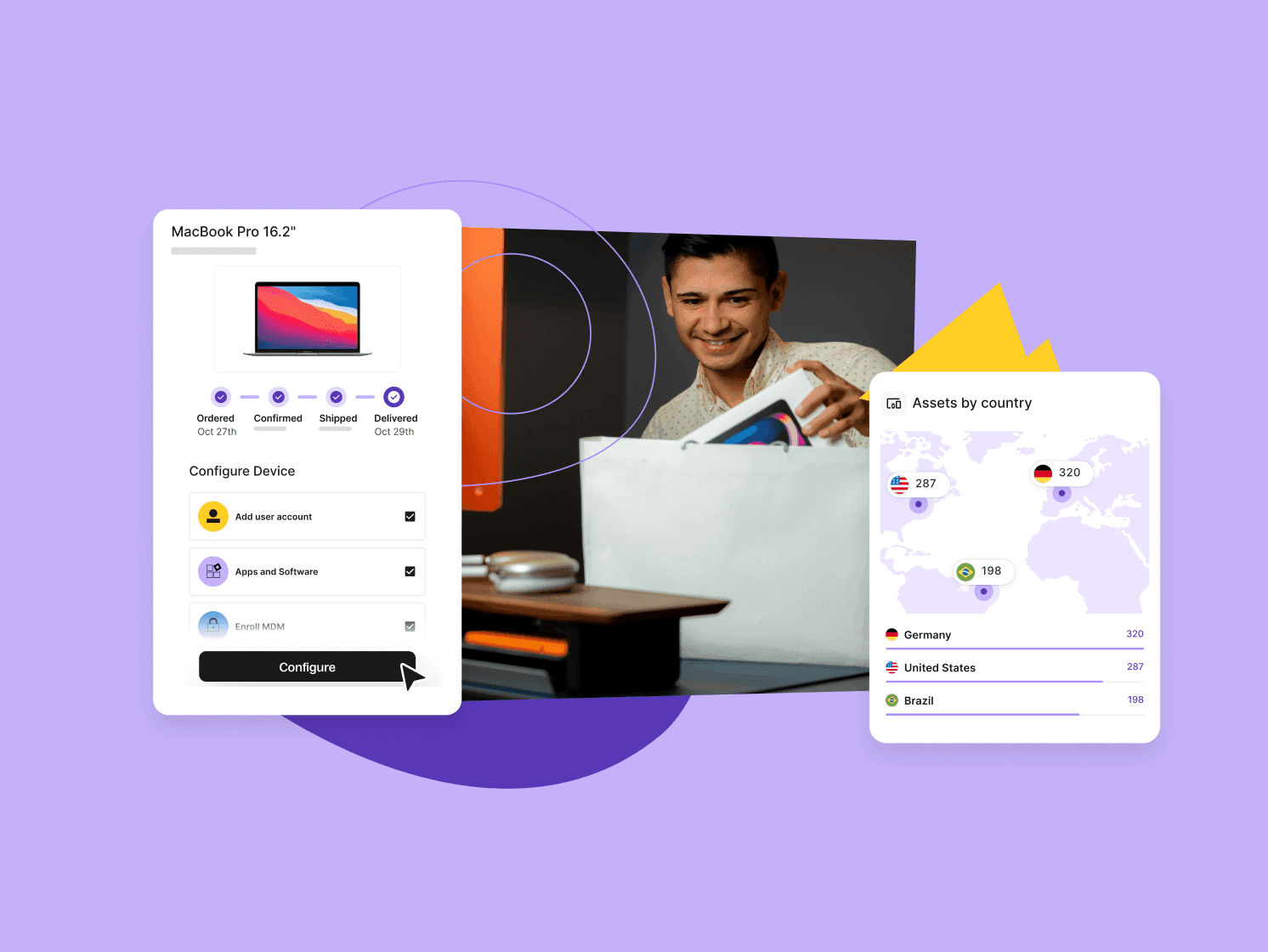
How Deel IT solves this: Deel IT handles device procurement and delivery across 130+ countries through a single platform, allowing you to seamlessly choose equipment from our 240+ item catalog, configure devices, and ship pre-imaged hardware to new hires globally.

Guide
The World at Work in 2026: Deel IT
Read: Top IT Procurement Challenges and How to Solve Them
Problem #2: Enrolling devices after delivery instead of at provisioning
Endpoint management is only as strong as the moment it begins. Most enterprise IT teams assume mobile device management (MDM) enrollment happens as part of the provisioning process, but in international deployments, it frequently doesn't. Devices ship clean, arrive at a new hire's location, and enrollment is treated as a first-login task rather than a pre-delivery requirement.
At the domestic scale, this gap is manageable. Across international markets, where IT has no physical presence and no ability to intervene after delivery, it creates a window of unmanaged exposure that can last days or weeks.
Here is what that means:
Devices ship without policy enforcement applied: Encryption, OS configuration, and security baselines are not in place when the device first connects to a network
MDM enrollment depends on the new hire completing it correctly: Self-enrollment processes introduce variability, where steps are skipped, configurations are incomplete, and IT has no visibility until something fails
Remote wipe and lock capabilities are unavailable until enrollment completes: If a device is lost or stolen before the new hire enrolls in it, IT has no recovery options
Enrollment failure rates are higher in international markets: Language barriers, unfamiliar interfaces, and limited local IT support mean self-enrollment fails more often outside the home market
Fleet compliance reporting shows gaps that are difficult to close retroactively: Devices that were never properly enrolled appear as unknown in compliance dashboards, creating audit exposure that's hard to remediate after the fact
The result: A portion of the international fleet operates outside policy coverage, not because of a security failure, but because enrollment is designed to happen after delivery rather than during provisioning.
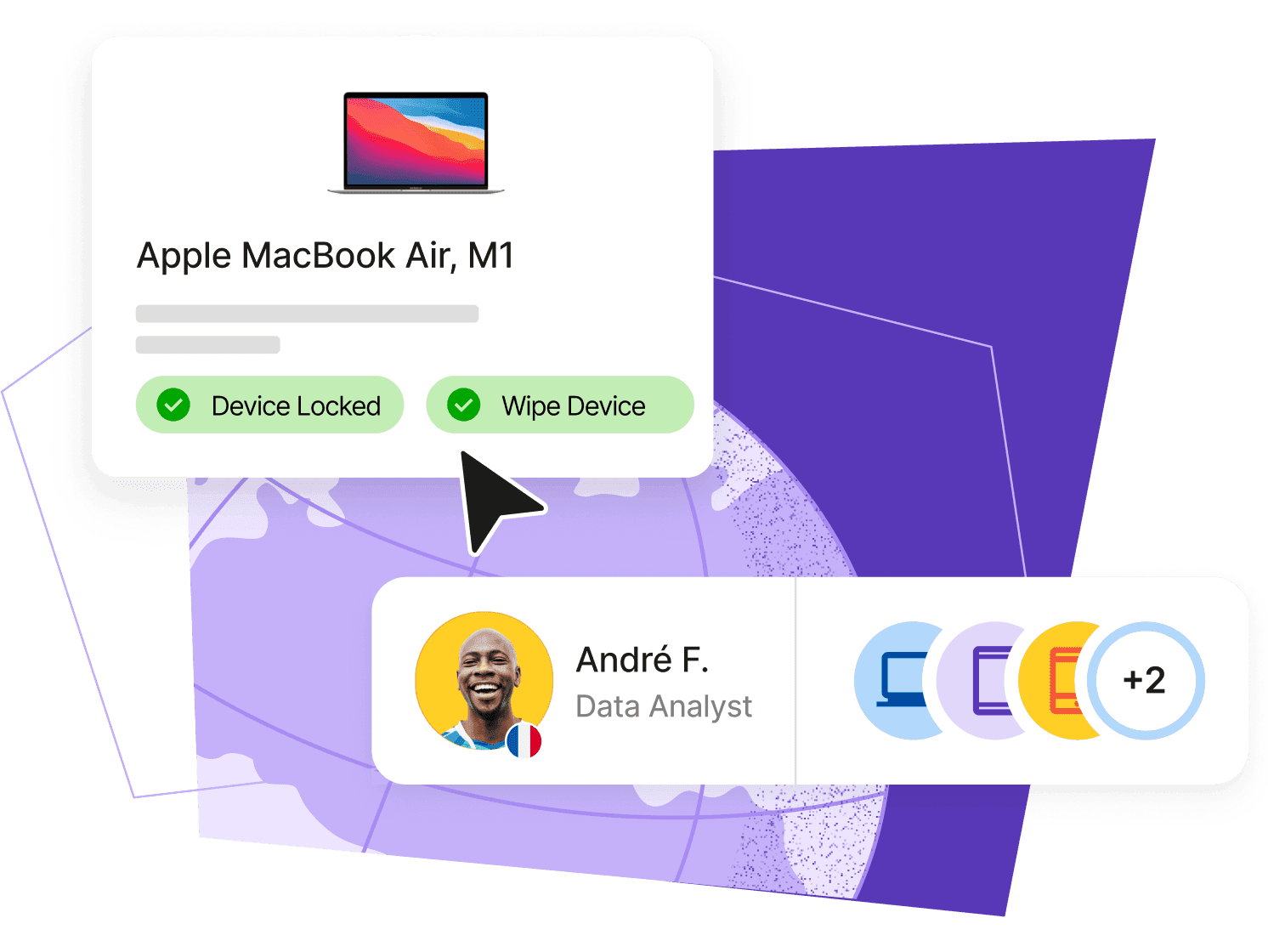
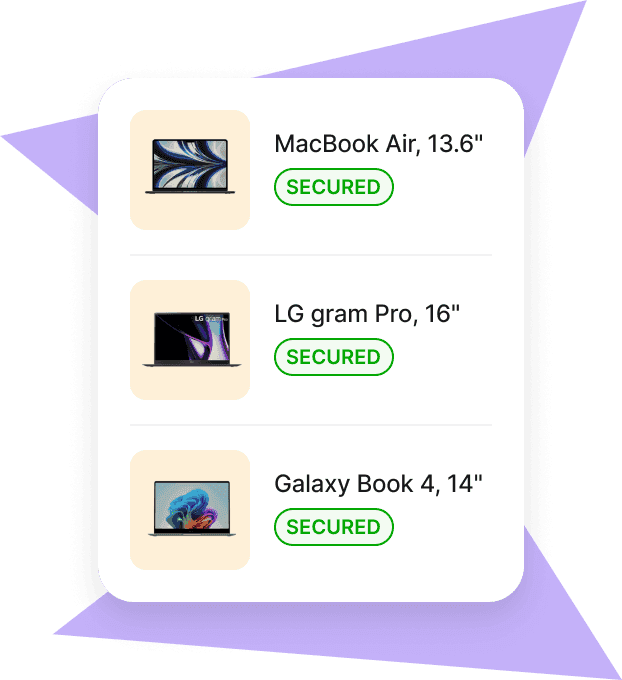
How Deel IT solves this: Deel IT ensures every device is MDM-enrolled and policy-compliant before employees begin using it. Security settings and required applications are applied as part of the enrollment process, with remote lock and wipe available from the Deel platform if a device is lost or stolen.
Mobile Device Management
Secure and manage IT devices across any operating system
See also: How to Improve IT Compliance with Automated Device Management
Problem #3: Managing access provisioning separately from device delivery
Onboarding in a single country is typically coordinated enough that device delivery and access provisioning happen close together, even if they're managed by different teams. Internationally, the timing gap between the two widens, and the consequences of that gap are more significant than most IT teams account for.
When a device arrives in Lagos, São Paulo, or Warsaw without the access provisioning already in place, the new hire has hardware but no ability to work. When access is provisioned before the device arrives, credentials sit active and unused: an open window with no device to close it.
Here is what that means:
HR-IT triggers don't fire consistently across regions: The signal that initiates access provisioning (a hire event in the HRIS doesn't always reach IT in time to align with international shipping lead times
Access provisioning runs on a domestic timeline: Access workflows are calibrated to domestic onboarding speeds and don't account for the longer lead times of international device delivery
Single Sign-On (SSO) and Multi-Factor Authentication (MFA) setup becomes dependent on device delivery: MFA enrollment depends on the employee receiving a physical device, so delays in device delivery stall account setup and access activation
Access setup becomes dependent on local process variations: As onboarding is handled differently across regions, new hires receive different application access, approval paths, and setup timelines depending on where they are hired
Deprovisioning at offboarding follows the same misalignment in reverse: Access remains active after a device is returned because the two workflows (device recovery and access revocation) are not connected
The result: Separate provisioning workflows create timing gaps that affect both productivity and security, particularly in international markets where onboarding timelines are already harder to coordinate.
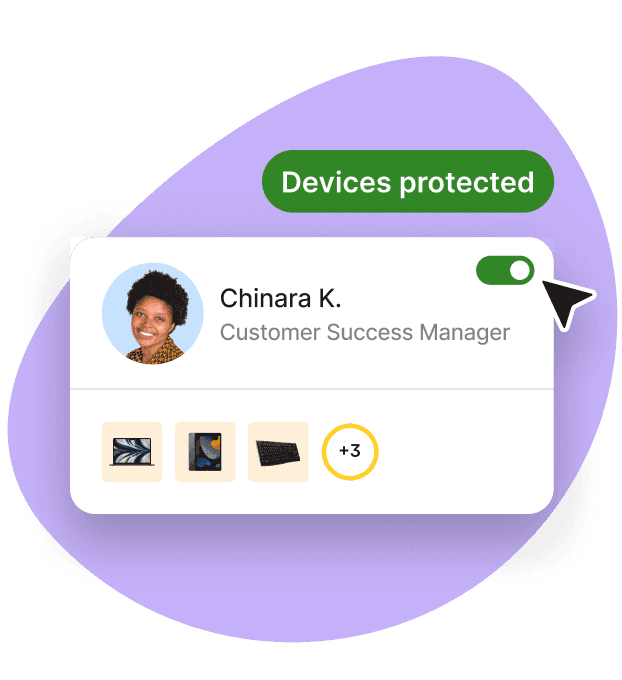
How Deel IT solves this: Deel IT connects device delivery and access provisioning to the same HR lifecycle event, so both are triggered automatically without manual coordination between HR and IT. At offboarding, device recovery and access revocation are initiated from the same workflow, reducing the risk of missed steps or delays.
Endpoint Protection
Built-in device protection from day one
Find out more by downloading this Strategic IT Onboarding & Offboarding Guide.
Problem #4: Assuming a single compliance policy covers every country
IT teams operating across multiple countries typically maintain a global security policy: one set of standards for encryption, access control, data handling, and device configuration that applies everywhere. The policy is sound. The assumption that it can be enforced uniformly across every market is not.
Compliance in international IT logistics isn't just about what your policy says. It's about whether local regulatory requirements, import laws, data residency rules, and device handling obligations are reflected in how that policy is actually implemented country by country.
Here is why a single policy cannot cover an international workforce:
Data residency requirements vary by country and are not always reflected in IT policies: Rules governing where data can be stored, processed, and accessed differ across markets, making it difficult to apply the same standards uniformly everywhere
Import regulations affect what hardware can be shipped and how: Certain device configurations, encryption standards, or pre-installed software are restricted or require specific documentation in some markets
Local labor and privacy laws affect what IT can monitor on employee devices: Endpoint monitoring capabilities that are standard in one country may be restricted or require explicit consent in another
Security frameworks like SOC 2 and ISO 27001 require evidence of consistent enforcement: Audit requirements call for documented proof that the policy was applied, which is difficult to produce when enforcement is fragmented across regions
Remediation timelines differ by country: When a compliance gap is identified, the speed at which it can be closed depends on local IT coverage, vendor relationships, and device access, which can be inconsistent on an international level
The result: Compliance processes that appear standardized at the policy level often become inconsistent in practice once devices, vendors, and regulations vary by country. As companies expand internationally, IT teams have less visibility into how policies are being applied across regions, making enforcement, reporting, and remediation more difficult to manage consistently.
How Deel IT solves this: Deel IT enforces security policies consistently across every enrolled device, regardless of country, with real-time compliance visibility across the entire fleet. IT teams can centrally monitor device health, policy enforcement, and security status while maintaining detailed audit trails that support frameworks such as SOC 2, GDPR, HIPAA, and PCI DSS.
Download this Complete IT Security and Compliance Checklist for Remote Workers.
Problem #5: Treating device recovery as a logistics problem rather than a security event
When an employee leaves, device recovery in a domestic context is operationally straightforward. IT schedules a collection, the device is returned, data is wiped, and the asset is redeployed. Internationally, the same process involves customs documentation, local courier coordination, import duties on return shipments, and, in some markets, legal constraints on what IT can require an employee to return and how.
Most enterprise IT teams treat this as a logistics challenge. It is also a security event, and the window between an employee's last day and the moment their device is wiped and access is fully revoked, is where data exposure risk is highest.
Here is where that breaks down:
Device recovery timelines are longer internationally: Coordinating collection, customs clearance, and return shipping across international markets takes significantly longer than domestic recovery, extending the window during which the device holds live data
Certified data erasure documentation is not always produced: Without a standardized recovery and wipe process, IT teams cannot always demonstrate that data was securely erased, leading to audit and regulatory exposure
Local legal requirements affect how recovery can be executed: In some jurisdictions, requiring an employee to return a device or submit to a remote wipe necessitates specific contractual language or legal process that IT teams must follow
Access revocation and device recovery run as separate workflows: Accounts are deprovisioned on the last day, but the device, which may hold locally cached data, browser sessions, or offline copies of sensitive files, is not recovered for days or weeks
Unrecovered devices are tracked inconsistently: Without a centralized fleet management system, devices that are not returned fall off the asset register rather than triggering an active recovery process
The result: International offboarding often leaves a gap between access revocation and device recovery, reducing visibility into where devices are, whether data has been erased, and when recovery is actually complete.
How Deel IT solves this: Deel IT automates device recovery workflows during offboarding, triggering collection and routing devices for storage, redeployment, or disposal based on configurable rules. Certified data erasure ensures sensitive company data is securely and permanently removed, with documentation provided for audit and compliance purposes.
Learn about the 5 most common offboarding failures for remote teams.
What are the real costs of poor international IT logistics?
The operational failures above don't stay operational. Each one carries a financial, security, or compliance cost that compounds as headcount and country coverage grow.
These include:
Delayed starts become more expensive at scale: A single missed onboarding may be manageable, but repeated delays across international teams create ongoing productivity and coordination costs
Unmanaged devices create security exposure that is difficult to quantify: A device operating outside MDM coverage for two weeks is two weeks of unmonitored endpoint risk, multiplied across every international hire who self-enrolled late
Compliance gaps discovered at audit are more expensive to remediate than to prevent: Retroactive evidence gathering, policy documentation, and remediation work under audit pressure costs significantly more than building consistent enforcement from the start
Vendor sprawl inflates IT spend without improving outcomes: Managing five regional resellers, two MDM tools, and a separate identity provider costs more in coordination overhead and licensing, and delivers less visibility
IT headcount scales to manage coordination, not capability: When international logistics requires active intervention at every stage, IT teams grow to absorb the coordination work rather than to improve the underlying system
How Deel IT solves international IT logistics
Deel IT is a global IT operations platform built to run devices, access, security, support, and recovery as a single system across 130+ countries. It connects directly to Deel HR, payroll, and EOR, and integrates seamlessly with other leading HR systems such as Workday, HiBob, BambooHR, and SuccessFactors. This ensures every hire, role change, and departure automatically triggers the right IT actions without separate coordination across systems.
Here is what Deel IT covers across the full international IT lifecycle:
Global procurement across 130+ countries: Seamlessly source, configure, and ship hardware to new hires through a single centralized workflow
Automated device enrollment and policy management: Keep devices visible, secure, and compliant with automated enrollment workflows and centralized policy enforcement across distributed fleets
Automated access provisioning tied to HR events: Trigger SSO, MFA, and Role-Based Access Control (RBAC) workflows automatically when employees join, change roles, or leave the company
Real-time fleet compliance visibility across every country: Monitor encryption status, OS configuration, and MDM enrollment continuously across the global device fleet from a single dashboard
Automated and secure offboarding: Coordinate device recovery, remote wipe, and data erasure workflows through a consistent global offboarding process
24/7 global IT support across time zones: Give employees access to around-the-clock IT support directly through the Deel platform, wherever they work
SaaS and application lifecycle management: Centralize software assignment, tracking, and license reclamation across the employee lifecycle, with visibility into usage and spend
Consolidated global IT operations: Manage devices, identity workflows, app access, and IT support through a single platform designed for international teams
Book a demo to see how Deel IT handles international IT logistics as a single system: from first hire to final offboarding, in every country you operate.
Deel IT
Automate IT operations in 130+ countries

FAQs
What are the most common mistakes companies make with international IT logistics?
The most frequent issues include inconsistent device provisioning across markets, shipments held up in customs due to incomplete documentation, and devices that arrive without proper enrollment or configuration. These problems tend to surface only after something has already gone wrong, making them costly to fix reactively.
How do customs delays happen when shipping IT equipment internationally?
Customs delays typically occur when shipments lack the correct documentation, such as accurate commercial invoices, harmonized tariff codes, or proof of device value. Different countries have different import requirements for electronics, and a process that works in one market may trigger holds or additional duties in another.
Why do devices sometimes arrive unmanaged or misconfigured at international locations?
This usually happens when remote employees receive hardware that was shipped without being pre-enrolled in an MDM system, or when enrollment was handled inconsistently across regions. Without a standardized provisioning process, IT teams lose visibility and control over endpoints the moment they cross a border.
What does consistent device provisioning across multiple countries actually require?
It requires a procurement and configuration process that applies the same standards regardless of where a device is being shipped — including MDM enrollment, security policies, and software setup before the device reaches the end user. It also means having reliable in-country sourcing or logistics partners who understand local import regulations and can prevent compliance gaps from building up over time.
Dr Kristine Lennie holds a PhD in Mathematical Biology and loves learning, research and content creation. She had written academic, creative and industry-related content and enjoys exploring new topics and ideas. She is passionate about helping create a truly global workforce, where employers and employees are not limited by borders to achieve success.