Article
2 min read
How Much Does Outsourced IT Support Cost, And Is It Worth It? (+ Self-Assessment)
IT & device management

Author
Dr Kristine Lennie
Last Update
August 13, 2026

Table of Contents
Why the sticker price rarely reflects the real cost
How much does outsourced IT support cost?
So, is outsourced IT support worth it?
How IT support requirements grow as teams scale globally
Helpdesk-only vs. connected IT support: What's the difference?
Self-assessment: Is your current IT support model actually working?
Self-assessment: Is your current IT support model actually working?
How Deel IT brings global IT support into one system
Key takeaways
Outsourced IT support typically costs $25–$150 per user per month, though pricing varies by coverage, service scope, and team size. Additional services can push the true cost beyond the base fee.
The right IT support model depends on how your team works, including coverage hours, geographic spread, ticket volume, and whether you need device management and access provisioning alongside helpdesk support.
Deel IT brings device management, software access, and 24/7 IT support into one global system, helping distributed teams replace fragmented IT workflows and reduce reliance on multiple providers.
Outsourced IT support is one of those decisions that looks easy on paper but turns complicated in practice. The headline number (usually the monthly per-seat fee or a flat retainer) rarely reflects what you actually end up spending, and it almost never reflects what you're not getting.
Most teams reach this question at a moment of pressure: the in-house setup isn't scaling, tickets are going unanswered, or a new country hire has just exposed a gap in coverage. Whether outsourced IT support is worth the cost comes down to how far that spend actually goes: what the provider covers, where the gaps are, and whether the support model can keep up with what your team needs as it grows.
Why the sticker price rarely reflects the real cost
The pricing models used by most outsourced IT providers are designed around inputs (seats, hours, tickets), not outcomes. So the base price only tells you part of the story. The rest shows up in the services that fall outside the contract, the internal work needed to fill the gaps, and the added costs that come with supporting a growing, distributed team. Here are some of the costs that can sit behind that headline price:
Work that falls outside the contract: Helpdesk and break-fix support may be covered, while device procurement, MDM configuration, access management, or compliance work sits outside the agreed scope. When those needs come up, they can mean additional fees, another vendor, or more work for your internal team.
After-hours and global coverage: A support package may only cover standard business hours or a limited number of time zones. For distributed teams, extending that coverage can mean paying for a higher service tier or bringing in additional support elsewhere.
Onboarding and offboarding overhead: Every hire and departure can involve coordination between HR, your IT provider, and separate device or identity vendors. Even when that work isn't an extra line item on the invoice, you're still paying for it through internal IT time, slower provisioning, and manual follow-up.
More vendors to manage: If your support provider doesn't cover devices, identity, or other parts of IT, those gaps often need to be filled by separate tools or vendors. That means more contracts to manage, more systems to keep in sync, and more time spent figuring out who owns an issue when something goes wrong.
Compliance and audit work: If evidence is split across your provider's ticketing system, an MDM platform, and identity tools, pulling it together for an audit can take significant internal time. And if policies haven't been applied consistently across those systems, the bigger concern is the compliance gap itself.
How much does outsourced IT support cost?
Outsourced IT support typically costs $25–$150 per user per month, depending on your team size, coverage hours, and what’s included. Providers may also charge a flat monthly retainer, an hourly rate, or offer different service tiers based on the level of support you need.
The biggest factor is scope. Basic helpdesk support sits at the lower end, while broader coverage — such as 24/7 support, device management, security, or onboarding and offboarding — can increase the price. And the quoted rate doesn't always include everything you'll need, which is where the real cost can start to climb.
So, is outsourced IT support worth it?
The honest answer is: it depends on what you're outsourcing, to whom, and whether the model fits how your team actually works.
For most growing companies, especially those with distributed or global teams, outsourced IT support is worth it when it replaces genuine coverage gaps, not when it replaces a system that was working. The problem is that most outsourced arrangements are scoped around a narrow definition of "support": reactive helpdesk, break-fix, and ticket resolution. That scope misses the parts of IT operations that actually drive cost and risk: device lifecycle, access provisioning, onboarding and offboarding, and compliance.
You're probably not getting full value from outsourced IT support if:
Your provider handles tickets but has no visibility into your device fleet or access state
Coverage gaps appear whenever employees work outside business hours or outside the provider's primary time zone
Onboarding and offboarding still require manual coordination between HR, IT, and the provider
You're paying a per-seat fee but have no clear view of what's included versus what triggers an additional charge
Device procurement, mobile device management (MDM) enrollment, and access provisioning are handled by different vendors with no shared workflow
Your provider can tell you how many tickets were resolved but not whether your endpoints are compliant or your access policies are enforced
Audit requests require you to chase evidence from multiple systems because your provider doesn't hold a unified record
Download: Do You Really Need 24/7 IT Support? A Self-Assessment for Global Teams
How IT support requirements grow as teams scale globally
As teams grow, the day-to-day demands on IT change with them. Support requests increase, employees need help across more time zones, and onboarding, devices, software access, and compliance all become harder to manage.
The table below shows what those needs typically look like at different stages of growth:
| IT support need | Startup (1–50 employees) | Scaling company (50–500 employees) | Enterprise (500+ employees) |
|---|---|---|---|
| Support requests | Typically lower volume, with requests focused on password resets, software issues, and device setup | Typically more frequent, with requests coming from employees across different teams, countries, and time zones | Typically high volume, with support needed across a large, distributed workforce |
| Support coverage | Typically focused on the working hours of one main region | Typically needs to cover employees working across several regions and time zones | Typically requires global, 24/7 coverage |
| Onboarding and offboarding | Typically a smaller number of hires and departures, making manual coordination manageable | Typically more frequent and spread across countries, requiring more coordination between HR and IT | Typically continuous and high volume, making automated workflows increasingly important |
| Device management | Typically a small fleet with relatively similar devices and operating systems | Typically a growing fleet spread across countries, with more device types and operating systems to manage | Typically a large global fleet that requires centralized management, security policies, and remote controls |
| Software access | Typically a smaller number of applications, users, and access changes to manage | Typically a growing SaaS stack, with more roles and more frequent provisioning and deprovisioning | Typically complex access requirements across many applications, teams, and roles |
| Compliance | Typically limited formal IT compliance requirements | Typically growing security and compliance requirements as the business matures | Typically multiple compliance frameworks, ongoing audits, and greater evidence requirements |
Discover the benefits of 24/7 IT support for distributed teams.
Helpdesk-only vs. connected IT support: What's the difference?
Helpdesk-only support is primarily there to resolve issues when employees need help. Connected IT support links that helpdesk with the systems used to manage devices, software, access, and the employee lifecycle. For distributed teams, that distinction becomes more important as IT needs grow: a ticket may be the immediate problem, but resolving it can depend on knowing the employee's device status, what they have access to, or where they are in the onboarding or offboarding process.
| IT function | With helpdesk-only outsourced support | When support and IT operations are connected |
|---|---|---|
| Employee support | Provider resolves tickets, but may have limited visibility into the employee's device or access | Support can see relevant device and access information while resolving the issue |
| Device management | Procurement, MDM, repairs, and recovery may require separate tools or vendors | Device management and support can run through the same system and workflow |
| Access management | Provisioning and revocation may be handled separately from the support provider | Access changes can be connected to employee lifecycle events, such as joining or leaving |
| Software and apps | Software requests, licenses, and usage may be managed separately from IT support | Software access and license management can be connected to the same employee and IT workflows |
| Onboarding and offboarding | HR, IT, and external providers may need to coordinate device and access tasks manually | Device and access tasks can be triggered and managed as part of the same workflow |
| Compliance and audits | Evidence may need to be gathered from the helpdesk, MDM, identity, and other systems | Device, access, and support records can be managed together, making evidence easier to retrieve |
For scaling teams, connecting these functions means fewer handoffs between support, HR, IT, and external providers — and less manual coordination as the business grows.
Read: How to manage remote IT support effectively
Self-assessment: Is your current IT support model actually working?
Before evaluating outsourced IT support costs, it's worth being honest about what your current model is and isn't covering. Work through the questions below — the pattern of your answers will tell you more than any pricing comparison.
Self-assessment: Is your current IT support model actually working?
Before evaluating outsourced IT support costs, it's worth being honest about what your current model is and isn't covering. Work through the questions below — the pattern of your answers will tell you more than any pricing comparison.
Coverage and availability
□ Employees in every country you operate in can reach IT support during their working hours
□ After-hours issues — device failures, access lockouts, security incidents — have a clear resolution path
□ Support response times are consistent regardless of where the employee is located
□ You have a single place to track all open IT issues across the team
Device and endpoint management
□ Every device in your fleet is enrolled in MDM before it reaches the employee
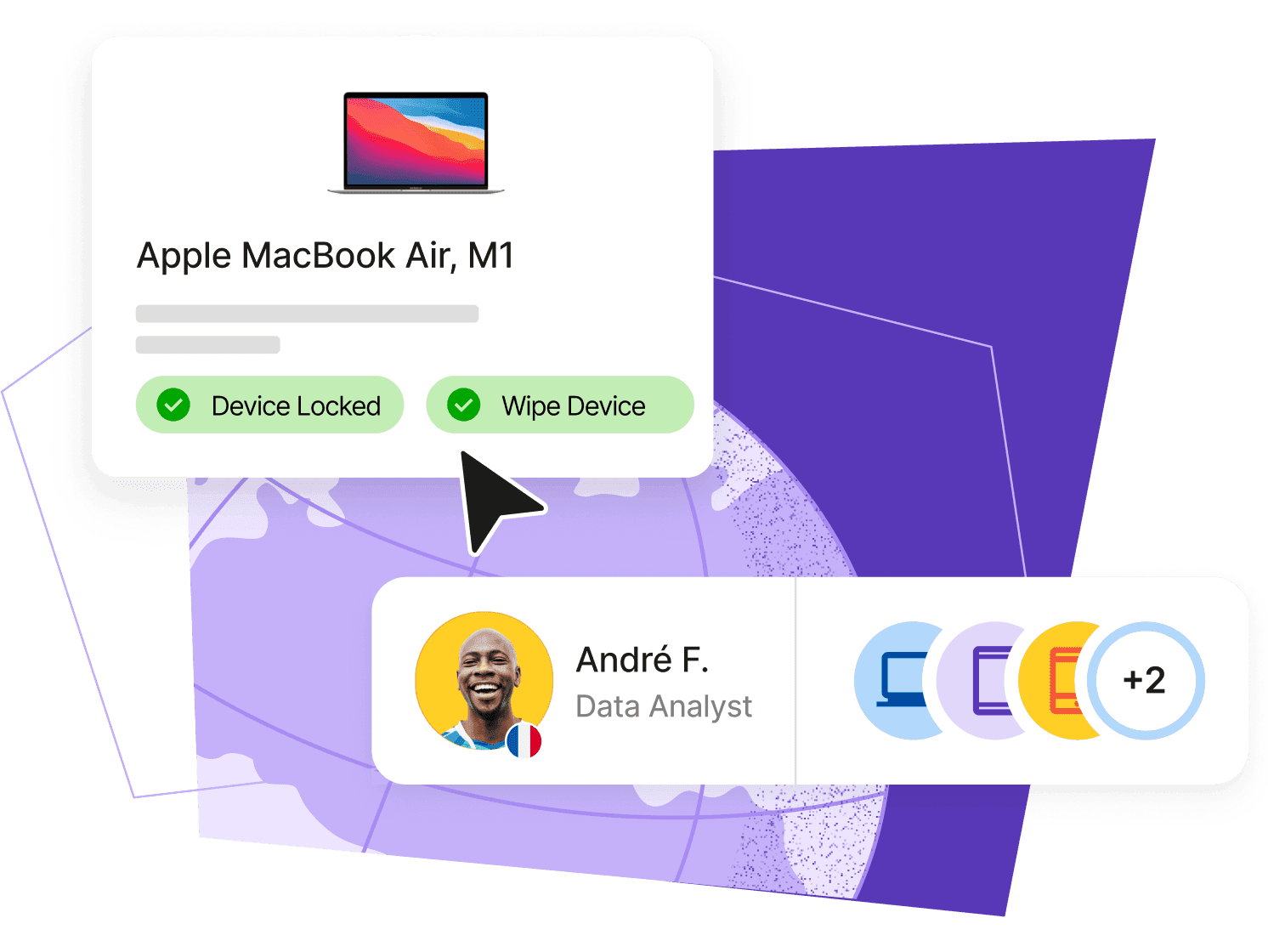
□ You can remotely lock or wipe any device in your fleet within minutes
□ You have real-time visibility into the compliance status of every endpoint
□ Device procurement for a new hire in a new country doesn't require engaging a new vendor
Access and identity
□ Access is provisioned automatically when a new hire is confirmed — not after they start
□ When an employee leaves, all access is revoked on the same day, across every application
□ You can produce a complete access audit trail for any employee without manual data gathering
□ Role-Based Access Control (RBAC) is enforced consistently across your SaaS stack
Onboarding, offboarding, and lifecycle
□ HR events — new hire, role change, departure — automatically trigger IT actions without manual coordination
□ New hires receive a configured, enrolled device before or on their first day
□ Offboarding runs as a single coordinated workflow across devices, access, and applications
□ You have a documented, repeatable process for IT onboarding and offboarding that works in every country you hire in
Scoring guide
12–16 Yes: Your IT operations are in strong shape. The risk at this level is complacency — distributed teams and compliance requirements evolve, and a model that works today needs active maintenance to hold at scale.
6–11 Yes: You have coverage in some areas but meaningful gaps in others. The gaps are likely concentrated at the seams between tools — where device management ends, and access management begins, or where HR processes hand off to IT.
0–5 Yes: Your current model is covering the visible surface of IT support while leaving the structural risks unaddressed. The cost of those gaps — in productivity, security exposure, and compliance risk — is almost certainly higher than the cost of fixing them.

Guide
The World at Work in 2026: Deel IT
How Deel IT brings global IT support into one system
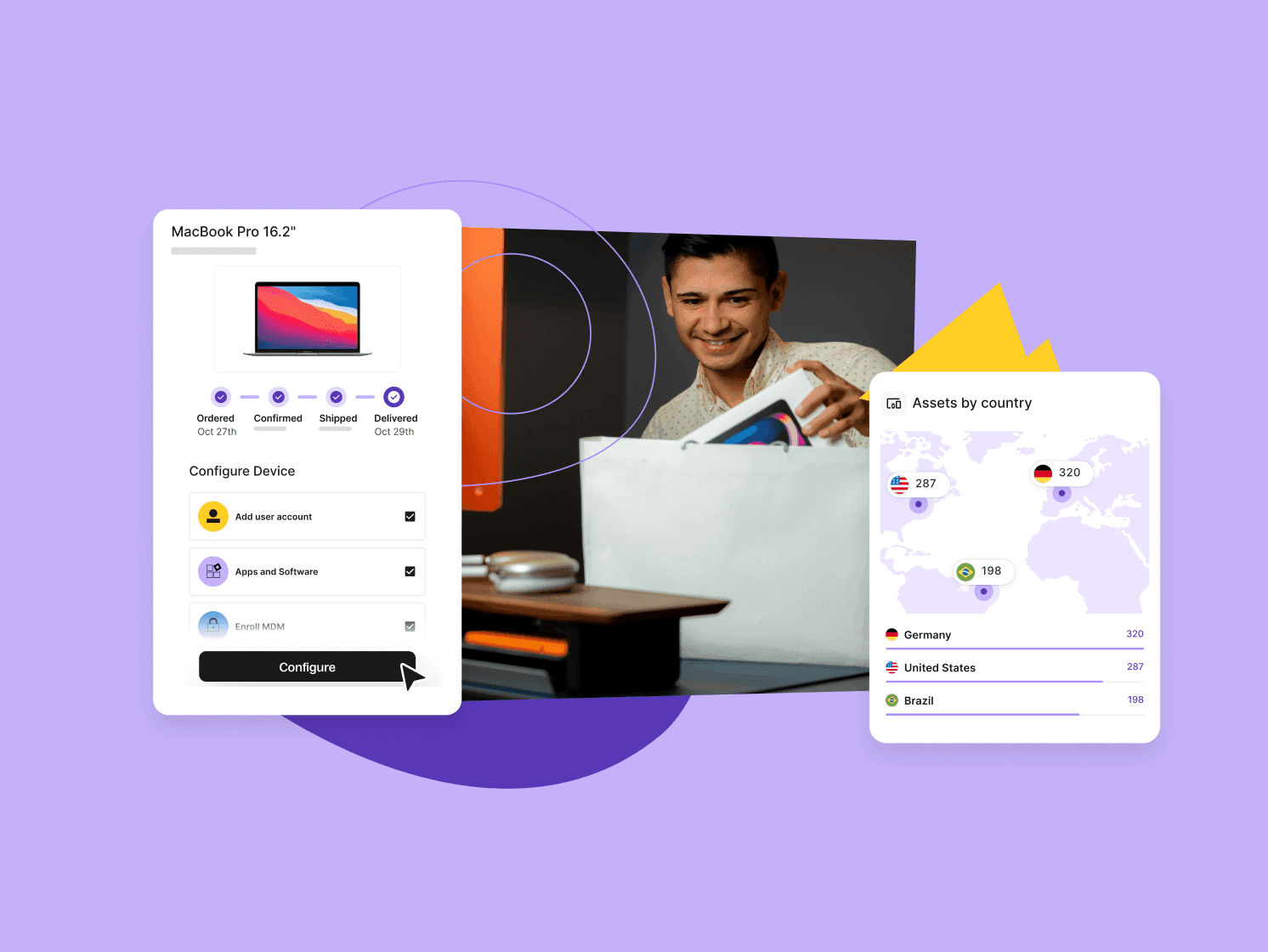
Deel IT connects support with the devices, applications, access, and employee data behind it. For distributed teams, that means less reliance on separate vendors and fewer manual handoffs across the employee lifecycle.
Here's what Deel IT covers:
24/7 global IT support: Employees get around-the-clock help, while support teams have relevant device and access context.
Global device management: Procure, configure, manage, and recover devices across 130+ countries, with MDM enrollment and remote security controls.
Access and lifecycle automation: Connect access provisioning, changes, and revocation to employee events in your HRIS.
SaaS and license management: Manage application access, usage, and licenses from the same IT environment.
Compliance and endpoint management: Apply device policies and keep device and access records together to make compliance easier to manage.
Deel IT connects the work that often sits across separate helpdesk, device, access, and lifecycle systems, giving global teams one place to manage more of their IT operations.
Book a demo with Deel IT to see how it works for your team.
Deel IT
Procure, deliver, manage, and secure devices anywhere
FAQs
How much does outsourced IT support typically cost per month?
Most outsourced IT support is priced either as a per-seat monthly fee, usually ranging from $25 to $150 per user depending on the service tier, or as a flat retainer that can run anywhere from a few hundred to several thousand dollars monthly. The right model depends on your team size, ticket volume, and how much coverage you actually need — a small team with predictable needs may do fine with a retainer, while a growing company often finds per-seat pricing easier to budget.
What's the difference between managed IT services and outsourced IT support?
Outsourced IT support typically refers to a help desk or ticketing function — someone to handle issues when they arise. Managed IT services (MSPs) usually go further, covering proactive monitoring, device management, security patching, and sometimes software licensing. The distinction matters because many companies pay for "IT support" and later discover it doesn't include the device or access management they also need.
Is outsourced IT support worth it for small or remote teams?
It can be, but the value depends heavily on whether the provider's coverage hours and capabilities match how your team actually works. A remote or globally distributed team, for example, needs support across multiple time zones and often requires someone who can handle device provisioning and offboarding — not just password resets. If the outsourced arrangement only covers part of the problem, you'll likely end up filling the gaps with internal time anyway.
What hidden costs should I watch for when evaluating outsourced IT providers?
The most common hidden costs are out-of-scope charges for tasks like onboarding new hires, managing software access, or supporting non-standard devices, as well as fees for after-hours coverage that wasn't included in the base contract. It's also worth accounting for the internal time spent managing the vendor relationship, escalating unresolved tickets, and handling anything the provider doesn't cover — these hours add up and rarely appear in the original cost comparison.
Dr Kristine Lennie holds a PhD in Mathematical Biology and loves learning, research and content creation. She had written academic, creative and industry-related content and enjoys exploring new topics and ideas. She is passionate about helping create a truly global workforce, where employers and employees are not limited by borders to achieve success.