
Article
9 min read
Moving to Latvia: A Guide for Expats and Digital Nomads
Immigration

Author
Deel Team
Last Update
July 30, 2025
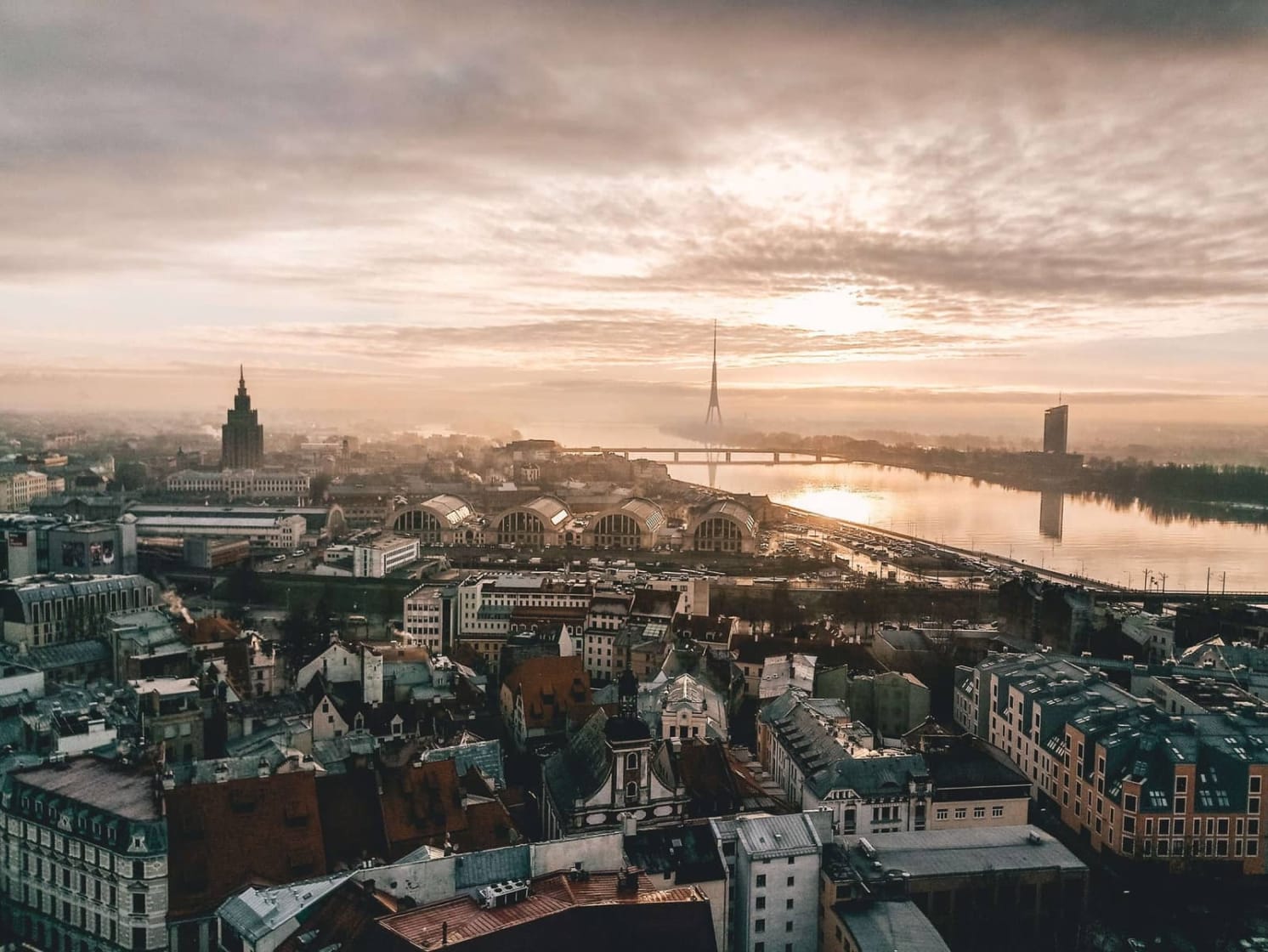
Table of Contents
Step 1: Before moving to Latvia: Prepare your documents
Step 2: Manage your finances in Latvia
Step 3: Arrange housing and accommodation in Latvia
Step 4: Job market and working arrangements in Latvia
Step 5: Accessing healthcare and education in Latvia
Step 6: Ensuring your safety in Latvia
Step 7: Embracing Latvian culture
Key takeaways
- With its growing tech scene and affordable cost of living, Latvia is becoming a sought-after destination for expats.
- Applying for a residence permit and securing employment in Latvia requires careful research and planning.
- Deel’s step-by-step guide helps you navigate the Latvian residence permit process and smoothly transition into your new home.
Located in the Baltic region of Europe, Latvia has become an attractive destination for skilled workers and digital nomads. Over the past decade, the country has seen a steady increase in its expatriate population, drawn by its vibrant culture, growing economy, and high quality of life.
Latvia’s strategic location and modern infrastructure, combined with its rich cultural heritage, offer a unique environment for both work and leisure. The country is part of the European Union, which adds to its appeal for expatriates seeking a European base.
As Latvia continues to develop its economy and attract international talent, understanding visa requirements, local customs, and the cost of living is crucial for a smooth relocation. With proper planning, Latvia can be an excellent choice for expats and digital nomads looking to experience a blend of tradition and modernity.
Step 1: Before moving to Latvia: Prepare your documents
Before moving to Latvia, it's essential to ensure you have the necessary documentation to live and work in the country.
Visa requirements for expats and digital nomads in Latvia
European Union (EU) and European Economic Area (EEA) citizens If you are a citizen of an EU or EEA country, you do not need a visa to live or work in Latvia. However, you must register your residence with the local authorities if you plan to stay for more than 90 days.
Non-EU/EEA citizens For non-EU/EEA citizens, obtaining a residence permit is mandatory if you plan to stay in Latvia for more than 90 days. The residence permit allows you to live and work legally in Latvia and serves as an identification document.
There are several types of residence permits and visas available to anyone interested in entering or living in the country. These permits are designed to fit different needs and purposes individuals may have.
Application process:
The application process typically involves submitting various documents, including a valid passport, a medical examination report, biometric data, and the completed application form. The employer or sponsor generally handles this process.
Duration and renewal
Residence permits are usually issued for up to five years and must be renewed before expiration. The renewal process is straightforward but requires up-to-date documentation and continued sponsorship.
It’s crucial to start the residence permit application process well before your intended move to Latvia. This ensures you have all necessary documents and approvals in place.
Visa types in Latvia
Latvia offers various visas to accommodate different needs:
- Tourist visa: For short-term stays of up to 90 days, this visa is for tourism, visiting family or friends, and short-term business trips. Many nationalities are eligible for visa-free entry or can obtain a visa on arrival.
- Residence permit: This permit is required for long-term stays if you plan to live in Latvia for more than 90 days. It allows you to legally reside and work in the country.
- Temporary work visa: To apply for this visa, you must have a confirmed job offer in Latvia. Your employer will sponsor you and handle most of the application process. Once in Latvia, you’ll need to convert this visa into a residence permit.
- Startup visa: This is a temporary residence permit that is granted to startup founders interested in establishing their operations in Latvia.
- Family visa: This is for family members of expatriates residing in Latvia. This visa allows spouses, children, and sometimes parents to join their relatives living in Latvia. The primary resident must meet income and accommodation requirements to sponsor family members.
- Investor visa: Available for those investing in Latvian businesses or real estate. This visa allows you to live and manage your investments in Latvia.
Visa sponsorship
For most non-EU/EEA nationals, obtaining a work visa or residence permit in Latvia typically requires sponsorship from an employer, unless you are applying for a business or investor visa. The sponsoring employer initiates the visa process and provides the necessary documentation to Latvian authorities.
Moving to Latvia: Essential document checklist
Gathering all necessary documents early in the visa application process is crucial to avoid delays. Depending on the type of visa, you may need the following:
- Valid passport: Ensure your passport is valid for at least six months beyond your intended stay and has at least two blank pages
- Passport-sized photos: Standard dimensions are 35mm by 45mm. The photo should be recent, taken within the last six months
- Visa application form: Complete and sign the form based on your specific visa type.
- Proof of outbound travel: A confirmed return ticket or onward travel booking.
- Health insurance: Proof of health coverage during your stay in Latvia, which may be required for visa approval
- Proof of accommodation: Details of where you will stay, such as a hotel booking or rental agreement
- Proof of employment: For a work visa, submit your job offer or contract as proof of employment in Latvia.
- Criminal record check: Some visas may require a police clearance certificate to verify you have no criminal background.
- Educational certificates: Provide certificates of academic qualifications if relevant to your visa type.
- Financial records: Documentation showing sufficient funds to support yourself during your stay, such as bank statements.
- Marriage and birth certificates: If relocating with family, provide these certificates for dependent visas.
Importance of authenticating and translating documents in Latvia
Documents should be translated into Latvian and authenticated as required by Latvian authorities. Some documents may also need attestation by your home country’s Ministry of Foreign Affairs and the Latvian embassy.
Work From Anywhere

Step 2: Manage your finances in Latvia
Latvia offers a high standard of living and a stable economy. However, the cost of living can be higher than in some other countries. Here's how to effectively manage your finances in Latvia:
Cost of living in Latvia
Below is an overview of some of the main cost of living factors to keep in mind when planning to live in Latvia:
Renting: A one-bedroom apartment in central Riga can cost around €600-€800 per month, while prices in less central areas may drop to approximately €400-€600.
Buying property: The real estate market in Latvia is diverse, with prices varying by location. Additional costs include notary fees, property registration fees, and possibly agent commissions, which can total around 2-4% of the purchase price.
Food and drink: Groceries in Latvia are relatively affordable, though imported items can be more expensive. Dining out at a mid-range restaurant might cost around €40-€60 for two people.
Transport: Public transportation in Latvia is efficient, with a monthly pass for buses and trams in Riga costing around €30. Car ownership is common, but consider the costs of fuel, insurance, and maintenance.
Utilities: Utilities in Latvia, including electricity, water, and heating, can cost between €100-€200 per month, depending on the size of your accommodation and usage. Internet and TV packages generally cost around €30-€50 monthly.
Taxation
Latvia has a favorable tax environment with a flat personal income tax rate of 20%. This is an important motivator for expats moving to the country. However, it's essential to understand your tax obligations, including any potential liabilities in your home country and whether any double taxation agreements apply.
Banking and currency exchange
To open a bank account in Latvia, you’ll typically need your residence permit, passport, and proof of address. Most banks in Latvia offer services in English, and you’ll find several international banks with branches in Riga.
Latvia’s currency is the Euro (EUR). Currency exchange services are widely available, but for the best rates, consider using ATMs or bank services that accept international cards, as these often offer more favorable exchange rates.
Managing your finances wisely in Latvia will help you enjoy the benefits of the country’s high standard of living while navigating its cost structure effectively.
Global Hiring Toolkit

Step 3: Arrange housing and accommodation in Latvia
Finding suitable housing is a key part of your relocation to Latvia. Your choice of accommodation impacts not just your comfort but also legal matters, such as securing your residence permit.
Renting vs. buying
Both renting and buying property are available options in Latvia, though buying property comes with specific regulations for foreigners.
Renting: Renting is the most common choice for expatriates in Latvia, especially in Riga and other major cities. The rental market offers a variety of options, from modern apartments to charming historical homes. When renting, you'll typically need to provide proof of income, a copy of your residence permit, and sometimes a deposit equivalent to one to two months' rent. Lease agreements are usually for one year, and rent is often paid in advance, either monthly or quarterly.
Buying property: Foreigners can purchase property in Latvia, though there are some restrictions, particularly regarding land purchases. Property ownership is allowed in most urban areas and some rural locations. Foreigners may also be eligible for a long-term residence permit if they make a significant investment in Latvian real estate. When buying property, be sure to consider additional costs such as legal fees, registration fees, and maintenance costs.
Finding suitable housing
Latvia offers a range of housing options, from contemporary apartments in the city to picturesque houses in the countryside. Websites like SS.lv and City24 are excellent resources for finding available properties.
For expatriates, key considerations include proximity to work, international schools, shopping centers, and public transportation. Many expat families prefer areas like Riga’s Central District, the Art Nouveau District, and the neighborhoods of Mežaparks and Jurmala for their amenities and quality of life.
Once you've selected a property, carefully review the lease agreement, which should include:
- Property description: A detailed overview of the property’s features.
- Rental amount and payment details: Information on how and when rent is to be paid.
- Security deposit: Usually equivalent to one or two months’ rent.
- Lease duration: Terms may be fixed for one year or longer.
- Maintenance responsibilities: Clarify who is responsible for repairs and maintenance.
- Policies on pets and subletting: Some properties have restrictions on pets or subletting.
Understanding these aspects will help you secure a comfortable and convenient living arrangement in Latvia, ensuring a smooth transition and a pleasant expat experience.
Step 4: Job market and working arrangements in Latvia
Latvia's job market is evolving, with opportunities across various sectors including technology, finance, manufacturing, healthcare, and education. The country is also experiencing growth in tourism, creative industries, and renewable energy, driven by its focus on economic diversification.
Average salaries: Salaries in Latvia can vary widely depending on the industry and your level of expertise. Generally, wages are competitive, and many expats benefit from additional perks such as housing allowances or travel expenses.
Remote work: Remote work is gaining traction in Latvia, especially following global trends. However, it is still less common compared to some Western countries. Job seekers can explore opportunities through platforms like LinkedIn, CV.lv, and Prakse.lv.
Work culture: Latvia’s work culture values punctuality, professionalism, and respect. Building personal relationships and demonstrating commitment are important in the business environment. While Latvian is the official language, English is widely spoken, especially in business and multinational companies. Proficiency in both languages is advantageous, though English alone is often sufficient in many professional settings.
By understanding these aspects of the job market and work culture, you can better navigate your professional opportunities in Latvia and make the most of your expat experience.
Step 5: Accessing healthcare and education in Latvia
Healthcare system
Latvia offers a robust healthcare system with both public and private options available. All residents, including expatriates, are required to have health insurance.
Public healthcare: Public healthcare services are provided by State-funded healthcare institutions and are accessible to all residents. The public system offers comprehensive care, though wait times can be longer compared to private options.
Private healthcare: Private healthcare in Latvia is well-regarded and often preferred by expatriates for quicker access to specialists and more personalized care. Private health insurance is commonly chosen for more extensive coverage, including international healthcare options.
Education options
Latvia provides a variety of educational options for both local and expatriate families. While public schools are free for Latvian nationals, expatriates typically enroll their children in private or international schools, where English is often the primary language of instruction. These schools offer various curricula, including British, American, and International Baccalaureate (IB).
Higher education: Latvia has a growing number of higher education institutions, including universities such as University of Latvia, Riga Technical University, and Riga Stradiņš University. These institutions offer a wide range of undergraduate and postgraduate programs, often in partnership with international universities.
Education standards in Latvia are high, and the multicultural environment supports a globally oriented education, making it an attractive destination for families.
Step 6: Ensuring your safety in Latvia
Safety overview
Latvia is considered one of the safer countries in Europe, with low crime rates and a stable political environment. While petty crime is rare, it is still advisable to take standard precautions, especially in crowded areas or during large public events.
Latvia has modern infrastructure equipped to handle emergencies, and the country has systems in place for natural disaster preparedness, though such events are uncommon.
Emergency contacts and protocols
In case of an emergency, dial 112, the national emergency number in Latvia, which is free to call and connects you to medical, fire, or police services. Operators usually speak English, but learning a few basic Latvian phrases can be helpful. Familiarize yourself with your neighborhood’s layout and locate nearby hospitals or clinics for quicker response in emergencies.
Step 7: Embracing Latvian culture
Cultural insights
Latvian customs: Greetings in Latvia are generally formal, with a handshake being common. It’s polite to address people by their titles and last names unless invited to use their first names.
Dress codes: Latvia has a modest dress code, particularly in formal and public settings. While business attire is usually formal, casual wear should be conservative, with attention to dressing appropriately for different occasions and settings.
Social norms: Punctuality is important in Latvia, especially in business contexts. Respect for personal space and privacy is valued, and communication is often direct yet polite. Public displays of affection are generally reserved for private settings.
Leisure culture: Latvia’s leisure culture is vibrant, especially in Riga, where you can find a blend of modern and traditional venues. Social activities often take place in cafes, restaurants, and cultural events. Traditional gatherings, such as those in local cafes or markets, provide opportunities to experience Latvian hospitality and engage with the local community.
Embark on a new adventure in Latvia
From the countryside landscapes to the bustling cultural scene of Riga, Latvia offers expatriates a unique mix of modernity and tradition. The country provides a high standard of living, excellent healthcare, diverse educational opportunities, and a rich cultural experience.
If you’re considering a move to Latvia, thorough research and planning are crucial for a successful relocation. For additional support, various relocation services can assist with the visa application process and help navigate insurance options and other relocation complexities.
Let Deel guide you through securing your work visa and ensure a stress-free relocation to Latvia, so you can focus on building your new life with confidence. Book your free consultation today.


