Article
4 min read
6 Top Endpoint Protection Solutions for Companies Without In-House Security Teams
IT & device management

Author
Dr Kristine Lennie
Last Update
June 10, 2026

Table of Contents
Deel IT
SentinelOne Singularity
Microsoft Defender for Endpoint
Sophos Intercept X
Bitdefender GravityZone
Eset Protect Advanced
Malwarebytes ThreatDown
Key features to look for in endpoint protection
How Deel IT simplifies endpoint security for lean IT teams
Companies that don't have a dedicated in-house security team still need to protect their devices from ransomware, credential theft, and data breaches. Without full-time monitoring and rapid response capabilities, even routine security incidents can become difficult to contain.
Endpoint management platforms have evolved to fill exactly this gap. The strongest solutions combine endpoint protection, automated response, and centralized device management so lean IT teams can maintain security without adding operational complexity.
Here are the top solutions that work well for teams without in-house security staff.
Deel IT
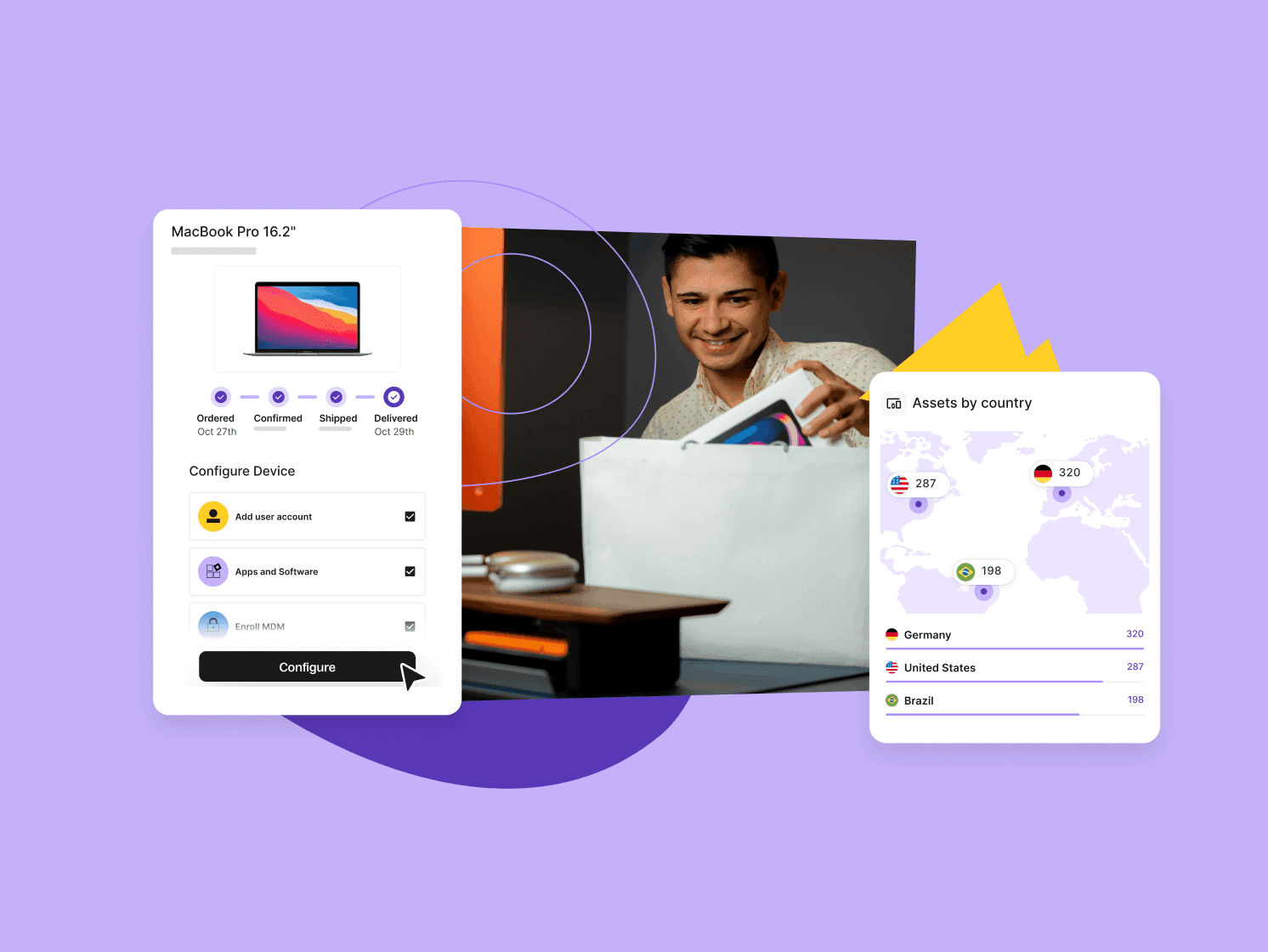
Deel IT is an end-to-end global IT platform that combines Mobile Device Management (MDM) (powered by JumpCloud), enterprise endpoint protection (powered by CrowdStrike Falcon), access management, device procurement, and global logistics across 130+ countries. For companies without dedicated in-house security teams, Deel IT reduces the amount of manual coordination typically required across IT, HR, procurement, and security operations, making it easier to maintain security and compliance as distributed teams scale globally.
Key capabilities:
AI-driven endpoint protection with low system impact: CrowdStrike Falcon uses behavioral analysis and machine learning to detect suspicious activity in real time while minimizing performance impact on employee devices
Every device enrolled and compliant before the employee starts: Zero-touch deployment pushes MDM enrollment, security policies, and required applications automatically at first boot
Devices shipped to 130+ countries before the employee's first day: A catalog of 240+ devices ships globally with 99.5% on-time delivery, so distributed hires aren't waiting on hardware while they're supposed to be productive
Access and security policies update automatically with HR events: Device access, Single Sign-On (SSO), application permissions, and endpoint policies adjust automatically as employees join, change roles, or leave the organization
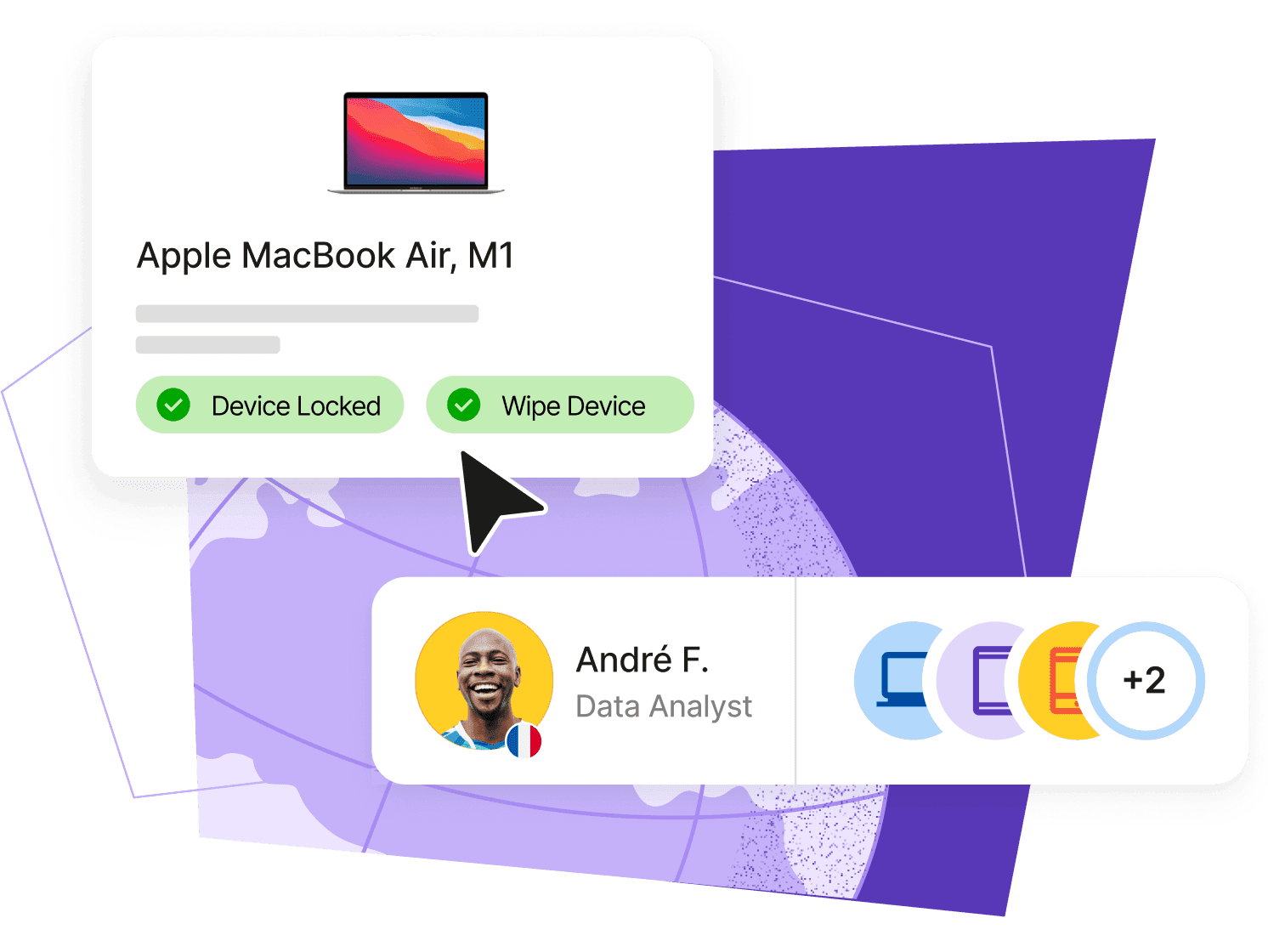
Offboarding workflows help close security gaps automatically: Remote lock, wipe, device retrieval, and access revocation workflows are coordinated centrally to reduce the risks commonly missed in manual offboarding processes
Centralized endpoint visibility across distributed devices: Monitor device status, security posture, policy compliance, and endpoint activity across global teams from one platform
24/7 support across every time zone your team operates in: Round-the-clock support helps resolve endpoint, device, and access issues quickly without requiring organizations to maintain dedicated in-house coverage across every region and time zone
Best for: Companies of all sizes, but especially those with distributed and remote teams that need endpoint protection, device management, and employee lifecycle workflows centralized without building a large internal IT or security function.
Limitations: Teams looking only for standalone endpoint detection and response software may not need the broader device logistics, provisioning, and lifecycle management capabilities.
Endpoint Protection
Built-in device protection from day one
SentinelOne Singularity
SentinelOne Singularity is an endpoint protection platform built to reduce the amount of manual monitoring required from IT teams. It's designed to detect, contain, and remediate threats without requiring a security analyst to review every alert.
Key capabilities:
AI-driven endpoint detection and response with automated threat remediation
Ransomware rollback capabilities that can restore affected files automatically
Cloud-based management console for monitoring and policy enforcement across devices
Cross-platform support for Windows, macOS, Linux, and mobile operating systems
Best for: Organizations that want autonomous threat detection and remediation without maintaining a large internal security operations team.
Limitations: SentinelOne covers endpoint detection and response well, but doesn't include device procurement, HR lifecycle integration, or global logistics. Teams managing distributed hardware will need separate tooling for those workflows.
Microsoft Defender for Endpoint
Microsoft Defender for Endpoint is built into Windows and extends to macOS, Linux, Android, and iOS. It can be a good fit for teams already running Microsoft 365 and looking to avoid managing a separate security stack, since management, alerting, and compliance reporting all live inside the same ecosystem.
Key capabilities:
Built-in endpoint protection integrated with Microsoft 365, Intune, and Entra ID
Threat detection, attack surface reduction, and automated investigation workflows
Centralized policy management and compliance reporting across managed devices
Cross-platform support for Windows, macOS, Linux, Android, and iOS
Best for: Microsoft-first organizations that want endpoint protection integrated into their existing Microsoft 365 environment.
Limitations: Defender for Endpoint is well-suited to Windows-first environments, but it offers less flexibility in mixed-OS fleets. It also doesn't address device procurement, global shipping, or HR-triggered access lifecycle management.
Sophos Intercept X
Sophos Intercept X is an endpoint protection platform aimed at small and mid-size teams. It combines deep-learning malware detection with ransomware-specific protection and an optional managed service for teams that need additional monitoring support without building an internal SOC.
Key capabilities:
Deep-learning malware detection and ransomware-focused protection
Managed Detection and Response (MDR) option for organizations without dedicated security staff
Centralized cloud management for endpoint policies and security monitoring
Threat isolation and remediation capabilities
Best for: Small and mid-size businesses that want endpoint protection with optional MDR support for additional monitoring coverage.
Limitations: Intercept X covers endpoint security and optional monitoring, but device provisioning, identity lifecycle management, and global hardware logistics require separate solutions.
Bitdefender GravityZone
Bitdefender GravityZone is designed to provide endpoint protection with low system overhead and centralized management. It suits organizations that want lightweight endpoint security and visibility across distributed device fleets without adding significant day-to-day administrative complexity.
Key capabilities:
Lightweight endpoint protection designed to minimize CPU and memory impact
Centralized policy management and threat monitoring across endpoint fleets
Behavioral threat detection and ransomware mitigation capabilities
Support for Windows, macOS, and Linux environments
Risk analytics and attack surface visibility across managed endpoints
Best for: Organizations that prioritize lightweight endpoint protection and centralized endpoint management.
Limitations: Mobile device support is more limited than some alternatives. GravityZone also doesn't include HR integration, global procurement, or identity lifecycle automation.
Eset Protect Advanced
ESET Protect Advanced is a straightforward endpoint security platform built for smaller teams. Its agent is lightweight, and the cloud console is designed for management by smaller IT teams without dedicated security specialists.
Key capabilities:
Lightweight endpoint security agent designed for low system overhead
Centralized cloud console for policy management and endpoint visibility
Malware prevention, device control, and phishing protection features
Straightforward deployment and management for smaller IT teams
Multi-layered ransomware and phishing protection across managed devices
Best for: Smaller IT teams looking for straightforward endpoint protection with low administrative overhead.
Limitations: ESET is a capable standalone tool for threat prevention, but it doesn't integrate with HR systems or address device procurement and global logistics. Teams scaling internationally will hit those gaps quickly.
Malwarebytes ThreatDown
Malwarebytes ThreatDown is built for simplicity. It's a cloud-managed endpoint protection platform with sensible defaults and a low barrier to getting started, making it a practical option for startups and smaller teams.
Key capabilities:
Cloud-managed endpoint protection with simplified deployment and administration
Automated malware detection and remediation workflows
Lightweight management experience designed for small teams and limited IT resources
Threat isolation and endpoint monitoring across managed devices
Best for: Startups and small teams deploying endpoint protection for the first time with limited internal IT resources.
Limitations: ThreatDown is well-suited to small fleets and limited IT capacity, but it's a narrower tool, focused on endpoint security without MDM, identity management, or procurement capabilities.
Resources to support endpoint security for lean IT teams
Download this Free IT Policy Template to define the rules your endpoint protection will enforce
Assess whether your current provisioning process can scale with this IT Provisioning Self-Assessment
Check your security and compliance coverage for remote workers with our Complete IT Security and Compliance Checklist
Key features to look for in endpoint protection
Before selecting a platform, it helps to map your requirements against the features each solution actually supports. The table below highlights the endpoint protection capabilities that matter most for security coverage, operational efficiency, and day-to-day manageability:
| Core capability | Why it matters | What to look for |
|---|---|---|
| Behavioral detection | Helps smaller IT teams identify new threats without relying entirely on manual review | An AI or heuristic engine that doesn't require constant signature updates |
| Automated remediation | Reduces the amount of manual investigation and containment work required during incidents | Ransomware rollback, automatic quarantine, isolation, or automated response workflows |
| Centralized endpoint management | Simplifies policy enforcement and monitoring across distributed devices | Cloud-based management console with remote actions and centralized policy controls |
| Cross-platform support | Ensures consistent endpoint protection across every operating system that employees use | Confirmed support for Windows, macOS, Linux, iOS, and Android |
| HR lifecycle integration | Keeps endpoint access and device policies aligned with onboarding, role changes, and offboarding | Triggered enrollment at onboarding and automatic revocation at offboarding |
| Alert prioritization | Helps lean IT teams focus on incidents that actually require action | Severity scoring, automated triage, and actionable alerts |
| Low system overhead | Reduces device slowdowns and minimizes disruption during day-to-day work | Lightweight agents with low CPU and memory usage |
Read: How to improve IT compliance with automated device management
Deel IT
Automate IT operations in 130+ countries
How Deel IT simplifies endpoint security for lean IT teams
Endpoint protection tools stop threats on individual devices. Deel IT connects endpoint protection to the full lifecycle of every employee and device in your fleet — from the moment a hire is created to the moment they leave.
Enrollment before the employee's first login: MDM profiles are applied during device setup, so every device that reaches a new hire is already compliant with your security policies before they touch it.
CrowdStrike Falcon protection on every managed device: Behavioral threat detection and response run in the background to help monitor and protect managed devices without disrupting day-to-day work.
Access policies tied to roles, not manual requests: Role-Based Access Control (RBAC) and SSO enforcement ensure employees only have access to what their role requires.
Offboarding that closes security gaps automatically: When an employee leaves, Deel IT revokes access, deprovisions accounts, locks or wipes the device, and initiates recovery workflows without requiring manual coordination across systems.
Audit-ready compliance reporting: Exportable access logs, device compliance records, and policy enforcement histories support ISO 27001, HIPAA, and GDPR reporting requirements without additional tooling
Global hardware procurement built in: A catalog of 240+ devices ships to 130+ countries with a 99.5% on-time delivery rate, so distributed teams can standardize device readiness globally
Book a demo to see how Deel IT simplifies endpoint security for distributed teams.
Deel IT
Procure, deliver, manage, and secure devices anywhere

FAQs
What is the best endpoint protection for companies without a dedicated security team?
The right answer depends on your OS mix, device volume, and how much internal IT capacity you have. SentinelOne, CrowdStrike Falcon, and Microsoft Defender for Endpoint are strong options for hands-off threat protection. Deel IT is worth evaluating if you also need device procurement, MDM, and identity lifecycle management — particularly for distributed or remote teams.
Should small and mid-size businesses invest in EDR, or is antivirus enough?
EDR is worth the additional investment for most businesses today. Behavioral analytics and automated response handle the categories of attack — ransomware, fileless malware, credential theft — that traditional antivirus signatures weren't designed to catch.
How much IT effort does endpoint security require without specialists?
Cloud-managed platforms on this list are designed for minimal ongoing effort. Most generate prioritized, actionable alerts rather than raw event logs, so non-specialists can respond appropriately without needing security expertise.
What features reduce false alarms and alert fatigue for non-experts?
AI-driven detection, automatic quarantine, and alert prioritization all help. The goal is a system where every alert that reaches a human genuinely requires a decision, not noise that the platform should have handled automatically.
Dr Kristine Lennie holds a PhD in Mathematical Biology and loves learning, research and content creation. She had written academic, creative and industry-related content and enjoys exploring new topics and ideas. She is passionate about helping create a truly global workforce, where employers and employees are not limited by borders to achieve success.