
Global Work Glossary
- Results for ""
Table of Contents
How threat intelligence works
Types of threat intelligence
Threat intelligence in workforce security
Threat intelligence vs. related security terms
Key facts
Detect identity fraud with Deel Security
FAQ
What is threat intelligence?
Threat intelligence is analyzed information about threats, attackers, and their methods that security teams collect, interpret, and use to protect their organizations. Threat intelligence transforms raw data, such as network logs, breach reports, and dark web signals, into context that informs decisions. Security and HR teams use that context to detect fraud, prioritize risks, and protect the worker lifecycle from hiring through offboarding.
How threat intelligence works
Security teams collect data from internal sources, such as network logs, endpoint alerts, and authentication records, and external sources, such as threat feeds, government advisories, and industry Information Sharing and Analysis Centers (ISACs).
After collection, analysts enrich and correlate the data to separate a known attacker's signature from routine noise. Security teams then share the output with those who need it, in formats ranging from executive risk briefings to machine-readable indicator feeds that tools can process automatically.
Types of threat intelligence
Security teams typically group threat intelligence into four categories:
Strategic looks at broad threat trends and risk themes to inform executive decisions and long-term security investment.
Operational covers active or imminent attacks, helping teams prepare defenses and incident response plans before an attack lands.
Tactical describes the techniques, tactics, and procedures (TTPs) attackers use, so security teams can recognize and disrupt those patterns.
Technical consists of machine-readable indicators of compromise (IOCs), such as malicious IP addresses, file hashes, and domain names, that automated security tools can process without human review.
Threat intelligence in workforce security
Organizations increasingly apply threat intelligence across the full worker lifecycle. Here is why:
Leaked credentials from past breaches might appear in a threat feed before a new hire's access is provisioned
Known fraud-ring methods could match patterns in a candidate's application or during a video interview.
Device signals and internet protocol reputation data can flag a connection attempt from a high-risk location during onboarding or while an employee is active.
HR and security teams use threat intelligence together to investigate anomalies. A candidate using a device tied to previous fraud, or an employee whose login behavior matches a known account takeover pattern, may warrant review. Threat intelligence gives security teams the evidence base to investigate those signals, and HR the context to understand why a flag was raised.
Threat intelligence vs. related security terms
Threat intelligence relates to several security concepts, including potential risks, attack methods, and tools used to detect suspicious activity. Here's how they differ and connect:
Dark web exposure is a threat intelligence input: when leaked credentials or personal data appear on dark web markets, threat teams collect and analyze that data to alert affected workers and tighten access controls.
Device fingerprinting produces technical signals that threat intelligence platforms ingest, and a device's attributes may match a known fraud tool or a compromised asset.
Social engineering describes an attack method that threat intelligence helps teams anticipate, so they can prepare defenses as phishing campaigns and pretexting tactics evolve.
Identity fraud is a risk category that threat intelligence helps surface, as patterns in stolen identity data could point to synthetic credentials or document forgery in a hiring pipeline.
Key facts
Here are some key facts about threat intelligence, the risks it addresses, and how security and HR teams use it.
Threat intelligence platforms pull data from internal logs, government advisories, information-sharing networks, and commercial threat feeds to build a picture of current risk.
The four main categories, strategic, operational, tactical, and technical, serve different audiences: executives need trend data, while security operations teams need indicators of compromise.
Threat intelligence can help organizations detect hiring fraud, leaked credential use, and account takeover attempts early in the worker lifecycle.
Industry ISAC networks let organizations share threat intelligence so members benefit from each other's incident experience without disclosing sensitive internal data.
Combining threat intelligence with device signals and dark web monitoring could build a richer picture of risk around individual candidates or workers.
When HR and security teams share threat intelligence findings, they can coordinate a response that addresses both the technical indicator and the human impact.
Detect identity fraud with Deel Security
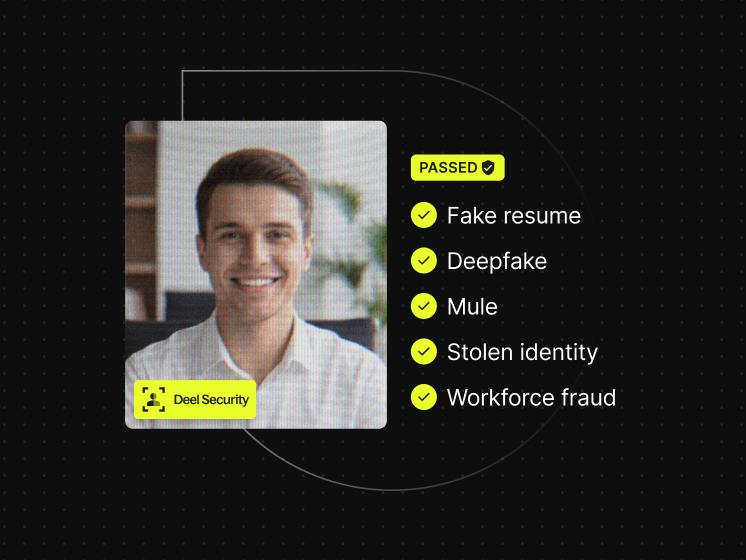
Deel Security helps businesses uncover fake candidates, synthetic identities, deepfakes, and impersonation attempts at every stage of the worker lifecycle, from hiring and onboarding to ongoing employment.
Integrated with your existing applicant tracking system (ATS), Deel Security surfaces identity fraud risks directly within recruitment workflows. HR and security teams can review these alerts, investigate potential fraud, and make informed hiring decisions.
Book a demo to learn how Deel Security helps reduce identity fraud risks across your workforce.
Deel Security
Hire real people, keep fraud out from hiring to offboarding
FAQ
What is the difference between threat intelligence and a threat feed?
A threat feed delivers raw indicator data, such as malicious IP addresses, file hashes, and domain names, without context or analysis. Threat intelligence programs pull data from multiple feeds, correlate it, and produce findings a team can act on. Most programs consume several feeds and perform that analysis layer on top.
How does threat intelligence help HR teams detect hiring fraud?
Threat intelligence can flag when a candidate's details, such as an email address or device, appear in known fraud-ring data. HR teams receive that signal as a risk alert with context about why the flag was raised, so they can investigate without making assumptions about the individual.
Can threat intelligence help prevent account takeover for existing employees?
Threat intelligence feeds that monitor for leaked credentials can alert security teams when an employee's credentials appear in a breach. That early warning allows the team to force a password reset and review recent access before an attacker can use the exposed data.
What is an indicator of compromise?
An indicator of compromise is a piece of evidence that a system or account may have been breached. Common indicators include unusual login locations, repeated failed authentication attempts, and file hashes matching known malware. Security teams use indicators of compromise as part of threat intelligence to detect and investigate incidents quickly.
Who is responsible for acting on threat intelligence in an organization?
Security operations and IT security teams typically manage threat intelligence programs. HR teams act on the alerts those programs surface during hiring, onboarding, and employment. An effective program usually requires both teams to share context and agree on escalation paths.
This content is for informational purposes only and does not constitute legal or security advice, so organizations should consult qualified advisers for guidance specific to their situation.