Article
2 min read
How to Recover Company Laptops in Hard-to-Reach Countries Without Delays: A Step-by-Step Process
IT & device management

Author
Dr Kristine Lennie
Last Update
June 10, 2026

Table of Contents
Step 1: Identify recovery risks before devices go missing
Step 2: Automate the retrieval trigger at offboarding
Step 3: Build a localized device recovery network
Step 4: Make device returns easy for employees
Step 5: Protect company data throughout the recovery process
Step 6: Maintain visibility throughout the recovery process
Step 7: Maximize the value of recovered devices
Can your organization recover laptops without delays?
Simplify global laptop recovery with Deel IT
Global offboarding is straightforward when an employee is in a major city with reliable courier access. It gets significantly harder when they're in a market with limited shipping infrastructure, complex customs rules, or no local logistics partner. That's where most device recovery programs start to break down.
Unreturned laptops aren't just an equipment cost. They carry data, access credentials, and compliance risk. And the longer they sit outside your control, the more exposure you carry. Each unrecovered device typically represents $800–$2,000 in hardware alone, plus whatever risk attaches to the data on it.
This guide walks through how to build a recovery process that works across difficult geographies: from automation and localized logistics to data security, cross-team coordination, and post-retrieval workflows.
Step 1: Identify recovery risks before devices go missing
Device recovery is much easier when you know where problems are likely to occur before an employee leaves. Rather than treating every offboarding event the same way, organizations should identify the locations, employee groups, and scenarios that are most likely to create delays or increase recovery risk.
This allows IT, HR, and logistics teams to apply the right recovery process from the start instead of reacting after a device becomes difficult to retrieve.
The table below highlights some of the most common recovery risk factors organizations should assess before building their device retrieval process:
| Risk factor | Example scenario | Why it matters |
|---|---|---|
| Remote or hard-to-reach locations | Employee works outside the major courier coverage areas | Device collection may take longer or require local partners |
| Cross-border mobility | Employee relocates between countries during employment | Recovery may involve customs, tax, or compliance requirements |
| High-risk roles | Executive or engineer with access to sensitive systems | Additional security controls may be needed before retrieval |
| Regulatory complexity | Employee is located in a country with strict privacy or labor laws | Recovery actions may need to follow local requirements |
| Known recovery challenges | The region has historically experienced delayed returns | Additional planning or contingency options may be required |
Organizations should regularly review recovery performance by region to identify recurring issues and adjust processes accordingly. Understanding where recovery risks exist makes it easier to allocate resources, select the right partners, and respond quickly when offboarding occurs.
Learn about the 5 things most companies get wrong about international IT logistics.
Step 2: Automate the retrieval trigger at offboarding
The most common reason device recovery starts late is that nobody realizes it's their turn to act. An employee leaves, HR updates a record, IT waits for a request, and several days pass before the recovery process even begins.
The solution is to make device retrieval a standard part of the offboarding workflow. When an employee's status changes, the recovery process should start automatically rather than relying on manual handoffs between teams.
A typical workflow looks like this:
| Step | Trigger | Action |
|---|---|---|
| 1 | Offboarding initiated in HRIS | Retrieval request created automatically |
| 2 | Retrieval request created | Employee receives return instructions |
| 3 | Employee notified | Pickup or return process scheduled |
| 4 | No response within a defined period | Automated reminder sent |
| 5 | Device collected | Recovery status updated and tracked |
Automating the trigger ensures device recovery starts consistently, regardless of who initiates the offboarding process. It also reduces delays, improves accountability, and gives IT teams earlier visibility into devices that may be difficult to recover.
Find out the typical reasons why new hires start without equipment.
Step 3: Build a localized device recovery network
Once a retrieval request is triggered, the next challenge is getting the device back quickly and reliably. This is often where recovery programs break down, particularly in countries with limited courier coverage, complex customs requirements, or long transit times.
Rather than relying on a single global shipping process, organizations should build a recovery network that can adapt to local conditions. In many cases, local collection and warehousing are faster, less expensive, and easier to manage than immediately routing devices across borders.
When evaluating recovery partners, look for:
Local pickup capabilities: Providers should be able to collect devices from employees wherever they are located, not just major cities
In-country warehousing: Local storage can reduce customs complexity and create opportunities for redeployment within the same region
Reliable tracking and proof of collection: Recovery teams should be able to monitor device status from pickup through final disposition
Customs and shipping expertise: Partners should be able to manage documentation requirements and resolve exceptions that could delay recovery
Consistent service levels: Clear SLAs help ensure pickups, status updates, and issue resolution happen within defined timeframes
For regions where no single provider offers complete coverage, a combination of local pickup partners and regional logistics hubs can help improve recovery rates while keeping costs under control.
Read: The Hidden Cost of Global Device Management at Enterprise Scale
Step 4: Make device returns easy for employees
Even the best recovery process can stall if returning a device is inconvenient. Employees are far more likely to complete returns quickly when the process is simple, clearly explained, and requires minimal effort on their part.
The goal is to remove as many barriers as possible. Employees shouldn't need to arrange their own shipping, search for packaging materials, or contact multiple teams to understand what happens next.
A frictionless return experience typically includes:
Prepaid return options: Employees receive shipping labels, return kits, or collection instructions without having to arrange them themselves
Flexible collection methods: Home pickup, drop-off locations, and self-service scheduling help accommodate different locations and work arrangements
Clear return instructions: Employees should know what needs to be returned, how to package it, and what to expect throughout the process
Localized communication: Instructions should be available in the employee's preferred language where possible
Status updates and reminders: Automated notifications help employees track progress and reduce the need for manual follow-up
A typical employee experience looks like this:
The employee receives return instructions when offboarding begins.
A prepaid shipping label, return kit, or pickup option is provided.
The employee packages the device using the supplied instructions.
The device is collected or dropped off.
Return status updates are shared until the device is received.
The easier it is for employees to return equipment, the faster devices are recovered and the fewer exceptions IT teams need to manage.
Resources to support global devices and their recovery
Standardize how your team handles device returns with this Free IT Policy Template
Coordinate remote handoffs without dropped steps using our Onboarding & Offboarding Guide for Distributed Teams.
Identify gaps before they become incidents using our Complete IT Security and Compliance Checklist for Remote Workers
Set equipment return expectations from day one with this Equipment Provisioning Policy Template
Step 5: Protect company data throughout the recovery process
Recovering the device is important, but protecting the data on it is even more important. If a laptop is delayed, lost in transit, or never returned, organizations still need a way to secure company information and prevent unauthorized access.
For this reason, data protection measures should be activated as soon as offboarding begins, not when the device is eventually recovered.
Key controls include:
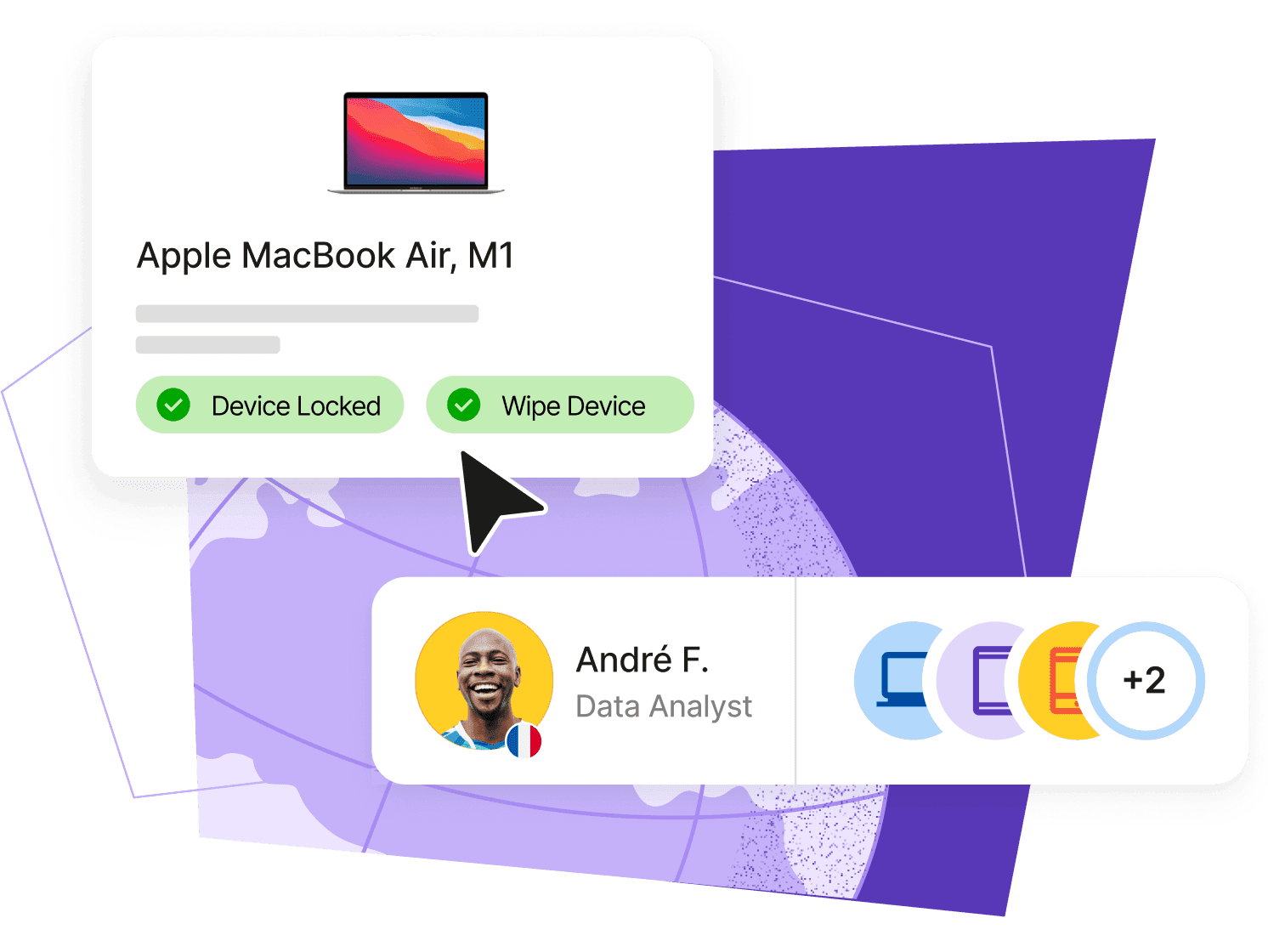
Remote lock capabilities: Devices can be locked immediately if they're no longer under the employee's control
Managed data erasure: Corporate data can be selectively removed or wiped remotely when required
Full-disk encryption: Encryption helps protect information while devices remain in use or are in transit
Backup verification: Critical data should be backed up before any wipe or remediation action is taken
Offline security controls: Devices that fail to check in within a defined period can be automatically restricted or locked
The appropriate response will depend on the situation. In some cases, a remote lock is enough while recovery is underway. In others, a selective wipe or full device wipe may be necessary to reduce risk. Organizations should also consider local legal and privacy requirements before taking action, particularly when personal devices or employee-owned data are involved.
The goal is to ensure company data remains protected regardless of how quickly the physical device is recovered.
Read: What Happens to Company Data When an Employee Leaves
Step 6: Maintain visibility throughout the recovery process
Recovering a device is only part of the challenge. Organizations also need visibility into where the device is, who has handled it, and whether it has been recovered according to policy.
Without a documented record of the recovery process, it's difficult to investigate delays, resolve disputes, demonstrate compliance, or confirm that devices have been handled securely.
Key tracking capabilities include:
Real-time shipment tracking: Provides visibility into device location throughout the recovery process.
Collection and delivery confirmation: Verifies when devices are handed over and received.
Event logs and activity records: Create a documented timeline of key recovery milestones.
Photo documentation: Records device condition at pickup and delivery.
Tamper-evident packaging: Helps identify unauthorized access during transit.
Visibility should extend from the moment a recovery request is created until the device is redeployed, refurbished, or retired. Centralized tracking makes it easier to identify delays, manage exceptions, and maintain confidence that devices are being handled appropriately throughout the process.
Read: How to Maintain Audit Readiness and Automate Access Revocation
Step 7: Maximize the value of recovered devices
Recovering a laptop is only part of the process. Once a device has been returned, organizations need a clear plan for what happens next.
A structured post-recovery workflow helps maximize hardware value, reduce unnecessary purchases, and ensure devices are handled securely throughout the rest of their lifecycle.
Typical next steps include:
Redeploy functional devices: Securely erase, re-image, and prepare devices for their next user
Repair damaged equipment: Restore devices with minor issues when refurbishment is more cost-effective than replacement
Retire end-of-life hardware: Securely dispose of devices that can no longer be used economically
Maintain device standards: Apply consistent grading criteria so decisions are made consistently across regions
Track recovery outcomes: Monitor redeployment, refurbishment, and disposal rates to understand how effectively assets are being reused
Organizations that maintain regional spare-device pools can often put recovered devices back into service more quickly, reducing procurement costs and shortening deployment timelines for future hires.
The goal isn't simply to get devices back. It's to extend the useful life of existing hardware wherever possible and ensure devices are retired responsibly when they reach the end of life.
Read: Reducing IT Costs Through Device Reconditioning
Can your organization recover laptops without delays?
Recovering devices from remote employees becomes much easier when the process is standardized. Organizations that consistently recover laptops quickly typically have the same foundational capabilities in place: they identify recovery risks early, automate retrieval workflows, simplify returns for employees, protect company data, maintain visibility throughout the recovery process, and have a clear plan for what happens once devices are returned.
Use the checklist below to assess whether your organization has the key elements of an effective device recovery program in place:
| Capability | In place? |
|---|---|
| Device recovery risks are identified before offboarding occurs | ☐ |
| Retrieval requests are triggered automatically when employees leave | ☐ |
| Local pickup and logistics support are available in key regions | ☐ |
| Employees receive clear return instructions and prepaid return options | ☐ |
| Remote lock, wipe, and other data protection controls can be activated immediately | ☐ |
| Devices can be tracked throughout the recovery process | ☐ |
| Recovered devices are redeployed, repaired, or retired through a defined workflow | ☐ |
Organizations that can check every box are typically better positioned to recover devices quickly, protect company data, and reduce the cost and complexity of managing hardware across distributed teams. If several items remain unchecked, they're likely to be the areas where delays, security risks, and unnecessary operational overhead emerge during device recovery.
Simplify global laptop recovery with Deel IT
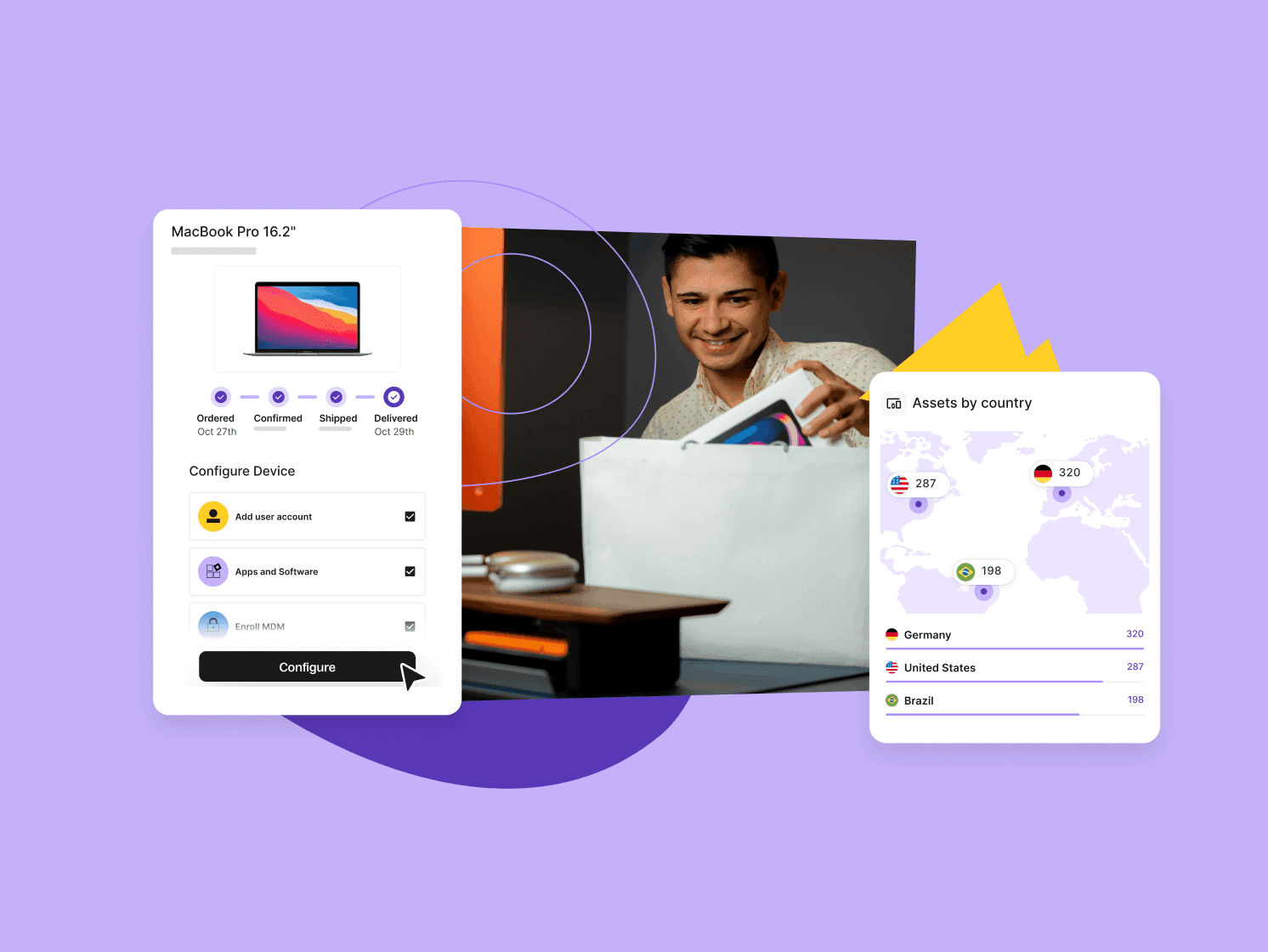
Recovering company laptops across multiple countries requires more than a shipping provider. Deel IT combines device logistics, endpoint management, and HR workflows in a single platform, helping organizations automate device retrieval, secure company data, track recoveries, and return devices to service faster across 130+ countries.
Automated recovery workflows tied to offboarding: Device retrieval can be triggered as soon as an employee's departure is recorded, helping teams avoid delays caused by manual handoffs between HR and IT.
Global device retrieval and logistics management: Coordinate local pickup, carrier management, pre-paid shipping labels, shipment tracking, and proof of delivery across 130+ countries
Built-in data protection throughout the recovery process: Remote lock, selective wipe, encryption enforcement, and access management controls help secure company data before devices are returned.
End-to-end visibility into every recovery: Track collection status, shipment progress, delivery confirmation, and device recovery milestones through a centralized workflow.
Asset recovery, redeployment, and secure retirement: Recovered devices can be stored, reused, redeployed, or securely retired, helping organizations reduce hardware costs and extend device lifespan.
Chain-of-custody and audit documentation: Device records, shipment tracking, wipe confirmations, and recovery activity are captured automatically to support compliance and audit requirements.
24/7 IT support for recovery exceptions: Whether a return is delayed by customs, logistics issues, or employee non-response, support is available around the clock to help keep recovery efforts moving.
Book a demo to find out more.
Deel IT
Procure, deliver, manage, and secure devices anywhere

FAQs
How can you ensure fast laptop returns from employees in remote locations?
Automate the retrieval request at the point of offboarding so there's no manual handoff between HR and IT. Partner with logistics providers that have genuine in-country presence — not just capital city coverage — and give employees a frictionless return path with prepaid kits, self-service scheduling, and multilingual instructions. Setting SLAs for each step and sending automated reminders if an employee hasn't responded within 72 hours keeps the process moving without requiring IT follow-up.
What should you do if device recovery is delayed and you're concerned about data?
Trigger a remote lock immediately through your MDM platform. Confirm that data backups are complete, then evaluate whether a selective wipe — which removes corporate profiles while preserving personal data — is appropriate under local law. Enable offline lock policies that activate if the device fails to check in within a defined window, and coordinate with legal before taking any action if a hold is in place. Document every step with timestamps.
Why do prepaid return kits improve recovery rates?
They eliminate the main reasons employees delay returns: not knowing how to pack the device safely, not wanting to pay for shipping, and not knowing where to take it. A kit that arrives with instructions, padding, a prepaid label, and a tamper-evident seal removes all of those barriers. Adding flexible pickup scheduling and local drop-off options for employees outside urban centers improves rates further.
Dr Kristine Lennie holds a PhD in Mathematical Biology and loves learning, research and content creation. She had written academic, creative and industry-related content and enjoys exploring new topics and ideas. She is passionate about helping create a truly global workforce, where employers and employees are not limited by borders to achieve success.