Article
6 min read
Reduce Integration Costs by Using an EOR to Manage Acquired Employees
Employer of record
M&As
Global hiring

Author
Jemima Owen-Jones
Last Update
September 18, 2026

Table of Contents
The hidden cost of indefinite legacy contracts
How an EOR reduces M&A integration costs
Benefits and employment administration during EOR transition
Planning talent integration to prevent attrition
Step-by-step: Transitioning acquired employees to Deel's EOR
The EOR advantage for enterprise M&A
Key takeaways
You inherit ongoing costs when employees remain on legacy contracts indefinitely. Without a firm transition deadline, you maintain duplicate payroll systems, entity costs, HR administration overhead, and compliance risk long after closing.
An EOR lets you onboard acquired employees compliantly without establishing new local entities. Deel operates 250 owned entities across 103 countries and supports EOR employment in 105+ countries, enabling you to hire and pay employees where you have no legal presence.
Controlled rehiring onto Deel EOR contracts eliminates indefinite legacy arrangements. You set a clear transition deadline, consolidate onto one platform, and move employees from legacy contracts to Deel-managed employment with defined endpoints rather than open-ended dependencies.
This article is provided for general informational purposes and should not be treated as legal or financial advice. Refer to local regulations and consult qualified legal and tax advisers for guidance on your transaction.
Enterprise acquisitions fail because of people, not products. The deal closes, and you're suddenly operating two payroll systems, two HR processes, and two sets of entity costs. Meanwhile, acquired employees are unsure whether their job will change, whether their benefits are protected, and who actually manages their employment. This uncertainty drives attrition.
The structural problem: acquired employees often continue on legacy contracts indefinitely. No one sets a firm deadline to transition them. The old payroll provider keeps running. The old entity keeps operating. You pay for duplicate infrastructure month after month while integration stalls.
This creates operational risk. Indefinite legacy arrangements lead to compliance gaps, payroll errors, double-payment mistakes, and client friction when a single employee appears in two systems simultaneously.
An EOR changes this dynamic. Instead of setting up new entities in every country where you hired people, you move acquired employees onto Deel's platform. Instead of managing legacy contracts indefinitely, you set a transition deadline. Instead of running separate HR processes, you consolidate payroll, support, and compliance onto one system.
Here's how EOR reduces M&A integration complexity and cost.
The hidden cost of indefinite legacy contracts
When acquisition closes, acquired employees don't automatically move to your infrastructure. They stay on the seller's payroll, under the seller's contracts, managed by the seller's HR system. Your integration plan says you'll transition them eventually. But "eventually" becomes six months, then a year.
This creates four ongoing cost categories you didn't budget for.
Entity maintenance costs
The acquired company's local offices, registrations, and annual compliance obligations keep running. Accountants file forms. Corporate secretaries handle administration. Tax filings happen on schedule. You pay for all of it until the entity winds down—a process that takes weeks to months depending on jurisdiction.
Payroll duplication and reconciliation
Two separate payroll systems process the same employees. Data reconciliation becomes manual and error-prone. Approval workflows differ. Pay periods may run on different calendars. Payment amounts might not reconcile between systems. If a payment fails in one system, errors may go undetected until an employee notices.
HR administration fragmentation
Your HR team manages onboarding and employee administration for new hires using your system. Acquired employees live in a different system managed by a different team. Employee records, benefits enrollments, performance reviews, and offboarding follow separate processes. This creates training overhead, increases administrative complexity, and raises the risk of errors or inconsistencies.
Compliance and employment terms drift
Employment terms on legacy contracts may not align with your standards. Statutory benefits and regulatory requirements differ by country and change over time. If you leave acquired employees on indefinite legacy arrangements, you don't know when their terms diverge from your policies—until an audit or compliance incident surfaces the issue.
The longer employees stay on legacy contracts, the more these costs compound. And because no one assigned clear ownership of the transition, no one pushes back on the deadline.
Global Hiring Toolkit
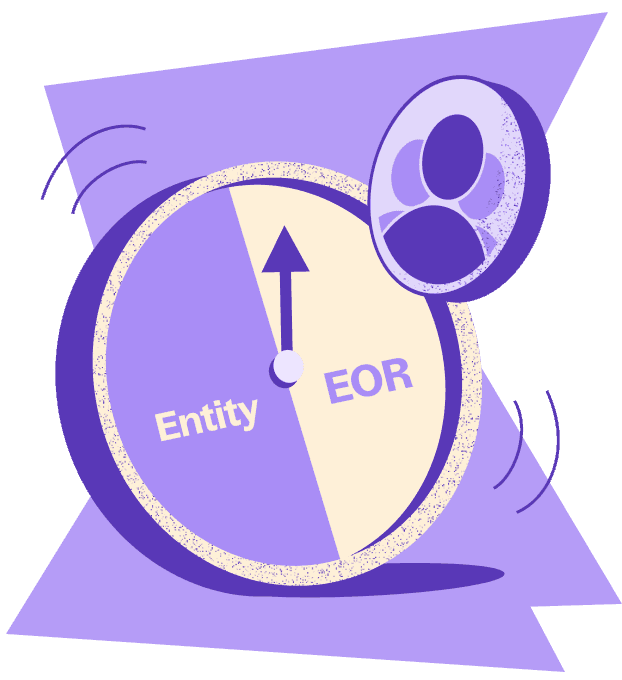
EOR vs. Entity Calculator
How an EOR reduces M&A integration costs
An EOR lets you avoid local entity setup, consolidate onto one platform, and move employees on a controlled timeline. Here's how.
Controlled rehiring eliminates indefinite legacy arrangements
Instead of leaving acquired employees on legacy contracts indefinitely, you set a firm rehiring deadline. Deel moves eligible employees onto Deel's EOR contracts through a controlled transition process with defined endpoints.
This removes operational risk by:
Eliminating ambiguity. Employees know their legal employer, payroll source, and employment terms. There's no question about who manages their employment.
Reducing payroll errors. One payroll system, one set of rules, one source of truth. No more double-payment mistakes or reconciliation gaps across systems.
Simplifying client relationships. If acquired employees serve your clients, you no longer appear in two systems simultaneously. Client billing, timekeeping, and payroll align.
Creating a clear cutoff. Once the rehiring deadline passes, the legacy system winds down. No indefinite legacy support.
Standardizing compliance. All acquired employees operate under your standard employment framework, policies, and compliance structure—effective on the transition date.
The rehiring process is straightforward: eligible employees transition to a Deel-managed EOR contract with clear, transparent communication about what changes and what remains the same. Their day-to-day job role generally does not change solely because of the employment transition. Their legal employer and employment administration do change. They now receive payroll, HR support, and compliance management through Deel.
Not all employees need to be rehired. If an employee should remain with a legacy arrangement for a business, compliance, visa, or work-authorization reason, that decision is documented upfront—not left hanging indefinitely.
Important: EOR rehiring is subject to country eligibility, compliance requirements, visa and work-authorization considerations, required documentation, employee consent where applicable by local law, and business-specific constraints. If rehiring is not viable for a particular employee, that employee may be offboarded from Deel and continue directly with the legacy provider.
Compliant onboarding without local entity setup
The traditional M&A playbook says: to employ people in a country, establish a local entity. Incorporation, registrations, bank accounts, payroll infrastructure, tax compliance setup. This process takes weeks to months and incurs significant costs depending on jurisdiction.
An EOR eliminates this requirement. Deel operates 250 owned entities across 103 countries and supports EOR in 105+ countries (as of [date—cite Deel Stats and Figures]). You don't establish a new entity. Deel's existing entity becomes the legal employer. You onboard employees in that country through Deel's infrastructure.
For enterprise acquisitions, this approach saves cost in two ways:
You avoid entity setup costs and complexity. No incorporation, registration, or bank account setup required. Onboarding moves faster because it doesn't depend on establishing new legal infrastructure.
You avoid ongoing entity maintenance. You don't own the entity, so you don't incur annual accounting, compliance, corporate administration, or filing costs for that jurisdiction.
This is especially valuable when you acquire employees in countries where you have no strategic long-term presence. Instead of building infrastructure for one acquired team, you use Deel's platform.
Centralized platform consolidation reduces administrative overhead
Moving acquired employees onto Deel consolidates your global workforce onto one payroll, HR, and compliance platform. Consolidation can simplify payroll administration and reduce reconciliation overhead across systems.
Without consolidation: You run separate payroll software. HR processes differ for different employee groups. Benefits enrollment happens on multiple systems. Employee records live in separate databases. Tax compliance is handled by separate teams. Support tickets route to different providers.
With Deel consolidation: One payroll system covers all acquired employees. Onboarding, benefits, time-off, and approvals follow unified workflows. Employee data is centralized. Compliance insights are available from one source. One support team handles issues across all markets.
Consolidation can reduce:
Payroll administration labor: Fewer reconciliations across systems, simplified provider management, streamlined payment processing.
Benefits administration complexity: Centralized enrollment reduces duplicate work. Country-specific compliance is handled by one provider instead of multiple.
Compliance complexity: Centralized visibility into employment terms, statutory requirements, and regulatory changes. Your legal and compliance teams don't have to aggregate data from multiple systems.
Support fragmentation: Deel's global support team operates 24/7 with localized expertise. One support relationship instead of many.
Deel's platform includes in-house legal and mobility experts who can provide guidance on employment issues, compliance questions, and cross-border considerations. This expertise is part of the service, reducing your dependency on external consultants.
Faster integration through owned entities
Deel owns and operates 250 entities in 103 countries. This owned infrastructure means Deel controls the end-to-end integration process without dependence on third-party payroll processors or external service agreements.
When you move acquired employees to Deel:
Employee activation timing depends on country eligibility, required documentation, employee consent where applicable, and payroll cutoffs; the implementation team confirms the country-specific timeline. Timing varies by jurisdiction and is determined during the assessment phase.
Data movement is managed within Deel's owned infrastructure. Deel controls employee records, tax documentation, and compliance data throughout the transition.
Compliance review happens during the transition. Deel's legal and tax teams review each transition to surface risks and ensure compliance with local employment law.
Privacy is managed within Deel's owned entities. Employee data stays within Deel's infrastructure and security framework.
For large acquisitions, streamlined integration means employees receive support sooner, onboarding is clearer, and payroll operates without preventable delays.
Deel Hire
Hire employees globally with the #1 Employer of Record
Benefits and employment administration during EOR transition
When employees move from a legacy contract to Deel's EOR, their benefits and employment administration may change after transition and vary by country. This is a planning and communication issue, not a cost problem. If handled transparently, it supports retention. If mismanaged, it drives attrition.
Here's what you need to know:
Benefits vary by country. Deel operates in 105+ countries, each with different statutory requirements, tax treatment, and local practices. Some countries mandate specific benefits. Others prohibit them. Acquired employees may have been offered benefits that cannot be replicated locally under the new structure—or local alternatives may be available.
You must communicate clearly. Employees need transparent information about what benefits or employment administration may change, why, and when. Confusion drives attrition. Clarity builds trust.
Deel benefits become available after rehiring. Once employees transition to Deel's EOR contracts, they become eligible for benefits available through Deel's platform in their country. The scope of available benefits varies by country and is determined during the onboarding process.
Employment administration changes. Employees move to a modern, self-service platform with 24/7 support, real-time access to employment documents, and defined approval workflows.
Compensation and employment terms are set out in the transition documentation and depend on the applicable country and agreed transition terms. Seniority carries over where legally permissible and subject to the transition arrangement.
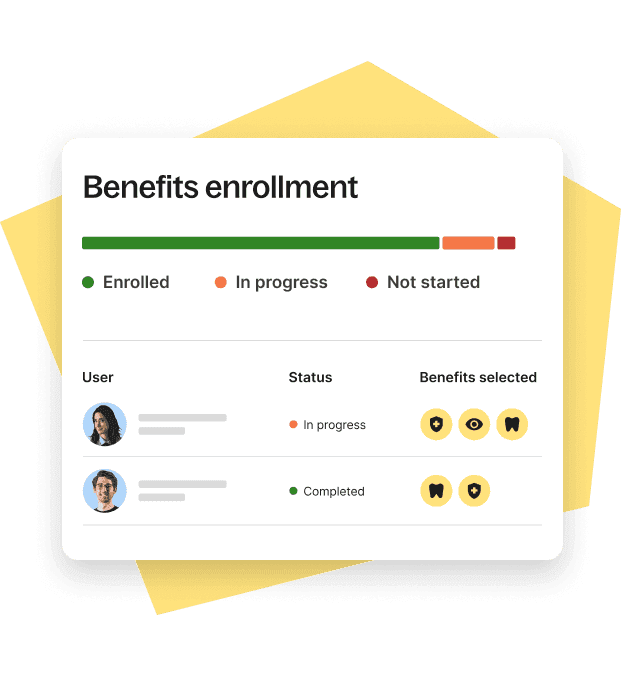
Benefits Administration
Fast, flexible global benefits
Planning talent integration to prevent attrition
Consolidating acquired employees onto EOR reduces integration costs and complexity, but only if you retain the workforce. Attrition during M&A is a real risk, driven by uncertainty, unclear benefits, and poor communication.
To mitigate this, you need a deliberate talent integration plan.
Start with clear messaging. Employees need to hear from leadership that they're valued, their role is secure, and their compensation is unchanged. Then explain the operational changes: new legal employer, payroll system, HR platform, benefits administration. Read our guide to post-merger talent integration for messaging best practices.
Address benefits and employment administration transparently. Communicate what may change, why, and what local alternatives or replacements exist. If benefits are changing, explain the business reason and what replaces them. If Deel's local benefits are available and different from legacy benefits, describe the new structure.
Manage change visibly. Create a communication timeline: announcement, Q&A sessions, one-on-one conversations with managers, written documentation, and ongoing support. Assign a single point of contact for employee questions. Read our enterprise M&A change management guide for detailed communication planning.
Document the transition. HR and Finance should jointly own the migration plan. Set deadlines. Assign clear ownership. Require proof of completion for each step. Track who has transitioned and who is pending. Once the deadline passes, wind down the legacy system.
Read our guide to retaining acquired talent across borders for retention-focused strategies specific to cross-border acquisitions.
Leading Global Hiring Platform
The world’s #1 platform for global employment

Step-by-step: Transitioning acquired employees to Deel's EOR
1. Audit your acquired workforce
Record the following for each employee:
Current legal employer and employing entity
Work location (country, city)
Compensation (salary, bonus, variable pay structure)
Contract terms (employment start date, contract end date if applicable, probation period, notice requirements)
Work authorization status (visa type, sponsorship requirements, any restrictions)
Employment history (service date with acquired company, any role changes)
Accrued leave, bonuses, and variable-pay commitments
Identify documentation gaps. Legacy contracts often have incomplete records. Get missing information before you transition—it's much harder to retrieve after.
2. Map countries and EOR eligibility
For each country where you have acquired employees, determine:
Does Deel operate an EOR entity there? (Deel supports 105+ countries, but availability varies by jurisdiction and use case)
Is the acquired employee eligible for EOR employment in that country? (Deel's legal team confirms based on role, visa status, and local requirements)
Must the employee remain with the legacy arrangement for a visa, compliance, or business reason? (Document each exception and the reason)
What transfer steps does the country require? (Consent, new contract, government notification, etc.)
What is the proposed transition deadline? (Set a firm date; indefinite transitions defeat the purpose)
Deel's implementation team helps you complete this mapping as part of the assessment phase.
3. Communicate with employees
Before you move anyone, communicate clearly:
You've acquired the company. Here's the strategic direction.
Employees' roles are secure. No layoffs are tied to this integration.
Compensation and employment terms are detailed in the transition documentation and depend on the applicable country and agreed transition terms.
Legal employment will change: they'll be employed by Deel EOR instead of the legacy employer.
Their day-to-day work and manager assignments don't change. Projects, responsibilities, and reporting lines remain the same.
Payroll, HR support, and benefits administration will be handled by Deel with 24/7 support.
Benefits and employment administration may change after transition and vary by country. Specific details are [communication approach depends on your situation].
Transition happens by [deadline]. Until then, everything continues as normal.
If they have questions, here's who to contact.
Repeat this message from multiple leaders. Employees need consistency and repetition to internalize major changes.
4. Prepare the payroll transition
Work with Finance and Deel to:
Set the legacy payroll end date. When does the old system's final payroll run?
Set the Deel payroll start date. When does Deel's first payroll cycle begin?
Align pay periods. Legacy payroll calendar vs. Deel payroll calendar—no gaps or overlaps.
Handle outstanding payments. Who pays accrued bonuses, commissions, unused leave? (Usually the legacy employer on final payroll.)
Transfer employee data. Bank account information, tax IDs, benefits elections, hours worked to date.
Reconcile opening balances. Verify that year-to-date compensation and taxes match in both systems before cutoff.
Plan for corrections. If an error surfaces after the transition, who identifies and fixes it?
Document every detail. Don't assume dates or payment timing will align automatically.
5. Align employment terms and administration
Review current employment structure and commitments:
What statutory benefits does each country require employees to have? (Health, retirement, time off—varies significantly by jurisdiction)
What enhanced benefits did the legacy employer offer? (Extra health coverage, wellness, equity, etc.)
What commitments or promises must carry forward? (Signing bonuses, option vesting schedules, retention bonuses, guaranteed raises?)
What benefits and employment administration are available through Deel in each country?
Where are there gaps between legacy and post-transition?
For each gap, decide: Does Deel provide a local alternative? Can you supplement with a cash allowance? Do you grandfather the old benefit? Document and communicate the decision clearly.
6. Finalize contracts and obtain signatures
Work with local counsel to:
Confirm the transfer mechanism. Some countries allow a contract amendment. Others require a new agreement. Some require employee notification or government registration.
Draft the Deel EOR contract. This document covers employment terms, compensation, benefits eligibility, jurisdiction, notice periods, and termination rights.
Secure required approvals. Employee signature, manager approval, legal review, government notification (where required by local law).
Set the effective date. Typically aligned with the payroll transition date.
Don't rush contract execution. Employment contracts are binding legal documents. Get the details right the first time.
7. Execute the transition
On the transition date:
Legacy payroll runs its final cycle. All outstanding payments, accrued amounts, and corrections are processed.
Deel payroll runs its first cycle. New bank accounts, tax withholding, benefits deductions, and approvals execute.
HR systems are updated. Employees are onboarded in Deel's platform. Manager assignments, reporting lines, access, and benefits elections are configured.
Benefits are activated. Health insurance, retirement contributions, equity plans (if applicable), and other benefits take effect.
Employees receive documentation. Updated employment documentation, benefits summary, support contact information, and platform access credentials are distributed.
Support is staffed. Your HR team and Deel's support team are ready to handle employee questions and resolve issues.
8. Close legacy systems
Only after confirming:
Deel's first payroll processed successfully
Benefits are enrolled and active
Employees have platform access and can self-serve
All transition corrections are complete
No pending dependencies remain on the legacy system
Then shut down the legacy payroll provider, archive old employee records per retention requirements, and terminate legacy contracts.
Until then, keep the legacy system active. Running in parallel for a month is safer than losing data or creating payroll errors.
Global Hiring Impact
Recognized as a Leader on Everest Group’s PEAK Matrix®
The EOR advantage for enterprise M&A
Deel consolidates acquired employees onto a unified platform without requiring local entity setup. This consolidation avoids unnecessary entity costs, simplifies payroll and HR administration, and gives you a defined transition timeline instead of indefinite legacy arrangements.
For enterprise acquisitions, this means:
Onboarding doesn't depend on local entity setup. Timing depends on country eligibility, required documentation, employee consent where applicable, and payroll cutoffs; the implementation team confirms the country-specific timeline.
Payroll consolidation can reduce reconciliation overhead and administrative complexity. One system, one rule set, one source of truth.
Compliance visibility improves. Real-time insight into employment terms, tax obligations, and regulatory requirements across all acquired employees.
Cost modeling is transparent. Clear comparison of status quo, EOR transition, and entity setup scenarios.
Book a demo below to see how Deel can support your acquisition. We'll build a plan that addresses your integration costs and timeline while supporting retention of your acquired talent.
Deel Hire
Find, hire, and manage anyone, anywhere

FAQs
Can an EOR preserve accrued seniority and benefits?
Ask for a country-specific assessment of existing rights and proposed terms. Document the agreed treatment of service dates, accrued balances, and benefits before employees transfer.
How quickly can you onboard acquired employees?
Confirm a schedule based on each country's requirements, employee documentation, contract completion, and payroll cutoffs. Avoid treating a standard hiring timeline as a commitment for an acquisition transfer.
Does using an EOR trigger transfer-of-undertakings rules?
The answer depends on local law and the transaction's facts, not the EOR label alone. Ask local counsel to assess applicable protections and any information or consultation requirements.
What happens if you later set up your own entity?
Plan a separate employment transition from the EOR to your entity, including contracts, payroll, benefits, and required local steps. Include that future transition cost when comparing your options now.
Is EOR cost-effective for large acquired headcounts?
Compare country-specific EOR fees with the full cost of operating your entities over the expected employment period. A larger team may justify direct employment infrastructure, but headcount alone doesn't determine the better option.
Jemima is a nomadic writer, journalist, and digital marketer with a decade of experience crafting compelling B2B content for a global audience. She is a strong advocate for equal opportunities and is dedicated to shaping the future of work. At Deel, she specializes in thought-leadership content covering global mobility, cross-border compliance, and workplace culture topics.