Article
10 min read
PEO vs EOR: The Difference (And Why It Matters)
PEO
Employer of record

Author
Anja Simic
Last Update
July 17, 2026

Table of Contents
Quick answer
Comparing services and platform experiences
Tracking hours and attendance for hourly teams
Both PEOs and EORs offer health benefits for workers
PEOs require entities, EORs do not
PEO vs. EOR: Cost comparison
Choose the solution that meets your long-term needs
How PEO is different
EOR or US PEO, you can do it all with Deel
Quick answer
EOR is the sole legal employer for global hires with zero compliance liability on you; PEO is a co-employment partner for US employees where you share legal responsibility and must have your own entities. Choose EOR for international expansion, PEO for domestic US growth.
Key takeaways
- An EOR helps businesses hire and manage a global workforce, while a PEO supports companies with US HR and workforce tasks where they have their own legal entities.
- With a PEO, you enter into a co-employment relationship, meaning you remain the legal employer of the people you hire. You are still liable if a legal or compliance mishap occurs. With an EOR, they’re the legal employer, taking full liability for your team.
- If you’re focused on US operations, a PEO or EOR could suit you well. However, if you want to expand globally while enhancing HR, payroll, and compliance, consider an EOR.
Hiring talent is no longer limited by borders—but choosing the right model to manage that talent is critical. Understanding whether a PEO or an EOR fits your business can save you time, money, and compliance headaches.
An employer of record (EOR) helps businesses hire and manage international teams without taking on compliance risk. A professional employer organization (PEO) supports companies with US-based HR and payroll when they already have legal entities in place and are willing to share compliance responsibilities.
Put simply: an EOR is your legal employer for global hires, while a PEO acts as an HR partner for your US employees.
The main difference comes down to who is the legal employer.
-
With a PEO, you enter a co-employment relationship: you stay the legal employer, and the PEO handles admin tasks like payroll, benefits, and tax filings. You still carry the compliance liability.
-
With an EOR, the provider becomes the legal employer. They sign the contracts, handle payroll and benefits in each country, and take on compliance risk. You continue to manage day-to-day work and performance.
In the sections below, we’ll break down how this impacts:
- The hiring process
- Health insurance and benefits
- Entity and business registration
- Compliance and contracts
- Team size and scalability
Comparing services and platform experiences
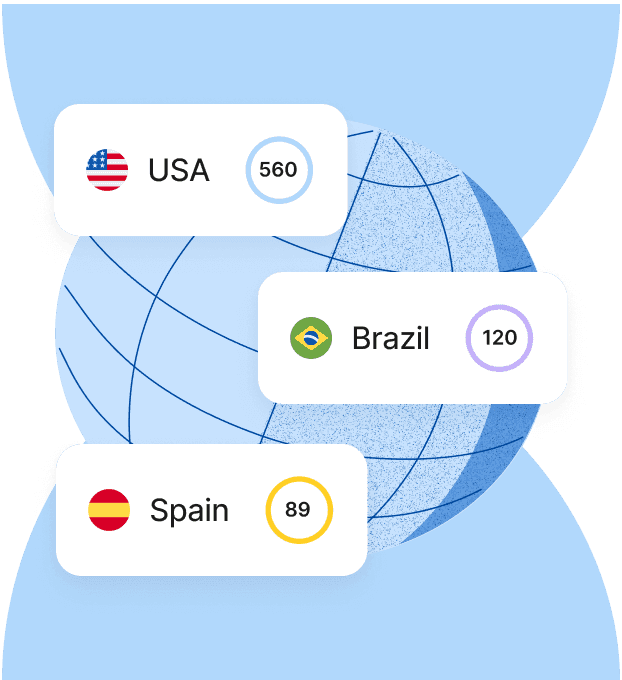
With an EOR, the platform functions as a centralized hub for global workforce management. Your team uses it to create compliant contracts, manage onboarding workflows, approve payroll across multiple countries, and monitor compliance updates.
Employees log in to complete new-hire paperwork, access contracts, download payslips in local currency, and review benefits packages tailored to their location.
Because the EOR manages global payroll and statutory benefits, your team’s interaction is lighter: you approve hires and funding, and the EOR handles the rest.
Deel Hire
A PEO is designed to extend your internal HR team rather than replace it. The platform typically comes with a built-in HR information system (HRIS), where your team enters payroll data, updates employee records, and manages benefits enrollment.
Employees log in to view pay stubs or choose benefit options, while your HR staff still oversees hiring, onboarding, and employee development directly. In this setup, the PEO streamlines compliance and administration, but the core HR processes remain with you, making the PEO feel like an extension of your existing workflows.
✨ Discover how Superfiliate expedites US expansion with Deel.
Before Deel, hiring in a new state meant increasing our risk of compliance issues. By ensuring we stay compliant, PEO not only saves us money but also alleviates our mental load.
—Andy Cloyd,
CEO and Co-founder, Superfiliate
Tracking hours and attendance for hourly teams
Both models let you track hours for the workers you employ, and Deel builds time tracking into the same platform that runs their pay. Hourly employees clock in and out from mobile or the web, submit timesheets, and send them to a manager for approval before anything reaches payroll. Approved hours flow straight into the pay run, so the time a worker logs and the amount they're paid stay connected.
For US teams on PEO, Deel interprets approved time into the right overtime buckets, applies state break rules, and accounts for rules like seventh-consecutive-day overtime before payroll runs. For EOR employees, the same clock-in and approval flow applies, with overtime rules and US state break tracking available in supported countries. Site-based teams can add geofencing, so a clock-in only counts when a worker is physically inside a defined work location.
Both PEOs and EORs offer health benefits for workers
EORs leverage their scale and global network to negotiate comprehensive benefits packages for workers from top insurance providers worldwide. This enables them to provide full-suite insurance coverage, including general liability, workers’ compensation, and other types of insurance, depending on where the employee resides.
PEOs also offer comprehensive benefit plans that include health insurance, dental and vision care, retirement plans, short-term and long-term disability coverage, life insurance, and accident insurance for your domestic employees.
Learn more: How to Choose the Best PEO for Health Insurance
PEOs require entities, EORs do not
If you plan to use a PEO, you need a legal entity in the US and are required to register your business in each state you operate in. Learn more in our guide to US business registration.
EORs employ the people who work for you, which means you can hire workers wherever the EOR has established a local entity. Deel, for example, has local entities across the US and over 150 other countries.
With Deel as your EOR, you don’t have to set up a branch office in a new state or country to hire a resident. Global hiring is a huge benefit for companies looking to break into new markets or hire the best (and not just the nearest) talent.
✨ Discover how Nium saved 12+ months, expanding into a dozen new geographies with Deel.
Deel enabled us to achieve our mission to reach and expand new markets with a faster turnaround time. I would say it saved us at least 12 to 24 months of effort. I’d recommend Deel to anyone who would like to expand globally and has limited time and resources to build the capability internally
—Nupur Mehta,
VP of Human Resources, Nium
PEO vs. EOR: Cost comparison
Understanding the cost structures of PEOs and EORs helps you see where each model saves—or adds—expenses over time.
| Cost Category | PEO (Professional Employer Organization) | EOR (Employer of Record) |
|---|---|---|
| Entity setup | Requires you to register and maintain entities in each state or country where you hire, adding upfront and ongoing costs | EOR’s existing entities cover employment, eliminating setup and maintenance costs |
| Service fees | Charges a per-employee-per-month (PEPM) fee or a percentage of payroll | Charges a fee per employee, per month |
| Benefits costs | Pooled US-based benefits plans can reduce costs domestically | Benefit plans may vary by country, ensuring compliance but with differing cost structures |
| Compliance and risk | Any fines, lawsuits, or compliance failures can create unexpected expenses | EOR absorbs compliance risks and shielding you from surprise costs |
| Scalability | More cost-efficient for smaller companies focused on US growth where entities already exist | More cost-efficient for international or rapid expansion without entity setup. Costs stay predictable even as you expand globally |
Learn more: EOR vs. Entity Costs: What’s More Affordable?
Choose the solution that meets your long-term needs
If you plan to restrict your operations to the US and are happy to assume legal responsibility for your local workforce, a PEO can be a great fit. If you don't want to set up an entity, want more compliance support, and plan to expand internationally, consider an EOR.
| Criteria | PEO (Professional Employer Organization) | EOR (Employer of Record) |
|---|---|---|
| Geographic scope | Supports US-only employees | Supports global hiring without local entities |
| Legal responsibility | You remain the legal employer and share liability | EOR is the legal employer, assumes compliance risk |
| Entity requirements | You must have or set up legal entities in each state/country | No entity needed — EOR uses its own entities |
| Hiring strategy | Best for companies growing into and across the US | Best for global, distributed, or remote teams |
| Benefits administration | Access to US-focused benefits (health, retirement, insurance) | Provides country-specific benefits packages worldwide |
| Cost and efficiency | Higher upfront costs for entity setup and HR overhead | Lower costs, faster market entry, no setup required |
| Long-term goals | Ideal if growth is US-focused with shared responsibility | Ideal if growth is international and requires flexibility |
How PEO is different
Deel’s in-house PEO is built to support fast-growing teams with the tools, coverage, and service they need, all in one platform.
Fully in-house support
PEO is run entirely by internal specialists, including certified professionals, licensed advisors, and dedicated HRBPs. Clients get direct access to expert guidance across payroll, benefits, and compliance, with no third-party handoffs or delays.
Benefits admin made easy
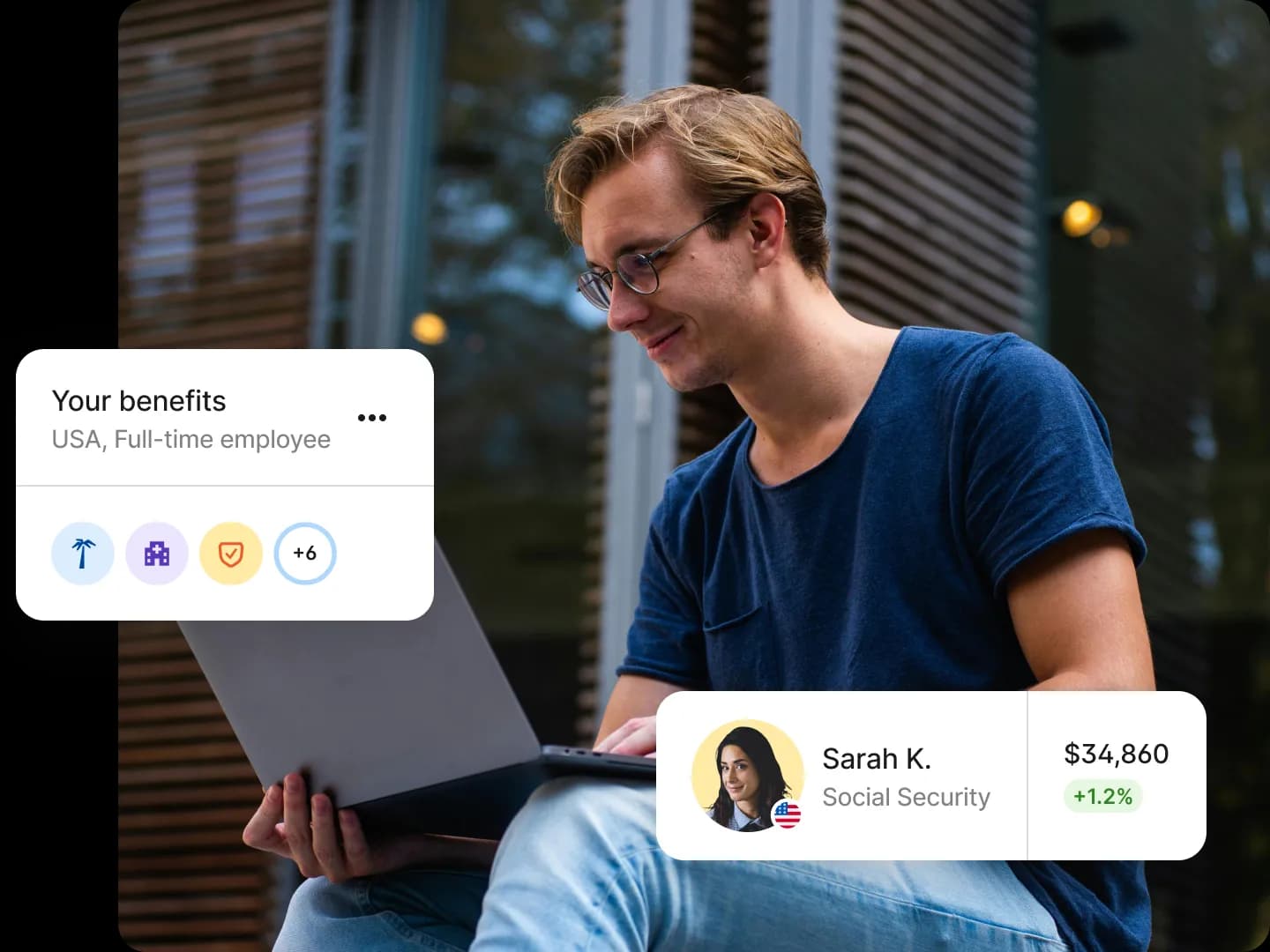
Admins can choose, enroll, and manage health benefits for US employees directly in the Deel platform. They can view costs, track coverage, and handle renewals—all in one place, without chasing brokers or juggling paperwork.
Exclusive access to Aetna International plans
For teams with globally mobile employees, Deel is the only PEO to offer Aetna International health plans, ensuring continuous coverage across borders without needing to manage separate providers.
One platform for payroll, benefits, and HR
Admins can manage hiring, onboarding, payroll, and benefits in one place. Deel simplifies every step, from enrollment to renewals, reducing HR admin time.
Compliance coverage at every level
Deel helps businesses meet federal, state, and local employment laws, taking the guesswork out of US HR compliance.
Explore how Deel’s in-house PEO can help you offer better benefits and stay compliant from day one.
PEO
Get full-service HR, payroll, and benefits for your US employees
The benefits of EOR
If you’re looking to bolster your current HR, payroll, and compliance functions while expanding your team globally, an EOR like Deel is your optimal choice. EORs enable you to expand across borders without worrying about local compliance or establishing local entities.
This is especially important in the era of remote work: partnering with an EOR unlocks access to the best talent in the world, not just the best talent in your area.
It’s important to note that an EOR doesn’t limit you to international hires only; you can still engage domestic employees and enjoy the full spectrum of services provided. However, a significant advantage is the flexibility to recruit talent from abroad whenever necessary.
Other financial benefits of using an EOR include:
- Elimination of upfront expenses of setting up an entity
- Decreased risk of non-compliance fines and penalties
- Lower administrative costs
- Lower tech stack costs
- Cost-effective new market entry
Should the time come to transition from the EOR model to owned entities, Deel offers continued support through Entity Setup services and Global Payroll.
See also: 5 Significant Cost Savings of an Employer of Record vs. Entity Setup
EOR or US PEO, you can do it all with Deel
As a global payroll and HR platform, Deel enables you to hire, pay, and manage your entire global workforce in one place.
You can leverage Deel’s services to suit your needs best. Opt for the EOR model to quickly hire and pay employees globally without setting up entities, US PEO to manage employees under US entities, Global Payroll services for centralized payroll operations, and Contractor of Record for compliant and efficient contractor management.
To discuss your options with an expert, book a 30-minute demo with our team today.
Deel Hire
Find, hire, and manage anyone, anywhere

More resources
FAQs
Can I use both PEO and EOR at the same time?
Yes. Many companies do—EOR for international employees in markets where they lack entities, PEO for their US workforce where they have entities or are consolidating domestic operations. This hybrid approach lets you use the right model for each region and scale flexibly as you grow.
What if I start with PEO in the US and later want to expand globally?
You can transition smoothly. Keep your US team on PEO and layer Deel EOR for international hires. Both operate within the same Deel platform, so payroll, compliance, and team management stay centralized. When you're ready, Deel's Entity Setup services can help you transition from EOR to owned entities in any market.
How do I decide between PEO and EOR?
Ask yourself three questions:
- Do you only need US employees, or do you plan international expansion? → US-only = PEO; International = EOR.
- Do you want to maintain your own entities and share compliance risk, or offload all legal employer responsibility? → Share risk = PEO; Full offload = EOR.
- How quickly do you need to hire? → Both are fast, but EOR skips entity setup entirely.
Can I hire contractors through PEO or EOR?
Neither PEO nor EOR hire contractors—both are employment models for permanent or part-time employees. For contractors and freelancers, you need a Contractor of Record (CoR) service. Deel offers CoR alongside PEO and EOR, so you can manage employees and contractors in one platform.
How do PEO and EOR handle compliance differently?
With PEO, you and the PEO share compliance liability. If a legal issue arises (misclassification, wage laws, tax filings), you share the financial and legal risk. With EOR, the provider assumes all compliance responsibility—they handle contracts, tax filings, labor law compliance in each country, and assume all liability. EOR is lower-risk for businesses new to a market.
What if my business needs change and I want to switch from PEO to EOR (or vice versa)?
Deel supports both transitions. If you outgrow PEO and want global reach, transition your US team to Deel's in-house PEO and add EOR for new international markets—both stay in the same platform. If you're ready to own entities after using EOR, Deel's Entity Setup and Global Payroll services guide you through the transition while keeping your team's data and workflows intact.
How quickly can I hire through PEO versus EOR?
Both are fast. PEO timelines depend on entity setup (if you don't already have a state entity). EOR is typically faster for new markets since Deel's entities are already established—you can move from offer to first paycheck in days. PEO can be equally fast if your US entities are already set up.
Do PEO and EOR handle benefits differently?
Yes. PEO offers US-focused benefits (health insurance, dental, vision, 401k, life insurance) negotiated at scale for US employees. EOR provides country-specific benefits packages tailored to local law and market conditions—so a hire in Germany gets German statutory benefits, while a hire in Singapore gets Singapore-compliant benefits. Deel PEO is unique in offering Aetna International plans for globally mobile teams.
What happens to employees if I switch providers?
Your employees' employment status is protected. If you transition from EOR to owned entities or from one PEO to another, Deel handles the administrative handoff—contracts transfer, payroll continues uninterrupted, and benefits stay active. It's a smooth backend process that employees rarely notice.
Anja Simic is a passionate advocate for remote work and leveling the playing field for diverse talents worldwide. She’s the Director of Content Marketing at Deel. As a content marketing professional, she thrives on shaping impactful narratives through different formats such as long-form content, webinars, and newsletters (to name a few).