Article
5 min read
How to Send Stablecoin Payments to Contractors in Mexico
Contractor management
Global payroll
Legal & compliance

Author
Joanne Lee
Last Update
September 21, 2026

Table of Contents
Why stablecoin payments work in Mexico
Benefits of paying Mexican contractors in stablecoins
Mexico stablecoin regulations businesses should know
Step 1: Classify your Mexico contractors correctly
Step 2: Set up your stablecoin payment infrastructure
Step 3: Onboard your contractors and collect payment details
Step 4: Execute and reconcile stablecoin payments
Step 5: Monitor compliance and manage ongoing obligations
Send stablecoin payments to Mexican contractors with Deel
Key takeaways
Mexico's cross-border payment friction and peso volatility make stablecoins a practical settlement option for companies paying independent contractors there.
Mexico's 2018 Fintech Law defines and regulates virtual assets, but it does not set tax rules. Mexico's Income Tax Law, enforced by SAT, treats gains from virtual assets as taxable income, so both businesses and contractors have compliance obligations when sending or receiving stablecoins.
Deel's Contractor solution enables businesses to onboard, manage, and pay independent contractors. Eligible contractors may have access to stablecoin withdrawal methods through the Deel platform.
Paying contractors in Mexico through traditional bank wires is expensive, slow, and operationally demanding. Cross-border wire fees in the US–Mexico corridor can add up, and settlement can take two to five business days. For finance teams managing hundreds of independent contractors, that friction compounds quickly.
Stablecoins can address much of this friction. Unlike volatile cryptocurrencies, stablecoins are designed to track the value of the US dollar, which makes the payment amount more predictable for contractors. Stablecoin rails in the US–Mexico corridor have remittance fees under 1%, and blockchain-based settlement can operate around the clock rather than during traditional banking hours.
This guide covers Mexico's stablecoin regulations, contractor classification requirements, payment infrastructure setup, execution and reconciliation workflows, and ongoing compliance obligations.
Why stablecoin payments work in Mexico
Mexico has a large independent-contractor workforce and meaningful foreign-exchange (FX) friction for cross-border payments, creating opportunity for stablecoin payments.
Mexico's peso has experienced notable volatility. The exchange rate moved from approximately MXN 16.93 per dollar in 2023 to MXN 20.79 in 2024 before recovering to around MXN 18-19 by 2025, according to FocusEconomics data. A swing of that size in a single year creates real exposure for contractors invoicing in pesos and for companies managing cross-border payroll costs.
Annual inflation averaged 4.72% in 2024, above Banxico's (Mexico's central bank and monetary authority) 2–4% target band, adding further purchasing-power pressure on peso-denominated contractor earnings.
For companies paying Mexican contractors, traditional bank wires face a different set of problems. International bank transfer fees accumulate, settlement can take multiple business days, and banking cutoff windows mean a payment initiated late Friday may not clear until the following week.
Stablecoins address both sides of this equation. A dollar-pegged stablecoin holds its value from the moment it reaches a contractor's wallet, giving them purchasing-power protection. Blockchain-based settlement runs 24/7, without correspondent-bank chains or banking-hour constraints.
Deel Stablecoin Wallet
Pay contractors with Stablecoin
Benefits of paying Mexican contractors in stablecoins
Stablecoin contractor payments have different advantages for the finance team making the payment and the contractor receiving it.
For finance leaders and their businesses:
Stablecoin rails typically operate for under 1% of transfer value, compared to 5% or more on traditional banks in this market.
Blockchain transactions can confirm much faster than a bank wire, and payments can be initiated on any day of the week.
On-chain payment records create a timestamped audit trail, making it easier to match invoices to payment confirmations without chasing bank statements.
Stablecoin transfers are not constrained by banking hours or international wire windows, which helps finance teams manage contractors across multiple time zones.
For Mexican contractors:
A contractor paid in stablecoin holds a dollar-denominated balance from the moment it arrives, providing protection from peso depreciation between payment and conversion.
Contractors can receive payment faster than through a traditional wire, improving their cash-flow position.
Stablecoin balances can be held in a digital wallet, converted to pesos at a time the contractor chooses, or accessed through supported off-ramp methods.
External-wallet transfers use blockchain rails rather than correspondent-bank chains, which can reduce per-transaction costs, though network, service, and off-ramp fees may still apply.
Mexico stablecoin regulations businesses should know
Mexico has a defined legal framework for virtual assets that is still evolving. Understanding which regulators govern which activities is the foundation of a compliant payment program.
Mexico's primary framework is the Ley para Regular las Instituciones de Tecnologia Financiera (Fintech Law), enacted in March 2018. The law defines "virtual assets" and establishes that only Financial Technology Institutions (ITFs) authorized by the Comision Nacional Bancaria y de Valores (CNBV) may operate platforms that handle them. Banxico's Circular 4/2019 subsequently prohibited financial institutions from offering crypto services directly to the public, pushing retail and business crypto activity to non-financial entities operating under strict anti-money laundering (AML) rules.
Three regulators share oversight of this space:
Banco de Mexico (Banxico) is Mexico's central bank and primary regulator for virtual-asset use by financial institutions. Banxico determines which virtual assets may be used in the financial system and under what conditions.
Comision Nacional Bancaria y de Valores (CNBV) supervises financial technology institutions, enforces compliance with the Fintech Law, and grants authorization to ITFs operating with virtual assets.
Secretaria de Hacienda y Credito Publico (SHCP) oversees AML and counter-terrorism-financing (CTF) policy for virtual-asset activity and receives reports on transactions classified as vulnerable to illicit use.
As of May 2026, a proposed legislative initiative (the "Murat Initiative") has been introduced in the Mexican Senate. If enacted, it would create a new "Activo Virtual Estable" regulatory category for peso-pegged payment stablecoins, assigning primary regulatory authority to Banxico and requiring authorized issuers (including foreign issuers seeking to operate in Mexico) to meet Banxico's authorization and reserve requirements. This initiative has not yet become law, but finance teams should monitor its progress at Banxico and CNBV.
Tax and reporting obligations for the paying company
Mexico's Servicio de Administracion Tributaria (SAT) treats virtual assets, including stablecoins, as intangible movable property. For the paying business, the key obligations are:
FX valuation and documentation: All cross-border payments denominated in stablecoins must be converted to MXN using the exchange rate published in the Diario Oficial de la Federación (DOF) for the business day immediately preceding the transaction, per Article 20 of the Código Fiscal de la Federación. Businesses must maintain consistent, auditable records of the valuation method applied.
Invoice requirements: If the paying company is registered for Mexican tax purposes, contractor payments must be supported by a Comprobante Fiscal Digital por Internet (CFDI) invoice, regardless of whether payment is made in pesos, US dollars, or stablecoins.
Contractor tax-status verification: Before making payments, confirm that each contractor is registered with SAT and operating under an appropriate tax regime (typically Regimen Simplificado de Confianza for smaller contractors, or Regimen de Actividades Empresariales y Profesionales for larger ones).
Record-keeping: Records must be retained for five years under Article 30 of the Codigo Fiscal de la Federacion (CFF).
AML transaction thresholds: Mexico's Federal Law for the Prevention and Identification of Transactions with Illicit Proceeds (LFPIORPI) requires businesses to register with SAT for AML purposes if they conduct virtual-asset transactions, and to report transactions above applicable thresholds.
Regulatory landscape at a glance
Banxico - Sets which virtual assets can be used by financial institutions; issued Circular 4/2019 restricting public crypto services
CNBV - Authorizes and supervises Financial Technology Institutions operating with virtual assets
SHCP - Oversees AML/CTF policy and receives vulnerability reports
SAT - Governs tax collection and reporting for virtual-asset transactions
Fintech Law (2018) - Primary regulatory framework; requires ITF authorization for platforms handling virtual assets
Step 1: Classify your Mexico contractors correctly
The first step in ensuring that you send compliant stablecoin payments to contractors is classification.
Correct classification is the prerequisite for everything else. Misclassifying an employee as an independent contractor in Mexico creates back-pay liability, social-security obligations, and regulatory penalties. Those exposures don't disappear because payment was made in stablecoins.
Mexico's independent contractor framework is governed by the Ley Federal del Trabajo (LFT). A genuine independent contractor:
Controls how and when they perform the work, not just what is delivered
Provides services to multiple clients, not exclusively one company
Is not economically dependent on a single client for substantially all of their income
Supplies their own tools and equipment
Invoices per project or milestone, rather than receiving a regular wage
If a working relationship doesn't satisfy these criteria, Mexico's labor courts are likely to reclassify the worker as an employee, regardless of what the contract says.
If classification is ambiguous, companies without a Mexican entity have two options: use a contractor of record (COR), which can help mitigate misclassification risk by engaging the worker through a structured contractor model, or use an employer-of-record (EOR) solution when the relationship is substantively employment.
Before setting up any payment method, confirm that each contractor is correctly classified and has a signed services agreement specifying the scope of work, payment currency and method (including stablecoins), the contractor's SAT registration number (RFC), and the applicable payment schedule.
Deel Contractor of Record
Minimize misclassification risk
Step 2: Set up your stablecoin payment infrastructure
Once classification is confirmed, the next task is building a payment infrastructure that can move stablecoins to Mexico-based contractors.
The two core questions to address here are how the company will fund payments and how contractors will receive and hold them.
How to fund payments as a business
Deel allows businesses to fund eligible contractor invoices using stablecoin at a 1:1 rate without building separate payment-disbursement infrastructure. Companies can use supported USDC or USDT funding methods to pay contractor invoices directly through the Deel platform.
Contractor wallet options
Mexican contractors on Deel have two primary options for receiving stablecoin payments.
The first option is an external wallet withdrawal. Contractors can withdraw earnings as USDC or USDT to a self-custodied wallet on supported networks including ERC-20 (Ethereum), Base, Polygon, BEP-20 (Binance Smart Chain), Solana, TRC-20 (Tron), and Tempo. A 2% service charge plus a $1 network fee applies, and proof of location documentation may be required for contractors in certain jurisdictions.
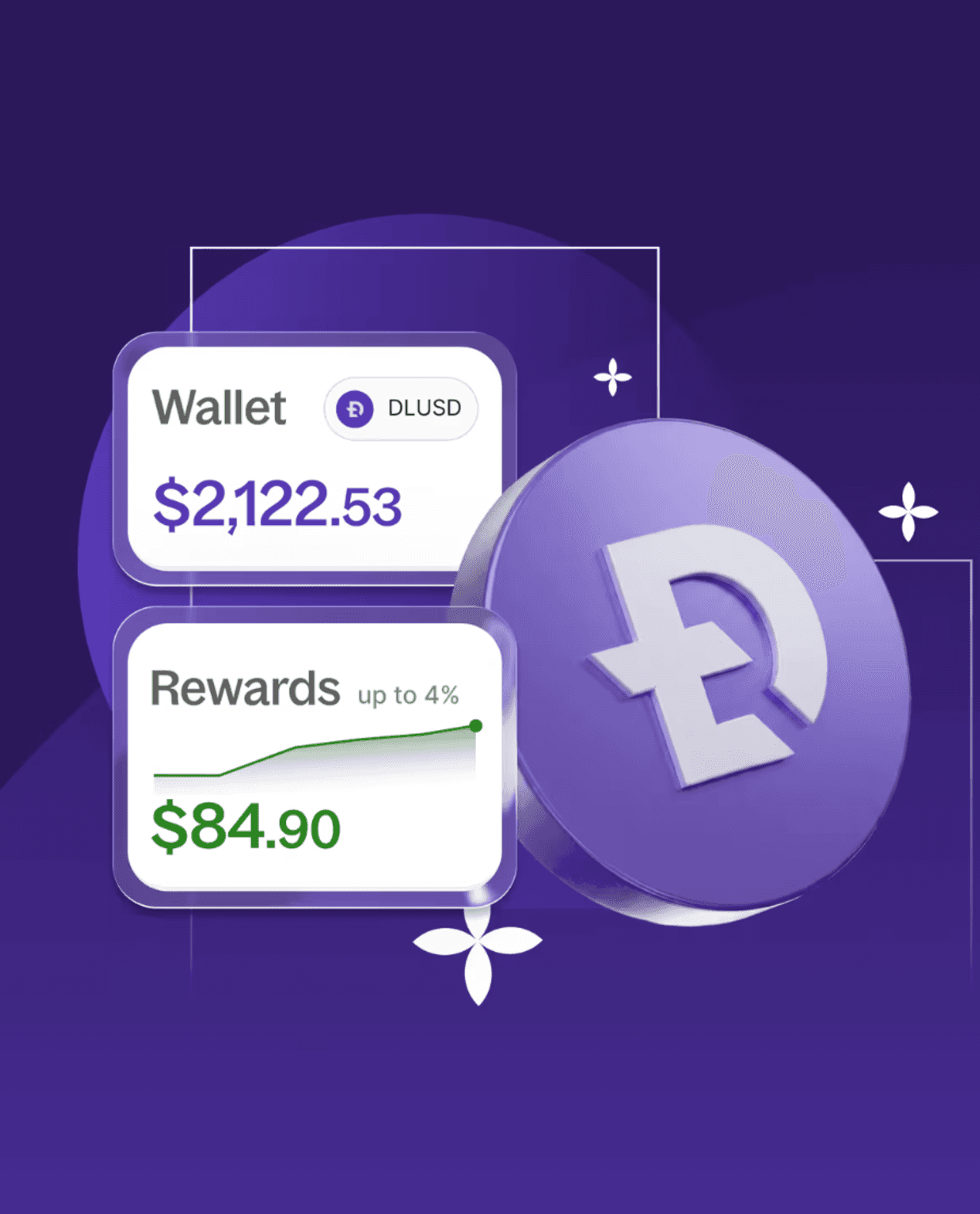
The second option is Deel Stablecoin Wallet. Deel launched its stablecoin wallet in Argentina in June 2026, and subsequently expanded availability to more than 80 countries across Latin America, Africa, the Middle East, and Asia-Pacific. DLUSD is Deel's US dollar-denominated digital balance, issued through Bridge (a Stripe company), held in Privy wallets, and settled on the Tempo blockchain. Eligible contractors in supported markets can hold, earn rewards on, and withdraw their stablecoin balance through the Deel app after completing required verification.
Step 3: Onboard your contractors and collect payment details
Infrastructure in place, the next step is onboarding each contractor so they're ready to receive stablecoin payments. This step has three components: identity verification, payment-method setup, and services-agreement execution.
Identity verification (Know Your Customer)
Stablecoin payments on Deel require contractors to complete Know Your Customer (KYC) verification. This is a compliance requirement for virtual-asset payments and a prerequisite for accessing stablecoin withdrawal methods or Deel Stablecoin Wallet. Contractors must complete applicable identity verification and meet market- and partner-specific eligibility requirements before using supported stablecoin methods.
The KYC process collects government-issued ID documentation and, in some countries, proof of address. For Mexico-based contractors, this typically means a national ID (INE or IFE) or passport plus a recent utility bill or bank statement.
Payment-method setup
Once KYC is complete, contractors can add their preferred stablecoin payout method through the Finance section of the Deel app:
External wallet: Contractors enter their USDC or USDT wallet address on a supported network. The network must be selected carefully. Sending to an unsupported network can result in permanent loss of funds.
DLUSD wallet: Eligible contractors in supported markets can access and enroll in the stablecoin wallet through the Deel app. No external wallet address is required.
Services agreement
Before the first payment runs, confirm that the services agreement signed by each contractor:
Specifies payment currency (US dollar-equivalent stablecoin) and the agreed payment schedule
References the contractor's SAT RFC number
Includes a CFDI invoicing obligation (the contractor must issue a valid CFDI for each payment received)
Does not contain language that could imply an employment relationship (no set working hours, no exclusivity clause, no equipment provision by the company)
Compliance
Unlock Continuous Compliance™ with Deel
Step 4: Execute and reconcile stablecoin payments
With contractors onboarded and payment methods set, executing payments follows a structured workflow.
Payment execution
When a contractor submits an invoice or a recurring payment cycle runs, the finance team funds the payment using supported USDC or USDT funding methods. Contractors can then use their designated withdrawal method, whether an external wallet or Deel Stablecoin Wallet. Settlement timing varies by withdrawal method, partner processing, network conditions, and applicable compliance review.
Batch payment workflows reduce the manual processing associated with paying multiple contractors separately. Deel's platform handles the disbursement in a single funding operation, which is more operationally efficient than initiating individual bank wires for each contractor.
Reconciliation
On-chain stablecoin transactions produce a timestamped record linking each disbursement to a wallet address. Finance teams can match contractor invoices to payment confirmations through Deel's dashboard, which aggregates payment history and supports export to accounting systems.
Two reconciliation-specific requirements apply to Mexican contractor payments:
MXN valuation: SAT requires that the value of each payment be recorded in MXN, using Banxico's official exchange rate. Establish a consistent process for capturing this rate at the time each payment executes.
CFDI matching: Each payment must be matched to the corresponding CFDI invoice issued by the contractor. Maintain a three-way match: services agreement, CFDI invoice, and stablecoin payment confirmation.
Step 5: Monitor compliance and manage ongoing obligations
A stablecoin payment program doesn't end at execution. Both the paying company and its contractors have ongoing obligations, and Mexico's regulatory environment for virtual assets continues to evolve.
Ongoing obligations for the paying company
Contractor reclassification monitoring: Review each contractor relationship against Mexico's independent-contractor criteria periodically. An engagement that starts as a genuine project-based relationship can drift toward economic dependency over time. Annual classification reviews are a reasonable minimum.
AML transaction monitoring: If your company's virtual-asset payments cross applicable LFPIORPI reporting thresholds, the required reports go to the Unidad de Inteligencia Financiera (UIF), Mexico's financial intelligence unit. A Mexican tax and compliance advisor can help determine whether your payment volumes trigger ongoing reporting obligations.
Record retention: All payment records, CFDI invoices, FX valuation documentation, and KYC records must be maintained for a minimum of five years, per Article 30 CFF.
Regulatory monitoring: The proposed Murat Initiative, if enacted, would create new authorization requireents for stablecoin issuers operating in Mexico. Monitor developments at Banxico and CNBV.
Ongoing obligations for Mexican contractors
Mexico contractors receiving stablecoin payments have their own compliance obligations:
ISR (Impuesto Sobre la Renta) reporting: Stablecoin income is subject to ISR at the contractor's applicable progressive rate, ranging from 1.92% to 35% for individuals, per SAT's published tariff tables. Contractors must declare this income in their annual tax return, due April 30 of the following year.
CFDI issuance: For each payment received, the contractor must issue a valid CFDI invoice to the paying company, valued in MXN using the exchange rate published in the DOF for the business day immediately preceding the payment, per CFF Article 20.
Monthly provisional payments: Mexican contractors in most tax regimes must file monthly ISR provisional declarations based on income received. Missing a monthly declaration generates fines and interest.
Send stablecoin payments to Mexican contractors with Deel
Compliant contractor payments in Mexico don't require separate bank wires, currency conversions, and manual reconciliation. Deel's Contractor solution supports contractor onboarding, agreement management, invoicing, and payments through connected workflows, while Deel Stablecoin Wallet gives eligible Mexican contractors another US dollar-denominated option for holding and accessing earnings.
With Deel, finance teams can:
Use built-in classification guidance and services-agreement templates to support contractor engagements
Onboard contractors and complete KYC verification directly through the platform
Fund eligible contractor invoices using USDC or USDT at a 1:1 rate
Give eligible contractors in supported markets access to Deel Stablecoin Wallet to hold a USD-denominated DLUSD balance
Export payment records to support reconciliation and the business's own tax and record-keeping processes
Book a demo below to see how Deel supports stablecoin contractor payments in Mexico from classification to reconciliation.
Deel Hire
Find, hire, and manage anyone, anywhere

This article is provided for general informational purposes and should not be treated as legal, tax, or financial advice. Regulations governing stablecoin payments in Mexico are evolving. Consult qualified local professionals for guidance specific to your situation.
FAQs
Is it legal to pay Mexico contractors in stablecoins?
Yes. Mexico permits stablecoin contractor payments under its existing virtual-asset rules established by the 2018 Fintech Law. Contractors must issue CFDI invoices for payments received, declare income to SAT, and pay ISR at their applicable rate. The paying company must maintain proper documentation and FX valuation records.
Which stablecoin should I use - USDC or USDT?
Both USDC and USDT are supported for contractor withdrawals on Deel across multiple blockchain networks. Many regulated payment providers in Mexico choose USDC for its regular reserve audits and transparency, while USDT has broader global market share.
Deel Stablecoin Wallet uses DLUSD, a USD-denominated digital balance issued through Bridge, a Stripe company. Eligible contractors who enroll access DLUSD through the Deel app without selecting a blockchain network themselves.
Does the paying company have any withholding obligations for stablecoin contractor payments in Mexico?
For payments to genuine independent contractors (not employees), Mexican companies are generally not required to withhold ISR on contractor invoices in the same way they withhold on employee payroll. The contractor is responsible for their own monthly ISR provisional declarations and annual return. Companies registered in Mexico should confirm their specific obligations with a Mexican tax advisor, as rules can vary by payment structure and the tax regime of both parties.
What happens if a contractor wants pesos instead of stablecoins?
Contractors are not obligated to receive payment in stablecoins. Deel supports local bank-transfer disbursement to Mexican accounts as well. The stablecoin wallet is a contractor-elected option, not a mandatory payment method. Contractors holding DLUSD balances can withdraw to a local bank account at any time, subject to applicable processing and conversion terms.
How does Deel handle compliance for stablecoin contractor payments in Mexico?
Deel's Contractor solution provides workflows for contractor onboarding, agreement management, invoicing, and payments. Businesses can use supported USDC or USDT funding methods for eligible contractor invoices without building separate payment infrastructure. Payment records can be exported for reconciliation and audit. Regulatory compliance obligations, including SAT filings, CFDI invoice management, and AML reporting, remain the responsibility of the business and its contractors.
Joanne Lee is a content marketing professional with 7+ years of experience creating effective social, search, email, and blog content for companies ranging from start-ups to large corporations. She's passionate about finding creative ways to tell a purpose-driven story, staying active at the gym, and diversity and inclusion. At Deel, she specializes in writing about topics related to global payroll and enterprise businesses.