Article
5 min read
How to Send Stablecoin Payments to Contractors in the Philippines
Contractor management
Global payroll
Legal & compliance

Author
Joanne Lee
Last Update
September 29, 2026

Table of Contents
Why stablecoin payments work in the Philippines
Benefits of paying Filipino contractors in stablecoins
Stablecoin regulations in the Philippines that businesses should know
Step 1: Classify your Filipino contractors correctly
Step 2: Set up your stablecoin payment infrastructure
Step 3: Onboard your contractors and collect payment details
Step 4: Execute and reconcile stablecoin payments
Step 5: Monitor compliance and manage ongoing obligations
Send stablecoin payments to Filipino contractors with Deel
Key takeaways
Paying Filipino contractors via stablecoins sidesteps foreign exchange (FX) friction and settlement delays common to traditional bank wires.
Only 33.5% of Filipino adults hold traditional bank accounts, making stablecoin wallets and mobile platforms practical alternatives.
Deel enables companies to manage stablecoin contractor payments alongside their compliance and onboarding workflows in one unified platform.
Finance teams paying independent contractors in the Philippines are familiar with the friction. SWIFT transfers take two to five business days with various fees. For contractors on the receiving end, that means waiting days for funds, then watching their purchasing power erode.
Stablecoin rails address both sides of this problem. They settle in minutes, cost a fraction of a SWIFT wire, and deliver USD-pegged value that protects contractors from Philippine peso depreciation. That protection matters because the Philippine peso (PHP) hit 61.5 PHP per USD in August 2026.
This guide walks finance leaders through the benefits of paying Filipino contractors in stablecoins, regulations businesses must know, and a step-by-step process for how to ensure compliant stablecoin payments.
Why stablecoin payments work in the Philippines
The Philippines depends heavily on remittances. In 2024, overseas Filipino workers sent home $38.34 billion, equal to 8.3% of GDP. This has shaped the country's financial system around receiving money from abroad. But when it comes to businesses paying local contractors, the bank wires typically used to send those payments carry real costs.
Currency risk adds to these costs. The peso has depreciated steadily against the dollar: down 10.5% in 2022, with a brief recovery in 2023, then down another 4.2% in 2024. Contractors paid in pesos absorb this loss directly. Contractors paid in USD-pegged stablecoins do not.
Limited banking access strengthens the case further. Only 33.5% of Filipino adults hold a traditional bank account, well below the regional average of 82.2%. At the same time, 28.8% of Filipino adults already use mobile money accounts. This gives unbanked workers a practical way to get paid.
Together, currency risk, wire costs, and a mobile-first financial culture make stablecoins a stronger default for paying Philippine contractors than bank wires.
Benefits of paying Filipino contractors in stablecoins
For finance leaders and their companies:
24/7 settlement: Stablecoin transfers settle in minutes regardless of time zone, banking hours, or holidays, replacing the 2–5 business day SWIFT window
Lower cost versus SWIFT wires: Sending via SWIFT to the Philippines typically incurs high fixed costs. Stablecoin transactions on low-fee networks reduce that to a few cents per transfer.
Cleaner reconciliation: Stablecoin transactions generate a transaction record with a timestamp, wallet address, and amount. That makes it easier to match payments to invoices and satisfy documentation requirements.
Centralized payment management with Deel: Deel lets finance teams manage fiat and stablecoin contractor payments from a single dashboard, with onboarding and payment records handled centrally rather than recreated per payment.
For Filipino contractors:
USD-value protection: Receiving USD Coin (USDC) or Tether (USDT) means the contractor holds USD-pegged value until they choose to convert, insulating earnings from PHP depreciation between payment cycles.
Faster fund access: Instead of waiting days for a wire to clear, contractors see stablecoin funds in their wallet within minutes of a company initiating payment.
Off-ramp flexibility: Contractors aren't locked into stablecoins. They can convert on their own schedule through a variety of platforms.
Deel Stablecoin Wallet
Pay contractors with Stablecoin
Stablecoin regulations in the Philippines that businesses should know
Companies paying Filipino contractors in stablecoins operate under a layered regulatory framework. Understanding each authority's role is essential before initiating payments.
BSP (Bangko Sentral ng Pilipinas)
BSP (Bangko Sentral ng Pilipinas) regulates virtual asset service providers under Circular No. 1108. The circular classifies VASPs as money service businesses, requiring a Certificate of Authority to Operate before providing virtual asset exchange or transfer services. The BSP imposed a moratorium on new VASP licenses in September 2022, which was extended indefinitely in 2025, so any new entity wanting to operate as a VASP in the Philippines faces a restricted licensing environment.
BIR (Bureau of Internal Revenue)
The BIR (Bureau of Internal Revenue) has not issued a dedicated crypto revenue regulation. Therefore, all income from whatever source, including stablecoin payments, is subject to income tax rules. Filipino contractors must report stablecoin receipts on BIR Forms 1701 or 1700, depending on the specific nature of their income and their taxpayer status. Ordinary income tax rates apply: graduated from 0% on the first PHP 250,000 of annual taxable income to 35% on the highest band.
AMLC (Anti-Money Laundering Council)
The AMLC (Anti-Money Laundering Council) requires covered institutions (including BSP-registered VASPs) to file Covered Transaction Reports (CTRs) for cash transactions exceeding PHP 500,000 within one banking day. Suspicious Transaction Reports (STRs) have no minimum threshold. They are behavior-based and must be filed whenever a transaction lacks clear legal purpose or appears structured to avoid reporting, regardless of amount.
OECD CARF
The Philippines formally committed to implementing CARF (Crypto-Asset Reporting Framework) by 2028, aligning with the global standard for automatic exchange of tax information on crypto assets. Finance teams should begin preparing now for cross-border stablecoin payments to be reportable under CARF exchange obligations.
Tax and reporting obligations
Companies sending stablecoin payments to Philippine contractors should maintain records of the USD value of each payment at the time of transfer, using a documented FX valuation method (typically the exchange rate at time of transaction from a recognized source).
Each contractor should provide a valid invoice. Companies should verify each contractor's tax status (specifically, whether they are filing as a self-employed individual or under a registered business) before initiating recurring payments. Record-keeping obligations mirror those for fiat contractor payments: contracts, invoices, and transaction records should be retained for at least five years.
Regulatory requirements at a glance
BSP: Regulates VASPs, moratorium on new VASP licenses since September 2022.
BIR: Tax authority, stablecoin income taxable as ordinary income, no dedicated crypto regulation yet.
AMLC: AML enforcer, CTRs required for cash transactions over PHP 500,000, STRs are behavior-based with no minimum threshold.
OECD CARF: Philippines committed to adopt by 2028, cross-border crypto reporting will be standardized when adopted.
Step 1: Classify your Filipino contractors correctly
Ensuring compliant stablecoin payments begins with correct classification. Companies that misclassify Filipino contractors may owe back wages, benefits, and regulatory fines, or face an order to regularize the worker as a full employee.
Labor authorities and courts consider control in classification. Control over the manner, means, and methods of work indicates employment, while control only over the result indicates an independent contractor relationship.
Deel Contractor of Record
Minimize misclassification risk
Step 2: Set up your stablecoin payment infrastructure
When integrating stablecoins into your payment infrastructure, consider the stablecoin instrument and network.
Two stablecoins dominate contractor payment workflows: USDC (Circle) and USDT (Tether). Both are pegged to the US dollar, though USDC's regulated reserve structure and attestation disclosures give it an edge in enterprise compliance reviews. For Philippines-specific off-ramps, both are supported by the major licensed Philippine VASPs (Coins.ph, Maya, PDAX).
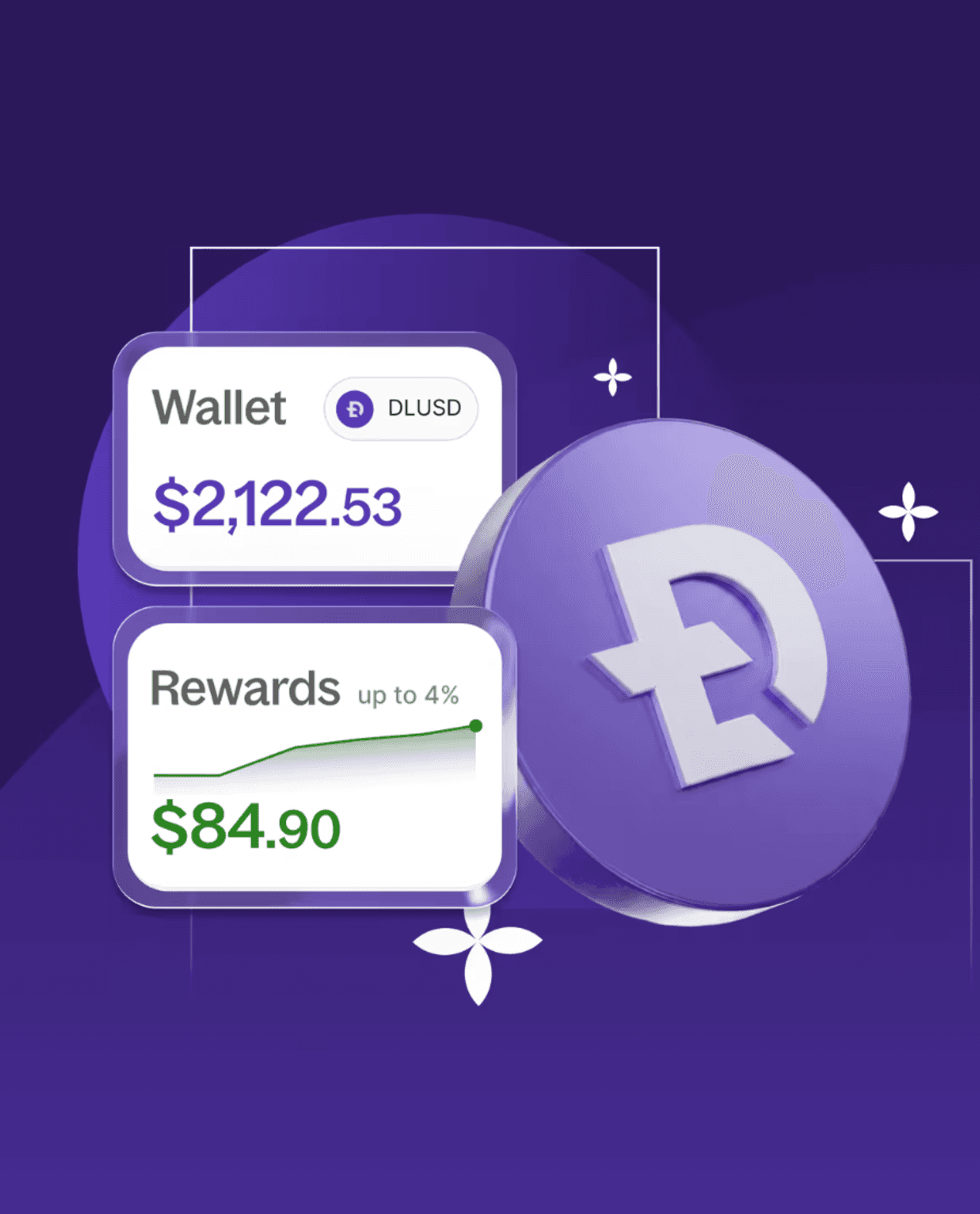
With Deel, contractors can also use DLUSD, Deel's internal USD-equivalent instrument. They can store it in a self-custodial wallet, and their funds are always 1:1 USD-backed. Contractors can choose to hold their balance in DLUSD or move their funds back to their Deel Balance. They also may be eligible to earn rewards.
Network choice also affects cost and speed. Some networks to consider include:
Solana: sub-cent fees, near-instant finality, well-supported by Philippine exchanges
Tron: low fees, widely used for USDT, supported by Coins.ph
Ethereum: variable fees, has the deepest liquidity and the longest track record, fees can rise when the network is busy
Step 3: Onboard your contractors and collect payment details
Before the first payment, each Filipino contractor should complete the identity-verification steps required. This includes government-issued ID, address verification, and proof of contractor status, consistent with know your customer (KYC) and anti-money laundering (AML) best practices.
Contractors can choose their preferred method for receiving payments. Depending on Deel's supported withdrawal options and their own preferences, they may use:
Deel Stablecoin Wallet: contractors can receive supported stablecoins through their Deel account and withdraw to a linked bank or supported transfer method.
GCash (via GCrypto / PDAX): Philippines' largest mobile wallet. Crypto access is available through the GCrypto feature, powered by PDAX.
Maya: BSP-licensed VASP with crypto trading support. Stablecoins can be received and converted to Philippine pesos.
Coins.ph: BSP-registered VASP. Supports USDT and USDC with QR Ph integration as of April 2026.
PDAX: The underlying exchange powering GCrypto, also available as a standalone platform with tiered KYC.
Note that GCash, Maya, Coins.ph, and PDAX are independent third-party platforms. Contractors using these services do so separately from their Deel account. Deel is not integrated with every platform listed above. Contractors should verify supported withdrawal methods at onboarding.
Deel Payroll
Run payroll in Deel. Anywhere. Your way.
Step 4: Execute and reconcile stablecoin payments
Your infrastructure is ready and your Filipino contractors are onboarded. Now you can run payments. Set up reconciliation from the first payment, and confirm the FX valuation method with your accounting adviser before you start.
Payment execution:
Approve the contractor payment in the supported Deel workflow. Enter the USD amount and the payment date. For a shared payment cycle, approve several Filipino contractors in one batch.
Record the exchange-rate reference for that date next to the payment confirmation.
The contractor gets a notification. They can pick from the eligible withdrawal methods in their account.
Stablecoin transfers usually confirm faster than international wire transfers. The exact time depends on the network and the provider.
Reconciliation requirements:
When you record the payment in your accounting system, capture:
The USD amount paid (stablecoin face value)
The PHP-equivalent value, using the method your accounting and tax rules require
Any blockchain transaction reference for an eligible stablecoin payout. Keep it with the contract, the invoice, and the approval record.
The contractor's invoice reference for the payment
An eligible on-chain payout can produce a timestamped transaction reference. Together with your internal invoice and approval records, it supports reconciliation. Keep all of these records for at least five years.
Step 5: Monitor compliance and manage ongoing obligations
Record-keeping and regulatory monitoring remain important throughout the contractor relationship. Three areas need ongoing attention:
BSP VASP reporting: Companies routing contractor payments through BSP-registered VASPs should confirm that their payment partner maintains current registration and complies with BSP reporting obligations. Given the moratorium on new VASP licenses in force since September 2022, the pool of licensed operators is fixed. Ensure any platform used by contractors holds current BSP authorization.
BIR annual reporting: Philippine contractors are responsible for filing their own income tax returns, but paying companies should maintain records that support contractor declarations if audited. Retain all contracts, invoices, and transaction records for at least five years.
AMLC suspicious transaction monitoring: Finance teams should be aware of transaction patterns that may trigger STR obligations for their VASP partners: transactions that lack clear business purpose, appear structured to avoid reporting, or are inconsistent with a contractor's established payment profile.
CARF preparation: With the Philippines committed to CARF by 2028, companies paying Philippine contractors in stablecoins should begin working with their tax advisers now to understand how automatic information exchange will affect their cross-border payment reporting obligations.
Send stablecoin payments to Filipino contractors with Deel
Paying Filipino contractors through traditional SWIFT wires means absorbing high fees, multi-day settlement delays, and FX volatility on both sides of the transaction. Deel Contractor supports stablecoin contractor payments with centralized onboarding, payment workflows, and transaction records.
Book a demo below to see how Deel handles stablecoin contractor payments compliantly in the Philippines.
Deel Hire
Find, hire, and manage anyone, anywhere

This article is provided for general informational purposes and should not be treated as legal, tax, or financial advice. Regulations governing stablecoin payments in the Philippines are evolving. Consult qualified local professionals for guidance specific to your situation.
FAQs
Is it legal to pay Filipino contractors in stablecoins?
Yes. The Philippines does not prohibit stablecoin payments to contractors. BSP Circular 1108 established the VASP licensing framework, and Filipino contractors can legally receive and convert stablecoins through BSP-registered platforms like Coins.ph, Maya, and PDAX. Companies should ensure their payment routing uses licensed platforms and maintain BIR-compliant documentation.
What if my contractor wants to receive Philippine pesos instead of stablecoins?
Deel supports contractor payments in multiple formats. Depending on availability and eligibility, businesses can pay Filipino contractors in Philippine pesos instead of stablecoins.
How does Deel handle compliance for stablecoin contractor payments in the Philippines?
Deel manages identity verification at the contractor onboarding stage, maintains transaction records for eligible stablecoin payments, and provides reporting tools that tie payments to invoices and contracts. Deel's Contractor solution is available for companies facing Philippines misclassification risk. Companies should consult qualified advisers for their specific obligations under BSP, BIR, and AMLC rules.
Joanne Lee is a content marketing professional with 7+ years of experience creating effective social, search, email, and blog content for companies ranging from start-ups to large corporations. She's passionate about finding creative ways to tell a purpose-driven story, staying active at the gym, and diversity and inclusion. At Deel, she specializes in writing about topics related to global payroll and enterprise businesses.