
Article
11 min read
How to Avoid Offboarding Pitfalls With a Trusted Employer of Record
Employer of record

Author
Jemima Owen-Jones
Last Update
October 23, 2025

Key takeaways
- Offboarding is often mishandled by cheaper or unreliable EORs, leading to compliance risks, poor employee experience, and hidden costs.
- A trusted Employer of Record ensures seamless offboarding with local legal expertise, transparent processes, and employee support at every step.
- EOR ensures compliant and dignified offboardings worldwide, making it the superior, trusted EOR partner that protects both businesses and employees.
When HR and People Ops leaders seek guidance on offboarding, what they really want is reassurance. Especially when relying on an Employer of Record (EOR), they need to know that the complexities of employee exits will be managed compliantly, smoothly, and with care — no matter the country.
Yet too often, offboarding is treated as an afterthought. When mishandled, the consequences are real: compliance risks, unexpected costs, and a poor employee experience that can harm your employer brand.
Having supported thousands of global offboardings, we’ve seen firsthand how the right partner makes all the difference. With deep local expertise and proven processes, EOR ensures that terminations are compliant, efficient, and respectful.
For HR leaders, this means safeguarding culture and reputation. For People Ops teams, it’s the confidence that every step aligns with legal and operational requirements. And for employees, it’s the reassurance that they’ll leave with dignity and support.
At Deel, we understand that offboarding is more than a process — it’s a defining moment for both business and employee. That’s why our compliance-first, employee-centered approach helps global companies handle exits with dignity, confidence, and peace of mind.
Why offboarding matters more than you think
- Employee experience: A poor offboarding process can leave employees feeling disrespected or abandoned. In today’s global talent market, a negative exit spreads quickly — tarnishing your reputation and discouraging future hires
- Compliance risks: Labor laws vary widely by country. Missed notice periods, mishandled severance, or incomplete documentation can open your company to legal claims, fines, and reputational damage
- Operational risks: From revoking IT access to closing out payroll and benefits, offboarding requires coordination across multiple systems. A gap in this process can lead to data security issues, payroll errors, or lapses in benefits coverage
See also: Employee Offboarding: The Key to Strengthening Company Culture
Deel for us is dealing with the entire complexity of our HR, contracts, and payments in a very efficient and fast manner.
—Daniel Aksioutine,
COO at DivBrands

Free template
Streamline your offboarding process
Common offboarding pitfalls with the wrong EOR partner
- Lack of local legal expertise: Some providers don’t have the depth of knowledge needed to navigate complex local termination laws. This can expose your organization to costly disputes
- Poor communication: Employees are often left in the dark during transitions, leading to confusion, anxiety, and resentment. Employers, too, may be unsure where the process stands
- Hidden fees and delays: Cheaper providers often mask true costs until termination. Extra charges for legal reviews, delays in payroll closure, or unexpected administrative fees can add up quickly
- Compliance fines and disputes: Even a small mistake — like missing a severance payment deadline — can escalate into penalties or lawsuits
- IT and data security risks: Failure to coordinate timely device returns or revoke system access can leave sensitive company data exposed and create compliance issues
Many global businesses have learned this the hard way, switching to Deel after suffering through chaotic, expensive offboarding experiences with less reliable partners.
Streamline IT offboarding with Deel IT
Managing IT offboarding across global teams can be complex — but Deel IT makes it seamless:
- Automated access revocation: Instantly removes access to all accounts, software, and cloud services the moment an employee’s departure is recorded
- Global asset tracking: Provides prepaid shipping labels, multiple return options, and remote device wipe to ensure hardware is recovered securely
- Compliance-first approach: Built-in GDPR, PCI DSS, and HIPAA safeguards ensure every step meets the highest data protection standards
- HR integration: Syncs with HR systems to reduce admin work, automate final payments, and keep employees informed throughout the process
With Deel IT, businesses protect sensitive data, streamline processes, and give HR and IT teams more time to focus on what matters most — scaling their business.
Learn more:
None of the other solutions came close to offering the ease that Deel IT provides. We're hiring quite frequently and it saves us an absolute fortune.
—Jamal Issouquaein,
IT Engineer at Banked
Deel IT

How a trusted Employer of Record makes offboarding seamless
- Local compliance expertise: A trusted EOR has on-the-ground experts who understand the nuances of labor law in each country. This ensures terminations are handled correctly, from required documentation to severance calculations
- Clear, transparent process: Both employers and employees benefit from structured, easy-to-follow steps. Transparency removes uncertainty and builds trust in the process
- Employee support: Offboarding isn’t just about ending a contract — it’s about supporting employees in transition. A reliable EOR ensures employees receive timely documentation, benefits information, and guidance on next steps
- Predictable costs: With a premium partner, you know upfront what offboarding will cost — no hidden fees, no nasty surprises
See also: Best Employer of Record 2025: Insights from the G2 EOR Report
Discover how switching to Deel saves Teamflow one week of admin per month.
We chose Deel mostly because of its extreme commitment to their mission and prioritization of customer success.
—Chris Baugh,
Head of Business Operations at Teamflow
Deel Employer of Record

Why Deel is the trusted choice
Deel combines global reach with a compliance-first model. With entities in over 100 countries, Deel ensures every offboarding process is fully aligned with local laws.
Customers who switched to Deel often highlight three recurring benefits:
- Peace of mind: No scrambling over legal requirements or last-minute changes
- Employee care: Offboarding handled with empathy, ensuring employees leave on good terms
- Efficiency: A streamlined process that frees HR and finance leaders to focus on strategic priorities, not administrative risks
Deel’s commitment to compliance and employee experience means businesses avoid costly pitfalls while protecting their reputation.
See also: From Planning to Offboarding: Why Deel HR Is the Go-To for Global Teams
Deel significantly improved our efficiency by centralizing the entire worker lifecycle in one platform. From onboarding to payments and offboarding, Deel streamlines every step, saving time and reducing manual errors.
—Oswaldo Alvarez,
CEO, Sellit9

Global Hiring Impact
Recognized as a Leader on Everest Group’s PEAK Matrix®
Avoid offboarding pitfalls with Deel
Offboarding may be the final step in the employee journey, but it’s often the most telling. If your EOR can’t deliver a seamless, compliant process at this critical moment, your organization could face risks that far outweigh any short-term savings.
If offboarding feels like a nightmare — full of delays, disputes, and unexpected costs — it may be because your provider isn’t equipped to handle the complexity. Many organizations come to Deel deer in the headlights after trying a cheaper solution that couldn’t deliver when it mattered most.
The takeaway? The lowest-cost provider isn’t always the safest choice. Trust, compliance, and expertise are what truly matter when it comes to global offboarding.
Ready to make global employment — and offboarding — seamless? Book a demo with Deel today.
More resources
FAQs
What are common offboarding mistakes?
Offboarding mistakes often happen when the process is treated as an afterthought. Common missteps include:
- No structured process: Without a documented employee offboarding process, tasks get rushed or missed
- Skipping exit interviews: Losing valuable feedback that could prevent future turnover
- Poor communication: Leaving teams or clients to hear news informally, which fuels gossip and uncertainty
- Weak knowledge transfer: Allowing critical know-how to leave with the departing employee
- Neglecting the human side: Failing to acknowledge contributions or provide closure reduces goodwill
- IT oversights: Not revoking access promptly or forgetting to retrieve company property, which creates compliance and security risks
- Payroll errors: Delays or mistakes in final pay can damage trust and spark public complaints
- No measurement or feedback: Without tracking the experience, HR misses patterns and chances to reduce errors long term
In short, the most damaging offboarding mistakes are those that ignore compliance, security, and respect. Avoiding them requires a structured, respectful, and step-by-step approach that balances legal obligations with empathy for the departing employee.
What are offboarding best practices?
The best offboarding strategies treat employee exits as just as important as onboarding. Rather than a rushed checklist, a respectful and structured employee offboarding process strengthens culture, protects workflows, and reinforces your brand.
Some best practices include:
- Plan proactively: Transition responsibilities before the final day to minimize workflow disruptions and reduce errors across teams
- Handle communication thoughtfully: Announce departures with tact and transparency to maintain trust and morale
- Capture knowledge: Use handover documents, walkthroughs, and peer training to preserve institutional knowledge for the long term
- Conduct exit interviews: Departing employees provide candid feedback that can shape retention strategies and offer competitive insights
- Retrieve company property: Ensure devices and access are securely collected and accounts are deactivated to protect data
- Foster alumni relationships: Treat departures as the start of a new kind of relationship. Former employees can become advocates, clients, or even future hires
Ultimately, effective offboarding is about more than compliance. It’s a final moment of truth that reflects how your organization shows up during change. With Deel, HR teams can manage offboarding step by step, ensuring compliance, knowledge transfer, and a respectful experience for every departing employee.
What does a good offboarding process look like?
A good offboarding process is structured, compliant, and respectful — balancing legal requirements with a smooth experience for the departing employee. Because laws vary across countries, employers must follow local rules closely. With Deel as your Employer of Record, you don’t need to navigate this complexity alone.
Here’s what the process typically looks like with Deel:
- Careful compliance review: Deel’s local HR experts review the facts, documentation, and desired timelines to ensure the termination request meets country-specific legal requirements. In some cases, timelines or details may need adjusting to comply with local law
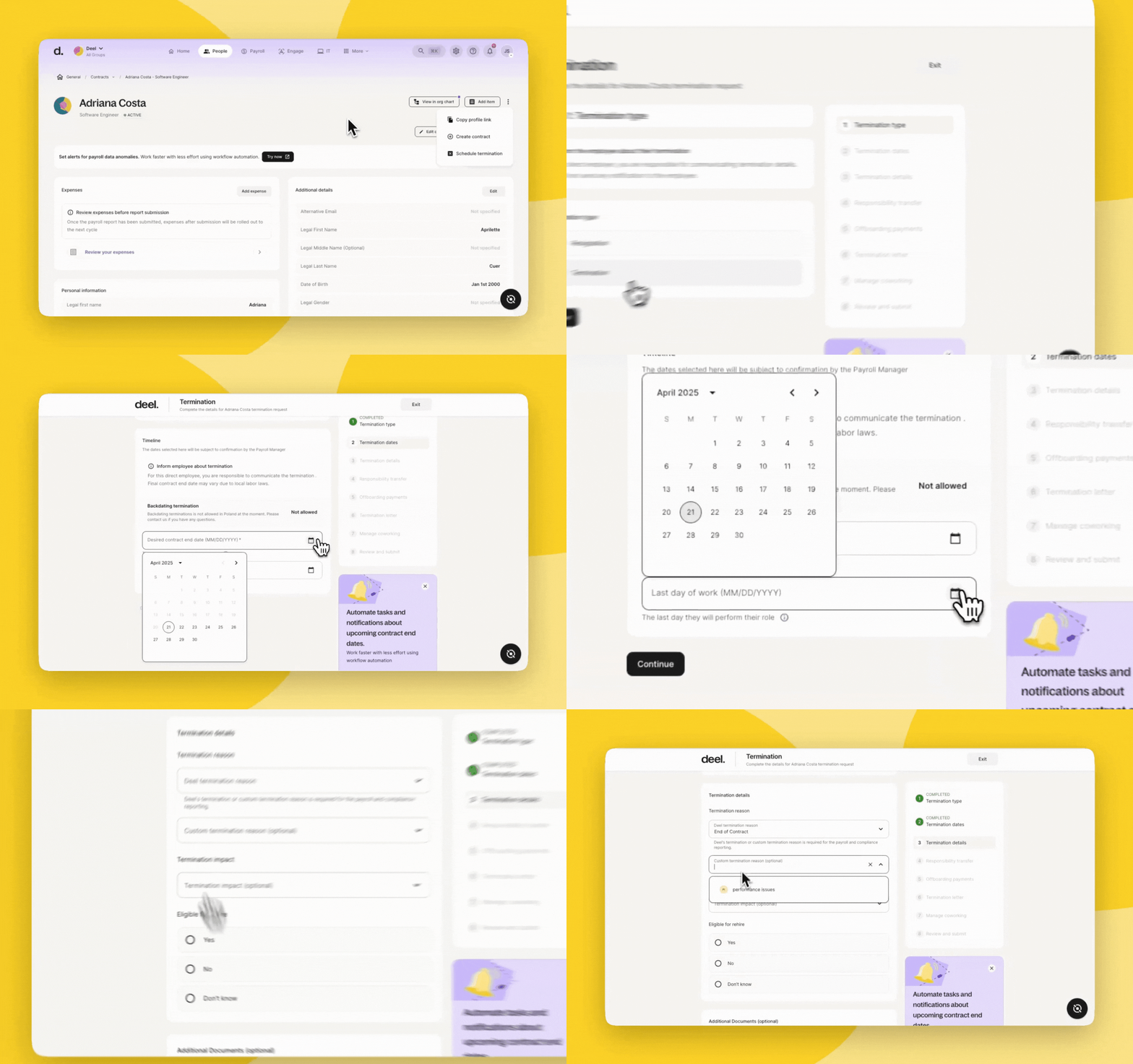
- Clear request submission: Clients initiate offboarding directly in the Deel platform by selecting the employee, noting whether it’s a resignation or termination, and providing details such as reason for departure, desired end date, leave balances, and severance
- Document preparation: Deel drafts all required offboarding documents, which the client can review and approve before they are finalized and shared with the employee
- Guided communication: To avoid compliance risks, Deel advises clients not to notify the employee until all details are confirmed. Once ready, a local HR expert or Deel’s legal team helps guide the communication and formal notice
- Ongoing visibility: Clients can track the status of each offboarding request directly in the Deel platform, ensuring transparency at every step
In short, a good offboarding process isn’t just about ending a contract. It’s about ensuring lawful, timely, and respectful exits that protect both the company and the departing employee. Deel’s compliance-first approach gives HR and People Ops leaders peace of mind that every offboarding is handled step by step, with local expertise built in.
Learn more:
How does an EOR support compliant offboarding?
An Employer of Record plays a critical role in ensuring that every offboarding is lawful, timely, and respectful — no matter where the employee is based. Since offboarding requirements differ across jurisdictions, an EOR like Deel provides the local expertise and structured process that internal HR teams often lack.
How should we handle devices and system access during offboarding?
When an employee leaves, IT offboarding is one of the most critical — and most overlooked — parts of the exit process. Missed steps can lead to data leaks, compliance violations, lost equipment, and even regulatory fines. In fact, nearly 60% of companies report experiencing a breach tied to weak offboarding practices.
To protect your business, follow a comprehensive IT offboarding checklist that includes:
- Revoke all access immediately: Disable logins for email, VPN, cloud apps, and shared accounts. Reset passwords and revoke permissions to prevent unauthorized access
- Retrieve company property: Collect laptops, phones, badges, and other devices before the final day, or provide prepaid shipping labels for remote employees
- Secure data: Transfer ownership of files, back up critical records, and wipe devices clean to prevent leaks
- Update systems and records: Redirect email, remove the employee from directories, and document every action for compliance and audits
- Audit and review: Conduct a final IT security check to close any gaps and confirm all access has been revoked
For many HR and People Ops teams without dedicated IT support, this process can feel overwhelming. That’s where automation makes the difference. Solutions like Deel IT streamline IT offboarding by automating access revocation, tracking global device returns, and generating full compliance logs — helping businesses reduce errors, save time, and leave every departing employee with a respectful, secure exit experience.
Who owns offboarding—HR, IT, Legal, or the EOR?
Offboarding is rarely the responsibility of just one team. It touches HR, IT, Legal, and the Employer of Record — each playing a different but equally important role.
- HR and People Ops coordinate the employee experience, manage communications, and ensure workflows, knowledge transfer, and culture are protected
- IT ensures that devices are collected, accounts are deactivated, and company data stays secure
- Legal provides oversight on compliance, severance agreements, and the risk of disputes
- The EOR (like Deel) takes the lead in managing the complex legal process of offboarding international employees. Because rules differ by jurisdiction, Deel carefully reviews every termination request, provides guidance on notice periods, severance, and documentation, and communicates directly with the employee once all details are confirmed
With Deel as the legal employer of record, clients cannot notify or discuss termination intentions with employees until Deel has finalized the process. This prevents premature communication that could limit options or create legal exposure. A local HR expert or Deel’s legal team serves as the client’s primary point of contact, ensuring every step complies with local laws.
In short: HR, IT, and Legal each manage their area of expertise, but for international employees hired through an EOR, Deel owns the termination process end-to-end — protecting clients from compliance risks and ensuring employees receive a fair, respectful offboarding.
How long does offboarding take across countries?
Timelines vary widely by jurisdiction. Some resignations or probationary exits can be processed quickly, while other terminations may require longer notice periods, severance calculations, or additional documentation. Deel requires 30 days’ notice to review and ensure each request complies with local law. Beyond the last working day, businesses should also plan for post-exit obligations like final pay, benefits, records retention, and data minimization.
See also: Severance Pay: A Comprehensive Guide for Global Teams
Which KPIs indicate offboarding quality?
Strong offboarding is both compliant and human. The best way to measure it is by tracking a mix of operational, compliance, and employee experience metrics. Key KPIs include:
- Time-to-access-revocation: How quickly accounts and system access are deactivated
- Device recovery rate: Percentage of company property successfully returned
- On-time and accurate final pay: Ensuring payroll, benefits, and severance are processed correctly
- Dispute rate: Number of legal or compliance challenges arising from terminations
- Exit survey results: Employee feedback on whether the process felt clear, supportive, and respectful
The goal is simple: deliver a respectful offboarding experience that protects your business, minimizes risk, and leaves departing employees with a positive final impression.
When should we reconsider our EOR provider?
If offboarding feels like a nightmare — full of delays, disputes, and unexpected costs — it may be because your provider isn’t equipped to handle the complexity.
Many companies come to Deel deer in the headlights after choosing a cheaper option that couldn’t deliver when it mattered most. The lesson? The lowest-cost provider isn’t always the safest choice. Investing in a trusted, compliance-first EOR like Deel ensures smoother exits, peace of mind, and a truly respectful offboarding experience that protects both your people and your business.
Jemima is a nomadic writer, journalist, and digital marketer with a decade of experience crafting compelling B2B content for a global audience. She is a strong advocate for equal opportunities and is dedicated to shaping the future of work. At Deel, she specializes in thought-leadership content covering global mobility, cross-border compliance, and workplace culture topics.


