Article
7 min read
IT vs. HR: Who's Responsible for What During Onboarding and Offboarding? (Enterprise)
IT & device management

Author
Dr Kristine Lennie
Last Update
September 17, 2026

Table of Contents
Why the IT–HR boundary is structurally hard to draw at enterprise scale
Onboarding | Who owns device procurement at enterprise companies?
Onboarding | Who owns access provisioning at enterprise companies?
Role change | Who owns access governance at enterprise companies?
Offboarding | Who owns access revocation at enterprise companies?
Offboarding | Who owns device recovery at enterprise companies?
Offboarding | Who owns SaaS and application cleanup at enterprise companies?
The IT–HR responsibility matrix: who owns what, and when
How Deel IT connects IT and HR across the employee lifecycle
Key takeaway
Enterprise scale turns IT–HR coordination into a cross-organizational problem. Onboarding and offboarding may span multiple regions, business units, systems, and local teams, making consistent ownership and execution harder to maintain across the organization.
Clear ownership needs to extend beyond individual teams. Enterprises need defined triggers and handoffs that work across regions and systems so device, access, and offboarding tasks follow the same process as employees join, move, and leave.
Deel IT brings device, access, and employee workflows into one platform. Enterprise teams can connect IT operations more closely with employee changes, helping create greater consistency and visibility across the employee lifecycle.
Enterprise onboarding and offboarding can span multiple HR and IT teams, business units, regions, and systems. Responsibilities may already be defined, but that doesn’t mean the process works the same way across the organization.
A hire in one region may follow a different device or access workflow from a hire elsewhere. Offboarding may involve both global policies and local teams. The challenge is creating an ownership model that works consistently across all of them.
Why the IT–HR boundary is structurally hard to draw at enterprise scale
Enterprise teams are managing a constant flow of hires, departures, internal moves, and reorganizations. Each event can set off multiple actions across contracts, devices, identity, applications, and security, often with different teams responsible for each one.
The volume makes small gaps in coordination much harder to absorb. A role change recorded by HR, for example, may require several separate access changes from IT. If one of those actions doesn’t follow, the employee’s access can fall out of sync with their new responsibilities.
Clear ownership therefore has to work at the level of each lifecycle event: who initiates it, who acts on it, and what tells the next team it’s their turn.
Onboarding | Who owns device procurement at enterprise companies?
At enterprise scale, device procurement has to work across a high volume of hires, locations, and local requirements. IT needs accurate information about who is joining, where they’re based, when they start, and what equipment they need early enough to source and prepare devices consistently.
HR owns the trigger: Once a hire and start date are confirmed, HR should make sure the information IT needs enters the device procurement process. That includes the employee’s location, role, start date, and equipment requirements.
IT owns device provisioning: IT is responsible for sourcing the device, applying the appropriate configuration and security requirements, enrolling it in Mobile Device Management (MDM), and coordinating delivery.
Where enterprise teams can get stuck: A single procurement process may need to work across countries with different suppliers, availability, delivery times, and logistics. If regional teams follow different processes or standards, device provisioning becomes harder to manage consistently across the organization.
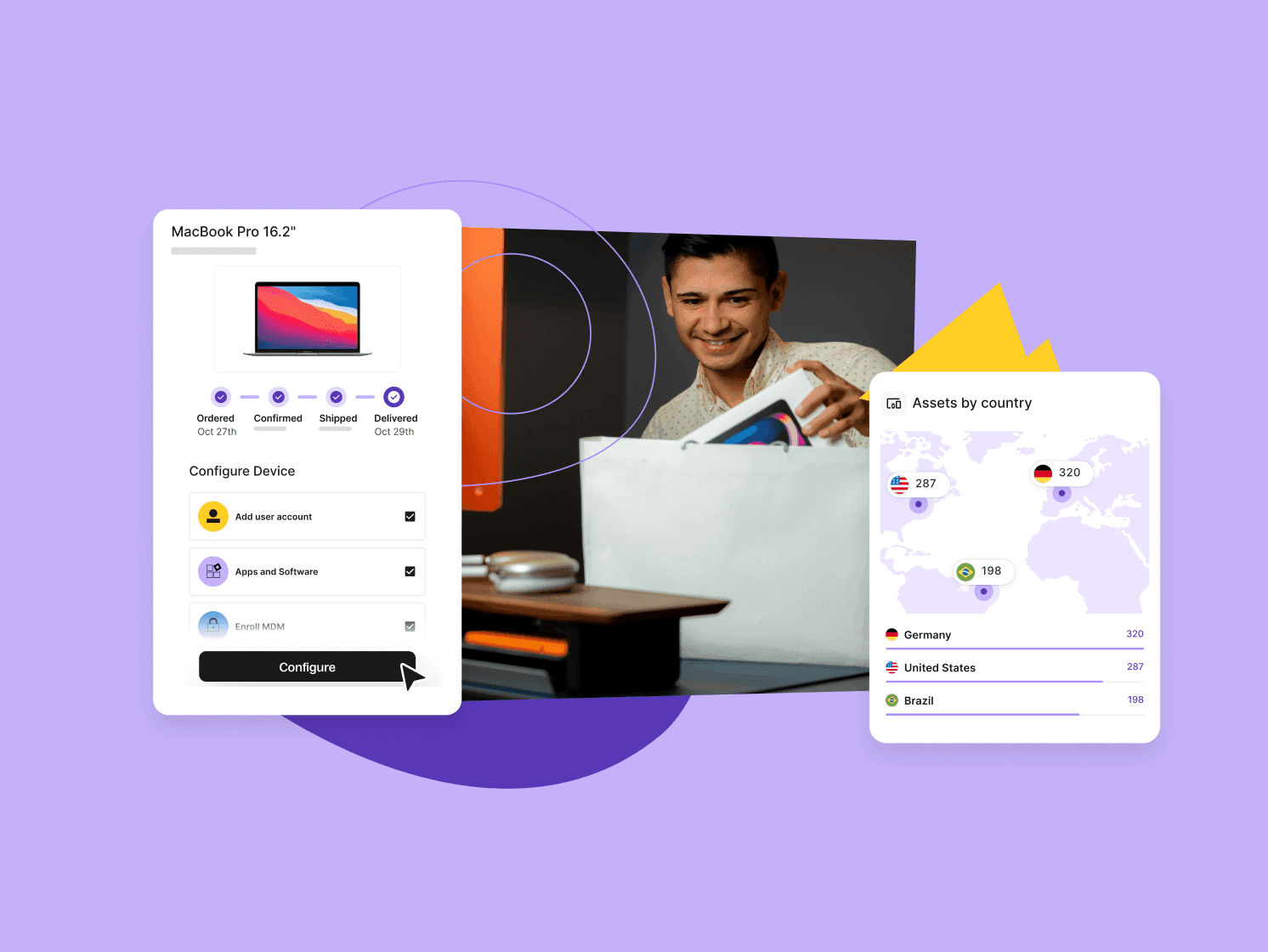
How Deel IT helps: Deel IT helps enterprise teams manage device procurement, configuration, enrollment, and delivery across distributed workforces, giving HR and IT a more consistent way to equip new hires across locations.
Learn why new hires start without equipment — and how to fix it.
Onboarding | Who owns access provisioning at enterprise companies?
At enterprise scale, access provisioning can span identity systems, core business applications, regional tools, and applications managed by individual teams. The challenge is applying access requirements consistently when employees in similar roles may sit in different business units, locations, or technology environments.
HR owns the employee information: HR makes sure IT has accurate information about the employee’s role, team, manager, location, and start date. Hiring managers or application owners may also need to confirm access that is specific to the employee’s responsibilities.
IT owns account and access setup: IT translates those requirements into accounts and permissions and applies security controls such as Single Sign-On (SSO) and Multi-Factor Authentication (MFA). Where Role-Based Access Control (RBAC) policies are in place, they can help standardize access for defined roles.
Where enterprise teams can get stuck: Not every application sits within the same identity or provisioning environment. Legacy systems, regional tools, acquired technology, and applications owned by individual business units can follow different access processes. That makes it harder to maintain a consistent access baseline across the organization, even when roles are clearly defined.
How Deel IT helps: Deel IT connects application and identity access management with employee data, helping enterprise teams coordinate access provisioning as new hires join across teams and locations.
See also: IAM best practices for distributed teams.
Role change | Who owns access governance at enterprise companies?
Enterprise role changes can be more complex than a straightforward promotion. Employees may move between business units, regions, or legal entities, take on temporary assignments, or gain access for specific projects. Each change can affect several parts of their access profile at once.
HR owns the trigger: HR records permanent changes to the employee’s role, team, or organizational position and makes sure IT has the information needed to act. Managers or application owners may need to provide additional context for temporary or project-specific access.
IT owns the access update: IT reviews the employee’s existing permissions, removes access that no longer matches their responsibilities, and grants what the new role requires. For temporary access, IT can also apply appropriate review or expiry controls.
Where enterprise teams can get stuck: An employee’s access may have been granted through different systems, teams, and stages of their career. When they move internally, updating the obvious role-based permissions may not address access inherited from previous teams, regional systems, or temporary projects. Over time, that can contribute to privilege creep.
How Deel IT helps: Deel IT supports HR-driven access updates and centralized permission visibility, helping enterprise teams keep access aligned as employees move between roles, teams, and responsibilities.
Find out what happens when access is not revoked on time.
Offboarding | Who owns access revocation at enterprise companies?
At enterprise scale, revoking access can mean coordinating changes across identity systems, business applications, regional platforms, and shared resources. The process also needs to account for different types of departures, from employees and contractors reaching a planned end date to exits that require more tightly controlled timing.
HR owns the trigger and timing: HR confirms the departure and makes sure IT knows when the employee’s access should end. For planned departures, that may be the end of the employee’s last day; other exits may require access to be removed at a specific time.
IT owns access revocation: IT disables the relevant accounts, ends active access, and removes permissions across the systems and applications the employee used. It should also maintain a record of what was revoked and when.
Where enterprise teams can get stuck: Access may be distributed across centrally managed identity systems, regional applications, legacy platforms, and tools owned by individual business units. Different worker populations may also follow different offboarding processes. Without a consistent view across those environments, completing and verifying access revocation becomes harder.
How Deel IT helps: Deel IT supports lifecycle-based account removal and offboarding workflows, helping enterprise teams coordinate access revocation as employees leave the organization.
Discover the 5 most common offboarding failures on remote teams.
Offboarding | Who owns device recovery at enterprise companies?
At enterprise scale, device recovery can involve a large fleet distributed across countries, offices, and remote locations. IT needs to coordinate returns across that footprint while keeping track of which devices are still with departing employees, which are in transit, and which have been recovered.
HR owns the employee communication: HR makes sure departing employees understand which equipment needs to be returned, when it’s due, and what the return process involves.
IT owns device recovery: IT coordinates the return, tracks the device through the recovery process, and handles the technical steps required once it is recovered, including secure data erasure where appropriate.
Where enterprise teams can get stuck: Recovery processes can vary across locations, particularly when different teams or providers handle returns. At fleet scale, inconsistent processes make it harder to maintain a clear view of device status and ensure recovered equipment is processed appropriately.
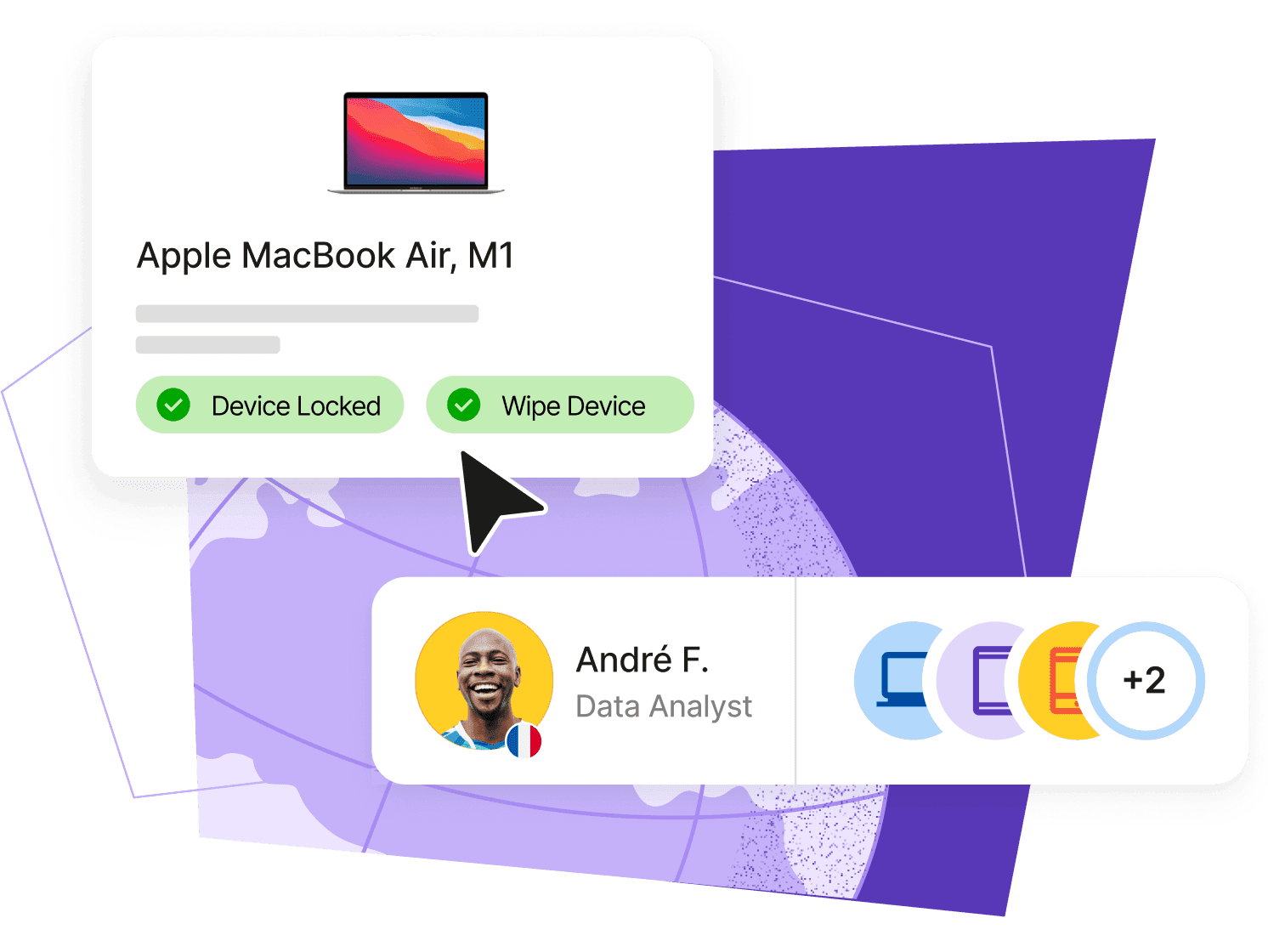
How Deel IT helps: Deel IT helps enterprise teams coordinate device returns across distributed workforces, track recovery status, and securely erase company data when devices are recovered.
Read: Certified data erasure for compliant device offboarding.
Offboarding | Who owns SaaS and application cleanup at enterprise companies?
At enterprise scale, software can be owned and managed across IT, Finance, business units, regional teams, and application owners. Acquisitions can add another layer of tools and contracts. When an employee leaves, identifying their full application footprint can therefore require coordination across several parts of the organization.
HR owns the trigger: HR confirms the departure and makes sure the relevant teams know when the employee’s access should end.
IT owns application cleanup: IT removes access to the applications and shared resources it manages and coordinates other changes needed as part of the employee’s departure.
Ownership may extend beyond IT: Business units and application owners may manage tools outside the central IT environment, while Finance may hold information about software contracts and spend. Those teams may need to contribute to the offboarding process where access or software ownership sits with them.
Where enterprise teams can get stuck: Software visibility can be fragmented across centrally managed applications, regional tools, business-unit purchases, and systems inherited through acquisitions. That makes it harder to establish whether all relevant access has been removed and whether software associated with the departing employee still needs to be reassigned or reviewed.
How Deel IT helps: Deel IT gives enterprise teams centralized visibility across applications, users, and access, making it easier to manage software and access as part of the offboarding process.
Download the Employee offboarding checklist.
The IT–HR responsibility matrix: who owns what, and when
At enterprise scale, ownership may be distributed across global and regional teams, business units, and application owners. This matrix provides a starting point for defining who owns each lifecycle action and what triggers the next team to act.
| Responsibility | Stage | Owner | Handoff / trigger |
|---|---|---|---|
| Confirm hire and notify IT | Onboarding | HR | Hire and start date confirmed |
| Provide role, location, and team information | Onboarding | HR | Hire confirmed |
| Procure and configure device | Onboarding | IT | Employee and device requirements provided |
| Enroll device in MDM | Onboarding | IT | Device prepared for employee |
| Confirm role-specific access needs | Onboarding | HR + hiring manager | Role and responsibilities confirmed |
| Set up accounts and access | Onboarding | IT | Employee and access requirements provided |
| Coordinate business-unit or regional access | Onboarding | IT + application owners | Additional access requirements identified |
| Confirm day-one readiness | Onboarding | Shared | Device and required access ready |
| Record and communicate role change | Role change | HR | Role, team, or organizational change confirmed |
| Review existing access | Role change | IT | Role change communicated |
| Update role-based permissions | Role change | IT | New access requirements confirmed |
| Review temporary or project access | Role change | IT + application owners | Assignment changes or ends |
| Confirm departure and access timing | Offboarding | HR | Departure confirmed |
| Revoke centrally managed access | Offboarding | IT | HR confirms when access should end |
| Coordinate regional or business-unit application cleanup | Offboarding | IT + application owners | Offboarding begins |
| Communicate device return requirements | Offboarding | HR | Offboarding begins |
| Coordinate and track device recovery | Offboarding | IT | Return requirements communicated |
| Process recovered device | Offboarding | IT | Device received |
| Confirm IT offboarding is complete | Offboarding | Shared | Required access and device actions completed |
How Deel IT connects IT and HR across the employee lifecycle
Enterprise HR and IT teams may operate across different regions, systems, and areas of responsibility. Deel IT brings device, access, software, and employee workflows into one platform, helping teams manage those processes more consistently across the organization.
For enterprise teams, that means greater visibility and coordination across the employee lifecycle:
Standardize device provisioning across locations: Procure, configure, and ship devices to employees while managing device requirements and security from one platform.
Manage a distributed device fleet: Keep track of company devices and apply security policies throughout the device lifecycle.
Coordinate access with employee changes: Manage application access as employees join, change roles, move between teams, or leave.
Improve visibility across software and access: Give IT a clearer view of applications and employee access across a complex software environment.
Coordinate global device recovery: Manage returns across distributed teams, track devices through recovery, and securely erase company data when appropriate.
Support employees across locations: Give distributed employees access to IT support without relying entirely on regional HR or IT teams.
Bring lifecycle operations into one place: Manage devices, software, access, and employee changes together, giving enterprise teams a more consistent operating model across the organization.
Explore Deel IT to see how enterprise teams can manage employee IT across the lifecycle.
Deel IT
Procure, deliver, manage, and secure devices anywhere

FAQs
How can enterprises manage onboarding and offboarding consistently across different regions?
Start with a common ownership model that defines who triggers each action, who completes it, and when the handoff happens. Regional teams can adapt execution to local requirements while keeping core responsibilities for devices, access, and offboarding clear across the organization.
How should enterprises divide onboarding responsibilities between HR and IT?
HR typically owns employee information such as role, location, manager, and start date, while IT owns device provisioning and technical access. Enterprises may also need to define responsibilities for regional teams, hiring managers, security teams, and application owners so ownership remains clear across the organization.
Why is IT and HR coordination more complex at enterprise scale?
A single hire, internal move, or departure can require actions across multiple teams and systems. Different regions, business units, worker populations, and technology environments can add further variation, making clear triggers and ownership especially important.
How can enterprises make IT and HR handoffs more consistent?
Define an owner and trigger for each lifecycle action, including steps that sit outside central HR and IT. The model should cover onboarding, internal moves, departures, access changes, device recovery, and applications managed by regional or business-unit teams.
Dr Kristine Lennie holds a PhD in Mathematical Biology and loves learning, research and content creation. She had written academic, creative and industry-related content and enjoys exploring new topics and ideas. She is passionate about helping create a truly global workforce, where employers and employees are not limited by borders to achieve success.