Article
18 min read
7 Reasons Why New Hires Start Without the Right Tools (And How to Fix It)
IT & device management

Author
Dr Kristine Lennie
Last Update
May 04, 2026

Table of Contents
Reason #1: HR and IT don't share a reliable handoff process
Reason #2: Device procurement takes longer than anyone plans for
Reason #3: Access provisioning is still done manually, role by role
Reason #4: No one owns the onboarding checklist end-to-end
Reason #5: Offboarding debt degrades onboarding quality
Reason #6: IT support on day one is an afterthought
Reason #7: Global hiring outpaced the IT infrastructure designed to support it
The real cost of sending new hires in unprepared
Ensure every new hire has the right tools from day one with Deel IT
Key takeaways
Many new hires still start without the tools they need, not due to lack of effort, but because onboarding systems and workflows aren’t designed to ensure day-one readiness.
Solving this means shifting preparation earlier: devices, access, and credentials should be provisioned and ready before a new hire’s first day.
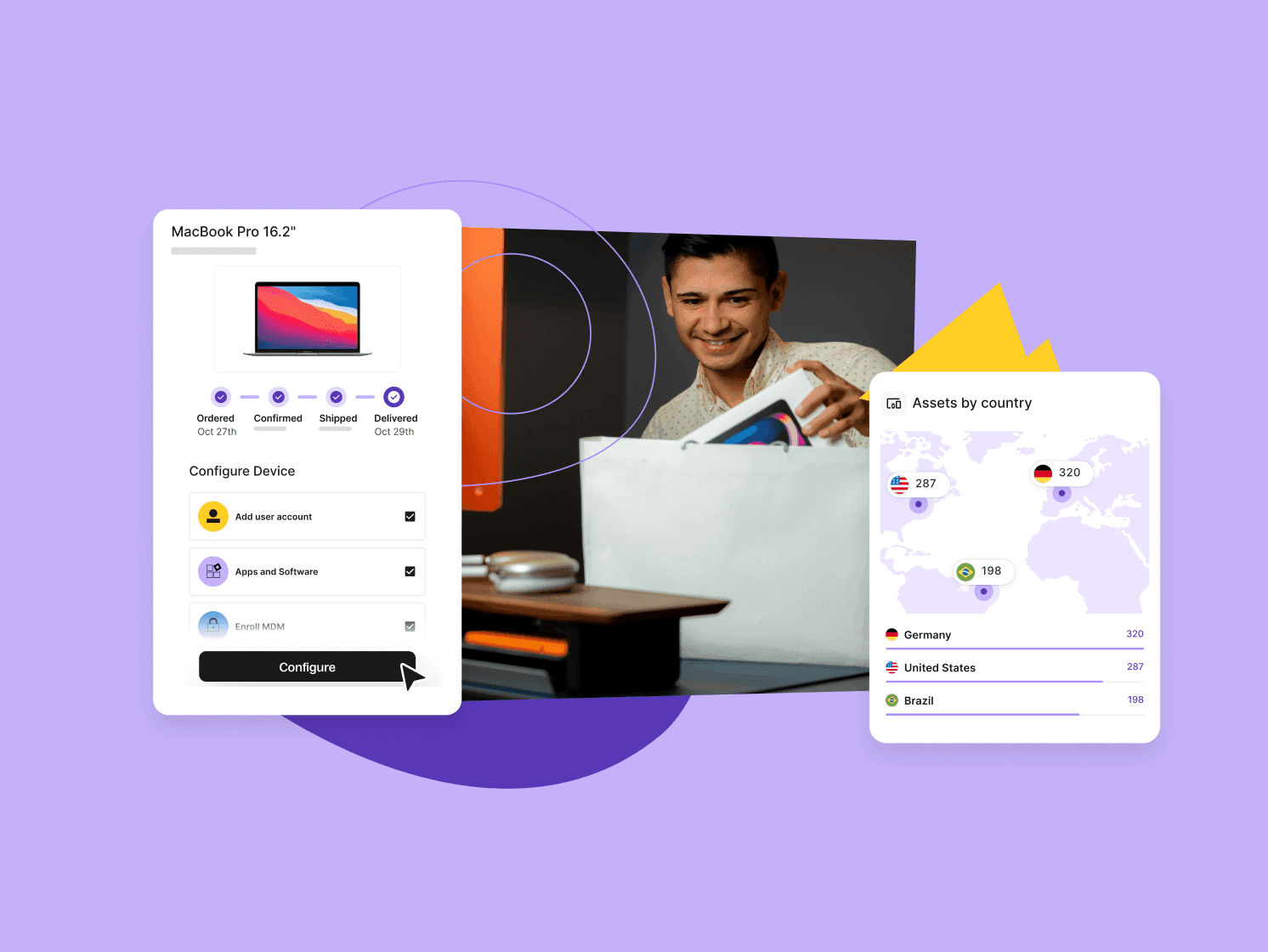
Deel IT’s all-in-one platform automates onboarding across 130+ countries,streamlining device procurement and shipping, provisioning access, and shipping pre-configured, secure devices from day one, with a 99.5% on-time delivery rate.
Ensuring new hires have a working laptop, application access, and credentials ready by day one isn’t always straightforward. Across teams, systems, and locations, employee readiness often depends on multiple moving parts coming together at the right time. Without clear coordination and visibility, delays can be difficult to trace, and even harder to prevent.
Here are the top seven reasons day-one readiness breaks down.
Reason #1: HR and IT don't share a reliable handoff process
New hire readiness depends on two teams working in sync, but most organizations never formalize how that handoff actually happens. HR knows when someone is starting. IT knows what needs to be provisioned. Neither has a reliable, automated way to connect those two facts into a coordinated action.
The result is a gap that fills with manual effort: emails that get missed, Slack messages sent to the wrong person, spreadsheets that are out of date before they're even shared. By the time IT hears about a new hire, it's often too late to meet the timeline.
The solution: Build a formal, automated handoff protocol between HR and IT that triggers provisioning workflows the moment an offer is accepted, not the moment IT happens to find out. The trigger should be systematic, not social.
How Deel IT helps: Deel IT connects directly with your HR systems, so when a new hire record is created, provisioning workflows start automatically: no email chains, no manual handoffs, no missed triggers. IT gets everything it needs before HR has to chase anyone.
Read: Why onboarding automation breaks down between HR and IT
Reason #2: Device procurement takes longer than anyone plans for
IT teams consistently underestimate how long it takes to source, configure, and ship a device to a new hire, especially when that hire is in a country where IT doesn't have an established supplier relationship. Lead times for hardware can stretch to weeks. Customs clearance adds delays. Local availability for specific specs isn't guaranteed.
When procurement is reactive (i.e., triggered only after a start date is confirmed) there's almost never enough runway to get hardware to a new hire before their first day. The result is a new employee staring at their personal laptop, waiting.
The solution: Shift procurement from reactive to proactive. Standardize device specs by role, pre-order inventory for predictable hiring markets, and build in buffer time as a default — not as a contingency. Treat device readiness as a deadline, not a best effort.
How Deel IT helps: Deel IT manages global device procurement across 130+ countries, with pre-imaged hardware shipped directly to new hires before day one. Inventory is held in regional hubs to eliminate lead time guesswork, so IT equipment arrives on time regardless of where the hire is located.
Read: How to avoid shipping delays for laptops
Reason #3: Access provisioning is still done manually, role by role
When a new hire joins, someone on the IT team has to figure out which tools they need, request access to each one individually, wait for approvals, and then verify that everything is working. For a company running twenty or thirty SaaS tools, that process can take days, and it's almost always done from memory or an informal checklist that wasn't updated the last time a tool was added.
Manual provisioning is slow by design. It depends on the right person having the right information at the right time, and it creates a long tail of missed permissions that only surface when a new hire actually tries to do their job.
The solution: Replace manual, one-by-one access requests with role-based access templates. Define which tools each role requires in advance, and automate access grants to fire as soon as a new hire's role and start date are confirmed. Approvals should be the exception, not the workflow.
How Deel IT helps: Deel IT automates application provisioning using role-based access groups synched with your HR data, so every new hire gets the right tools from day one without manual tickets. This ensures applications are assigned in advance, with provisioning triggered automatically when onboarding begins.
Find out also how to choose IT equipment for any role.
Reason #4: No one owns the onboarding checklist end-to-end
Most companies have an onboarding checklist. Very few have a single person or system that owns it end-to-end. Instead, responsibilities are split across HR, IT, finance, and the hiring manager, each doing their part, often without visibility into whether the other parts are done.
When no one has a complete picture, things fall through the seams. A device ships, but the software isn't licensed. Access is granted, but the account isn't verified. The hire shows up and finds half their setup in place and the other half still pending. Each team thinks someone else handled it.
The solution: Assign explicit, cross-functional ownership of the onboarding checklist with a single system of record that all stakeholders can see. Every item — device, access, license, account — should have a named owner, a deadline, and a status that updates in real time.
How Deel IT helps: Deel IT provides a centralized platform to manage device procurement, shipping, and application provisioning in one place. Device orders, app access, and account setup are all tracked and automated based on HR lifecycle events, giving teams visibility into onboarding progress without relying on manual coordination.
Download: Employee onboarding checklist
Reason #5: Offboarding debt degrades onboarding quality
Every time an employee leaves without a clean offboarding process, they leave behind ghost accounts, uncollected hardware, and dangling licenses. Over time, this creates a shadow layer of IT debt that actively slows down onboarding: licenses that should be available for new hires are tied up in inactive accounts, devices are sitting in former employees' homes, and access logs are impossible to audit cleanly.
Bad offboarding makes good onboarding harder. They're not separate problems: they're two ends of the same lifecycle, and fixing one requires fixing both.
The solution: Treat offboarding as a prerequisite for onboarding quality. Automate license revocation and device recovery the moment an employee departure is confirmed, and build a hardware return and redeployment workflow so recovered devices are ready for the next hire, not sitting in a queue.
How Deel IT helps: Deel IT automates offboarding alongside onboarding: revoking access, recovering devices, and wiping hardware to certified standards when an offboarding event is triggered in your HR system. Recovered devices cycle back into inventory and are ready to redeploy, reducing procurement costs and eliminating the lag between hires.
Download our employee offboarding checklist template to optimize your offboarding process.
Reason #6: IT support on day one is an afterthought
Even when the device arrives and the access is provisioned correctly, thingsl still go wrong. A credential won't work. An app won't launch. A configuration will need adjusting. What happens next depends entirely on whether the new hire can reach someone who can help, fast.
At most companies, day-one IT support is informal at best. New hires are pointed at a ticketing system they've never used, told to email an alias, or asked to wait until their manager can loop in the right person. In distributed teams, that wait can last an entire working day.
The solution: Treat day-one IT support as part of the onboarding workflow, not an afterthought. Define a clear support path in advance—who to contact, how to reach them, and expected response times, and make it part of the new hire’s onboarding materials. Support should be available in the new hire’s time zone and working hours from the moment they log in.
How Deel IT helps: Deel IT provides 24/7 IT support for every employee, globally, with real response times and resolution, not just ticket acknowledgment. New hires get support access as part of their onboarding package, so help is available from the moment they log in.
Read: How to manage remote IT support effectively
Reason #7: Global hiring outpaced the IT infrastructure designed to support it
Many companies scale their headcount internationally faster than they scale the systems behind it. What worked for a 30-person team in one country doesn't hold up when you're onboarding new hires across five time zones with different hardware availability, different compliance requirements, and no local IT presence.
International new hires often face a worse version of every other problem on this list: longer device lead times, more complex access provisioning, support teams that aren't available in their working hours, and no one nearby who can help when something goes wrong.
The solution: Build onboarding infrastructure that is globally ready by default — not country-by-country patches bolted onto a domestic-first system. Procurement, provisioning, support, and compliance should work the same way in Lagos as they do in London.
How Deel IT helps: Deel IT is built for distributed teams from the ground up, with device procurement in 130+ countries, Mobile Device Management (MDM) that works across operating systems and geographies, and 24/7 IT support that new hires can access in their local time zone from day one.
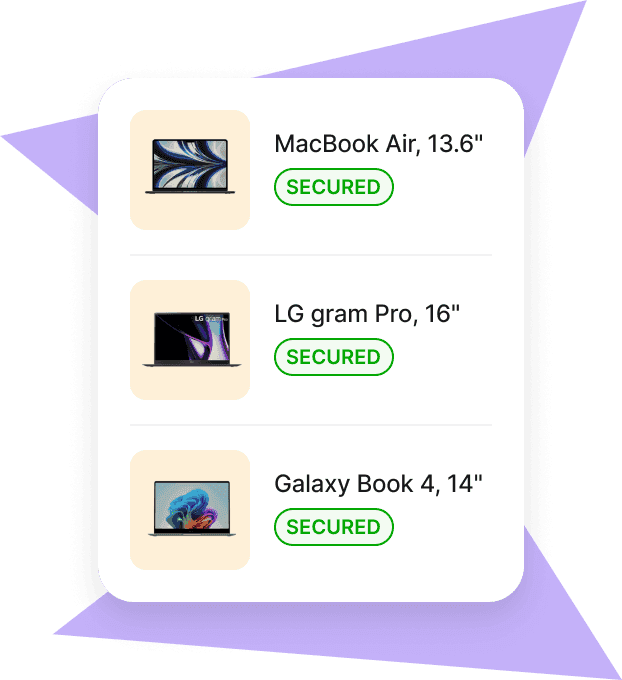
Mobile Device Management
Secure and manage IT devices across any operating system
Read: Integrating global employees and equipment with Deel IT
Use this self-assessment to find out if your business really needs 24/7 IT support.
The real cost of sending new hires in unprepared
Getting a new hire's setup wrong isn't just an inconvenience: it creates a chain of compounding costs that most teams never fully account for. Here's what's actually at stake:
Productivity loss from day one: A new hire without tools can't contribute. Every hour they spend waiting for a laptop, access, or credentials is time your business has paid for and received nothing in return.
Damage to employer brand: First impressions are lasting impressions. A chaotic onboarding experience signals disorganization at the leadership level, reduces new hire confidence, and increases the likelihood they'll disengage or leave early.
Security exposure: Delayed provisioning creates pressure to use personal devices, shared accounts, or informal workarounds, all of which introduce real security and compliance risk before IT even knows the employee is active.
HR and IT overhead: When setup fails, HR and IT become impromptu help desks. Teams spend hours chasing procurement, resetting timelines, and fielding frustrated messages from new starters who expected better.
Attrition at the worst possible time: Research consistently shows that employees who have a poor onboarding experience are significantly more likely to leave within the first 90 days, right when the cost of replacement is highest.
How Deel IT helps: Deel IT helps eliminate these costs by turning onboarding into a coordinated, automated workflow. By connecting HR events to IT provisioning, standardizing device and access setup, and ensuring visibility across every step, teams can consistently deliver day-one readiness at scale.
Ensure every new hire has the right tools from day one with Deel IT
New hires shouldn't have to fight for basic tools on their first day. But when procurement, provisioning, support, and HR-IT coordination all run through disconnected systems and informal processes, that fight becomes the default, and it costs more than most teams realize.
Deel IT brings every part of the employee IT lifecycle into a single platform, so the question is never “did IT hear about this hire?” but a predictable outcome: devices arrive on time and the right apps are already set up.
Here's what Deel IT covers:
Automated HR-IT onboarding triggers: Provisioning workflows start the moment a new hire record is created, no manual handoffs, no missed notifications, no last-minute scrambles
Global device procurement across 130+ countries: Source, configure, and ship hardware to any new hire anywhere in the world, with 99.5% on-time delivery rate
Role-based application provisioning: Define access templates by role in advance, and every new hire gets the right tools from day one, scoped correctly, granted automatically, with no manual tickets required
Endpoint management and MDM across every OS: Manage every device —
Mac, Windows, Linux — from a single console, with configuration, compliance, and security policies applied before the device ever reaches the employeeIdentity and Access Management (IAM) and Single Sign-On (SSO): Provision and deprovision access across your entire app stack in seconds — with Multi-Factor Authentication (MFA) enforced from day one and zero orphaned accounts left behind.
Automated offboarding and device recovery: When someone leaves, access is revoked, devices are recovered, and hardware is wiped to certified standards — ready to redeploy for the next hire.
24/7 global IT support: Every employee gets real-time IT support in their time zone, from their first login
Every new hire deserves a day one that works. Deel IT makes that the baseline, not the exception.
Deel IT
Automate IT operations in 130+ countries
FAQs
Why do new hires so often start without the tools they need on day one?
The most common cause is a lack of coordination between HR, IT, and hiring managers — each team assumes another has handled setup, so tasks fall through the cracks. Structural issues like manual provisioning processes and late hire notifications compound the problem, making poor onboarding more of a system failure than a people failure.
How much does a bad onboarding experience actually cost a company?
The direct costs include lost productivity during the time a new hire spends waiting for access or equipment, plus the IT hours spent on reactive fixes. The indirect costs are harder to measure but significant — early disengagement, damaged first impressions, and higher turnover risk among new employees who feel unsupported from the start.
What should companies put in place before a new hire's first day to avoid onboarding gaps?
The most effective approach is automating provisioning workflows so that device ordering, software access, and credential creation are triggered as soon as a hire is confirmed, not the week before they start. Clear ownership between HR and IT, combined with a defined checklist tied to role and location, removes the ambiguity that causes delays.
What is employee lifecycle automation, and how does it help with onboarding?
Lifecycle automation connects the key events in an employee's journey — hiring, role changes, and offboarding — to the IT actions those events require, like provisioning or revoking access and equipment. This removes the need for manual handoffs between teams and ensures the right tools are ready at the right time without relying on anyone to remember to trigger the process.
Dr Kristine Lennie holds a PhD in Mathematical Biology and loves learning, research and content creation. She had written academic, creative and industry-related content and enjoys exploring new topics and ideas. She is passionate about helping create a truly global workforce, where employers and employees are not limited by borders to achieve success.