
Article
12 min read
How to Ship Laptops from USA to Brazil
IT & device management

Author
Michał Kowalewski
Last Update
January 30, 2026

Table of Contents
What to know before shipping laptops from USA to Brazil
How to prepare laptops in the USA before shipping
Step by step process for sending laptops from USA to Brazil
Step by step process for sending laptops from USA to Brazil with Deel IT
When to ship vs when to procure locally
Practical checklists for shipping laptops to Brazil from USA
Simplify laptop shipping with Deel IT
Key takeaways
- Laptops shipped to Brazil are subject to import duties (typically 0–20% depending on HS code) plus a federal VAT (IPI) and state-level ICMS tax, which can add 40–60% to the landed cost
- Customs clearance in Brazil is complex: missing paperwork, undervaluation, or errors in HS codes can result in laptops being held for weeks.
- Deel IT manages compliance, customs, and delivery so employees in Brazil receive ready-to-use laptops on day one, without surprise costs.
Brazil is one of the largest markets in Latin America, with millions of employees working remotely for international companies. But it also has one of the strictest customs regimes in the region. Imports are heavily taxed, subject to multiple layers of regulation, and prone to clearance delays if documentation isn’t perfect. Even a minor error in the declared value or missing tax ID (CNPJ/CPF) can stall a shipment indefinitely.
If you want to avoid the hassle, Deel IT ships to 130+ countries with a 99%+ on-time delivery rate in 10 days or fewer, so your Brazil hires can start fast.
What to know before shipping laptops from USA to Brazil
When sending laptops from the USA to Brazil, there are several country-specific regulations and requirements to plan for. Missing even one detail can delay a shipment at customs or create unexpected costs.
Customs duties and taxes
- Laptops are classified under HS code 8471 (portable automatic data processing machines). Import duty rates vary between 0% and 20%, depending on classification and trade agreement eligibility
- Imports are subject to multiple layers of tax, including IPI (federal excise tax, ~15%), ICMS (state VAT, 17–20% depending on the state), and PIS/COFINS (federal social contributions, ~9.65%)
- Altogether, these duties and taxes can add 40%–60% to the laptop’s landed cost.
Required documentation
- Commercial invoice with detailed laptop description, HS code, and serial numbers
- Packing list
- Air Waybill (AWB)
- Importer’s tax ID (CNPJ for businesses, CPF for individuals)
- Certificate of origin if preferential duty treatment applies
- Power of attorney for a licensed customs broker to handle clearance
Regulatory restrictions
- All electronics require compliance with ANATEL certification (Brazil’s telecom regulator), even if they are Wi-Fi–only devices.
- Lithium-ion batteries are regulated as hazardous materials under IATA standards.
- Refurbished or used laptops are heavily restricted and may be refused entry.
See also: Want to Reduce IT Costs? Try These 5 Device Reconditioning Strategies
Shipping environment
- Brazil has one of the strictest and slowest customs clearance systems in Latin America. Clearance can take days or weeks if documentation is incomplete.
- Customs brokers are mandatory for shipments above USD 3,000 (formal entry process).
- Major couriers (FedEx, UPS, DHL) operate in Brazil, but brokerage and storage fees are common.
Impact on employee onboarding
- Delays at customs are the number one reason employees in Brazil don’t receive laptops on time.
- Employees may be asked to pay ICMS or other import taxes on delivery if shipments aren’t sent DDP (Delivered Duty Paid).
How to prepare laptops in the USA before shipping
Before shipping laptops to Brazil, there are several preparation steps to follow. These ensure devices are secure, compliant with U.S. export rules, and ready to clear customs smoothly.
Secure company data
- Encrypt each device (BitLocker for Windows, FileVault for Mac).
- Remove cached logins, saved passwords, and personal data.
- Record the laptop’s serial number for paperwork and tracking. Brazilian customs often require it on the commercial invoice.
- Enable mobile device management (MDM) or remote wipe so you can protect data if a device is lost in transit.
Verify export rules
- Confirm laptops are classified under HS code 8471 and are eligible for USMCA duty-free entry.
- U.S. exports above $2,500 generally require an EEI filing through the Automated Export System (AES).
- Laptops with strong encryption (certain chipsets) can trigger U.S. export control checks, though standard consumer laptops are usually covered under EAR99 or license exception ENC. For more information visit U.S. Bureau of Industry and Security
- Consult with your customs broker about ANATEL certification requirements in Brazil, as Wi-Fi-enabled devices typically need approval.
Package devices securely
- Use the manufacturer’s original packaging if available.
- Double-box with sturdy, corrugated cardboard and high-density foam to absorb shocks during long-haul transit.
- Separate chargers and accessories in padded pouches to prevent scratches or impact damage.
- Apply lithium battery hazard labels (UN3481) on each package, as required by IATA air shipping regulations.
Prepare documentation in advance
- Complete a commercial invoice with detailed descriptions, serial numbers, and country of origin.
- Generate the Air Waybill (AWB) with accurate consignee information, including RFC for Brazilian importers.
- Include a packing list and certificate of origin to claim USMCA benefits.
- Share tracking and clearance documents with your customs broker before shipment to avoid delays.

Step by step process for sending laptops from USA to Brazil
Use this eight-step checklist to ship laptops from the USA to Brazil with fewer delays and predictable costs.
1. Set your shipping plan
Decide whether to use an express courier (FedEx, UPS, DHL) or a freight forwarder. Couriers are best for small batches and offer integrated customs clearance, while freight forwarders may reduce costs for larger volumes but require more coordination.
2. Prepare the laptop
Encrypt the hard drive, preinstall endpoint security, and document each serial number for asset tracking. Confirm that the lithium battery specifications comply with IATA rules to avoid rejection during transit.
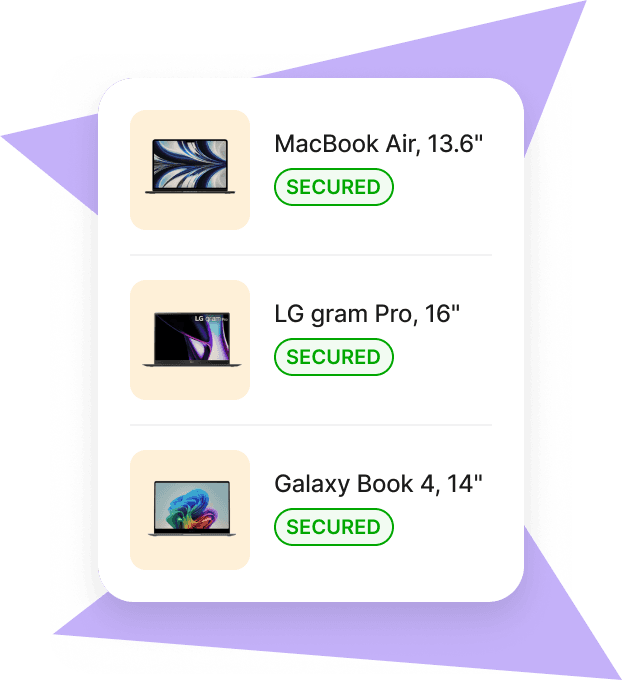
Tip: Mobile device management (MDM) software lets you track, lock, or wipe laptops remotely. It’s worth setting up before shipping. See our best MDM tools guide for options.
Mobile Device Management
3. Create shipment and documents
Prepare a commercial invoice with model, HS code 8471, origin, and value, along with a detailed packing list. Generate the Air Waybill (AWB) and include the consignee’s CNPJ (business) or CPF (individual) tax ID, which is mandatory in Brazil.
4. Submit for pre-clearance
Share documents with your licensed Brazilian customs broker before shipping. Pre-clearance helps reduce delays, especially since Brazil’s customs system (Siscomex) is known for strict reviews.
5. Package and hand off
Use double-walled cartons with anti-static bags and foam inserts to protect laptops in transit. Affix lithium battery and fragile electronics labels, then hand the shipment to your carrier or forwarder.
6. Track and resolve exceptions
Monitor progress through the carrier portal and stay alert for customs holds. If Receita Federal (Brazilian customs) requests additional information, promptly provide serial numbers, invoices, or ANATEL certificates.
7. Settle duties and coordinate last mile
Pay the import duty and multiple taxes (IPI, ICMS, PIS/COFINS), which can significantly increase the total cost. If shipping under DDP (Delivered Duty Paid) terms, the broker or courier handles payment; otherwise, the recipient may face unexpected charges.
8. Delivery to the employee
After clearance, the laptops are delivered to the employee’s address in Brazil, typically within 7–14 business days depending on the city. Confirm receipt, ensure the device functions properly, and update your internal asset tracker.
See also: Mac vs PC for work: Pros, cons, and how to pick the right one
Step by step process for sending laptops from USA to Brazil with Deel IT
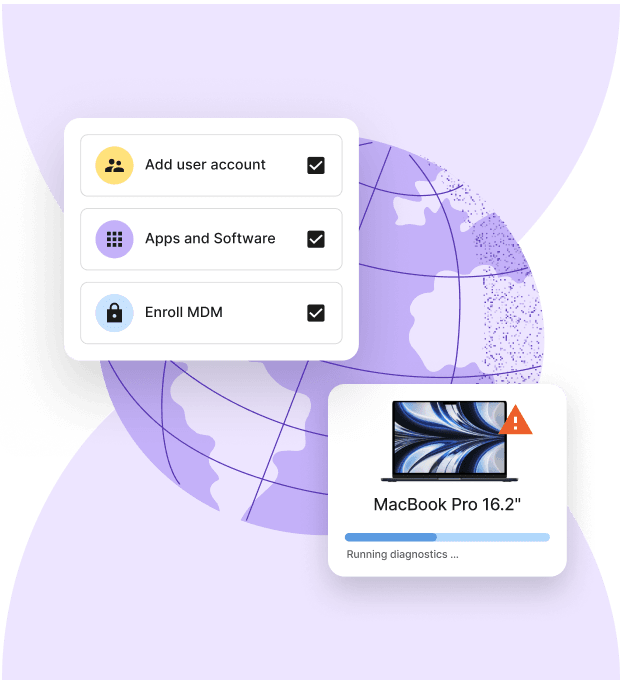
Instead of managing encryption, packaging, paperwork, customs, and delivery yourself, Deel IT handles the entire workflow. Here’s what the same process looks like when you use Deel IT:
- Place the order: select the laptop model in the Deel IT platform and assign it to the employee.
- Configuration: devices are preconfigured to your specifications (OS, security settings, company standards).
- Compliance and paperwork: all customs forms, duties, and country-specific certifications are prepared and managed by Deel IT.
- Shipping: the device is shipped through Deel’s global logistics network and fully insured.
- Delivery: the laptop arrives at the employee’s address in Brazil, compliant and ready to use on day one.
- Lifecycle support: if the device is damaged, needs repair, or must be retrieved, Deel IT manages the reverse logistics.
Shipping laptops yourself vs with Deel IT
| Step | Doing it yourself | With Deel IT |
|---|---|---|
| Device preparation | Encrypt, reset, record serials manually | Preconfigured to your standards |
| Packaging | Source boxes, add padding, apply battery labels | Professionally packaged and labeled |
| Documentation | Create invoices, packing list, airway bill, file EEI | Documentation prepared and submitted |
| Customs clearance | Calculate duties, respond to broker queries | Duties prepaid, clearance managed |
| Shipping | Choose courier, track shipment, resolve delays | Shipped through Deel’s global network |
| Delivery | Employee sets up device after receipt | Device arrives ready to use |
| Returns & repairs | Arrange collection and service locally | Managed through Deel IT platform |
Device Lifecycle Management
Global delivery coverage
Deel IT is not limited to shipping laptops from the USA to Brazil. We deliver to over 130 countries worldwide, including:
- Canada, Mexico, Brazil
- United Kingdom, Germany, France, Spain
- India, China, Japan, Singapore
- Australia, New Zealand, and more
Wherever your team is located, Deel IT ensures devices arrive on time, compliant, and ready to use. Find out more details on how companies worldwide are leveraging Deel IT in our Guide to The World at Work in 2025
When to ship vs when to procure locally
Not every situation calls for shipping laptops from the USA. In many cases, buying in-country is faster, cheaper, and less risky. Use this framework to decide.
Shipping from the USA is better when:
- You need a specific model that is not available locally
- You already have inventory in the USA ready to go
- You are equipping a small number of employees and want consistent hardware globally
- Duties and shipping costs are lower than local purchase prices
Procuring locally is better when:
- You need laptops delivered in a timely manner
- Local regulations make imports difficult (extra permits, high duties, or restrictions on used equipment)
- You are hiring in volume and want faster scaling without customs delays
- You want local warranty coverage and service availability
Break-even point:
Compare the total landed cost of shipping (device cost + freight + insurance + duties + admin time) with the cost of buying locally (device price + local taxes + vendor fees). The lower option is usually the smarter choice.
Case study
By switching to Deel IT, Sastrify automated equipment requests, streamlined procurement through a pre-approved catalog, and ensured employees worldwide received the right devices quickly. Deel IT also enabled reliable deliveries to hard-to-reach locations such as Nigeria, Kosovo, and remote islands.
With 97% of orders delivered within 10 working days, Sastrify eliminated onboarding delays and gained a trusted partner that supports its pace of international growth.
Practical checklists for shipping laptops to Brazil from USA
Use these quick-reference templates to prepare shipments consistently.
Commercial invoice checklist
- Full description of the laptop (brand, model, HS code 8471)
- Quantity and unit value in USD
- Serial numbers listed individually
- Country of origin (United States if claiming preferential treatment)
- Importer’s tax ID (CNPJ for companies, CPF for individuals)
- Exporter’s name and address
- Terms of sale (e.g., DDP or DAP)
Packing list checklist
- List of all items in the shipment, including accessories (charger, cables, mouse)
- Number of cartons and total weight
- Dimensions of each carton
- Cross-reference to serial numbers on invoice
- Contact details of sender and consignee
Pre-shipment checklist
- Device encrypted and security software installed
- Lithium battery specifications confirmed compliant with IATA
- Certificate of origin prepared if claiming USMCA duty-free entry
- Air Waybill (AWB) issued with accurate details
- All documents shared with customs broker for pre-clearance
Employee delivery checklist
- Confirm laptop delivered to correct recipient in Brazil
- Verify customs clearance completed with duties and taxes settled
- Update asset tracker with device assignment and serial number
- Ensure employee confirms full device functionality and access to required software
- Collect proof of delivery for compliance and audit purposes
You would hear me complaining daily about our equipment issues with our previous provider. With Deel IT, this simply stopped.
—C,
People Ops Manager at Sastrify
Simplify laptop shipping with Deel IT
Getting laptops from the USA into Brazil doesn’t have to mean chasing couriers, navigating customs paperwork, or managing duties and taxes yourself. You can do it manually—but every step adds time, risk, and operational overhead.
Deel IT simplifies cross-border laptop shipping by running the entire process end to end in one unified IT platform, across 130+ countries, with shipping and lifecycle actions triggered by HR data—from procurement through delivery and ongoing lifecycle support:
- Global device sourcing: Procure Macs and PCs from Deel IT’s device catalog based on role, budget, and business needs
- Reliable global delivery: Devices are shipped directly to employees in Brazil and 130+ countries with a 99.5% on-time delivery rate
- Preconfigured devices: Laptops are prepared with required apps, security settings, and policies before they ship
- Compliance handling: Customs documentation, duties, taxes, and Brazil-specific requirements are managed automatically as part of the shipment
- Real-time tracking: Track shipments, delivery status, and device ownership from a single dashboard, from dispatch to receipt
- Automated lifecycle management: Onboarding, repairs, reassignments, and offboarding are triggered automatically, with actions synced to HR data and role changes
- 24/7 global IT support: Always-on support handles shipping issues, device problems, replacements, and access changes
Book a demo today and see how Deel IT helps you equip teams in Brazil and beyond.
Deel IT

Michał Kowalewski a writer and content manager with 7+ years of experience in digital marketing. He spent most of his professional career working in startups and tech industry. He's a big proponent of remote work considering it not just a professional preference but a lifestyle that enhances productivity and fosters a flexible work environment. He enjoys tackling topics of venture capital, equity, and startup finance.


