Article
7 min read
How to Send Stablecoin Payments to Contractors in Colombia
Contractor management
Global payroll
Legal & compliance

Author
Joanne Lee
Last Update
September 23, 2026

Table of Contents
Why stablecoin payments work in Colombia
Benefits of paying Colombian contractors in stablecoins
Colombian stablecoin regulations businesses should know
Step 1: Classify your Colombian contractors correctly
Step 2: Set up your stablecoin payment infrastructure
Step 3: Onboard your contractors and collect payment details
Step 4: Execute and reconcile stablecoin payments
Step 5: Monitor compliance and manage ongoing obligations
Send stablecoin payments to Colombian contractors with Deel
Key takeaways
The Colombian peso has depreciated significantly over the past decade, making US dollar-pegged stablecoins a practical settlement rail for finance leaders paying Colombian contractors.
Colombian regulations affecting cryptocurrency include Banco de la República's foreign exchange (FX) regime, DIAN's new crypto reporting rules, and the SFC's anti-money laundering (AML) oversight.
Deel's Contractor solution helps businesses onboard, manage, and pay independent contractors. Eligible contractors may have access to stablecoin withdrawal methods through the Deel platform.
Paying Colombian contractors through traditional wire transfers means accepting FX markups of 2–5%, settlement windows that stretch one to five business days, and a compliance paper trail that touches Banco de la República, DIAN, and your own finance team's reconciliation workflow. For a one-off payment, that's manageable. For a growing team of contractors, it compounds fast.
Stablecoins have emerged as a practical alternative. Colombian crypto buyers are already among the region's heaviest stablecoin users. Stablecoins made up 48% of Colombian crypto purchases in 2024.
There's an opportunity for businesses to send stablecoin payments to contractors in Colombia. The challenge isn't contractor readiness. It's building the internal workflow to classify, onboard, pay, and stay compliant under Colombian and DIAN rules.
This guide outlines benefits of stablecoin payments, regulations businesses should know, and steps for how to pay contractors in stablecoin compliantly.
Why stablecoin payments work in Colombia
The Colombian peso (COP) has depreciated steadily against the US dollar over the past decade. COP swings were particularly sharp in 2022 when political uncertainty pushed the peso to historic lows, and the currency has remained under pressure from fiscal headwinds since.
For contractors invoicing in COP, this volatility erodes the real value of their earnings against imports and USD-denominated goods. Contractors who can receive and hold stablecoins avoid that erosion by holding a dollar-pegged asset. They can decide when and how to convert to local pesos through platforms like Bitso or other Colombian fiat on-ramps.
For the paying company, the FX cost on traditional cross-border wires to Colombia is a separate problem. Colombia's Formal Exchange Market (FEM), overseen by Banco de la República, requires all cross-border payments to be processed through authorized financial intermediaries, such as commercial banks and licensed brokers. Those intermediaries add spread, and bank wire fees commonly run five to seven percent of the transaction value when FX conversion and intermediary fees are combined. Stablecoin payments settled on-chain bypass that spread. The sending company pays blockchain network fees (typically a fraction of a percent), and the contractor receives the stablecoin equivalent at close to mid-market rate.
There's also a settlement speed advantage. Traditional bank wires to Colombian accounts can take two to five business days, particularly when correspondent banking chains are involved. On-chain USDC or USDT settlements on major networks settle within minutes, 24 hours a day, seven days a week.
Benefits of paying Colombian contractors in stablecoins
Both the finance teams running the payments and the contractors receiving them benefit from stablecoin payments.
For finance leaders and their companies:
On-chain stablecoin payments eliminate the five-to-seven percent spread embedded in traditional bank wires, replacing it with network fees that typically run under 1%.
USDC and USDT settle within minutes on major networks, compared to two to five business days for correspondent bank wires.
Every on-chain payment produces an immutable transaction hash, timestamp, and amount, making invoice-to-payment matching cleaner and providing a ready-made audit trail.
Contractor payments don't wait for banking hours or Colombian public holidays.
Contractors hold a dollar-pegged asset and the company doesn't need to convert to COP at the time of payment.
For Colombian contractors:
Receiving USDC or USDT means the contractor holds an asset that doesn't depreciate with the COP while they decide when to convert.
On-chain settlement means contractors receive funds the same day rather than waiting days for a wire to clear through the Colombian banking system.
Colombia's stablecoin off-ramp infrastructure is developing. Platforms like Bitso and local exchanges allow contractors to convert USDC to COP at competitive rates. Contractors who want pesos can convert immediately, and those who want to hold a dollar-pegged asset can do so.
Stablecoin payments require only a compatible wallet, not a USD bank account, removing a barrier that many Colombian contractors face given restrictions on USD-denominated accounts at domestic banks.
Deel Stablecoin Wallet
Pay contractors with Stablecoin
Colombian stablecoin regulations businesses should know
Colombia's crypto regulations are changing, and it's important to understand them accurately. There is currently no single crypto-specific law in Colombia. Cryptocurrencies are not classified as legal tender, money, or securities. What exists is a set of overlapping rules from multiple authorities, each governing a distinct area of what stablecoin payments touch.
Banco de la República
Banco de la República is Colombia's central bank and the principal authority over the foreign exchange regime. Under External Resolution 01 of 2018, all cross-border payments that fall within Colombia's FEM must be channeled through authorized intermediaries and reported accordingly.
The central bank has stated that cryptocurrencies are not considered a foreign currency under national legislation. This means stablecoin payments do not trigger mandatory FEM channeling as a direct currency exchange. However, businesses should confirm their specific payment structure with a qualified adviser.
Superintendencia Financiera de Colombia (SFC)
The Superintendencia Financiera de Colombia (SFC) is the financial supervisory authority. The SFC has historically prohibited supervised financial institutions (banks, financial corporations) from holding, investing in, or intermediating with digital currencies. This means Colombia's regulated banks cannot directly process crypto payments, which is why stablecoin payments to Colombian contractors flow through non-bank infrastructure (crypto exchanges, wallets) rather than through a contractor's bank account directly.
The SFC has updated its SARLAFT AML supervisory tools to monitor transfers between banks and crypto exchanges, meaning banks are now tracking fiat flows to and from crypto platforms more closely.
Dirección de Impuestos y Aduanas Nacionales (DIAN)
DIAN (Dirección de Impuestos y Aduanas Nacionales) is Colombia's national tax authority. For tax purposes, DIAN treats crypto assets as intangible assets that are taxable under Colombian income tax rules, with gains and net worth declarations required. A major regulatory shift came in December 2025, requiring crypto asset service providers operating in or serving Colombian residents to report detailed user and transaction data starting with the 2026 tax year. This aligns Colombia with the OECD's Crypto-Asset Reporting Framework (CARF). The resolution applies to both domestic and foreign platforms serving Colombian taxpayers.
Colombia is a member of Grupo de Acción Financiera de Latinoamérica (GAFILAT), a financial regional body, and has committed to the OECD's CARF framework through Resolution 000240. In practice, this means crypto service providers involved in Colombian payments must implement KYC/KYB verification, suspicious transaction reporting to the Unidad de Información y Análisis Financiero (UIAF), and detailed reporting to DIAN.
Regulatory landscape at a glance
Banco de la República: governs the FEM foreign exchange regime; has stated crypto is not a foreign currency; key action: confirm whether specific payment structures trigger FEM reporting
SFC: prohibits regulated banks from engaging with crypto directly; monitors bank-to-exchange fiat flows via updated SARLAFT tools; key action: use non-bank crypto infrastructure
DIAN: treats crypto as intangible assets for tax purposes; Resolution 000240 requires service providers to report user/transaction data for the 2026 tax year onward; key action: ensure service providers are compliant, and maintain documentation for DIAN audits
Tax and reporting obligations
When a company based outside Colombia pays a Colombian independent contractor in stablecoins, there are several tax and reporting obligations for both the paying company and the contractor.
FX valuation: Even though stablecoins are pegged to the USD, the company should document the USD fair-market value of the stablecoin at the time of payment. DIAN's Resolution 000240 sets this standard for crypto service providers, and applying the same discipline to your own payment records is good practice.
Invoice requirements: Colombian contractors are required to issue invoices (facturas) for their services. The invoice should reflect the agreed fiat-denominated amount in COP, not just the stablecoin amount. Retain the invoice, the transaction hash, and the timestamp as a matched record set.
Contractor RUT verification: The Registro Único Tributario (RUT) is the contractor's tax identification with DIAN. Companies paying Colombian contractors should verify the contractor's RUT before payment to confirm their tax status and social security contributions. Colombia's pension reform, Law 2381, shifted part of that responsibility to the contracting company.
Since July 1, 2025, companies with a services contract (contrato de prestación de servicios) must withhold pension contributions from the contractor's fee and remit them to the new system's Pilar Contributivo. The contribution is based on 40% of the contractor's monthly payment. If the company doesn't withhold it, the company is liable for the full contribution, plus penalty interest. Confirm your specific exposure with local counsel before you finalize a payment structure.
Record-keeping: Retain payment records (blockchain transaction hashes, stablecoin amount, USD-equivalent value, contractor RUT, and matched invoice) for a minimum of 10 years to maintain compliance with tax and commercial accounting documentation requirements.
Step 1: Classify your Colombian contractors correctly
Now, let's dive into practical steps for how to ensure compliance when sending stablecoin payments to contractors in Colombia.
Before any stablecoin payment goes out, the most important step is confirming that each worker qualifies as an independent contractor under Colombian law. Getting this wrong doesn't just create a labor law problem, but it directly affects the legality of the payment structure and introduces misclassification risks.
Under Colombia's Substantive Labor Code (Código Sustantivo del Trabajo), the distinction between an employee and an independent contractor turns primarily on subordination and control. An employee works under the direction and discipline of the employer, with set hours, and tools provided by the employer. An independent contractor retains autonomy over how, when, and where the work is performed, uses their own tools and methods, and is engaged for a specific deliverable or project. Courts weigh subordination as the decisive factor, looking at practical indicators such as set hours, employer-provided tools, and control over how the work gets done.
Stablecoin payments do not change this analysis since they are a payment mechanism, not a classification tool. A worker who meets the legal definition of an employee in Colombia is an employee whether payment is made in COP, USD, or USDC. Paying via stablecoin to a misclassified worker does not reduce the company's exposure, and it may complicate the paper trail.
Deel Contractor of Record
Minimize misclassification risk
Step 2: Set up your stablecoin payment infrastructure
With classification confirmed, the next operational step is building the stablecoin payment infrastructure the finance team will actually use.
Choosing the stablecoin: USDC vs. USDT for Colombian payments
Both USDC (USD Coin, issued by Circle) and USDT (Tether) are widely used for cross-border contractor payments in Latin America. However, there are practical differences worth understanding.
USDC is issued by Circle, a regulated US company subject to US money services laws such as The GENIUS Act, with monthly reserve attestations published publicly. It's the standard for enterprise-grade cross-border payroll use, preferred by compliance teams for its transparency.
USDT has a larger overall market cap and liquidity globally, but provides less transparent reserve documentation. For contractor payments where audit trail quality matters, USDC's reserve transparency makes it the stronger default for finance teams.
Network selection
The choice of blockchain network affects cost and speed. Ethereum mainnet carries higher gas fees, typically unsuitable for smaller contractor payments. Polygon, Solana, or similar lower-fee networks support USDC and settle within seconds. Confirm that the contractor's wallet is compatible with whichever network is selected before initiating the first payment.
Wallet infrastructure
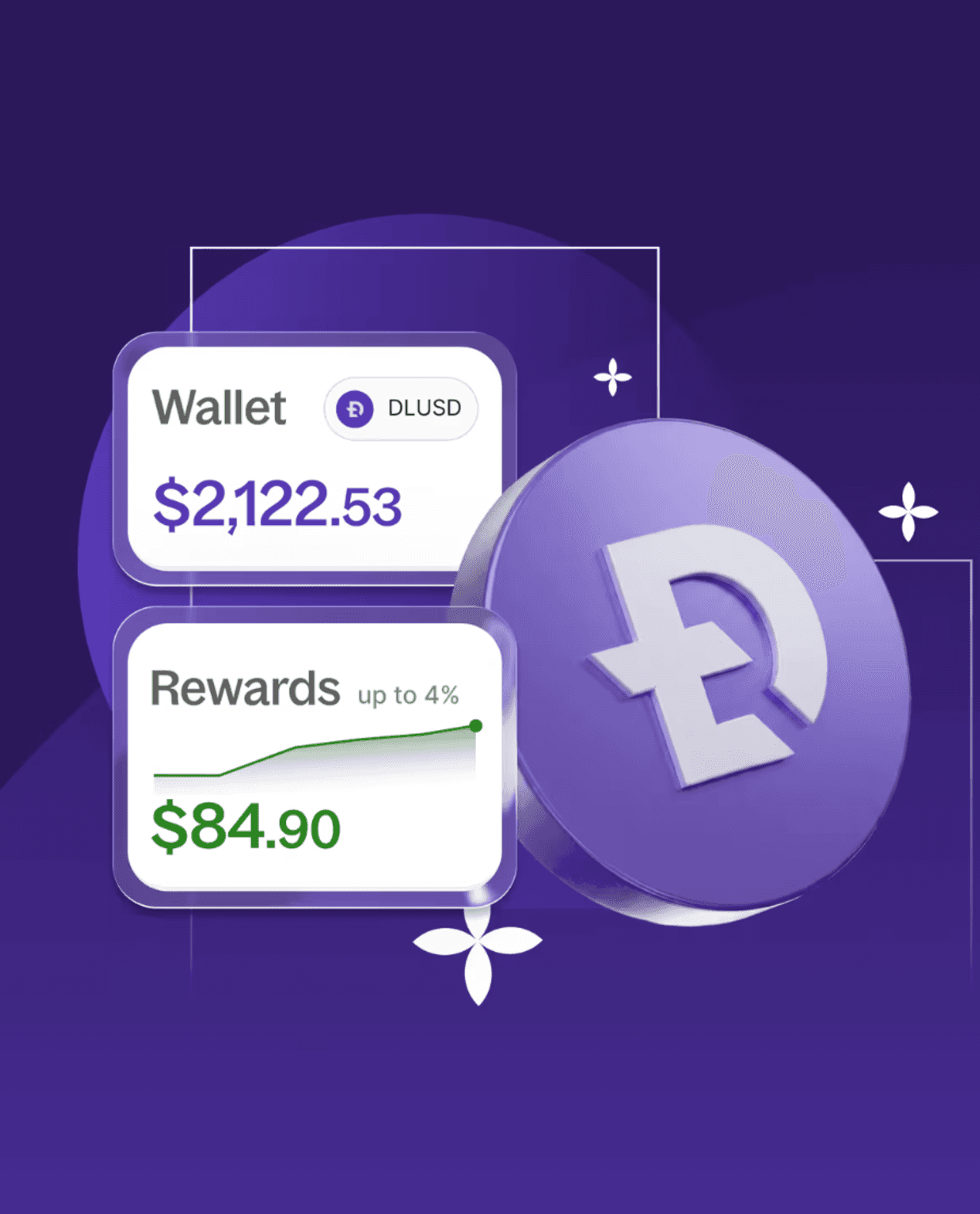
The Deel Stablecoin Wallet lets eligible contractors hold a USD-equivalent balance in Deel (DLUSD) and optionally earn variable rewards, without managing crypto wallets or gas fees. It’s designed to be simple for contractors to use, and employers don’t need to change their payroll process.
Step 3: Onboard your contractors and collect payment details
Contractor onboarding for stablecoin payments involves additional steps beyond a standard contractor engagement, particularly around verification and wallet address collection.
Verification under Colombian AML requirements
Colombia's AML framework, enforced through the UIAF, requires that crypto payment platforms and service providers verify the identity of counterparties. Deel applies the identity and business verification required for the relevant onboarding and payment workflows. For companies managing their own wallet infrastructure, the paying company must ensure the platform used for payment applies appropriate verification processes. Paying into an unverified wallet address can create AML compliance exposure.
Wallet address collection and verification protocol
Collect the contractor's stablecoin wallet address through a verified, documented channel. Never accept a wallet address via an unverified communication. Wallet addresses are long and easy to mistype, and there is no blockchain reversal for a misdirected payment. Best practice is to require the contractor to submit their wallet address through the onboarding platform, then send a small test transaction before processing the first full payment, with the contractor confirming receipt.
Verify that the wallet address is compatible with the chosen network. A wallet address configured for Ethereum mainnet will not receive funds sent on Polygon and vice versa.
Contractor education on receiving and converting USDC to COP
Not all Colombian contractors will be familiar with stablecoin payments. Companies should provide contractors with clear wallet setup and conversion guidance before the first payment, covering how to verify receipt and how to convert USDC to COP through local platforms like Bitso.
Documentation at onboarding
Collect the contractor's RUT at onboarding. Store it alongside the contractor's wallet address, contract details, and first invoice as a single contractor record. This record set gives your finance team a clean, matched file to produce if DIAN ever requests supporting documentation under Colombia's general tax recordkeeping rules.
Step 4: Execute and reconcile stablecoin payments
With infrastructure in place and contractors onboarded, the execution step is operationally straightforward, but the documentation discipline here is what keeps the audit trail clean.
Pre-payment: Invoice approval and fiat-denominated amount confirmation
Before executing any stablecoin payment, confirm the fiat-denominated amount first. The contractor's invoice should state the agreed amount in USD (or COP equivalent). From that USD amount, calculate the USDC equivalent. Since USDC is pegged 1:1 to the USD, this is typically a direct conversion. Record both the fiat-denominated invoice amount and the stablecoin amount paid in the payment record.
Avoid using USDT or USDC market price to determine the USD equivalent after the fact. The payment amount should be determined from the invoice, not from a post-hoc conversion.
Blockchain transaction documentation for a clean audit trail
Every on-chain USDC or USDT payment produces a transaction hash (a unique identifier for the payment), a timestamp, the sending and receiving wallet addresses, and the exact stablecoin amount. Export and store these alongside the matched contractor invoice and RUT record.
For large transactions ($50,000 USD or above), DIAN's Resolution 000240 requires the service provider to flag the transaction in their reporting. Confirm that the payment platform or wallet service being used is filing the required reports. Deel and its licensed partners support applicable platform-side reporting obligations, while customers remain responsible for maintaining their own records.
Reconciliation
The standard reconciliation workflow is to match each payment's transaction hash to the corresponding approved invoice in the company's accounts payable system. Record the USD-equivalent value used for the payment, the date, the contractor's RUT, and the network used. Flag any discrepancy between invoice amount and payment amount before the payment closes.
Stablecoin reconciliation is typically cleaner than wire reconciliation. There are no intermediate correspondent bank legs, no value dates, and no intermediary fees. The transaction hash provides a single, definitive record.
Compliance
Unlock Continuous Compliance™ with Deel
Step 5: Monitor compliance and manage ongoing obligations
Stablecoin payments to Colombian contractors are not a set-and-forget operation. Colombia's regulations are actively evolving, and businesses have ongoing obligations at multiple levels.
Ongoing DIAN reporting cadence
Under Resolution 000240, crypto service providers must report user and transaction data for the 2026 tax year, with the first report due to DIAN by the last business day of May 2027. The paying company's responsibility is to maintain its own matching records (invoices, RUTs, transaction hashes) to substantiate its contractor payments in any DIAN audit.
SFC regulatory monitoring
Colombia doesn't currently have a licensing regime for crypto platforms in the pipeline. Proyecto de Ley 510 of 2025, which would have created formal VASP licensing under SFC supervision, was archived by Congress in mid-2026 after passing an initial debate. The SFC has stated it doesn't regulate, supervise, or authorize crypto-asset businesses, so platforms continue to operate under the existing patchwork of UIAF and DIAN rules rather than a comprehensive framework. Watch for a new bill, since industry pressure is pushing Colombia's government to reintroduce one.
Contractor re-classification monitoring
Classification risk is not static. A contractor whose relationship with the company deepens over time (more hours, more direction, more integration with the company's internal tools) may drift toward the legal definition of an employee under Colombian law. A periodic re-classification review is warranted for long-term contractor engagements.
Send stablecoin payments to Colombian contractors with Deel
Managing stablecoin payments for Colombian contractors doesn't have to be complex. Deel's Contractor solution supports compliant onboarding and management of independent contractors, and the Deel Stablecoin Wallet supports eligible stablecoin payment workflows on Deel's connected platform.
Book a demo below to see how Deel handles the full workflow for stablecoin contractor payments in Colombia.
Deel Hire
Find, hire, and manage anyone, anywhere

This article is provided for general informational purposes and should not be treated as legal, tax, or financial advice. Regulations governing stablecoin payments in Colombia are evolving. Consult qualified local professionals for guidance specific to your situation.
FAQs
Is it legal to pay Colombian contractors in stablecoins?
Yes, it is legal for Colombian contractors to receive stablecoin payments. Colombia does not prohibit individuals from receiving or holding crypto assets, and the central bank has confirmed that individuals may accept crypto as a form of payment at their own risk. The paying company should ensure the payment structure is documented for DIAN purposes and that the platform used complies with AML requirements.
Which stablecoin (USDC or USDT) is better for Colombian contractor payments?
USDC is generally the stronger choice for enterprise contractor payments because of Circle's transparent reserve attestation practices and its established position in enterprise-grade cross-border payroll workflows. Both are widely accepted and convertible in Colombia through platforms like Bitso, but USDC's compliance transparency is a meaningful differentiator when audit trail quality is a priority.
What happens if the contractor wants Colombian pesos instead of stablecoins?
If a contractor prefers COP, stablecoins can be converted to pesos through local exchanges like Bitso at the contractor's discretion after receiving the stablecoin payment.
How does Deel handle compliance for stablecoin contractor payments in Colombia?
Deel supports verification and compliance checks relevant to stablecoin workflows, including screening and transaction monitoring where applicable. Requirements vary by product and jurisdiction, and clients remain responsible for their own legal and regulatory obligations.
Joanne Lee is a content marketing professional with 7+ years of experience creating effective social, search, email, and blog content for companies ranging from start-ups to large corporations. She's passionate about finding creative ways to tell a purpose-driven story, staying active at the gym, and diversity and inclusion. At Deel, she specializes in writing about topics related to global payroll and enterprise businesses.