Article
4 min read
How to Use AI to Close Skills Gaps in 2026
AI

Author
Ellen Simmonds
Last Update
June 22, 2026

Key takeaways
AI can help organizations identify skills gaps earlier and create development plans tailored to each employee's needs.
Connecting skills data with performance and career information gives organizations a clearer picture of whether development efforts close capability gaps effectively.
Accurate skills data is the foundation of any AI upskilling or reskilling strategy. Employees and managers are far more likely to trust recommendations when the underlying information is current and verifiable.
Economic uncertainty, geopolitical disruption, and rapid technological change have left most organizations short of the workforce capability they need. 63% of employers cite skills gaps as their greatest barrier to business transformation, according to the World Economic Forum (WEF), while 59% of the global workforce will need to be reskilled by 2030.
Most conversations about this shortage default to AI skills: teaching people how to automate their workflows or integrate AI agents into their lineup are just two examples. But an engineer who needs cloud architecture experience, a manager who needs stronger conflict resolution, or a salesperson who needs to learn a new product line won't close any of those gaps by learning to prompt a chatbot.
AI still has a role here, just not as the subject of the training. Used at the root of your learning and development strategy, instead, AI can map exactly where any skill gaps sit and build the response to close them.
This article explores how AI can map missing skills and strategize how to close them. Work through the five steps below to help your people and your business reach their full potential.
Step 1: Use AI to identify where the gaps are
Manual skills mapping relies on managers filling in spreadsheets or employees self-reporting what they know. The manual approach is far from accurate or timely, so it’s easy to see why it falls flat so often. Mercer reports that only 38% of organizations maintain a single, enterprise-wide skills library, while 45% don’t map skills directly to jobs.
AI can support here by overhauling your skills and competency mapping process and pulling from any scoring or proficiency data you hold about employees’ specific skills or competencies. To set AI on the right path:
Define the most important skills for your business now and over the next 12 to 18 months. Organize them into clear capability areas rather than a long, unstructured list.
Connect any systems that already hold skills-relevant data, including your HRIS, recruiting database, learning management system, and any project management tools your teams use.
Use the connected data to let AI score proficiency against your skills taxonomy, rather than relying on self-assessment.
Roll this out in waves, starting with one team or function, and adjusting based on what you learn, then expanding rather than launching everywhere at once.
Give employees visibility into the data feeding the model and let them correct or add to it, so the AI works from the information people have verified.
Deel HR
Foster a culture of continuous development
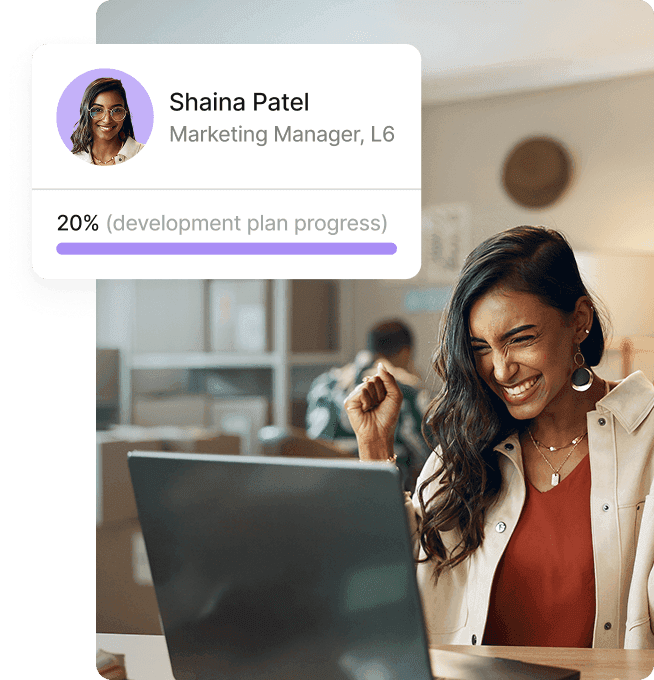
Case study: Johnson & Johnson defined a skills taxonomy of 41 specific skills across 11 capability areas, then built an AI engine that pulled data from its HR information system (HRIS) recruiting database, learning management system, and a project management platform. A machine learning model was used that combined data to score each employee's proficiency, ranging from no skill detected, all the way up to thought leader. The rollout was gradual and iterative; employees could review and edit the personal data feeding the model before it factored into their score.
Step 2: Use AI to personalize learning paths
54.1% of learning and development (L&D) teams track completion rates as a training success metric. They encourage the employee to select a course from a static course catalog, then measure whether they completed it within a certain time frame. But this outdated approach doesn’t tell L&D leaders anything about whether the course was the right fit for the learner, or whether they’ve developed any tangible skills that could benefit the business.
AI breaks L&D free of this mold, generating personalized learning paths relevant to the individual. Course completion goals are replaced by closed skills gaps when you:
Feed AI your skills and proficiency data from Step 1, so recommendations reflect true gaps rather than your assumptions of what’s missing.
Let AI adjust the path as the employee progresses, recommending the next module based on quiz results, pace, and where they've struggled, not a fixed syllabus set on day one.
Pull from a mix of content sources, including internal material and external providers, so AI can recommend the best resource for a specific skill rather than whatever’s currently housed in your training content library.
Set the system to flag employees who've stalled, so a manager can step in before someone drops off their learning path altogether.
Learning Management
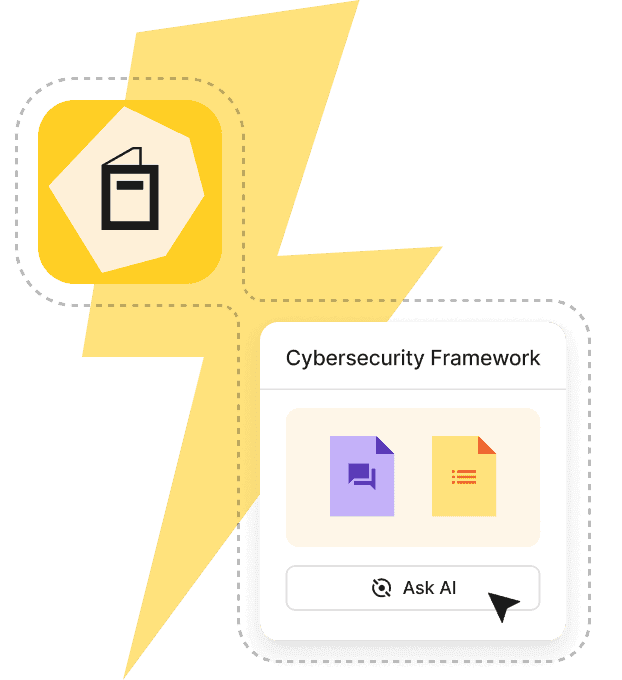
Accelerate Learning with AI
Step 3: Use AI to track progress and close the feedback loop
Learning feedback loops are heavily dependent on memory and access to the right information at the right time. Between review cycles, managers and L&D teams must remember to review each learner’s progress and check if they’re still on track to reach their individual goals. Across an entire team, these checks get pushed back, and happen too late or not at all.
AI reduces the reliance on manual follow-up by continuously monitoring employee development. As learning, goals, competencies, and performance data all live in the same system, AI can analyze employee development in context rather than looking at learning activity alone.
To keep development on track:
Connect learning activity to performance reviews so AI can compare skill development against any changes in employee performance.
Define measurable indicators for each targeted skill, such as promotion readiness or competency scores, so AI has a benchmark to assess progress against.
Configure AI alerts when employees stop progressing toward development goals or when performance data suggests that a skills gap is unresolved.
Use AI-generated summaries during manager check-ins to focus conversations on capability growth rather than recollections of past performance.
Free template
Unlock employee potential with competency-based performance reviews
Step 4: Use AI to shape internal mobility
Employee development comes with an expectation of return on the company’s investment. Organizations invest in training, mentoring, coaching, and career development because they need those skills inside the business.
But when upskilled employees can't see a clear path to their next opportunity, they often look for career opportunities outside the org chart, maybe even heading to rival companies to find the right role. Their newly acquired skills leave with them, and employers find themselves recruiting for capabilities they’ve already spent time and money building.
As an alternative, here’s how to use AI to reveal internal opportunities that could entice your team members to progress their careers internally instead:
Connect your skills framework to career paths and job architectures so AI can evaluate employees against opportunities across the organization.
Feed AI current role requirements, open vacancies, and anticipated workforce needs so it can identify potential internal matches.
Include project work, temporary assignments, and mentoring opportunities alongside formal job openings to broaden the range of opportunities AI can recommend.
Give employees visibility into AI-generated career recommendations and suggested next steps for moving into a new role.
Case study: DHL, a large transportation company, built an AI-powered Career Marketplace to connect employees with relevant internal development opportunities, including jobs and projects, all based on their skills. To get a great match, employees create skills profiles and receive recommendations for opportunities across the organization, helping them discover career paths they may not have considered otherwise.
Free guide
Optimize HR with AI
Step 5: Focus on data quality
AI-powered skills intelligence depends on trust. If your data is inconsistent or impossible to verify, employees won’t trust AI’s recommendations, and managers won’t use them to make workforce decisions.
A common mistake is treating skills gaps as a technology problem, believing that consolidating your HR tech systems is all you need to align each element of your people processes. While consolidation is important, the hard work often sits in your skills data layer: deciding who owns skills data and which signals the AI should trust.
To improve the quality of your inputs:
Assign clear ownership for skills data so HR, L&D, and managers know who’s responsible for keeping each record accurate.
Separate verified skills from inferred skills so employees and managers can see which recommendations come from confirmed information.
Set review dates for skills and competency data so outdated information doesn’t continue to influence your AI recommendations.
Audit AI-generated recommendations for patterns that could reinforce unconscious bias, limit mobility, or overlook qualified employees.
Close your skills gaps with Deel
Once you know how AI can identify and close skills gaps, the next step is choosing a platform that supports the full process.
Deel is a global HR and payroll platform that helps companies hire, manage, pay, and develop workers across countries. For skills development, Deel brings together Engage, our AI-powered talent management solution, and Deel HR, our global HR platform.
Engage helps organizations:
Create AI-driven learning paths based on employee needs and business priorities
Track skills, competencies, and development progress over time
Manage performance reviews, goals, feedback, and career development in one place
Support growth plans that connect employee development with role expectations
Deel HR helps organizations:
Centralize employee records, roles, reporting lines, and workforce data
Give teams visibility into org structure and employee movement
Support workforce planning and internal mobility decisions
Connect development activity with wider HR processes
Together, Engage and Deel HR help organizations move from skills insights to action. You’ll have everything you need to progress your employees in their careers without separating learning data from the HR intel that gives it context.
Book a demo to see how Deel can help you build an AI-powered approach to closing skills gaps.
Live Demo
Get a live walkthrough of the Deel platform
FAQs
How can AI identify skills gaps in the workforce?
AI analyzes data from sources such as performance reviews, learning platforms, employee profiles, project work, and recruiting systems. It can compare current capabilities against role requirements, workforce plans, or competency frameworks to highlight areas where employees may need additional support and development.
What's the difference between using AI to close skills gaps and training employees on AI?
Training employees on AI focuses on teaching people how to use tools such as ChatGPT or incorporate AI agents into their workload. Using AI to close skills gaps means applying AI to identify capability gaps, personalize learning, track development progress, and connect employees with opportunities that help them build new skills.
Can AI support internal mobility?
Yes, AI can compare employee skills against open roles and career paths across the organization. This helps employees discover opportunities they may not have considered and gives employers greater visibility into their existing talent.
What data does AI need to support employee development?
The most effective development systems combine data from performance reviews, learning platforms, employee records, competency frameworks, career paths, and workforce planning initiatives. The quality of the recommendations depends heavily on the quality and accuracy of the information.
Ellen Simmonds is a content marketing manager with a decade of experience in tech, leadership, startups, and the creative industries. A long-time remote worker, she's passionate about WFH productivity hacks and fostering company culture across globally distributed teams. She also writes and speaks on the ethical implementation of AI, advocating for transparency, fairness, and human oversight in emerging technologies to ensure innovation benefits both businesses and society.