
Checklist
Employee Benefits Renewal Checklist for US HR Teams
PEO
Global HR
Employee Benefits
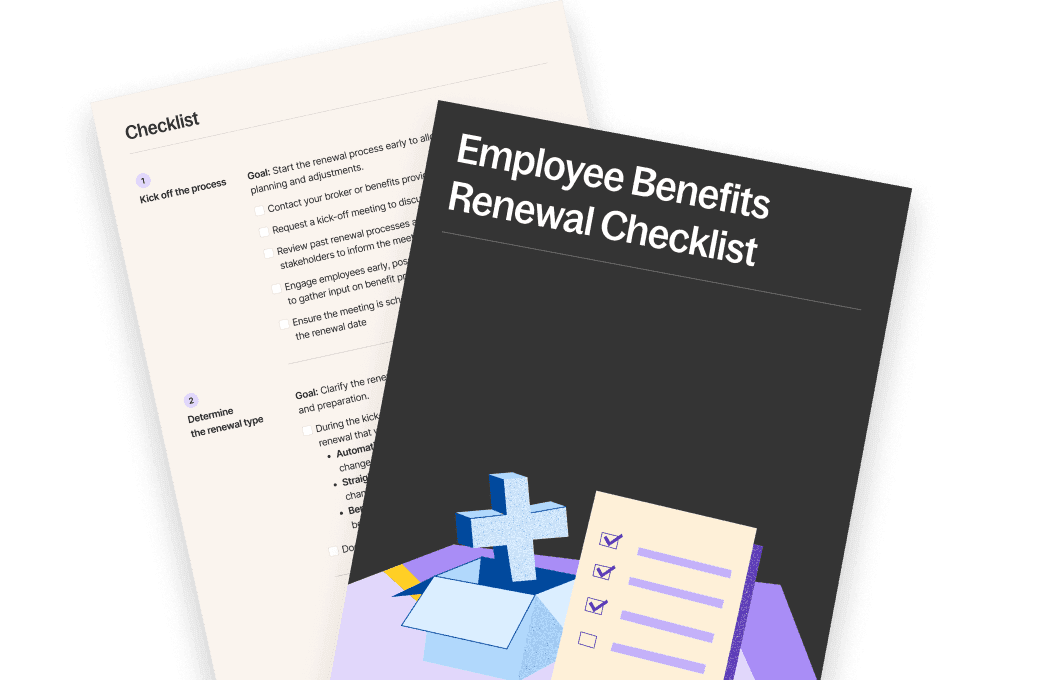
Get the resource for free
A missed deadline or a plan error can leave employees without coverage. Use this free checklist to renew your benefits plan in 10 clear steps.
Benefits renewal has fixed dates. If your team misses one, employees can lose coverage or face a rate increase that you did not plan for. This employee benefits renewal checklist gives US HR teams and company administrators a clear order of work. It also works as your open enrollment checklist. Use it to set your timeline, review renewal rates, approve changes, and run open enrollment with no gaps.
What is an employee benefits renewal?
Employee benefits renewal is the yearly process where an employer reviews, prices, and renews its benefits plans with each carrier. HR teams work with their broker or provider to review renewal rates, approve changes, update documents, tell employees about changes, and run open enrollment if needed. Deel's checklist gives HR teams a clear order for each task.
Most group plans renew once each year. Your broker or provider sends new rates before the renewal date. HR then has a short time to compare options, change plans, and tell employees. Each step depends on the step before it, and one late step can delay open enrollment.
What are the types of benefits renewal?
There are three types of employee benefits renewal: automatic, straight, and benefit change. The type you have sets how much preparation you need:
Automatic renewal: Cost and coverage stay the same.
Straight renewal: Cost may change. The benefit structure does not change.
Benefit change renewal: Benefits change or grow, and cost may change.
More resources
How do you renew employee benefits? 10 steps
Follow these 10 steps in order. Each step in the download has a goal and a task list.
Kick off the process: Start early so you have time to plan and adjust. Ask your broker or provider for a kick-off meeting, and hold it no later than 3.5 months before the renewal date. Ask employees for input with pulse surveys or focus groups.
Determine the renewal type: Decide if you have an automatic, straight, or benefit change renewal.
Set the timeline: Work with your broker or provider on a detailed timeline. Include renewal rate proposals, plan changes, communication dates, and document deadlines.
Determine the open enrollment process: Ask your broker or provider if you need open enrollment. If you do, plan for plan selections, opt-outs, and dependent registration.
Review renewal rates: Meet with your broker when rates arrive to compare the rates with industry benchmarks. Check claims use data to see if the increase is fair, and negotiate if needed.
Approve the renewal and effective dates: Get sign-off from finance, legal, and other stakeholders. Give formal approval, and confirm the effective date with your broker or provider. Sign and submit any remaining documents.
Draft employee communications: Write clear messages about cost changes and benefit updates. Send them at least one month before the effective date. Work with your communications team so messages stay consistent.
Complete renewal documentation: List the documents your provider needs, which can include the signed rate agreement, entity documents, the master policy contract, and broker agreements. Submit them on time and keep copies.
Align on invoicing and payroll: Confirm when the first invoice at the new rates will arrive and when payment is due. Update payroll processes if the new rates require it, and audit payroll and invoicing after the first cycle.
Update benefit documentation: Update handbooks, benefit guides, and HR records. Make sure employees can access the new documents easily.
Who should use this checklist?
Use this checklist if you manage employee benefits at a US company. It works for a small business and for a large organization:
HR teams that run the renewal each year
Company administrators who own benefits tasks with no HR team
Finance leaders who approve the benefits budget and review rate changes
How does Deel help with US benefits renewal?
A manual renewal takes many emails, spreadsheets, and deadlines. Deel puts these tasks in one place and adapts to your business. You can use Deel's benefits or your existing provider, and can also scale into Deel's benefits plans as you grow. Choose the model that fits how you employ people in the US.
Deel's PEO replaces fragmented US payroll, HR, and benefits administration with one full-service HR partner.
PEO is a US co-employment model, where Deel is the co-employer of your US employees and shares compliance liability with you
Deel manages payroll, taxes, compliance, workers' comp, and benefits administration
A dedicated HR Business Partner (HRBP) helps with state-by-state compliance
You get benefits plans from leading providers, and can also keep your current plans and broker
Deel Payroll (US) is US-specific payroll and compliance for companies that pay US employees through their own entities.
Run payroll yourself with the self-serve option. Or use the managed option, which includes a dedicated Deel payroll expert.
Deel Benefits is payroll-connected and works with Deel Payroll. Enrollment changes sync directly to payroll deductions to eliminates deduction errors.
You can keep your existing broker or use Deel's broker network.
See all options on the Deel Benefits page.
"Deel, for us, started as a way to pay international contractors... We have US payroll, PEO, health insurance benefits, and culture management—all under Deel."
—Andy Cloyd, CEO and Co-founder,
Superfiliate
FAQs
Why should we review our benefits package before renewal?
A review shows which plans work and which plans do not. It helps you match your benefits to employee needs and to your budget. You then make renewal decisions with data, not guesses.
How do I gather employee feedback on benefits?
Use pulse surveys, focus groups, or one-on-one talks. Ask which benefits people use, which gaps they see, and what they want to change. Short, regular surveys give you better data than one long survey.
What should I ask benefits providers at renewal?
Ask for the renewal rate and the reason for any change. Compare the rate with industry benchmarks, and check claims use data to see if the increase is fair. Ask about new plan options and new compliance requirements.
How do I keep my benefits package compliant?
Track federal and state rule changes each year. Read the US Department of Labor guidance on ERISA. Ask your broker or a legal expert to review your plans before you approve the renewal. Deel's Compliance Hub sends alerts when regulations change.
What is the best way to tell employees about benefits changes?
Use more than one channel, such as email, team meetings, and information sessions. Say what changes, when it changes, and what employees must do. Send your messages at least one month before the new benefits start. Tell them where to get help during open enrollment.
Do you need open enrollment at every benefits renewal?
No. You usually need open enrollment when you add plan options, make big changes to existing plans, have a legal duty, change who is eligible, or add voluntary benefits. You may not need it for an automatic renewal with no changes, minor changes, or mid-year changes handled through special enrollment periods. Confirm with your broker or provider.
How often should I review my benefits package?
Review your benefits package at least once each year, before renewal. Also check employee satisfaction and market trends during the year. This lets you make changes in time.
How do I measure the success of my benefits package?
Track employee satisfaction, engagement, and retention. Also track how many employees use each benefit and what each benefit costs. Compare the results each year.
How can Deel help me manage US benefits?
Yes. Deel's PEO is a US co-employment model. Deel manages payroll, taxes, compliance, workers' comp, and benefits administration for your US employees. Deel Payroll (US) is for companies that pay US employees through their own entities. Deel Benefits is payroll-connected, so enrollment changes sync directly to payroll deductions. You can keep your existing broker or use Deel's broker network.