Article
7 min read
AI and Performance Management: Nobody Knows What They're Measuring Anymore
AI

Author
Ellen Simmonds
Last Update
June 11, 2026
AI is changing how work gets done, and that’s created a measurement gap that’s sometimes difficult to talk about. Your teams may be confused about what "good performance" even looks like anymore. Is it the quality of their output? The speed at which they deliver? Their proficiency with AI tools? Their ability to prompt engineer? When AI is doing part of the cognitive work, how much of the result is actually them? And as some CEOs have hinted, is token usage now a performance metric? Are they being judged on how efficiently they use AI, or on what they produce with it? They don't know. So they're second-guessing every decision.
HR teams and managers are wrestling with the same questions, except they're also trying to answer them while their talent data is scattered across five different systems. You've got performance reviews in one place, skills data in another, engagement metrics in a third. You can't see the full picture of who's actually performing, who's struggling, or where the real skill gaps are. So you're patching together a talent strategy based on incomplete information, hoping it holds together long enough to be useful.
The result: employees are anxious about invisible metrics. Leaders are making decisions on fragmented data. And nobody's clear on what performance actually means in an AI-first world.
The instinct for an AI-first organization might be to fight fire with fire and fix the problem with AI. It’s a good instinct, but getting your approach to modern performance management right first is key. Until you know how you’re applying AI (and why), and you have the right infrastructure, all the AI in the world won't help.
The myths getting in your way
When confusion sets in, myths fill the gap. Here are the biggest ones holding your teams back.
Myth 1: "AI will automate away the manager role."
This one shows up constantly in headlines. The fear is real. If AI can analyze performance data, flag skill gaps, and predict who might leave, what do managers actually do anymore?
Here's the reality: managers aren't going anywhere. What changes is what they do. As AI absorbs the tracking, scheduling, and reporting that used to eat up their time, the skills that remain are more distinctly human. Coaching. Giving specific feedback. Having difficult conversations. Reading a team's dynamic and responding to it, and knowing when the data is telling you something important and when it's just noise.
When Freeletics implemented Deel HR's Engage module for leadership development, 100% of leaders reported feeling supported in their growth. But they weren't supported by AI alone. They were supported because the platform freed up their manager's time to actually coach them instead of running reports.
Deel has cut manual tasks and enhanced personal interactions. This creates better leaders, informed employees, and a stress-free People Operations team
—Patrizia Przybylski,
Senior Consultant People Ops, Freeletics
The manager role didn't disappear. It evolved.
Deel HR
Unlock your team's full potential
Myth 2: "Implementing AI tools solves performance measurement problems."
This is the one that gets organizations in trouble. They adopt a new performance management platform with AI built in, expecting it to clarify what performance actually means. Then they're confused when the anxiety gets worse.
This isn't a technology problem, since the tools exist and in many cases, companies have already made them available to every employee. This is a training problem, a confidence problem, and a culture problem. All three sit squarely in L&D's territory.
—Alice Burks,
Director of People Success, Deel
The data backs this up. According to SHRM, 57% of HR departments lack the staff to manage individual workloads effectively, and every redundant task makes the situation worse. The bottleneck isn't the tool. It's the clarity and infrastructure around how to use it.
You can implement the fanciest AI performance platform in the world, but if your managers haven't been trained to interpret the insights, if your culture doesn't define what good performance looks like with AI as part of it, and if your employees don't understand what they're being measured on, the tool just amplifies the confusion.
Myth 3: "Performance is now mostly automated and objective."
AI can analyze patterns at scale. It can spot engagement drift before it becomes a crisis. It can surface skill gaps you didn't know existed. And because it's data-driven, it feels objective.
But here's what it can't do: it can't tell you why. Why is someone's engagement dropping? Is it the work? The manager? Personal circumstances? A skill gap they're anxious about? The data shows the pattern. It doesn't explain the cause. And without the cause, you can't actually fix the problem.
That's where the human judgment comes in. A manager reads the insight about a team member's performance drift, then has a real conversation. While AI can surface the signals, HR professionals connect the dots and know where to go from there.
Free guide
Optimize HR with AI
Myth 4: "You can build a talent strategy across fragmented systems."
You've got performance data in one system, skills in another, learning and development in a third, and engagement metrics somewhere else. You're trying to piece together a coherent picture of who your people are and how they're developing.
It doesn't work. Fragmented data means fragmented decisions. You can't see patterns across the full employee lifecycle. You can't connect performance issues to skill gaps to learning opportunities. You're making bets based on incomplete information.
PostHog replaced a fragmented stack of EOR and HRIS tools with a single platform and recovered 160 hours every month. More importantly, they saved over $50,000 annually. But the real win wasn't time or money. It was visibility. Suddenly, they could see their people as a coherent system. They could connect dots that were invisible before. They could actually build a talent strategy instead of patching one together.
When your data is consolidated, AI can work across the entire picture. When it's fragmented, AI just gives you fragmented insights.
If this resonates, you're not alone
The excitement over the speed and productivity increases associated with AI had many leaders focusing on implementation. Tracking, ROI, performance management…that could all come later once the dust settled. If your organization has been focused on driving adoption and is now looking around trying to figure out how to reflect that in your upcoming performance reviews, you’re likely not the only one.
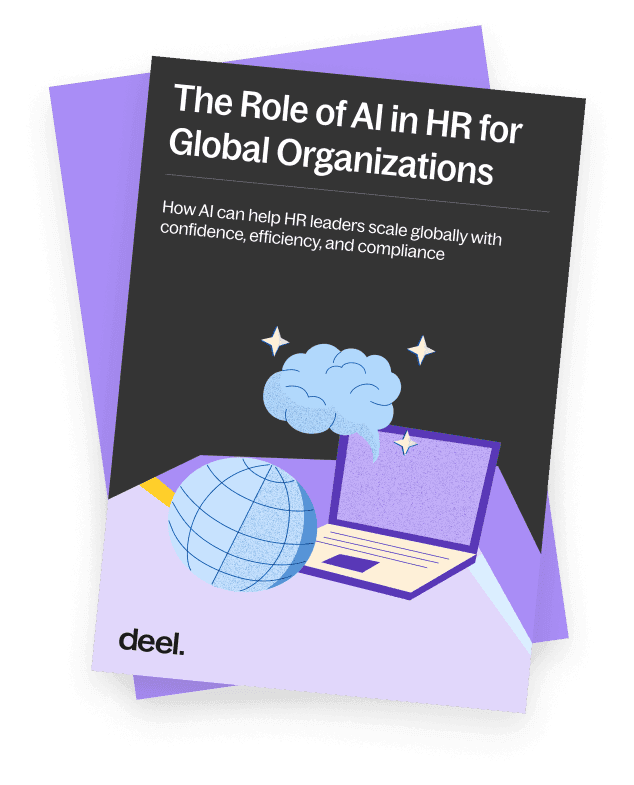
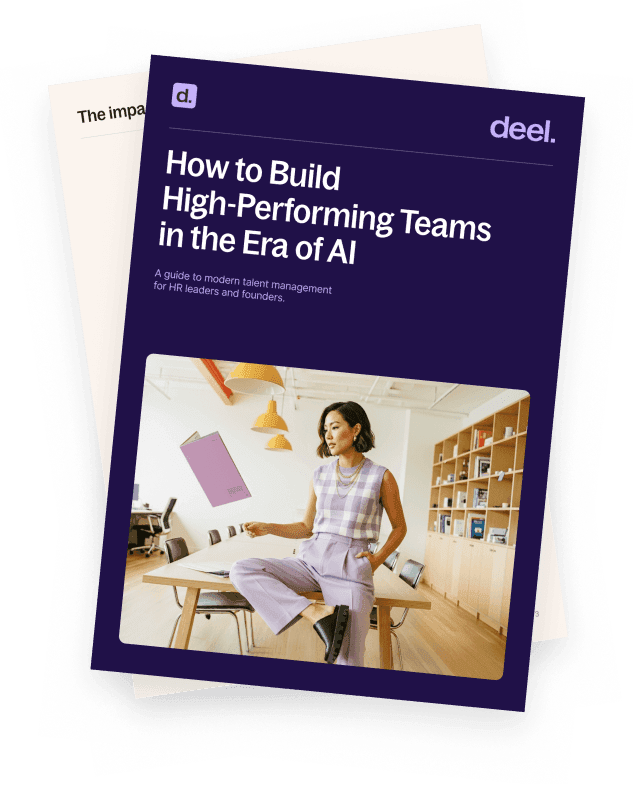
We created a guide specifically for this moment. It's called How to Build High-Performing Teams in the Era of AI, and it breaks down these myths in detail, shows you how to define performance when AI is part of your workflow, and gives you a concrete framework for building talent management that actually works.
The guide covers three critical areas: how AI changes performance expectations, what the real leverage points are (spoiler: it's the management layer), and how to consolidate your systems so AI can actually help instead of confuse.
Deel HR
How to Build High-Performing Teams in the Era of AI
How to actually get this right
Once you accept that the myths are myths, the path forward becomes clearer.
First, define what you're measuring. Not just "performance" in the abstract. Be specific. In an AI-first world, what does good performance actually look like? How much of the work is execution versus thinking? How do you evaluate someone's ability to work with AI tools? What's the difference between good output and output that was made faster because someone used AI well? Define that, and share it widely for transparency.
Second, build the management layer. This is where the real leverage is. Managers are the connection between organizational strategy and individual performance. When managers are trained to coach, to give specific feedback, to have difficult conversations clearly, and to read their team's dynamics, everything else follows. Most managers at startups and SMEs haven't been formally developed in these areas. They were promoted because they were good at their jobs, not because they were trained to lead. Building that capability through structured development programs, better 1:1 frameworks, and deliberate feedback cultures is one of the highest-leverage things an HR leader can do in an AI-powered environment.
Third, consolidate your systems. One platform means one data model. One source of truth about your people. When all your talent data lives in one place, AI can work across the full picture. It can connect performance to engagement to development to compensation. It can surface patterns that would be invisible if the data were scattered. Consolidation isn't just about efficiency. It's about enabling AI to actually work.
How Deel does it
We define performance explicitly for every role and level. What does good look like? We use Engage to centralize that definition. Performance reviews, feedback cycles, skill frameworks, and development plans all live in one place. When a manager sits down with someone, they have context. They can see the full picture of how that person is developing, what they've learned, and where the gaps are.
We invest heavily in manager development. We use Engage not just to manage performance but to develop our own leaders. Our managers get recommendations for how to coach specific people. They get insight into patterns they might miss. Development plans aren't something that happens once a year. They're live, they're connected to feedback, and they get updated as people grow.
And we've consolidated our entire people stack. HR, payroll, performance, learning, compensation, benefits. One platform. One data model. It's not perfect, but it means we can see our people as a coherent system instead of a collection of disconnected spreadsheets.
That consolidation is what makes Engage actually useful. Without it, the insights would just be noise.
How Engage supports modern performance management in an AI-first world
This is why we built Engage the way we did.
Most HR teams spend their time managing processes instead of building culture. Engage handles the administrative work that currently consumes weeks of manual effort every quarter. It generates review cycles, surveys, and course content in minutes instead of days. It automatically triggers performance actions across modules. It handles routine admin tasks like scheduling reminders and tracking cycles. It synthesizes feedback patterns so you can see what's actually happening instead of drowning in comments.
Engage also surfaces real-time insights about engagement, skill gaps, and performance drift before problems compound. It recommends the next action for every performance conversation, so managers have guidance. It transcribes and summarizes 1:1s, so conversations feed directly into performance data instead of disappearing into thin air. It identifies skill gaps and engagement patterns that would otherwise stay invisible until quarterly reviews.
Deel HR
Build high-performing teams with half the work
Ready to build high-performing teams?
Download the guide How to Build High-Performing Teams in the Era of AI to see the full framework, including detailed practices for defining performance, investing in your management layer, and consolidating your talent strategy.
Or, if you want to see how Engage actually supports this in practice, book a demo. We'll show you how one platform can consolidate your performance, learning, and development data so you can finally see your people as a coherent system instead of a collection of fragmented metrics.
Live Demo
Get a live walkthrough of the Deel platform
FAQs
How do we define performance when AI is doing part of the work?
Start by being explicit about what good looks like for each role. Ask: What's execution versus thinking? How do you evaluate someone's ability to work with AI? What's the difference between fast output and good output made faster? Write it down and share it with your team. Without this clarity, employees will keep guessing.
Does this mean we need to replace our performance management system?
Not necessarily. The problem isn't usually the tool—it's what you're measuring and how clear you are about it. That said, fragmented systems make it harder to see the full picture. If your performance data, skills data, and engagement metrics live in separate places, you're making decisions on incomplete information. Consolidation matters more than the tool itself.
How much time does it actually take to implement this?
Defining performance takes weeks, not months. Training managers takes ongoing effort—this isn't a one-time workshop. Consolidating systems depends on your current setup, but the ROI shows quickly. PostHog recovered 160 hours monthly just by moving from fragmented tools to one platform. Most organizations see impact within the first quarter.
What if we can't consolidate our systems right now?
Start with clarity. Define what performance means with AI as part of it. Invest in manager development. Those two things will improve your results regardless of your technology. When you're ready to consolidate, you'll be in a much better position to make it work because your people will understand what the data actually means.
How do we help managers interpret AI insights without overwhelming them?
The key is synthesis, not raw data. Instead of showing managers 50 data points, show them what matters. Surface real-time alerts about engagement drift or skill gaps. Give recommendations for the next action in a performance conversation. Transcribe 1:1s so the insights feed into your performance data automatically. Let managers focus on coaching, not data analysis.
Is AI performance management only for large enterprises?
No. The principles apply at any scale. Even small teams need clarity about what they're measuring. Even five-person startups benefit from consolidating their data. The execution looks different, but the framework is the same: define performance, invest in managers, consolidate systems.
How do we address employee anxiety about being "measured by AI"?
Transparency is everything. Explain what metrics you're tracking and why. Show employees how AI is being used (to help managers, not replace judgment). Give them visibility into what the data shows about them. Most anxiety comes from invisibility. When employees understand what's being measured and how it's being used, the anxiety drops significantly.
What's the biggest mistake organizations make when implementing AI performance management?
Treating it as a technology problem instead of a culture and clarity problem. They adopt a new tool expecting it to solve performance issues, but if managers haven't been trained, if performance isn't clearly defined, and if employees don't understand what they're being measured on, the tool just amplifies the confusion. Start with clarity and culture. The technology is easier.
Ellen Simmonds is a content marketing manager with a decade of experience in tech, leadership, startups, and the creative industries. A long-time remote worker, she's passionate about WFH productivity hacks and fostering company culture across globally distributed teams. She also writes and speaks on the ethical implementation of AI, advocating for transparency, fairness, and human oversight in emerging technologies to ensure innovation benefits both businesses and society.