Article
4 min read
How Deel Mobility Handles Business Visa Applications and Travel Authorization for Global Teams
Immigration
Legal & compliance
Global HR

Author
Jemima Owen-Jones
Last Update
August 28, 2026

Table of Contents
Why business visa and travel authorization management is a strategic HR problem
Understanding business visas, ETAs, and travel authorizations
Business visa vs. work permit: when business travel becomes unauthorized work
The real rule: what you do matters, not why you're going
Automatic approvals that are easy to forget: ESTA, ETA, ETIAS
Six business travel mistakes to avoid
What to look for in a business visa application service
How Deel Mobility coordinates the business visa application workflow
After approval: what happens next
How Deel compares to other visa services
Make visa management simple with Deel
Key takeaways
Managing business visas across countries requires structured eligibility checks because visa type, permitted activities, and reporting obligations vary by jurisdiction.
The most capable business visa application services support pre-trip assessment, document coordination, status tracking, and applicable compliance workflows through a coordinated service.
Deel gives HR leaders a coordinated way to manage business visa applications and travel authorizations through Deel Mobility, backed by in-house immigration specialists.
Disclaimer: This article is provided for general informational purposes and should not be treated as legal or immigration advice. Visa rules vary significantly by country and individual circumstances. Consult a qualified immigration professional for guidance specific to your situation.
Every time an employee flies overseas for a meeting or training, your HR team takes on a legal risk. You may not realize it until something goes wrong.
A wrong visa type means fines or bans. Wrong activities on a business visa mean your company breaks the law. Untracked stays create unexpected tax bills.
Most companies manage this badly. You use different travel agents, immigration consultants, and spreadsheets. This does not work once your team travels regularly.
This article explains what you need to know: the main visa types, what separates good visa services from bad ones, and how Deel Mobility helps.
Why business visa and travel authorization management is a strategic HR problem
Most HR teams do not know who should own visa compliance. Travel teams say it is too complex. Legal says it is too operational. Immigration teams say they cannot review every case.
When nothing goes wrong, no one notices. When it does go wrong, the costs are high:
An employee stays too long → They get banned from that country for years
An employee installs equipment on a business visa → Your company breaks the law in that country
A repeated stay becomes a tax issue → Your company owes money
These are not rare edge cases. They happen to many companies because the system is broken.
Deel Mobility
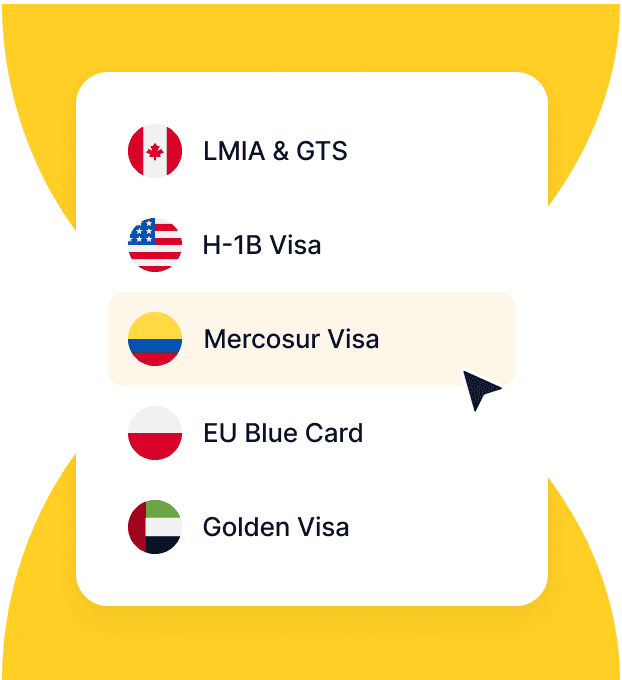
Get worldwide visas without the legwork
Understanding business visas, ETAs, and travel authorizations
Different countries need different travel documents. These differences matter for the law. They can also be overwhelming.
A global team might make ten trips across ten different countries. Ten different passports. Each trip needs different documents, different wait times, and different legal rules.
| Document type | Description | Typical use case |
|---|---|---|
| Traditional business visa | A stamped or stickered visa issued by a consulate after application review | Countries requiring full consular processing (for example, China, India for certain nationalities) |
| Electronic travel authorization (ETA) | A pre-approval linked electronically to the traveler's passport, with no physical stamp | Australia, Canada, New Zealand for eligible nationalities |
| ESTA | US-specific authorization for Visa Waiver Program travelers, valid for two years or until passport expiration | Short-term US business visits for eligible nationalities |
| ETIAS | Upcoming EU travel authorization for non-EU nationals who currently travel visa-free | Expected to apply to Schengen-area business travel for eligible nationalities |
| E-visa | Electronically issued visa, applied for online but recognized as a formal visa | Countries including Turkey, India (e-visa route), Kenya |
| Consular visa | Requires in-person appointment at the issuing country's consulate or embassy | Countries without e-visa infrastructure |
For more details about each country, read Deel's business travel visas guide.
Business visa vs. work permit: when business travel becomes unauthorized work
Your employees can do certain things on a business visa. They cannot work. Many companies miss this.
A business visa lets your employee:
Attend meetings
Talk with business partners
Go to conferences
Look at investment chances
A business visa does NOT let your employee:
Install or fix equipment for a customer
Train people hands-on
Do work for a local company
Work from that country (even remotely)
The real rule: what you do matters, not why you're going
The visa type depends on what your employee actually does, not why the company sent them. One day can require a work permit. Two weeks might not. Length does not matter.
Example: Your company sends an employee to meet a client (business meeting). But while there, they install equipment and train the team. This is work, not a business visit. They need a work permit, even though the commercial reason is legitimate.
Another example: Your company sends an employee to a two-week conference (training). But they only attend sessions and network. They do not do work. A business visa allows this, even though the trip is longer.
The challenge: This boundary can be difficult for companies to assess because permitted activities vary by jurisdiction. Employees often do not tell you accurately what they will really do. Each country applies its own rules for what counts as work. This is why you need an expert to assess the trip before your employee goes.
Automatic approvals that are easy to forget: ESTA, ETA, ETIAS
Some countries let travelers enter without a visa. Instead, you get approval online before you arrive. This is fast and easy. But it is easy to forget.
Some major systems do this:
US ESTA – Two-year approval for short US trips
UK ETA – New UK approval for short stays
Canada eTA – Online approval to enter Canada
Australia ETA – Online approval for eligible nationalities
New Zealand NZeTA – Online approval for eligible nationalities
ETIAS is coming to Europe. Deel Mobility supports electronic authorization systems for eligible nationalities. ETIAS implementation has faced repeated delays; verify the current launch timeline before planning compliance workflows. If your team travels to Europe, plan for this now. Confirm your visa service can handle ETIAS when it launches.
Why this matters: Your employees might have an ESTA from two years ago. It may have expired. They do not realize it. A good platform tracks these dates for you.
HR teams that currently manage EU business travel without any pre-authorization step should begin building ETIAS into their travel compliance workflows ahead of its implementation. An immigration platform that tracks these authorization requirements across traveler profiles helps prevent last-minute disruptions when new systems go live.
Six business travel mistakes to avoid
1. Thinking business purpose = business visa Your company sends someone for a business reason. But what they do there matters. If they install equipment or train people, they need work permission, even on a "business trip."
2. Asking employees what they will do Employees do not always tell you accurately. They say "business trip" but plan to train people on-site. You must ask in a structured way before they go.
3. Forgetting ESTA and ETA expiration dates Your employee got an ESTA two years ago. It expired. They do not realize it. Use a platform that reminds you.
4. Missing EU posting rules Some EU countries require notice when you send an employee there. You must notify even if the stay is short and your employee has a valid visa.
5. Repeated trips creating tax problems Your employee travels to the same country six times a year. After a threshold, that creates a tax issue. Track cumulative visits.
6. Not updating when plans change Your employee's trip extends. Or they accept a job offer mid-trip. What was allowed (business) becomes not allowed (work). Keep records updated.
Deel Mobility has been a game-changer for us. It has taken the complex burden of international work authorizations off our plate and enabled us to handle immigration processes efficiently and accurately. Thanks to Deel Mobility’s structured approach, we can dynamically manage our immigration needs to facilitate workforce mobility across different locations with less lengthy meetings and delays.
—Johnny Saul,
VP, People at Outrider (Computer Software)
What to look for in a business visa application service
Good visa services help you avoid problems. Bad ones add work. Here is what to look for:
1. Does it cover where your team travels? Ask if the service handles all the countries your employees visit. Do not assume global means your countries. Check smaller markets and new regions your company is entering.
2. Can they assess visas before your employee books? The best services review visa needs upfront, before travel plans are locked in. This stops the problem: your employee books a flight, then finds out they need a different visa and must rebook everything.
3. Do they collect and check documents? A good service asks for the right documents, reviews them, and tells you if anything is missing before they submit. Missing or wrong documents delay approval.
4. Are processing times clear? Can you track the case? Ask how long each visa type takes in each country. Ask if you can see the status in real time. If you cannot track it, you cannot plan.
5. Do they track expiration dates? Your employee got an ESTA two years ago. It expires next month. A good service reminds you. A bad one does not.
6. Do they handle work notification requirements? Many countries require advance notice when you send an employee for work, even briefly. Ask if the service handles these requirements for your destination countries.
7. Does it connect to your HR system? If the visa service is separate from your HRIS and payroll, you enter the same data twice. Ask if they integrate with your existing systems.
8. Who is accountable if something goes wrong? When you use outside firms, who talks to them? The visa service, or you? It matters. You want one person in charge.
Deel Mobility
Manage global employee visas effortlessly
How Deel Mobility coordinates the business visa application workflow
Deel Mobility reduces the work your HR team has to do. We coordinate each step of the visa process, from checking if you need a visa to tracking approval.
Here is how it works:
1. You submit a request
You or your employee tells us where you're going, when, why, and what passport you have. You can submit this information in a free consultation with an immigration specialist, or use our free AI chat.
2. We assess what visa you need
Our team reviews your information—nationality, residence, destination, trip purpose, and travel dates—to determine the right document type.
We check if your planned activities are allowed on a business visa and flag any problems (for example: work permission needed, not a business visa).
We follow up within 24 to 48 hours if we need more information. This stops you from booking a flight only to find out you need work permission instead. We also tell you how long approval takes and what it costs, so you can plan around real timelines, not guesses.
3. We ask for documents
We tell you what documents we need: passport copy, employment letter, invitation letter. The platform reminds you of what to send.
4. We review and prepare
Our specialists check your documents. If anything is missing, we ask for it. We prepare everything for submission.
5. We submit and track
We submit or support submission We submit your application, or we support you if you submit it. You see the status in real time.
6. We confirm approval
We tell you when your visa is approved or denied. If denied, we explain next steps.
We use our own team and licensed experts
Deel employs in-house immigration specialists. For complex cases, we also work with licensed external experts.
This means one person at Deel stays in charge of your case, even if external experts are involved. You do not have to manage multiple firms.
For cases where your activity is unclear—maybe it's between business and work—we can use our internal team for the first review, then bring in legal experts if needed.
Deel Mobility
Check business visa eligibility in seconds
After approval: what happens next
Your visa is approved. But the work does not stop.
We track when your visa expires. If your travel plans change, we tell you what that means for your visa. If your activity changes mid-trip, we flag that.
Tax issues from repeat travel
If your team travels to the same country repeatedly for work, your company may create a tax problem. This is called a "permanent establishment" issue. If your employees repeatedly work in one country and create value for your company, that country may say your company owes taxes there.
We can help you track this risk and share information with your tax team. But you need independent tax advice to decide if this applies to your company.
EU social security and posting rules
Two EU compliance issues matter:
A1 Certificates confirm your employee stays on your home country's social security during work trips. Some EU posts require these.
Posting rules require advance notice to some EU countries when you send an employee there, even briefly.
We can support both, depending on the country and your employment structure. Ask us what applies to your situation.
How Deel compares to other visa services
| Service | How it works | Can you track it? | Countries covered | What's different |
|---|---|---|---|---|
| Deel Mobility | Our team + licensed experts in one place | Yes, in the Deel platform | 150+ countries | Connects to your hiring and payroll |
| Envoy Global | Technology platform with service partners | Yes, dashboards for employer and employee | Global | Analytics tools |
| Fragomen / Nomadic | Law firm network | Portal (varies) | Global law firm network | Deep legal expertise for complex cases |
| Newland Chase | Managed service | Case tracking portal | Strong in Europe | Specialist focus |
Why Deel Mobility wins
Deel Mobility is trusted by companies worldwide to hire, relocate, and retain talent without immigration bottlenecks — backed by scale, expertise, technology, and proven results.
Global reach at scale: immigration support in 75+ countries, including the U.S., Canada, and UAE, covering 200+ work permit types including business visas
Real expertise, not outsourcing: 40+ in-house immigration specialists fluent in 26 languages, each client gets a dedicated case manager for localized, tailored guidance
One platform, total visibility: a unified dashboard manages every work permit, tracks applications, initiates cases instantly, and runs pre-contract assessments with instant document review
An employee experience that builds loyalty: real-time case tracking, status updates, business visa letter requests, and access to relocation, banking, and local insurance support — all in one place.
Proven with the hardest cases: >90% approval rate on H-1B, O-1, and Green Card applications.
Make visa management simple with Deel
Good visa management means treating each trip as a compliance decision: What document? What activities? What monitoring? What if things change?
Deel Mobility helps you:
Assess what visa you need
Collect and review documents
Track approvals and expiration dates
Support compliance after approval
If you manage visas ad-hoc now, Deel is a better way. Book a free consultation below.
Deel Mobility
Get your immigration and mobility questions answered

FAQs
What is a business visa application service?
Business visa application services may support eligibility assessment, document collection, submission coordination, and case tracking. Exact responsibilities vary by provider and jurisdiction.
How long does it take to get a business visa?
Processing times vary significantly by country, document type, and applicant profile. Electronic travel authorizations are generally faster than traditional consular visas, though approval should not be assumed to be immediate. Where available, Deel provides estimated processing timelines and cost information as part of the eligibility workflow.
What is the difference between a business visa and a work permit?
A business visa permits specific business-visitor activities such as meetings, conferences, and commercial negotiations, without authorizing productive work in the host country. A work permit is required when an employee will perform hands-on work, provide services to local clients, or engage in activities that constitute employment in the destination country.
Can Deel handle business travel authorizations like ESTA or UK ETA?
Yes. Deel supports ESTA, UK ETA, Canada eTA, Australia ETA, and New Zealand NZeTA through Deel Mobility, alongside traditional business visa and e-visa applications.
What countries does Deel Immigration cover for business visas?
Deel operates in more than 150 countries globally. Business-visa and authorization support varies by destination, traveler nationality, authorization type, and local service availability. Confirm coverage for each specific travel corridor.
Jemima is a nomadic writer, journalist, and digital marketer with a decade of experience crafting compelling B2B content for a global audience. She is a strong advocate for equal opportunities and is dedicated to shaping the future of work. At Deel, she specializes in thought-leadership content covering global mobility, cross-border compliance, and workplace culture topics.