Article
7 min read
Employment Law in Poland for Employers (2026)
Employer of record
Global hiring
Legal & compliance

Author
Jemima Owen-Jones
Last Update
October 15, 2026
Table of Contents
Poland employment law: what every employer must know
Payroll, tax, and employer costs explained
Statutory benefits and leave entitlements
Hiring without a Polish entity: how an Employer of Record works
Step-by-step guide to hiring an employee in Poland
Hiring internationally into Poland: visas and right to work
Termination, redundancy, and offboarding
Hire in Poland with Deel
Key takeaways
Poland’s Labour Code sets firm rules on pay, leave, and notice. Pre-employment medical exams must be completed at least one day before the start date. Eligible employees are enrolled in PPK after 90 days.
Hiring through an EOR can build continuous compliance into the process. The EOR can help with PPK enrolment and monthly payroll filings, and track Labour Code changes.
Deel's EOR stands apart in three ways. It operates its own Polish entity, runs its own in-house payroll engine, and is supported by 2,000+ in-house experts. Deel ranks #1 on G2 for Employer of Record, and its compliance tools cover 150+ countries, so your company can manage compliance through one platform.
Poland has become one of Europe's most attractive expansion markets for mid-market companies. A workforce of nearly 17 million people, a strong STEM and services talent base, competitive labor costs relative to Western Europe, and deep integration into EU regulatory frameworks make it a compelling destination for companies building teams across the region.
Poland consistently ranks among the top five EMEA markets for foreign direct investment in professional services and technology.
But the same EU alignment that makes Poland attractive also means a dense compliance environment. The Polish Labour Code is worker-protective and precise: employment contracts must meet mandatory content requirements, social-insurance registrations carry a hard seven-day deadline, pre-employment medical exams are legally required before the first day of work, and the penalty for misclassifying a worker as a contractor when they qualify as an employee can reach back years in unpaid ZUS contributions, PIT arrears, and statutory leave obligations.
For companies without a Polish entity, the fastest route to compliant employment is an Employer of Record (EOR). For companies with a long-term presence in mind, understanding the full framework matters just as much: every employer in Poland, regardless of structure, must comply with the same payroll, statutory benefits, and termination rules.
This guide explains Polish employment law for employers. It covers the rules that apply once you employ someone in Poland.
The guide covers:
Polish employment law basics, employee status, and pay transparency reform
Payroll, tax, and ZUS contributions
Statutory benefits and leave
How an Employer of Record works in Poland
A seven-step hiring checklist
Visa routes for non-EU hires
Termination, notice periods, and offboarding
To learn more about how an EOR can help, read hire and pay employees in Poland.
Poland employment law: what every employer must know
Poland's employment framework is grounded in the Labour Code (Kodeks pracy), the primary legislation that governs every aspect of employment from contract formation through to termination. The Labour Code sets the floor on wages, working time, leave entitlements, anti-discrimination rules, and dismissal rights, and it's mandatory.
Any contractual clause that gives an employee less than the Labour Code provides is automatically void and replaced by the statutory entitlement, regardless of what both parties agreed. Understanding this framework before you hire is essential, not optional.
Employment status: employee, civil-law contractor, or B2B
Polish law distinguishes between three primary working arrangements, and the legal consequences of each differ substantially. The key is that Polish authorities and courts determine status based on the substance of the arrangement, not what the contract says.
The table below summarizes the three main categories:
| Category | Definition | Key rights |
|---|---|---|
| Employee (pracownik) | Works under a contract of employment (umowa o pracę); fully protected by the Labour Code | Minimum wage, statutory leave, notice periods, ZUS enrollment, PPK |
| Civil-law contractor | Works under a mandate contract (umowa zlecenia) or task contract (umowa o dzieło) | Limited Labour Code protections; ZUS contributions apply to mandate contracts |
| Self-employed B2B | Operates own business and provides services under a commercial contract | No Labour Code protections; but reclassification risk applies when the arrangement resembles employment |
The practical distinction between a B2B arrangement and employment isn't just about the contract label. Polish law looks at whether the worker is economically dependent on a single client, receives directed hours and instructions, uses the client's equipment, and works as an integrated part of the client's organization.
When those conditions are present, the arrangement can be reclassified to employment regardless of the contract's language.
Minimum wage
Poland's statutory minimum wage applies to all employees, in every sector, regardless of employer size or region. From 1 January 2026, the gross minimum wage is PLN 4,806 per month. Poland has increased the minimum wage consistently in recent years, roughly doubling it in real terms over the past decade, and employers should budget for annual adjustments.
Any contractual wage below the minimum is automatically replaced by the statutory rate. The employer cannot offset the difference against other payments unless specific conditions apply.
Working time rules
Standard working time in Poland is 40 hours per week, calculated as eight hours per day over five working days, measured across a reference period of up to four months. The Labour Code gives employers flexibility in organizing how those hours are distributed (for example, a compressed workweek or an averaging scheme) provided the weekly average stays within the statutory limit over the reference period.
Overtime is permitted but controlled:
The statutory annual overtime limit is 150 additional hours per calendar year
Collective agreements or individual contracts can extend this limit to a maximum of 416 hours per year
Overtime on top of the standard 40-hour week attracts a premium: 50% for overtime on regular working days, 100% for overtime on Sundays, public holidays, and, for some workers, nights
Employees are entitled to a minimum of 11 consecutive hours of daily rest and 35 consecutive hours of uninterrupted weekly rest. Night shift workers (those who work at least three hours between 11 pm and 6 am as a regular part of their schedule) are entitled to additional protections, including health surveillance and, in some cases, an additional night-work allowance.
Statutory holiday entitlement
Annual leave entitlement is tied to total qualifying work seniority, which includes not just the current employer but recognized prior employment periods and, in some cases, educational period credits. The result is that an employee's leave entitlement can be higher than their tenure with you alone suggests:
20 days per year for employees with fewer than 10 years of total qualifying seniority
26 days per year for employees with 10 or more years of total qualifying seniority
Leave accrues through the year. Employees are legally entitled to take at least 14 consecutive days of their annual leave entitlement in one block. Unused leave from the current year must be taken no later than 30 September of the following year. If the employer fails to grant leave by that date, they face potential claims under the Labour Code. Leave cannot be replaced by a cash payment while the employment relationship continues.
Poland also recognizes 13 statutory public holidays per year on which employees are not required to work.
Right to work and GDPR
For EU/EEA nationals, the right to work in Poland is automatic under EU free movement. No work permit is required, though employers should verify identity via a valid passport or national ID card and retain a copy in the personnel file. For non-EU nationals, valid work authorization must be verified before employment begins. Employing an unauthorized foreign national can result in substantial fines.
On data protection: Poland operates under the EU General Data Protection Regulation (GDPR). Every employment-related data-processing activity, from payroll records to personnel files and health surveillance records, requires a documented lawful basis, a clear retention schedule, and secure handling from the moment the employment relationship begins.
Employees must receive a data-subject information clause (klauzula informacyjna) at or before the start of employment, setting out what data is processed, why, for how long, and what their rights are.
Anti-discrimination and equal-treatment rules
The Labour Code prohibits discrimination in employment based on sex, age, disability, race, religion, nationality, political opinion, trade union membership, ethnicity, religion, sexual orientation, and employment type (fixed-term or part-time).
Discriminatory treatment in hiring, pay, promotion, training, or termination gives the affected employee the right to claim compensation of at least the minimum wage, with no upper cap. Employment contracts, internal policies, and job advertisements must be gender-neutral, and any pay differential for the same or equivalent work must be justifiable on objective, non-discriminatory grounds.
Works councils and trade unions
Companies employing 50 or more people in Poland are required to establish a European Works Council if they meet the multinational threshold under the EU directive.
Separately, Polish employees have the right to organize trade unions, and in companies with active union representation, certain decisions, including collective redundancies, internal pay regulations, and working-time agreements, require either negotiation with the union or formal consultation before implementation. Where no trade union exists, employee representatives elected by the workforce fulfil the consultation role for matters requiring employee input.
2026 pay transparency reform
Poland is in the process of transposing the EU Pay Transparency Directive 2023/970/EU into national law. The EU's transposition deadline was 7 June 2026. Poland adopted a phased approach:
Phase 1 (in force December 2025): recruitment-related obligations (mandatory salary disclosure to job applicants before interviews, a ban on salary history inquiries, and requirements for gender-neutral job descriptions) took effect in December 2025.
Phase 2 (expected ~January 2027): full implementation of the remaining obligations, including pay-gap reporting between male and female employees, pay-equity review requirements, and enforcement mechanisms. The Polish legislature has not yet finalized this phase. Implementation is expected in early 2027 with an additional transitional period for employers.
Companies building HR infrastructure in Poland now should begin collecting the internal pay data (by role, by gender, by grade) that these reporting requirements will eventually demand. It is easier to establish pay-equity data collection and reporting processes before the workforce grows than to build them from scratch later.
Poland minimum wage 2026
The gross minimum wage is PLN 4,806 per month from 1 January 2026. Any contract setting a lower rate is automatically void. Poland has raised the minimum wage consistently, roughly doubling it in real terms over the past decade.
Global Hiring Tools
Make Smart Hiring Decisions With Global Insights
Payroll, tax, and employer costs explained
Polish payroll compliance covers three interconnected requirements: income-tax withholding (PIT), social-insurance contributions to ZUS, and mandatory pension enrollment under PPK. Each has its own rates, calculation bases, filing deadlines, and penalties for non-compliance.
The Polish income tax system (PIT)
Poland's personal income tax system (podatek dochodowy od osób fizycznych, or PIT) is a two-rate progressive system. Employers withhold tax on behalf of employees each month through the Płatnik reporting system and remit it to the relevant tax authority (urząd skarbowy) via podatki.gov.pl. The system includes a tax-free allowance (kwota wolna od podatku) of PLN 30,000, meaning the effective rate on incomes up to PLN 30,000 per year is zero.
The following table shows how PIT applies across annual gross income:
| Annual gross income (PLN) | Tax rate | Notes |
|---|---|---|
| Up to 30,000 | 0% | Tax-free allowance (kwota wolna) |
| 30,001 – 120,000 | 12% | On income above the tax-free allowance |
| Above 120,000 | 32% | On income exceeding PLN 120,000 only |
| Above 1,000,000 | +4% solidarity tribute | On income exceeding PLN 1 million |
The PLN 30,000 tax-free allowance reduces each employee's annual tax liability by PLN 3,600. Employers take this into account when calculating monthly PIT advance payments. Employees typically provide a PIT-2 declaration instructing the employer to apply the tax-free deduction in monthly withholding rather than receiving it entirely as a refund at year-end.
The annual reporting cycle requires employers to provide each employee with a PIT-11 income information slip by the end of February following the tax year. Employees use this to file their own annual PIT declaration.
Employer ZUS contributions
All employers pay social-insurance contributions to ZUS (Zakład Ubezpieczeń Społecznych), Poland's state social security authority, on top of each employee's gross salary. The total employer burden depends on the industry-specific accident insurance rate, but typically falls in the range of 19.21%–22.41% of gross salary. The breakdown by contribution component is:
Pension insurance (ubezpieczenie emerytalne): 9.76%, shared equally between employer and employee (both pay 9.76%)
Disability insurance (ubezpieczenie rentowe): 6.50% employer contribution and 1.5% employee contribution
Accident insurance (ubezpieczenie wypadkowe): 0.67%–3.33% depending on industry classification (office-based roles typically attract 1.67%)
Labour Fund (Fundusz Pracy): 2.45% employer-only contribution
Employee Guaranteed Benefits Fund (FGŚP): 0.10% employer-only contribution (funds employee wage guarantees in employer insolvency)
Note that employees also contribute to ZUS: pension (9.76%), disability (1.5%), sickness insurance (2.45%), and health insurance (9% of calculation basis after ZUS deductions). These employee contributions are withheld by the employer from gross salary before net pay is calculated.
For a full component-by-component breakdown and example calculations at different salary levels, see our dedicated guide to employer costs for an employee in Poland.
Employer cost example
To make the on-cost burden concrete, the table below shows approximate total employer cost for an employee earning PLN 10,000 gross per month, using an accident insurance rate of 1.67%:
| Cost element | Monthly (PLN) |
|---|---|
| Gross salary | 10,000 |
| Pension insurance (9.76%) | 976 |
| Disability insurance (6.50%) | 650 |
| Accident insurance (1.67%) | 167 |
| Labour Fund (2.45%) | 245 |
| FGŚP (0.10%) | 10 |
| Total employer ZUS cost | 2,048 |
| Total employer cost | ~12,048 |
This example doesn't include the mandatory PPK employer contribution (an additional minimum 1.5% of gross salary), optional benefit top-ups, or the time cost of compliance administration. In practice, total employment on-costs in Poland, including PPK, typically run to 21–24% above gross salary.
PPK: mandatory occupational pension scheme
Pracownicze Plany Kapitałowe (PPK) is Poland's mandatory occupational pension scheme, introduced in 2019 and now covering employers of all sizes. Eligible employees are those under 55 who have completed 90 days of employment with the current employer. They're automatically enrolled unless they submit an opt-out declaration.
The contribution structure is:
Employee (default): 2% of the ZUS calculation basis (gross salary). Employees can voluntarily contribute an additional 2%.
Employer (mandatory): 1.5% of the ZUS calculation basis. Employers can voluntarily contribute an additional 2.5%.
The government also contributes a welcome bonus of PLN 250 upon enrollment and an annual bonus of PLN 240 for each year the employee stays enrolled.
Employees may opt out at any time after enrollment by submitting a written declaration. Critically, opt-out declarations don't carry forward indefinitely: every four years, employees who opted out are automatically re-enrolled, and must submit a new opt-out declaration if they want to exit again. Employees aged 55 and over must actively apply to join PPK. The automatic enrollment default applies only to those under 55.
Failing to enroll eligible employees, missing contribution deadlines, or failing to process opt-out declarations correctly can trigger fines from the Polish Financial Supervision Authority (Komisja Nadzoru Finansowego, KNF).
Employee ZUS contributions
While the employer-side ZUS obligations are the main concern for headcount budgeting, it's useful to understand what employees contribute: both because the gross-to-net calculation affects how employees perceive their compensation, and because employers are responsible for withholding these amounts before paying net salary.
Employee contributions are deducted from gross salary and remitted by the employer to ZUS together with the employer's own contributions:
Pension insurance (emerytalne): 9.76% of gross salary
Disability insurance (rentowe): 1.5% of gross salary
Sickness insurance (chorobowe): 2.45% of gross salary
Health insurance (zdrowotna): 9% of the calculation basis after ZUS deductions
The health insurance contribution is remitted directly to the National Health Fund (NFZ) rather than ZUS, but the employer handles both remittances. The combined employee deductions mean that an employee earning PLN 10,000 gross will take home approximately PLN 7,000–7,200 net, depending on tax credit applications.
Payroll and ZUS filing deadlines
Payroll compliance in Poland involves four recurring filing obligations every month:
ZUS declarations (DRA/RCA): monthly summary and individual contribution declarations, due by the 15th of the following month for most employers, filed through the ZUS e-Płatnik online system
ZUS contribution payment: payment of all employer and employee contributions, also due by the 15th of the following month
PIT monthly advance payment (zaliczka na PIT): monthly income tax prepayment, due by the 20th of the following month, remitted to the relevant tax office via podatki.gov.pl
Annual PIT-11 filing: employers must provide each employee with their PIT-11 income information slip by the end of February following the tax year
Poland employer cost at a glance
For a PLN 10,000 gross monthly salary, total employer cost runs to approximately PLN 12,048 before PPK pension contributions.
ZUS employer contributions: 19.21u201322.41% of gross salary
PPK employer contribution: minimum 1.5% of gross salary
Total on-cost: typically 21u201324% above gross salary
For a full component-by-component breakdown, see our employer costs guide for Poland.
Global Hiring Toolkit
Employee Cost Calculator

Statutory benefits and leave entitlements
Poland's statutory benefits floor is extensive: these entitlements apply to every employee from day one, with no minimum tenure condition and no contractual workaround. Employers cannot reduce these entitlements, and the Labour Code's hierarchy makes any attempt to do so legally void. Here's what every employer must provide:
Annual leave
Employees receive between 20 and 26 days of paid annual leave per year depending on their total qualifying seniority, including recognized prior employment periods and, in some cases, educational credits. The entitlement is not conditional on how long the employee has worked for the current employer specifically.
Leave cannot be replaced by a cash payment while employment is active. It accrues through the calendar year, and any unused leave must be granted no later than 30 September of the following year.
Failure to ensure leave is taken within this window creates potential liability for the employer. Employees are entitled to take at least 14 consecutive days of their annual leave in a single block. The remainder can be taken in smaller installments.
Sick leave
Poland's sick leave system involves a cost-sharing mechanism between the employer and ZUS that depends on the employee's age:
Employees under 50: the employer funds sick pay for the first 33 days in a calendar year at 80% of the employee's standard calculated salary basis (100% in cases of pregnancy-related illness, workplace accident, or occupational disease). From day 34, ZUS pays a direct sickness benefit (zasiłek chorobowy) to the employee.
Employees aged 50 and over: the employer-funded period drops to 14 days per calendar year, with ZUS taking over from day 15. This shorter period applies starting from the calendar year following the year in which the employee turns 50.
These thresholds reset every calendar year, so an employee who was sick for 20 employer-funded days in November will re-enter a fresh 33-day (or 14-day) employer-funded window on 1 January of the following year.
Maternity, paternity, and parental leave
Poland's leave system for new parents is one of the more comprehensive in the EU. Both parents have distinct, partly non-transferable entitlements, and parental leave can be split flexibly between them.
The following table summarizes the key entitlements:
| Leave type | Entitlement | Statutory pay rate |
|---|---|---|
| Maternity leave (urlop macierzyński) | 20 weeks (singleton birth); 31 weeks (twins); up to 37 weeks (higher-order multiples) | 100% of average salary basis |
| Paternity leave (urlop ojcowski) | 2 weeks; must be taken before the child's second birthday | 100% of average salary basis |
| Parental leave (urlop rodzicielski) | 41 weeks (singleton) to 43 weeks (multiples); shared between parents | 70% of average salary basis (or 81.5% where the higher rate was taken during maternity leave) |
A non-transferable portion of parental leave is reserved for each parent. Neither parent can transfer their reserved block to the other. This structure is designed to encourage fathers to take leave independently, rather than the full entitlement going to one parent.
Adoption leave follows a similar structure to maternity leave, with entitlements tied to the child's age and the number of children adopted simultaneously.
Additional leave and time-off entitlements
Beyond the core annual leave and parental entitlements, Polish law provides several other statutory time-off categories that employers must administer:
Bereavement leave (urlop okolicznościowy): two days for the death of a spouse, parent, child, stepparent, or stepchild, and one day for the death of a sibling, grandparent, parent-in-law, or other close relative. This is paid leave and doesn't reduce the employee's annual leave balance.
Leave for personal events: two days for the employee's own wedding or the birth of their child (separate from paternity leave), and one day for the wedding of the employee's child.
Blood donation leave: employees who are registered voluntary blood donors are entitled to paid time off to donate.
Force majeure leave (urlop z powodu siły wyższej): two days or 16 hours per calendar year for urgent family matters caused by illness or accident, introduced under the 2023 amendments implementing the EU Work-Life Balance Directive. The employer pays 50% of normal remuneration for this leave.
Unpaid childcare leave (urlop wychowawczy): up to 36 months of unpaid leave for parents of children under eight, of which a mandatory minimum of one month must be taken by each parent separately. The employee has a right to return to the same or equivalent position at the same remuneration level.
PPK occupational pension
In addition to the ZUS statutory pension contributions described in the payroll section, employers must enroll eligible employees into PPK and make the mandatory 1.5% employer contribution each month. This is not optional: it's a mandatory component of the employment cost structure, and missing contributions can result in KNF fines. The PPK obligation applies to employers of all sizes.
Health and safety (BHP) obligations
Polish health-and-safety law (Bezpieczeństwo i Higiena Pracy, known as BHP) imposes specific pre-employment requirements that must be met before every new hire begins work, regardless of the role:
Pre-employment medical examination (badania wstępne): every new employee must complete a medical exam at an approved occupational health clinic (medycyna pracy provider), typically at least one day before their start date. The employer arranges and pays for the exam. The exam generates a medical clearance document confirming no health contraindications for the specific role. This document must be retained in the personnel file. Without a valid medical clearance, the employee legally cannot begin work.
Initial occupational health and safety training (szkolenie BHP): general OHS training covering workplace hazards, emergency procedures, first aid locations, and the employee's statutory rights and duties must be completed before the employee starts their duties. For desk-based roles, this is typically delivered as a short online module. For roles with physical or chemical hazards, in-person instruction with a qualified BHP officer is required.
Personnel file (akta osobowe): employers must open and maintain a personnel file for each employee from the start of employment. The file is divided into four standard sections covering pre-employment documentation, the employment relationship, pay and benefits data, and records related to the termination. Since 2019, electronic akta osobowe are fully legally valid. The employer doesn't need to maintain paper copies provided the electronic system meets the security and access standards set by the relevant regulation.
Key statutory leave entitlements
-
Annual leave: 20 days (under 10 years qualifying seniority) or 26 days (10+ years)
-
Sick leave: employer-funded for 33 days (employees under 50) or 14 days (aged 50+)
-
Maternity leave: 20 weeks at 100% salary
-
Paternity leave: 2 weeks at 100% salary
-
Force majeure leave: 2 days/16 hours per year (50% pay)
Global Hiring Toolkit
Global Benefits Tool

Hiring without a Polish entity: how an Employer of Record works
Hiring employees in Poland requires a Polish legal employer. Without a legal entity registered in Poland, you have no direct path to employment: you need either to establish an entity yourself (which takes three to six months and carries ongoing operational costs) or to partner with an EOR that already has a Polish entity established.
For most companies exploring the Polish market or building a small team there, the EOR path is faster, cheaper in year one, and carries fewer ongoing administrative obligations.
An EOR acts as the legal employer of your Polish workers. The employment contract is between the EOR's Polish entity and your employee, fully subject to the Labour Code, while you retain operational control: you manage the worker's daily tasks, set their objectives, make hiring and performance decisions, and determine their compensation package.
The EOR manages core legal-employer obligations, including ZUS registration, payroll processing, PIT withholding, leave administration, BHP compliance, PPK enrollment, and offboarding, with the client company providing the decisions and information those processes require.
How the EOR model divides responsibility
The practical split between your company and the EOR covers every stage of the employment lifecycle. The following table shows what each party manages:
| You retain | EOR takes |
|---|---|
| Role definition, tasks, and deliverables | Employment contract executed through the EOR's Polish entity |
| Day-to-day management and performance oversight | ZUS registration within 7 calendar days of start date |
| Compensation and benefits strategy | Monthly payroll processing and PIT withholding |
| Hiring decisions, promotion, and termination initiation | ZUS declaration filing and contribution remittance |
| Access to company tools, systems, and information | Mandatory leave tracking and administration |
| Commercial and business direction | BHP compliance (medical exams and OHS training), PPK enrollment and contributions, personnel file creation and maintenance, annual PIT-11 preparation |
For a detailed explanation of how Deel structures the EOR relationship for Poland specifically, including how the employment contract is drafted, what obligations the Polish entity carries, and how you interact with your worker day-to-day, see our dedicated guide to Employer of Record for Poland.
Misclassification risk in Poland
Polish labour law's approach to employment-status determination is substance-based, not form-based. The Labour Code defines an employment relationship by its characteristics. The worker performs a specified type of work, under the employer's direction, at a place and time set by the employer, for remuneration. When a B2B or civil-law arrangement has all of these features, courts and ZUS can reclassify it as employment regardless of what the contract says.
ZUS audits targeting contractor arrangements have increased in frequency, particularly in technology, professional services, and financial services: sectors where high-value contractors working integrated ongoing roles for a single client are common. A reclassification finding exposes the company to:
Back payment of all employer ZUS contributions for the full reclassified period
PIT arrears and penalties
Statutory annual leave and sick leave backpay
PPK contributions for the same period
Potential employment-status claims from the worker (including notice pay and severance where applicable)
The total exposure from a reclassification event can reach several years of back-payments. Companies with contractors performing ongoing, directed, integrated work should audit those arrangements against the Labour Code's employment-relationship indicators. Our guide to Poland B2B contractor reclassification and EOR conversion covers the specific risk indicators and the conversion path in detail.
EOR vs. owning a Polish entity
Both approaches are legitimate. The right choice depends on your timeline, headcount expectations, and long-term market strategy. The table below compares the key factors:
| Category | EOR through Deel | Own Polish entity |
|---|---|---|
| Time to hire | Days to weeks from initial engagement | 3–6+ months for entity registration, banking, and tax setup |
| Year-one cost | Fixed per-employee EOR fee; no entity setup or registration cost | Legal, notarial, accounting, and banking costs to establish and operate the entity |
| Compliance responsibility | EOR manages all Labour Code, ZUS, PIT, BHP, and PPK obligations | Full statutory compliance responsibility sits with your company |
| Scalability | Easy to scale up or wind down without fixed infrastructure costs | Entity operational costs persist regardless of headcount |
| Employment protections | Employees are under Labour Code through Deel's Polish entity | Employees are under Labour Code through your own entity |
| Headcount threshold | Suited to companies testing the market or with no entity plans yet | Better suited for companies with sustained long-term headcount and entity plans |
| Best for | Market testing; a small Poland team; no long-term entity plans | Committed long-term Poland presence; full local operational control |
For a broader framework on when EOR makes strategic sense versus when building your own entity becomes the better long-term investment as your Poland headcount grows, see our guide on EOR vs. owned entity.
When to reassess EOR vs. an owned entity
EOR and an owned entity serve different operating needs. Companies can use EOR to hire in Poland without establishing a local entity, then reassess the model as headcount and long-term plans evolve. When the time comes to establish a Polish entity, comparing EOR fees with the legal, accounting, tax, and administrative costs of running an owned entity gives a clearer picture of where the economics shift for your specific situation.
Planning a transition from EOR to an owned entity a few months ahead allows time to compare operating models and coordinate any employee transition carefully.
What makes Deel's Poland EOR different
Deel employs workers in Poland through a Deel entity incorporated in the country. Employment contracts run between that Polish entity and each employee, subject to the Labour Code directly, not routed through a cross-border or intermediary structure. For employees, this means their statutory protections are grounded in Polish law from day one.
When a company hires through Deel, the legal employer relationship is straightforward and compliant, with Deel managing the applicable payroll, tax-withholding, benefits-administration, and onboarding obligations within the EOR service.
Deel Hire
Hire employees globally with the #1 Employer of Record
Step-by-step guide to hiring an employee in Poland
Hiring a Polish employee moves through several distinct stages: model selection, right-to-work verification, contract drafting, registration, benefits setup, onboarding, and ongoing compliance. The seven steps below cover the full lifecycle in the order you'll need to execute them.
Step 1: Choose your hiring model
Your first decision determines your legal structure, your timeline to hire, and every ongoing obligation that follows. Three main paths exist for engaging a worker in Poland:
EOR: the fastest compliant route for companies without a Polish entity. An EOR becomes the legal employer, manages all Labour Code obligations, and lets you direct the worker's role and performance without building local infrastructure. Best for companies with fewer than 10–15 employees in Poland or with no long-term entity plans.
Own Polish entity (spółka z o.o.): gives full operational and structural control but requires entity registration at the National Court Register (KRS), VAT registration, a local bank account, and your own ZUS and tax registrations. The process takes three to six months. Best for companies with a committed, long-term Poland presence and sufficient headcount to absorb the entity overhead.
B2B contractor engagement: the most flexible arrangement, but carries real reclassification risk for ongoing, directed roles. The flexibility is genuine: you're not bound by the Labour Code's notice periods, leave entitlements, or ZUS obligations. But when a contractor's working arrangement starts resembling employment in substance, ZUS and labour inspectors can impose all of those obligations retroactively. Our guide on Poland B2B contractor reclassification covers the specific factors that create risk and what a reclassification event typically costs.
Step 2: Verify right to work
Right-to-work requirements depend entirely on the worker's nationality. Verification must happen before the first day of employment, not after.
For EU/EEA and Swiss nationals, the right to work in Poland is automatic under free movement. Verify identity using a valid EU/EEA passport or national ID card. No work permit is required. Retain a copy of the identity document in the personnel file.
For non-EU nationals, valid work authorization must be confirmed before employment begins. The most common authorization types are: a Type A work permit sponsored by the Polish employer, an EU Blue Card for highly-skilled professionals, a residence permit with work authorization, or a notification-based right to work for Ukrainian nationals under temporary protection.
Employing a worker without valid authorization, or whose authorization has lapsed, can result in fines of up to PLN 30,000 per unauthorized worker and may trigger immigration enforcement action.
Step 3: Draft and issue a compliant employment contract
A written employment contract must be provided no later than the first day of work. The contract must be in Polish (or bilingual Polish/English, with the Polish version governing in any conflict). Polish law, under Art. 29 of the Labour Code, requires the contract to specify:
Contract type: indefinite, fixed-term, or probationary
Job title and description of duties
Place of work, including any remote-work arrangements
Start date
Remuneration and its components
Working hours and schedule
Since the 2023 Labour Code amendments implementing the EU Work-Life Balance Directive, probationary periods are now proportional to the intended follow-on contract:
1 month if the subsequent contract will last fewer than 6 months
2 months if the subsequent contract will be between 6 and 12 months
3 months if the subsequent contract is expected to last 12 months or longer
The previous uniform three-month maximum has been replaced by this proportionality rule. Employers must now specify, in the probationary contract, what type of fixed-term or indefinite contract will follow. The probation length is tied to that stated intention.
E-signatures are legally valid for employment contracts in Poland, enabling fully digital onboarding for remote or internationally-managed hires without requiring wet-ink documents.
Step 4: Register with the local tax and payroll authority
Three registrations must happen at or before the employment relationship begins, some with statutory deadlines attached.
ZUS employee registration is the most time-critical. You must register each new employee with ZUS within 7 calendar days of their start date, using the ZUS ZUA form submitted through the e-Płatnik online system. The 7-day window runs from the employee's first day of work, not from the date the contract was signed, and it includes all calendar days, including weekends and public holidays. If the last day of the window falls on a non-working day, the deadline shifts to the next business day. Missing this deadline can result in fines of up to PLN 46,000.
PIT withholding registration requires the employer (or the EOR, if applicable) to be registered as a PIT withholding agent (płatnik) with the relevant tax authority. Monthly advance PIT payments are due by the 20th of the following month, remitted via podatki.gov.pl.
PPK operator selection: if you employ fewer than 250 employees and have no existing PPK financial institution agreement in place, you must select a provider and enter into a PPK management agreement with a qualified financial institution (towarzystwo funduszy inwestycyjnych or similar). This agreement must be in place before the enrollment deadline for the first eligible employee.
Step 5: Set up pension and benefits enrollment
PPK enrollment is triggered automatically 90 days after the employee's start date, for employees under 55. The employer's obligations before that deadline are:
Enter into a PPK management agreement with the chosen financial institution at least 10 days before the enrollment date
Inform the employee in writing about PPK mechanics: what the scheme is, the default contribution rates (employee 2%, employer 1.5%), the option to contribute more, and the right to opt out
Begin processing and remitting employer and employee contributions from the first payroll period following automatic enrollment
Maintain records of the enrollment date and any opt-out declarations submitted
Employees aged 55 and over are not auto-enrolled. They must actively apply to join. Employees who submit an opt-out declaration are removed from contributions, but are automatically re-enrolled every four years. They must submit a new opt-out declaration if they want to exit again after re-enrollment.
Step 6: Run the onboarding workflow
Several legally required steps must be completed before or on the first day of employment. Skipping any of these creates both a compliance failure and, for the medical exam and OHS training, a concrete bar on the employee beginning work.
Pre-employment medical examination (badania wstępne): arrange the exam at an approved occupational health (medycyna pracy) provider. The employer covers the cost and arranges the appointment. The employee shouldn't have to chase this. The medical clearance document must be in hand at least one day before the start date and retained in the personnel file. Without valid medical clearance, the employee legally cannot begin work.
OHS training (szkolenie BHP): general health-and-safety training must be completed before the employee begins their duties. For desk-based office roles, this typically runs one to two hours and is available as an online module. For roles with physical, chemical, or operational hazards, in-person instruction with a qualified BHP officer is required.
GDPR data-processing information clause (klauzula informacyjna): the employee must receive written information about what personal data is processed, the lawful basis for processing, how long data is retained, and their data-subject rights (access, rectification, erasure), at or before the start of employment.
Personnel file (akta osobowe): open the personnel file, in paper or electronic form, and populate it with the signed contract, identity/right-to-work verification, medical clearance document, OHS training confirmation, and the GDPR information clause. Electronic akta osobowe have been fully legally valid since January 2019. You don't need paper copies provided the system meets the required security standards.
Step 7: Maintain ongoing compliance
Once the hire is complete, a set of recurring obligations continues throughout the employment relationship. These are not a one-time setup. They require active monthly, annual, and ad-hoc management.
Monthly payroll and ZUS declarations: process payroll, withhold PIT, calculate and pay ZUS contributions, and file the ZUS DRA/RCA declarations by the 15th of each month via e-Płatnik. Any changes to the employee's personal details, employment terms, or contribution base must be reflected in the monthly ZUS reporting.
Remote-work policy compliance: if the employee works remotely, fully or partially, maintain a written remote-work policy consistent with Arts. 67¹⁸–67³⁴ of the Labour Code, introduced in April 2023. The policy must cover cost reimbursement for home-office utilities, equipment provision and maintenance, health and safety responsibilities for the remote workspace, and the mechanism for inspecting or verifying the remote workspace where applicable.
Annual leave tracking: track leave usage through the year, ensure unused leave is granted no later than 30 September of the following year, and handle any carry-forward correctly in the annual leave ledger.
Annual PIT-11 filing: provide each employee with their PIT-11 income information slip by the end of February each year.
PPK re-enrollment: every four years, eligible employees who opted out are automatically re-enrolled. Update contribution processing accordingly and ensure the employee receives the required notice of re-enrollment.
Record-keeping: maintain personnel files and payroll records for the periods required by law: employment records generally for at least 10 years from the end of the employment relationship (reduced from 50 years for employees hired after January 2019 under the e-filing reform).
Pay transparency data collection: if you anticipate reaching the reporting thresholds under Poland's incoming pay transparency obligations, begin collecting pay data by role, gender, and grade now. The internal data infrastructure is easier to build into an existing payroll setup than to retrofit once the headcount grows.
Periodic medical examination renewals: the pre-employment medical clearance is not permanent: employees in roles with occupational health hazards require periodic renewal examinations (badania okresowe) at intervals specified in the initial medical clearance document. Employers are responsible for arranging and paying for renewals. For office-based roles, renewal periods are typically every four to five years, but shorter for roles with physical exposure.
Compliance
Unlock Continuous Compliance™ with Deel
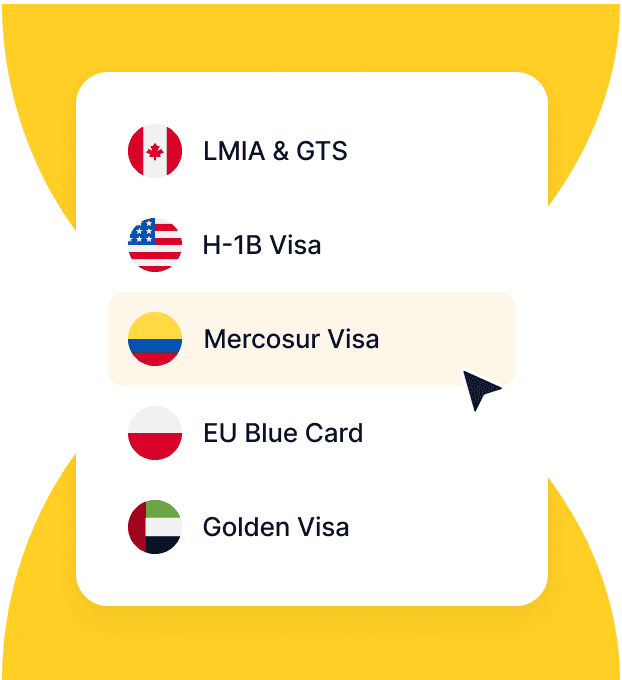
Hiring internationally into Poland: visas and right to work
Poland hosts one of Europe's most internationally diverse workforces. Beyond EU nationals from other member states, Poland has a large and established Ukrainian worker population, growing communities from Asia and the Middle East, and a technically-oriented diaspora of professionals who've returned to Poland after careers abroad. For companies hiring across these groups, the right-to-work rules vary significantly, and getting them wrong before employment begins is an employer liability, not a worker issue.
EU/EEA and Swiss nationals
Citizens of EU member states, the European Economic Area (Iceland, Liechtenstein, Norway), and Switzerland have the automatic right to live and work in Poland under EU free movement rules. No work permit is required, and no advance notification to authorities is needed before employment begins. Employers should:
Verify identity using a valid EU/EEA passport or national ID card
Retain a copy of the identity document in the personnel file
Confirm the document is valid (not expired) before the employment start date
EU nationals who want to remain in Poland for more than 90 days must register their residence with the relevant local authority (Urząd Gminy), but this is the employee's own administrative obligation, not the employer's.
Non-EU nationals: main work permit routes
For workers from outside the EU and EEA, Poland's immigration system provides several authorization pathways. The most relevant for employers are:
Type A work permit (zezwolenie na pracę typu A): the most common route for non-EU nationals working in Poland under a contract of employment or mandate contract for a Polish employer. The employer sponsors the application, submitted to the Voivodship Office (Urząd Wojewódzki) in the region where the work will take place. Processing takes four to eight weeks on average, though times vary substantially by office and caseload. The Type A permit authorizes work but not residence. The worker also needs a valid visa or residence title to stay in Poland legally.
EU Blue Card (Niebieska Karta UE): a combined residence-and-work permit for highly skilled non-EU nationals. Eligibility requires a qualifying job offer, a salary of at least 150% of the average gross salary in Poland, and recognized professional qualifications or higher education. The Blue Card provides both work authorization and legal residence in a single document, making it the preferred route for senior technical and professional hires, particularly where the worker may also want to move family members.
Declaration of entrustment of work (oświadczenie o powierzeniu wykonywania pracy): a simplified authorization available for nationals of specific countries (historically including Georgia, Moldova, Ukraine, Belarus, Russia, and Armenia), allowing up to 24 months of employment without a full work permit. As of 2026, the availability of this route for specific nationalities should be confirmed with the relevant Voivodship Office, as eligibility criteria are subject to regulatory updates.
For a step-by-step breakdown of each permit application, including the documents required, application timelines, and employer obligations during the process, see our detailed guide to visas and work permits in Poland.
Residence permits and the two-step process
It's important for employers to understand that work authorization and residence authorization are two separate tracks in Poland. A Type A work permit proves the right to work for a specific employer, but it doesn't itself grant residency. The worker must also have a valid basis to remain in Poland, typically a national D-visa or a temporary residence permit (karta pobytu czasowego).
Most new non-EU hires enter Poland on a D-type national visa tied to the work permit, then apply for a temporary residence and work permit (a combined single-document replacement) once in-country.
Managing both tracks, and ensuring neither lapses, is part of the employer's due diligence obligation during the employment relationship.
Ukrainian nationals: notification-based right to work
Ukraine is Poland's largest source of non-EU workers, and Ukrainian nationals under temporary protection have a simplified right to work that bypasses the standard permit system entirely. Instead of applying for a Type A permit, employers hiring a Ukrainian national under temporary protection must:
Confirm the worker's temporary-protection status before employment begins
Notify ZUS within 7 days of employing the worker
No permit application or Voivodship Office involvement is required. As of October 2026, temporary protection remains in force for most eligible Ukrainian nationals. Status validity dates are updated by Polish and EU authorities on a rolling basis. Employers should verify current status with the Polish Office for Foreigners (Urząd do Spraw Cudzoziemców) or through qualified immigration counsel before relying on this route.
Practical immigration planning for employers
Immigration timelines in Poland can be significantly longer than the official stated processing periods suggest. Regional offices in Warsaw and other major cities handling high volumes of applications regularly run weeks or months behind stated timelines.
Employers hiring non-EU nationals should plan immigration processes at least two to three months before the intended start date, and should not enter binding business commitments that depend on a specific start date until work authorization is confirmed.
Employers are also responsible for maintaining records of work authorization documents: copies of permits, visa status, and expiry dates, and should implement a system for tracking permit renewal deadlines. A permit that expires while the employee is employed creates the same liability as failing to verify authorization before hire.
For roles where the employee's immigration status is tied to their employment with you specifically (as is the case with Type A permits), changes to the role, compensation, or employer entity may require a permit amendment before they take effect.
How an EOR handles work authorization
When you hire through an EOR like Deel, the EOR, as the legal employer, takes on responsibility for verifying right to work, initiating permit applications where needed, monitoring permit validity and expiry, and ensuring the employment relationship doesn't begin before all authorizations are confirmed.
For non-EU national hires, where the permit process runs through multiple Polish authorities and delays can shift start dates, this is a particularly valuable aspect of the EOR arrangement. Your company doesn't interact directly with immigration authorities. Deel's in-country team handles the coordination from start to finish.
Ukrainian workers: simplified right to work
Ukrainian nationals under temporary protection can work in Poland without a Type A work permit. Employers must notify ZUS within 7 days of hiring them. As of October 2026, temporary protection remains in force for most eligible Ukrainian nationals. Verify current status before relying on this route.
Deel Mobility
Get worldwide visas without the legwork
Termination, redundancy, and offboarding
Termination in Poland is regulated by the Labour Code: it specifies the valid grounds for dismissal, the written procedures that must be followed, statutory notice periods, consultation requirements for certain types of termination, and the severance entitlement that applies when a dismissal is driven by employer-side reasons. Departures from these rules can result in reinstatement orders or compensation claims equal to several months of salary. The process is manageable, but it requires precision.
Fair dismissal grounds
Polish law distinguishes between two main termination approaches, each with its own requirements:
Termination with notice (wypowiedzenie umowy o pracę): either party can terminate the contract by giving written notice, which ends the relationship at the conclusion of the notice period. For employer-initiated termination of an indefinite contract, the notice letter must include a written, substantive justification for the decision. Polish courts have held that vague reasons like "performance issues" with no specifics, or "operational reasons" without further explanation, are insufficient. The justification must be concrete, real, and verifiable.
Summary (disciplinary) dismissal (zwolnienie dyscyplinarne): immediate termination for serious misconduct: a deliberate and serious breach of employment duties, commission of a criminal offense that prevents continued employment, or loss of qualifications required for the role. The employer has exactly one month from gaining knowledge of the misconduct to invoke summary dismissal. Missing that window closes off the summary route for that specific event, though disciplinary proceedings for lesser misconduct can continue separately.
In both cases, the employer should give the employee the opportunity to respond to any allegations before issuing a formal termination. Polish courts expect this as part of the procedural fairness standard, even though the Labour Code doesn't prescribe a formal hearing process for most employment categories.
Notice periods
Statutory minimum notice periods under the Labour Code depend on the employee's total employment seniority. From 2026, seniority calculations may also include periods under qualifying civil-law contracts and certain prior foreign employment periods, meaning effective seniority can exceed the employee's tenure with the current employer alone.
| Length of service | Minimum notice period |
|---|---|
| Under 6 months | 2 weeks |
| 6 months – under 3 years | 1 month |
| 3 years or more | 3 months |
Notice periods can be extended by contract but cannot be reduced below the statutory floors. During the notice period, employers can release the employee from the obligation to attend work (equivalent to "garden leave" in common law systems) while still paying full salary through the notice period. The Labour Code also allows employers to direct the employee to take any outstanding annual leave during the notice period.
Redundancy and collective consultation
Where a termination arises from reasons on the employer's side (business restructuring, role elimination, or workforce reduction), specific additional rules apply:
Individual redundancy (przyczyny leżące po stronie pracodawcy): the employer must state clearly in the termination notice that the dismissal arises from employer-side reasons. The employee retains all statutory notice entitlements and, where tenure conditions are met, is entitled to statutory severance (odprawa).
Collective redundancy: triggered when an employer with 20 or more employees plans to dismiss within 30 consecutive days: at least 10 employees (for employers with 20–99 employees), 10% of the workforce (100–299 employees), or 30 employees (300+ employees). Collective redundancies require formal written consultation with employee representatives (a works council, trade union, or ad hoc employee representatives if neither exists), advance notification to the local Labour Office (Urząd Pracy), and a minimum 20-day consultation period before notices can be issued.
Statutory severance
Statutory severance pay (odprawa) is a mandatory entitlement in redundancy terminations, where the dismissal arises from reasons on the employer's side. It scales with the employee's seniority:
1 month's salary: service under 2 years
2 months' salary: service of 2–8 years
3 months' salary: service of 8 or more years
Severance is capped at 15 times the national minimum wage per event. It applies only to redundancy dismissals, not to performance, conduct, or summary dismissals. The severance entitlement cannot be waived by contract.
Employee appeal rights
An employee who believes their dismissal was unlawful (procedurally defective, based on an invalid reason, or carried out without required consultation) can bring a claim before the Polish Labour Court (Sąd Pracy). The claim must generally be lodged within 21 days of receiving the notice of termination (or within 21 days of the end of the employment relationship in the case of summary dismissal). The Labour Court can order reinstatement or award compensation equivalent to the notice period (up to three months' salary) or, in some circumstances, the entire period of unlawful dismissal.
Employees who are trade union members, members of works councils, or in a protected category (e.g. pregnant, on parental leave, within four years of retirement) have heightened protection against dismissal. Notices given to protected employees may be set aside by the court regardless of the substantive grounds. Employers should check whether an employee falls into a protected category before issuing any termination notice.
Deel offboarding
When an employee hired through Deel's EOR in Poland departs, Deel manages the full offboarding workflow from the moment termination is initiated. Deel issues termination documentation consistent with Labour Code requirements, processes the notice period, and calculates and pays the final payroll run including outstanding salary, any unused annual leave, and statutory severance where applicable. Deel also de-registers the employee with ZUS within 7 calendar days of the termination date and provides the employee with their świadectwo pracy, the employment certificate Polish law requires within 7 days of the end of employment.
Hire in Poland with Deel
Poland's talent market is deep, its regulatory environment is EU-aligned and predictable, and its integration into EU compliance frameworks means the rules are well-documented, even when they're complex. What makes hiring in Poland challenging isn't the existence of the framework, but keeping up with it: minimum wage updates, PPK re-enrollment cycles, Labour Code amendments, and pay-transparency reform all create ongoing compliance obligations that compound as your team grows.
Deel's EOR solution manages core legal-employer requirements from compliant employment documentation and ZUS registration through payroll, statutory administration, and offboarding. The legal employment relationship runs through Deel's Polish entity, grounded in Polish law from day one.
Start hiring in Poland without waiting to establish a local entity. Book a demo below to see how Deel can help you build a compliant Poland team.
Deel Hire
Find, hire, and manage anyone, anywhere

FAQs
How long does it take to hire an employee in Poland?
Via EOR, the typical timeline from initial engagement to the employee's start date is one to two weeks. Establishing your own Polish entity takes three to six months.
What is the total employer cost on top of gross salary in Poland?
Employer ZUS contributions add approximately 19u201322% of gross salary. PPK contributions add a mandatory minimum 1.5% on top. Total on-costs typically run to 21u201324% above gross salary.
Can a foreign company hire in Poland without a local entity?
Yes, by using an Employer of Record. The EOR acts as the legal employer in Poland, handles all Labour Code, ZUS, PIT, and BHP obligations, and lets you manage the worker's day-to-day role.
What is the misclassification risk for contractors in Poland?
Significant. When a B2B arrangement has the hallmarks of employment, ZUS can reclassify it and impose back payment of employer ZUS contributions, PIT arrears, and statutory leave pay for the full reclassified period.
Does Poland require a local bank account for payroll?
Companies running their own Polish entity need a local bank account for ZUS and tax payments. When using an EOR like Deel, the EOR handles all local payment flows; you pay Deel in your preferred currency.
How does PPK auto-enrollment work for new hires?
Eligible employees (those under 55 with 90+ days of employment) are automatically enrolled in PPK. The employer contributes a minimum of 1.5% of gross salary; the employee defaults to 2%. Employees can opt out but are re-enrolled every four years.
What changed in Poland's employment law in 2026?
The first phase of pay transparency requirements took effect in December 2025, including mandatory salary disclosure to job applicants and a ban on salary history inquiries. Full transposition of remaining obligations is expected around January 2027.
What happens to my Polish hire if terminated through Deel's EOR solution?
Deel manages the full offboarding workflow: termination documentation, notice period processing, final payroll including outstanding leave and statutory severance, ZUS de-registration within 7 days, and providing the required employment certificate (świadectwo pracy).
This guide is for informational purposes only and does not constitute legal or tax advice. Employment law changes frequently. Always consult a qualified adviser for guidance specific to your situation.
Jemima is a nomadic writer, journalist, and digital marketer with a decade of experience crafting compelling B2B content for a global audience. She is a strong advocate for equal opportunities and is dedicated to shaping the future of work. At Deel, she specializes in thought-leadership content covering global mobility, cross-border compliance, and workplace culture topics.