Article
13 min read
Global Mobility & Payroll: The Enterprise Compliance Gap
Global payroll
Immigration

Author
Jemima Owen-Jones
Last Update
April 29, 2026

Table of Contents
Where global mobility payroll integration fails most often
The real cost of global mobility payroll disconnects
Why global mobility and payroll systems stay siloed
How entity changes complicate global mobility payroll
What successful global mobility payroll integration looks like
Self-serve vs. fully managed global mobility: what works for payroll integration
How to start connecting global mobility and payroll
Why global mobility payroll integration is business-critical
Key takeaways
Mobility and payroll often run in separate systems, and the gap between them is where compliance breaks down. Wrong entities, wrong tax jurisdictions, wrong payslips.
Connect mobility events to payroll triggers. When work authorization changes, payroll should update automatically, not via a manual email three days later.
Deel is the one platform where immigration, HRIS, and payroll are connected in real time.
Most enterprise teams treat work authorization as the finish line. It isn't. The real compliance risk lives in the handoff between mobility and payroll — where wrong entities, wrong tax jurisdictions, and wrong payslips turn successful immigration cases into operational disasters.
For most enterprise HR and People Ops teams, global mobility and payroll are managed by different people, different systems, and often different vendors. Mobility handles the work authorization. Payroll handles the pay. On paper, that division of labor makes sense.
In practice, it creates a gap that no one officially owns — and that gap is where compliance problems live.
Consider what happens when an employee relocates from Germany to Singapore. Mobility secures the employment pass. But does payroll know the effective date? Does the system know which entity to pay from? Has anyone confirmed whether the employee's current contract structure is valid in the new jurisdiction? These questions don't belong to mobility. They don't belong to payroll. They belong to the conversation between them — one that, in most large organizations, doesn't happen until something goes wrong.
Where global mobility payroll integration fails most often
The most common failure point in enterprise global mobility isn't the immigration case itself. It's what happens after the work permit is issued.
Mobility closes the case. Payroll gets a notification — sometimes a structured update, more often a manual email, occasionally nothing at all — and scrambles to catch up. The employee starts their assignment in a new country, but payroll is still running off the old entity. Tax calculations are wrong. Social contributions aren't aligned to the new jurisdiction. The employee's payslip reflects a structure that was correct six months ago and hasn't been touched since.
This isn't carelessness. It's architecture. Most enterprise organizations have built their HR tech stacks as a collection of systems that weren't designed to talk to each other. The HRIS holds workforce records. The payroll platform processes pay. Mobility manages immigration cases. Each system does its own job, but the workflow connecting them — moving employee status changes from mobility into payroll with the right data, at the right time — tends to live in someone's inbox.
See also: All-In-One HR Platform: 9 Must-Have Features Explained
Deel Mobility
Get worldwide visas without the legwork
The real cost of global mobility payroll disconnects
Compliance violations from payroll-mobility gaps cost enterprise companies millions in penalties, retroactive corrections, and failed assignments. Beyond financial risk, employee experience suffers when relocations become payroll disasters.
In most jurisdictions, paying an employee from the wrong entity — even temporarily — creates tax exposure. Payroll calculated under the wrong jurisdiction's rules generates underpayments or overpayments that are difficult to correct retroactively. In countries with strict employment frameworks, the wrong payroll structure can call the employment relationship itself into question.
Beyond the legal risk, there's the employee experience dimension. An assignee who moves to a new country and receives a garbled payslip — wrong currency, wrong deductions, a month's delay before anyone figures out what happened — tends to remember it. Global mobility friction is one of the more consistent drivers of early assignment failures, and it's rarely the immigration process that causes it. It's the operational mess that follows.
The enterprise teams that run mobility well understand this. The ones that run into trouble are usually treating work authorization as the finish line, when it's really the starting gun.
Deel gave us everything in one platform—payroll, compliance, HR tasks, documents, no more switching between systems or having to translate contracts manually. Deel made everything simpler…
…We're hiring someone in Dubai to work in Spain, and doing the whole visa process through Deel. Why would we use anything else?
—Izacco Scattolin Neto,
Senior Recruitment & HR Administrator, Amilon
See also: The Enterprise Guide to Global Compliance Management in 2026
Why global mobility and payroll systems stay siloed
Organizational structure, technical complexity, and legacy operations all contribute to keeping mobility and payroll disconnected. Most enterprise companies built their international operations incrementally, creating patchworks that nobody designed.
If the problem is obvious, why does it persist?
Part of it is organizational. Mobility teams typically report into different functions than payroll teams. They have different vendors, different compliance priorities, and often different definitions of what "done" means for an employee move. Getting them aligned requires someone senior enough to own the cross-functional workflow — and in many large organizations, that person either doesn't exist or has too many other things to own.
Part of it is technical. Running payroll across multiple jurisdictions, multiple entities, and multiple worker types is already complex. Plugging mobility event data — with all its nuance about work authorization timing, entity structure, and tax residency implications — into a payroll system that wasn't designed to receive it is harder still.
And part of it is legacy. Most enterprise companies have built their international operations incrementally. New country, new local vendor, new ad hoc process. Then another country. Then an acquisition with its own systems. By the time the mobility program is running cases across 20 jurisdictions, the "process" connecting mobility and payroll is a patchwork of workarounds that nobody designed and everyone depends on.
Other global payroll providers didn’t have the in-house knowledge or systems to support our complex needs. Deel was the only solution that truly made global hiring and payroll easier…
…Deel enables scaling companies to pivot quickly and confidently, whether that’s with independent contractors, international entities, or through the EOR model.
—Marion Passalinqua,
Mobility and Legal Operations Specialist, Gecko Robotics, Inc.
See also: How One Head of HR Reclaimed Control of Global Operations
How entity changes complicate global mobility payroll
When employees move between countries, the employing entity almost always changes, creating different payroll obligations that require coordination before the move, not after.
In some structures, the employee transitions from an Employer of Record (EOR) sponsored work permit to a locally owned entity. In others, they move between two owned entities in different countries. In others still, there's a period of overlap — the original entity technically employs them while the new structure is being established.
Each of these scenarios creates a different payroll obligation. And each one requires mobility and payroll to agree on timing, structure, and responsibilities before the employee starts their new role — not after the first payslip has gone out wrong.
This is also where a common misconception creates real problems. An Employer of Record arrangement manages employment within existing work rights. It doesn't create them. An employee moving to a new country under EOR still needs valid work authorization in that jurisdiction before payroll can run correctly. The work permit comes first. EOR follows. Payroll runs on top of both. When those three things aren't sequenced and communicated between teams, the compliance exposure falls on HR.
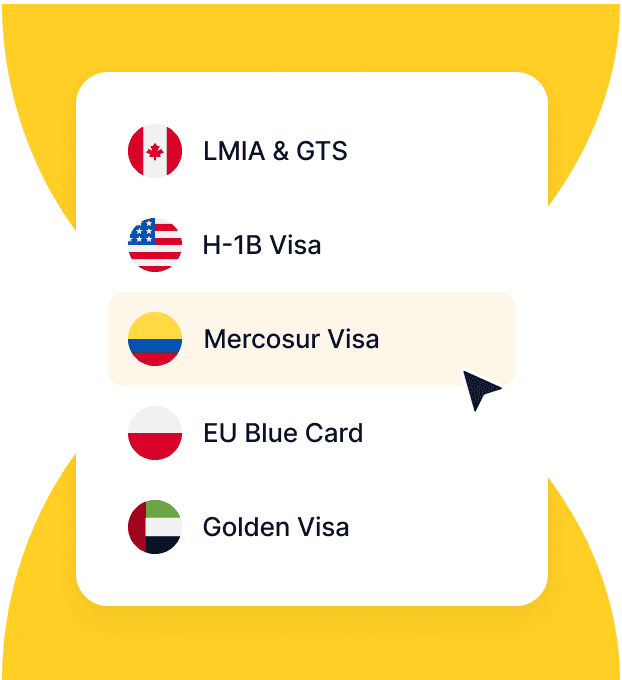
Deel Mobility supports both EOR-sponsored and entity-based sponsorship across 75+ countries for long-term work authorization — which matters precisely because the sponsorship model determines which payroll structure is correct. Getting that connection right upstream prevents the downstream errors that show up in payroll runs and audit findings.
Our HR and payroll systems were disjointed and unmanageable. We needed Deel's centralized solution to scale…
…We looked at other HR and payroll platforms, but Deel is the only truly all-in-one solution for global teams.
—Sophie Karagianes,
Chief People Officer, Petvisor
Deel Mobility
Don’t meet the requirements to sponsor workers’ visas?
What successful global mobility payroll integration looks like
Organizations that connect mobility and payroll successfully share four common elements: centralized workforce data, connected lifecycle workflows, shared compliance visibility, and a single unified platform. The technology exists to make mobility events trigger payroll actions automatically.
The enterprise organizations doing this well share a few things in common.
A single source of truth for workforce status. When an employee's immigration status changes — work permit issued, visa renewed, assignment extended — that change flows automatically into payroll. Not via email. Not via a weekly export. In real time. This requires HR data infrastructure that treats mobility events as payroll triggers, not separate notifications
Defined transition workflows across the full lifecycle. The handoff from mobility to payroll isn't left to chance. There's a defined process for each stage: pre-hire eligibility checks feed into onboarding timelines, work permit issuance triggers entity and contract updates in payroll, renewals and expiry tracking feed proactive alerts, and offboarding and permit closures trigger payroll exits. The whole lifecycle is connected, not siloed by stage
Shared compliance visibility. Payroll can't process correctly if it doesn't know what's expiring. Mobility can't flag risk accurately if it doesn't understand what payroll implications follow from a status change. The most resilient programs treat immigration expiry dates and payroll calendar dates as part of the same operational view — not two separate alert systems in two separate platforms
A unified platform. Technology helps, but only if the underlying systems are designed to share data. The Deel platform houses mobility, HRIS, and payroll under one roof so that workforce changes drive immigration tracking updates automatically — meaning payroll stays aligned to the actual state of each employee's work authorization and entity structure. Centralized reporting and audit-ready dashboards mean compliance teams aren't reconciling across three different systems to answer a single question
Deel makes everything easier—it handles the heavy lifting, like calculations and currency exchange. Without it, managing payroll across multiple countries and currencies would be almost impossible for a global company like ours…
…Immigration processes like work visas can be overwhelming, but with Deel, we’re able to navigate them almost single-handedly…
…Our global team can turn to Deel AI for instant answers to their HR questions, anytime. It’s been a huge time-saver for our People team.
—Yunjung (Rina) Bae,
Director of People, MarqVision
See also: What It’s Really Like to Run Payroll With Deel, According to Customers
Self-serve vs. fully managed global mobility: what works for payroll integration
Both self-serve and fully managed mobility models are available through Deel. The choice of operational model depends on your team's experience.
One thing that often gets overlooked in the mobility-payroll conversation is that the right operational model depends on where your program is right now — not just where you want it to be.
Deel Mobility supports two ways to run your program, and critically, both run on the same platform with the same built-in HRIS and payroll integration:
With self-serve, your team manages cases directly in the platform — using AI-powered eligibility assessments, real-time case tracking, automated compliance alerts, and HRIS integrations to keep payroll and HR systems in sync. Your team stays in control of execution, while the platform handles the compliance tracking and data infrastructure that connects mobility to payroll. On-demand support from Deel's immigration experts is available when you need it
With fully managed, Deel handles the full immigration lifecycle — case initiation, applications, filings, renewals, and ongoing compliance updates as employee or regulatory changes occur. Your team retains full visibility into every case through the same real-time dashboard, but the execution sits with Deel's dedicated case managers rather than your internal team
The self-serve model tends to suit HR and People Ops teams with in-house immigration experience who want direct control over case management and timelines. Fully managed is the stronger fit for teams without specialist immigration expertise, those expanding into new or complex markets, or organizations that want to reduce coordination overhead without losing visibility.
What matters for the mobility-payroll connection is that the HRIS integration lives in the platform itself — not in the service tier. Both models give payroll the real-time workforce data it needs. The question of who manages the immigration execution is separate from whether your systems are connected.
See also: Deel Mobility: Self-Serve vs. Managed Mobility
How to start connecting global mobility and payroll
The path to alignment starts with mapping data flows, not platform overhauls. Identify what information mobility generates, what payroll needs, and where the gaps are — then assign clear ownership for the transition workflow.
If your organization's mobility and payroll functions are currently operating independently, the path to alignment doesn't have to start with a platform overhaul.
Start with the data. Map what information mobility generates at each stage of an immigration case — application filed, work permit issued, renewal triggered, status changed — and identify what payroll needs to know at each of those moments. Then map how that information currently travels, and where the gaps are. In most enterprise environments, the gaps are identifiable quickly. The fix is usually a combination of process and technology, not one or the other.
Then look at ownership. Someone needs to own the transition workflow between mobility and payroll. In the absence of a defined owner, both teams will assume the other handled it — and neither will be right until it's too late.
Finally, evaluate whether your current platforms are helping or working against you. If mobility is running in a disconnected tool and your HRIS doesn't feed payroll reliably, you have a structural problem that process alone won't solve. The right infrastructure — where mobility integrates with HRIS and payroll in a connected, real-time way — is what makes the workflow sustainable at scale.
See also: The ROI of HR Consolidation with an All-In-One HR Tool, Deel HR
Why global mobility payroll integration is business-critical
Global mobility is increasingly a business-critical function, not just an HR operational one. The ability to move talent across borders quickly, compliantly, and without payroll disruption is a competitive advantage — or, when handled poorly, a meaningful drag on international growth.
Most enterprise HR leaders already know this. What's harder to see from inside the organization is how much of the risk lives in the space between functions. Mobility does its job. Payroll does its job. But the gap between them is where compliance breaks down, employees get frustrated, and finance ends up cleaning up tax issues that nobody anticipated.
Closing that gap requires mobility and payroll to stop operating as separate tracks and start functioning as a connected workflow. The organizations building that integration now are the ones that will scale their international programs without the operational cost of stitching it back together under pressure.
Ready to see how Deel connects mobility, HRIS, and payroll in one platform? Book a demo to see Deel in action.
FAQs
What is global mobility payroll integration?
Global mobility payroll integration connects immigration case management with payroll processing so that work authorization changes automatically trigger payroll updates. When an employee's visa is issued or renewed, payroll immediately knows the effective date, correct entity, and applicable tax jurisdiction without manual handoffs.
How does global mobility affect payroll compliance?
Global mobility creates multiple payroll obligations across jurisdictions. Employees moving between countries often trigger tax withholding requirements, social security contributions, and entity changes that must be reflected in payroll immediately. Delays or errors in this process create compliance exposure and employee disruption.
What is shadow payroll in global mobility?
Shadow payroll is a parallel payroll calculation run in the host country to determine correct tax and social security obligations while the employee remains on home country payroll. It requires monthly reconciliation between mobility status changes and payroll calculations across both jurisdictions.
Why do mobility and payroll systems stay disconnected?
Most enterprise organizations built their HR tech stacks incrementally with separate vendors for HRIS, payroll, and immigration case management. These systems weren't designed to communicate, creating manual handoffs that fail when employees move between countries or entities.
How much do global mobility payroll errors cost companies?
Payroll-mobility integration failures can trigger multi-year retroactive audits, significant tax penalties, and assignment failures. One case study showed a single miscalculated hypo tax error leading to a five-year audit and millions in penalties and corrections.
What's the difference between EOR and global mobility for payroll?
EOR manages employment within existing work rights but doesn't create work authorization. Global mobility secures the permits first, then EOR can employ the worker. Payroll must coordinate with both functions — work permits determine when employment can begin, EOR determines which entity pays.
How does Deel connect mobility and payroll?
Deel Mobility connects with the platform's built-in HRIS, so immigration status changes automatically update workforce records that feed payroll. When a work permit is issued, the effective date, entity structure, and tax jurisdiction flow into payroll in real-time, not via manual notification.
What's better for payroll integration: self-serve or fully managed mobility?
Both Deel models run on the same platform with the same built-in HRIS. Self-serve gives your team direct control over case management while maintaining payroll connectivity. Fully managed has Deel experts handle execution while your payroll still receives automated status updates.
Jemima is a nomadic writer, journalist, and digital marketer with a decade of experience crafting compelling B2B content for a global audience. She is a strong advocate for equal opportunities and is dedicated to shaping the future of work. At Deel, she specializes in thought-leadership content covering global mobility, cross-border compliance, and workplace culture topics.