
Article
17 min read
Fractional HR Guide: Strategic HR Without the Price Tag
Global HR

Author
Ellie Merryweather
Last Update
March 31, 2026

Table of Contents
What is fractional HR?
When do companies need fractional HR
What fractional HR professionals actually do
5 benefits of hiring fractional HR
Limitations and misconceptions on fractional HR
Is fractional HR right for your company?
How Deel supports organizations working with fractional HR
Deel, your partner at every stage of growth
Key takeaways
- Fractional HR services allow growing companies to have a senior people leadership team without paying for a full-time hire. It’s a practical way to introduce structure, judgment, and accountability as your people complexity increases.
- The model works best during periods of change, such as rapid growth, global hiring, or operational strain. Fractional HR removes leadership from the burden of day-to-day HR firefighting; it also reduces operational risk by cementing people practices in the organization’s DNA.
- When paired with the right systems, fractional HR creates strong foundations for what’s next. Companies can move faster while preparing for a future full-time People leader.
The number of LinkedIn profiles referencing fractional leadership has grown dramatically in recent years, rising from around 2,000 in 2022 to more than 110,000 last year. Not long ago, “fractional” leadership was mostly associated with finance. Fractional CFOs were a practical solution for growing companies that needed senior expertise without the cost or commitment of a full-time executive.
But now, fractional roles span the entire C-suite, including Chief Marketing Officers, Chief Technology Officers, and increasingly, Chief People and HR leaders. It’s a model that’s appealing to early and mid-stage companies, in particular.
As their teams grow, their people challenges become harder to manage informally; compliance risk increases, hiring and onboarding are under pressure, and leadership time is stuck responding to day-to-day HR issues. Fractional HR expertise introduces senior people leadership at the moment complexity demands it, without forcing organizations into a full-time structure before they’re ready.
This guide explores what fractional HR is, when it makes sense, what fractional HR professionals actually do, and how companies can use the model to build scalable people foundations.
What is fractional HR?
Fractional HR is a model where an experienced HR leader works with a company on a part-time, retained, or flexible basis, delivering strategic people leadership without the cost or commitment of a full-time hire.
Instead of hiring a Head of People, HR Director, or Chief People Officer too early, companies can engage a senior HR professional for a defined number of days or hours per month. This fractional leader embeds into the business and works closely with founders and executives. They own specific people outcomes even though they’re not on payroll full-time.
Fractional HR leadership is especially common in fast-growing startups and scaleups. Lesley Elder-Aznar, founder of Career Angel and a former fractional COO, remarks, “I'm seeing more demand for fractional HR experts than in any other area.”
While the exact scope of a fractional HR role varies by company size, growth stage, and maturity, the focus is consistent: bringing senior-level people leadership into moments of change. At a high level, fractional HR leaders are typically accountable for:
- Creating clarity and structure in how people are hired, managed, and developed
- Reducing people and compliance risk as the business grows or expands into new markets
- Supporting founders and managers with experienced judgment on complex people decisions
- Establishing scalable foundations, you don’t need to rebuild if headcount increases
- Preparing the organization for its next phase of growth, including a future full-time HR hire
What this looks like in practice depends on the organization, but the intent is always the same: strategic ownership first, execution second.
Deel HR
Fractional HR vs. full-time HR vs. outsourced HR vs. HR consulting vs. part-time HR
Fractional HR isn’t the same as a full-time HR role, but it’s also different from other flexible models, including consulting, outsourcing, or part-time HR admin. Here’s how they compare.
| Model | Cost range | Typical expertise | Use cases | Best for | Limitations |
|---|---|---|---|---|---|
| Fractional HR | $$-$$$ | Senior HR leader (Head of People/HR Director/CPO level) | Building HR foundations, scaling people practices, reducing risk | Growing companies (10-200 employees) that need leadership without full-time cost | Limited hours; requires prioritization |
| Full-time HR | $$$$$ | Dedicated, in-house HR leader | Long-term people strategy, culture ownership, ongoing leadership | More mature orgs (often 150–200+ employees) | High fixed cost; harder to change or scale down |
| Outsourced HR | $-$$ | Process and compliance specialists | HR admin, employee queries, standardized processes | Small teams needing operational support | Little strategic input; limited business context |
| HR consulting | $$$ | Specialist advisors | One-off projects (audits, org design, policy reviews) | Short-term or niche needs | No long-term ownership or execution |
| Part-time HR admin | $ | Junior-mid HR practitioner | Day-to-day HR tasks and documentation | Teams that already have strategy in place | No leadership or strategic capability |
When do companies need fractional HR
According to fractional Chief People Officer Richard Roberts, “SMEs, in particular, are finding fractional people leaders an efficient way to professionalize HR, de-risk growth, and deliver measurable people outcomes quickly.”
That said, there is a broader set of circumstances in which an organization could benefit from some fractional people support:
- Rapid growth with no HR foundations: Headcount increases faster than policies, processes, or manager capability.
- Leadership spending too much time on people issues: Founders and executives are pulled into hiring, performance, or employee relations instead of the business.
- Regulatory, payroll, or compliance risk: Especially common with remote teams, global hiring, or inconsistent documentation.
- Hiring and onboarding chaos: Roles are unclear, onboarding varies by team, and early hires struggle to ramp effectively.
- Series A-C growth without scalable people systems: The company isn’t ready for a full-time VP of People, but delaying structure is starting to slow growth.
In each of these scenarios, fractional HR provides stability while the business prepares for its next stage.
What fractional HR professionals actually do
Fractional HR work is as varied as any other type of human resources. Fractional Director Vicki Dasan describes why this breadth is a selling point, both for her as a career choice and for the organizations she supports:
I work with some great businesses in a wide number of sectors and on a wide variety of people issues. Having been around as long as I have, I’ve a lot of experience helping people get building blocks in place, simplify complex problems, establish policies, processes and documents. I’ve “lived” employment law, navigated the grey, learnt from mistakes.
—Vicki Dasan,
Fractional Director
While every engagement is different, fractional HR leaders are typically brought in to work across a few high-impact areas.
1. Building foundational HR processes
Early-stage and scaling companies often lack consistent people foundations. Fractional HR professionals help design and implement the basics that allow teams to grow intentionally.
These commonly include:
- Onboarding frameworks that create a consistent, compliant first experience
- Core policies and documentation aligned with company values and legal requirements
- Compensation ranges and role clarity to support fair and scalable pay decisions
- Manager playbooks that standardize expectations and people management practices
- HRIS selection and setup to centralize employee data and workflows
If your company is on such a path that in 18 months, it's going to be two or three times the size it is today, you need to be accounting for that and the decisions that you're making for today. Looking back, I certainly would have been more intentional and more proactive about ad hoc decisions and policy creation that then you end up being, you know, kind of held accountable for from other people coming into the organization.
—Andy Cloyd,
Co-founder and CEO of Superfiliate
2. Strengthening people operations
As companies scale, informal people processes start to break. Fractional HR leaders bring order and consistency to day-to-day people operations without holding the business back.
Some typical areas of focus include:
- Talent acquisition structure, including interview frameworks and decision-making processes
- Employee relations support so leaders can navigate performance issues, conflicts, and sensitive conversations
- Hiring plans that match growth goals and budgets
People leaders and HR teams get a bird's-eye view into what's happening across the organization. Some of the early-stage risks the HR team may identify first could be the risks or challenges of hiring A-plus players. At the early stage, when you're building those companies, you want to understand in real time how recruiting challenges are impacting your ability to hire and ultimately close talent.
—Randi Jakubowitz,
Head of Talent at 645 Ventures
3. Leading performance and development
In many growing teams, performance expectations can feel fuzzy, and feedback is inconsistent or outdated. Fractional HR leaders can introduce lightweight, scalable performance practices that help managers lead more effectively, without introducing any unnecessary processes. This often involves:
- Designing review cycles that are simple, consistent, and manager-friendly
- Implementing employee feedback frameworks to support continuous improvement
- Introducing basic job architecture to clarify potential career paths and deliver accountability as team members increase
Learn more about how to build robust employee feedback systems and job architecture to support career progression in our detailed guides.
4. Maintaining compliance and reducing risk
Compliance is one of the most common triggers for fractional HR support, especially for remote-first and global teams. Fractional HR professionals typically help with:
- Employment contracts and documentation
- Record keeping and policy alignment
- Global hiring compliance strategies, so the business follows local labor laws across jurisdictions
Addressing risks early helps companies avoid costly issues later and creates a stronger foundation for international growth.
5 benefits of hiring fractional HR
Hiring fractional people support can feel risky, or like some sort of compromise that signals you’re not committing properly to your people function. But in reality, hiring a fractional HR team of one or more members has multiple benefits to the organization.
1. Strategic expertise at a fraction of the cost
At the top of the list are the salary benefits you’ll experience with this model. Fractional HR gives companies access to senior-level people leadership without taking on the full financial and employment risk of a permanent executive hire.
Of course, there’s no single price tag for fractional HR. The precise cost savings you’ll make from a fractional HR arrangement depend on the scope of work, seniority of the individual, location, and whether the role is remote or in-person. But the underlying advantage is consistent: companies pay for impact and expertise, not unused capacity.
Ben Simpson, co-founder of Organisational Vitality, stresses that fractional HR is a win in particular for organizations growing between 50 and 250 people.
“We’re seeing more and more ‘fractionals’, and we should expect that to continue. Costs and risk of directly employed execs is going up, the flexibility that fractionals offer is a good match for our uncertain and volatile world.”
2. Faster setup of people foundations
The success of any organization depends on its people. But putting strong people foundations in place takes time and plenty of experience. Founders and leadership teams often delay choices around policies or structure, lacking clarity on what “good” looks like at their stage of growth. As a result of this drag:
- Managers handle people issues inconsistently
- Hiring and onboarding become fragmented
- Compliance gaps build up
Fractional HR accelerates this process by bringing in someone who’s built these foundations before. They know what to prioritize now, what can wait, and how to design systems that won’t need rebuilding six or twelve months down the line.
Just as importantly, fractional HR creates a clear runway before you hire a full-time Head of People or VP of People, making that eventual hire easier, faster, and more successful.
3. Greater flexibility and scalability
One of the biggest advantages of fractional HR is that it scales with the business. A company might:
- Start with a few days a month to address urgent gaps
- Increase support during hiring spikes, restructures, or expansion
- Scale back once systems are in place
4. Ideal for remote and global teams
Remote and global teams must deal with complexity early, often long before headcount justifies a full-time HR leader. Fractional HR professionals are particularly valuable here because they:
- Bring experience navigating multi-country employment models
- Understand how to design policies that work across jurisdictions
- Help companies avoid common compliance and classification mistakes
Example: A company hiring its first employees outside its home country may only need targeted HR leadership around contracts, onboarding, and local compliance, which is exactly the kind of focused support fractional HR provides.
5. Objective, experienced perspective
Because fractional HR leaders aren’t bogged down by internal politics or legacy decisions, they can bring clarity and objectivity to complex people challenges. As Melanie Manners, global chief people officer, explains:
At that critical growth inflexion stage, a fractional leader is more than a consultant with a broader remit. Fractional leaders are embedded and fully vested in the business, sitting at the executive table with full accountability for strategy, business performance, and leadership.
—Melanie Manners,
Global Chief People Officer
This combination, close enough to lead, independent enough to challenge, is especially valuable during growth inflection points, restructures, or cultural change.
Limitations and misconceptions on fractional HR
Fractional HR can be highly effective, but only when it’s used for the right reasons and with clear expectations. Understanding its limitations upfront helps organizations get far more value from the model.
Fractional HR isn’t a replacement for long-term people leadership
Fractional HR is designed to build foundations, guide change, and stabilize growth. In most cases, it’s not a suitable replacement for a dedicated Head of People or HR team. Superfiliate’s co-founder Andy Cloyd is unconvinced that the fractional model is a long-term solution for large initiatives like culture-building.
“I don’t think fractional is going to come in and solve the definition of what it means to be your company. You could bring in somebody external in a fractional capacity to make sure that the boxes get checked, and that you're compliant, but as you think about the future of your company and your culture, I think that would have been very hard to do from a fractional executional capacity.”
The trick is knowing when to transition away from fractional toward a full-time and more permanent lineup, using fractional HR to prepare the organization, rather than delaying that decision indefinitely.
Fractional HR won’t manage daily admin unless explicitly scoped
Fractional HR leaders are usually engaged for their strategic oversight, rather than handling daily operational tasks. Activities such as responding to employee queries, managing payroll issues, or updating records typically sit outside the scope unless agreed upon up front.
This can be a misconception for teams expecting a “catch-all” HR solution. Fractional HR works best when paired with internal operators or outsourced support who handle the execution side.
Fractional HR will flop without active support from internal champions
Fractional HR leaders can design strong systems and make clear recommendations, but they’re not solely responsible for embedding change. Successful adoption depends on founder and leadership buy-in, particularly from managers who are expected to apply new processes consistently.
Randi Jakubowitz, Head of Talent at 645 Ventures, describes that this is a two-way street, and fractional talent must also be willing to seek support from leaders.
“The misconception is that the founder hired this person and doesn't want to be involved anymore. But the founder definitely wants to understand. They only know as much as they know when it comes to these functions and specifics.
So, really think about how you can elevate the organization in your functional area, while making sure you're bringing the founder along on this journey. A people, talent, or HR function cannot stand up on its own without the full, dedicated support of a founder.”
Fractional HR can only excel with the right HR technology in place
Fractional HR leaders are usually brought in to move things forward quickly. So, if they have to spend their first few weeks working out where information lives or how decisions have been tracked, it’s hard for them to make the progress you want and expect.
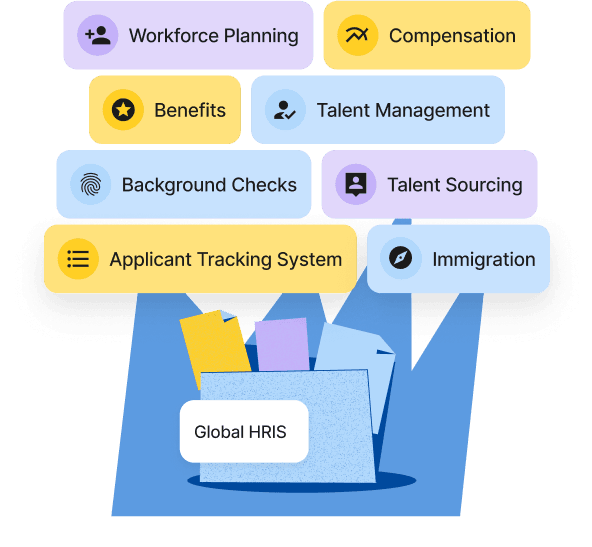
Modern HR systems like Deel give them a stable base to work from and make it easier for changes to hold once their involvement reduces.
Deel's HRIS

Is fractional HR right for your company?
Fractional HR tends to work best when there’s a clear intent to improve people practices, but uncertainty about how, or when to build a permanent function. This checklist can help you sense-check if you’re a good candidate for fractional HR:
- Do you have between 10 and 200 employees, or expect to be there in the near future?
- Are people issues slowing down leadership, pulling founders, executives, or finance leaders into day-to-day HR decisions?
- Do you lack consistent onboarding, performance, or role clarity across teams?
- Are managers handling people issues in different ways, creating uneven experiences or avoidable risk?
- Are you hiring top talent remotely or expanding into new countries, with growing compliance or employment complexity?
- Are you waiting until Series B-C to hire a VP of People, but already feeling the absence of senior people leadership?
- Do you need experienced HR judgment now, rather than more administrative capacity?
- Would your business benefit from clearer people foundations, without committing to a full-time senior hire yet?
If these questions reflect your reality, fractional HR can be a practical way to introduce senior people leadership while keeping the organization flexible.
How Deel supports organizations working with fractional HR
Fractional HR leaders bring experience, judgment, and direction to organizations that need stronger people leadership. To be effective, that strategic layer needs an operational foundation that makes decisions easy to execute and sustain over time. This is where Deel fits naturally.
Deel provides a single platform that supports the kind of structured, globally-aware people operations that fractional HR leaders are often hired to build. Instead of stitching together tools and local providers, fractional HR departments can depend on Deel as a centralized solution. In practice, this means:
- Global onboarding and HRIS to centralize employee data, roles, and documentation across locations
- Localized compliance is built into contracts and workflows, reducing risk as companies hire internationally
- Time off, documents, and contracts managed in one place, rather than scattered across systems
- Compensation, performance, and engagement tools that support clearer role definition and people processes
- Payroll across countries, removing friction between HR strategy and execution
Superfiliate is an example of a company that has achieved excellence with Deel. Its founders needed to bring structure and consistency to people operations while scaling across six states. As the company grew, Deel helped HR decisions translate into systems that could support the next stage of growth. Superfiliate is now equipped to scale internationally.
Deel, your partner at every stage of growth
Fractional HR is often a bridge that helps organizations move from informal people practices to something more intentional and scalable. Deel is built to support the entire journey.
Whether HR responsibility sits with a founder, a finance leader, a fractional HR professional, or a full-time people team, Deel provides the same underlying capabilities: visibility, consistency, and compliance across borders.
For growing companies, that means:
- Faster maturity of people operations
- Lower risk as teams expand internationally
- Stronger foundations for future HR leadership
With the right tools in place, fractional HR goes beyond solving immediate problems, turning good advice into systems that last.
Get in touch for a free demo and to learn how Deel supports People Operations at every stage of growth.
Live Demo
Get a live walkthrough of the Deel platform

Ellie Merryweather is a content marketing manager with a decade of experience in tech, leadership, startups, and the creative industries. A long-time remote worker, she's passionate about WFH productivity hacks and fostering company culture across globally distributed teams. She also writes and speaks on the ethical implementation of AI, advocating for transparency, fairness, and human oversight in emerging technologies to ensure innovation benefits both businesses and society.


