
Article
5 min read
HCM and Payroll Integration: Top 5 Benefits
Global payroll
Global HR

Author
Joanne Lee
Last Update
August 19, 2025

Table of Contents
Benefits of HCM and payroll integration
Pay and manage your global workforce in one platform with Deel
Key takeaways
- HR and payroll tend to be siloed functions within business operations, which can lead to inconsistencies in employee data, operational inefficiencies, and time lost to repetitive tasks.
- Human Capital Management (HCM) and payroll integration reduces costs, ensures data accuracy, strengthens compliance, improves employee engagement, and enables strategic business decisions.
- Deel helps companies pay and manage employees from a unified platform, resulting in streamlined operations and better scalability.
Human Capital Management (HCM) and payroll integration bridges the gap between two traditionally siloed functions by streamlining workflows, eliminating data redundancy, and enhancing visibility across workforce operations.
Whether your company is scaling internationally or refining internal processes, this integration helps you unlock cost savings, improve compliance, and elevate employee satisfaction.
In this blog, we’ll explore the top five benefits of HCM and payroll integration and how a unified approach can transform the way you pay your workforce on a global scale.
Benefits of HCM and payroll integration
Let's look at the top five ways HCM and payroll integration can positively impact your business operations, costs, and employees.
1. Reduced payroll processing costs
Global payroll gets complicated fast, especially when you’re juggling multiple local providers, each with its own systems, processes, and compliance requirements. This results in disconnected workflows, duplicated data entry, and mounting administrative costs.
By integrating your HCM and payroll systems with a single global payroll provider, you streamline operations and eliminate redundancy. No more patchwork systems or IT overhead in every region—just one unified solution that simplifies payroll across every country and cuts payroll processing costs, all while keeping your data consistent and compliant.
2. Improved data accuracy
When HCM and payroll systems operate in silos, data gaps and inconsistencies are inevitable. Manual updates, duplicated records, and conflicting employee information can lead to costly errors, especially when working across multiple countries, time zones, and payroll compliance requirements.
HCM and payroll integration creates a single source of truth for employee data. Any changes, such as new hires, salary adjustments, or benefit enrollments, automatically sync across systems in real time, reducing the risk of human error. This level of accuracy and efficiency prevents payroll mistakes, supports compliance reporting, and builds trust with your team.
3. Stronger data compliance
In today’s global workforce, compliance is increasingly complex. Organizations must comply with a wide range of global employment laws, tax regulations, and data protection standards. Managing this manually across disjointed systems is not only tedious and time-consuming, but it also introduces risk.
HCM and payroll integration helps maintain compliance by securing employee data in one central place, ensuring accurate tax filings and benefits, and providing audit trails for internal or external reviews.
When employee data is unified in a secure platform and centrally managed, businesses can reduce the risk of non-compliance as well as the fines, reputational damage, and legal consequences that come with it.
Compliance

4. Better employee engagement
Payroll accuracy and timeliness are more than just operational issues; they directly affect employee experience. Integrating HCM and payroll systems ensures your workforce is paid correctly and on time, every time. Because employees rely on their paychecks for their livelihood, this makes payroll a critical driver of employee engagement and retention.
This integration also gives your employees seamless, on-demand access to important information, such as:
- PTO accruals
- Sick time
- Payslips
- Benefits
- Tax deductions and withholdings
Performance data and compensation are also better aligned in an integrated system. For example, if an employee is promoted, that data can automatically flow from your HCM into payroll, adjusting compensation and benefits accordingly.
5. Greater focus on strategic business decisions
An integrated approach allows organizations to go beyond transactional processing and use payroll data as a strategic asset. For example, HR teams can identify trends in absenteeism, productivity, or attrition and correlate them with compensation strategies or workplace policies.
By breaking down silos, HCM and payroll integration helps organizations become more agile, data-driven, and equipped for growth.
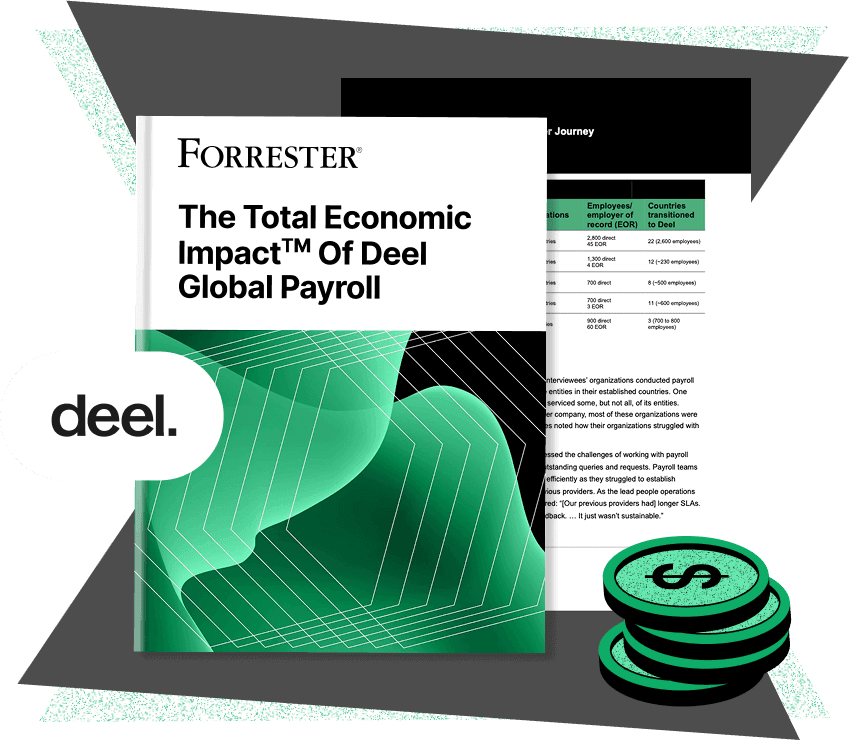
According to a 2025 Forrester Total Economic Impact study, HR and payroll leaders reported saving 80% of time previously spent on managing multiple payroll vendors after streamlining operations with Deel. That’s less time spent on administrative tasks and more time available to focus on strategic initiatives.
Pay and manage your global workforce in one platform with Deel
Deel helps companies optimize global workforce management with a fully integrated platform for paying and managing employees and contractors in over 130 countries.
Automate payroll in local currencies, consolidate employee data in one place, and gain full visibility over your workforce with Deel Payroll and our built-in HRIS.
Book a demo today to speak to one of our experts.
Deel Payroll

Joanne Lee is a content marketing professional with 7+ years of experience creating effective social, search, email, and blog content for companies ranging from start-ups to large corporations. She's passionate about finding creative ways to tell a purpose-driven story, staying active at the gym, and diversity and inclusion. At Deel, she specializes in writing about topics related to global payroll and enterprise businesses.


