Article
14 min read
The 6 Most Common After-Hours IT Issues For Remote Teams
IT & device management

Author
Dr Kristine Lennie
Last Update
April 21, 2026

Table of Contents
Issue #1: Locked accounts and authentication failures
Issue #2: Device failures right before critical work
Issue #3: Software permissions and role-based access errors
Issue #4: Security alerts and suspicious activity
Issue #5: Onboarding and offboarding gaps across time zones
Issue #6: Shadow IT and workarounds
The hidden cost of after-hours IT firefighting
Reduce after-hours IT issues with always-on operations from Deel IT
Key takeaways
After-hours IT issues are a constant reality for distributed and remote teams, and delays in support quickly lead to lost productivity, employee frustration, and increased security risk.
Addressing after-hours support requires moving beyond reactive ticketing systems and on-call rotations toward a model built for time zone fragmentation and always-on work.
Deel IT provides 24/7 support so that no matter when or where an issue strikes, employees get the help they need without waiting for business hours to resume.
Distributed teams now operate across multiple time zones, turning after-hours IT issues into a daily reality rather than an exception. Even small after-hours IT issues, such as login failures, device problems, or outages, can quickly interrupt work and impact team productivity.
The ripple effects don’t stop with IT. HR and People Ops teams often bear the downstream consequences, from poor onboarding experiences to operational bottlenecks that slow the entire organization. Yet despite these challenges, many companies still rely on reactive IT models built for a different era: one that didn’t account for always-on, globally distributed work.
Below are the six most common after-hours IT issues that continue to disrupt global teams, and how they impact productivity, security, and employee experience.
Issue #1: Locked accounts and authentication failures
Locked accounts and authentication failures are among the most frequent after-hours IT issues, and can instantly block productivity.
The scenario: Employees get locked out due to failed Multi-Factor Authentication (MFA), expired passwords, or misconfigured Single Sign-On (SSO) integrations, completely preventing them from logging in. These issues can surface during urgent tasks or outside core support hours, such as after system updates or maintenance windows. New hires and contractors are especially affected, frequently encountering login problems during onboarding when immediate help isn’t available.
The impact: When authentication fails, employees can’t access any systems at all. A single lockout can cascade across multiple tools: blocking email, collaboration platforms, and core systems at once. Delays during critical work lead to missed deadlines, while poor onboarding experiences create early friction for new employees.
The solution: Organizations need a more proactive, lifecycle-driven approach to access management, one that automates provisioning, reduces reliance on manual IT intervention, and enables secure self-service for common login and recovery issues.
How Deel IT solves this: Deel IT centralizes authentication through SSO and automates access provisioning from day one, with MFA policies and centralized access controls in place to keep access disruptions to a minimum.
Learn how to choose and implement an access management system for automated provisioning.
Download also: Employee Onboarding Checklist
Issue #2: Device failures right before critical work
Device failures at the worst possible moments are a common after-hours IT issue, which can be especially damaging for remote teams that have no on-site IT to fall back on.
The scenario: Laptops freeze, crash, or require unexpected updates just before deadlines or important meetings. For remote employees, there’s no option to walk over to IT for help, meaning downtime may be significantly extended, especially if the failure occurs outside of business hours.
The impact: When devices fail, work stops entirely. Employees miss deadlines, delay key deliverables, or show up unprepared to important meetings. Fragmented troubleshooting and non-standardized device setups slow resolution, while limited visibility into device health prevents teams from catching issues early. For global teams, even replacing a device can take days without established logistics processes.
The solution: Organizations need centralized device management, including Mobile Device Management (MDM), to enable real-time visibility, remote diagnostics, and faster troubleshooting. Standardized device setups and global logistics processes are also critical to ensure quick replacements when failures can’t be resolved remotely.
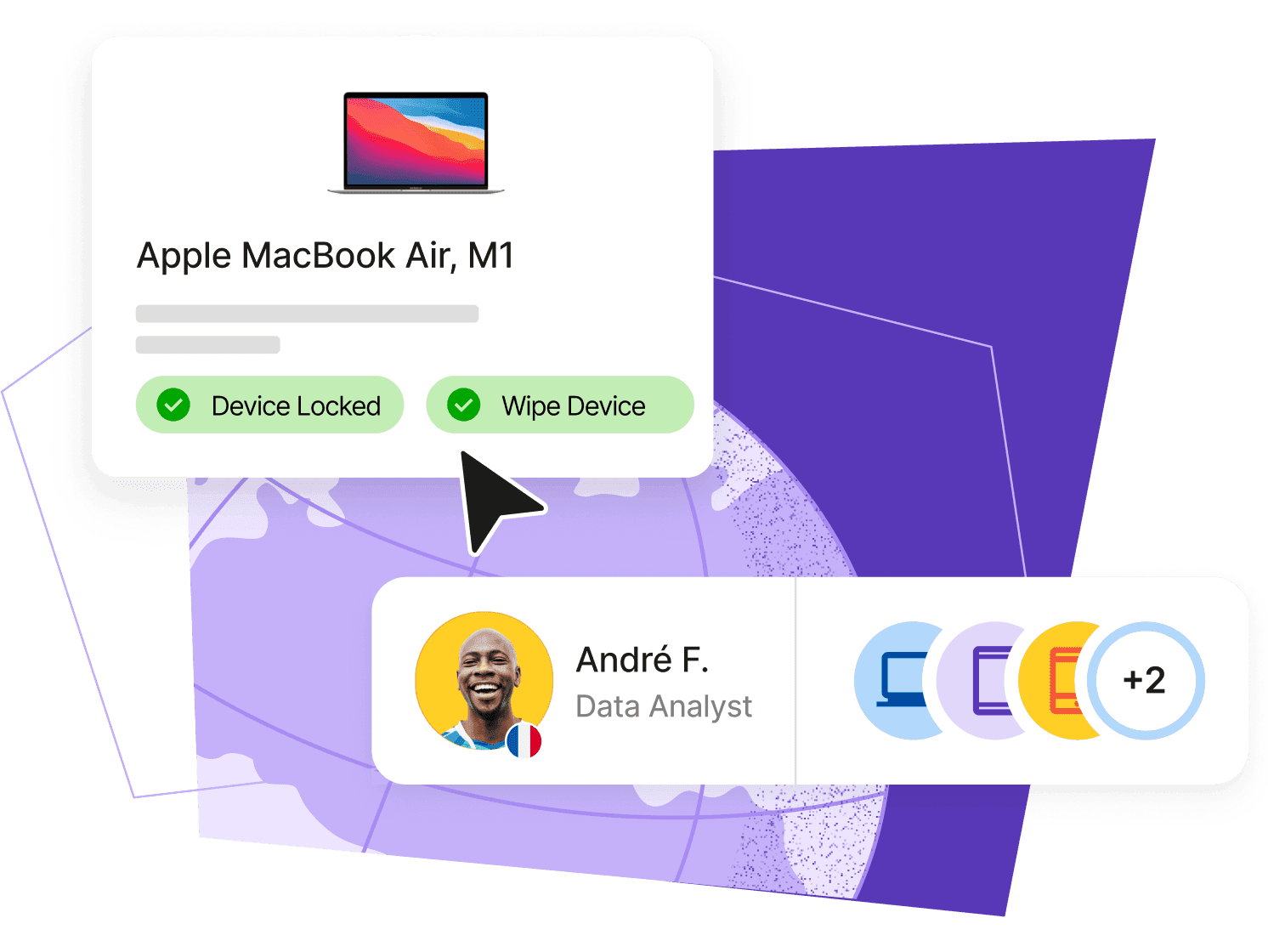
How Deel IT solves this: Deel IT's JumpCloud-powered MDM gives IT teams real-time device visibility and remote action capabilities (including restarts, forced updates, and password resets) so failures can be diagnosed and resolved without touching the device.
See also: Want to Reduce IT Costs? Try These 5 Device Reconditioning Strategies
Issue #3: Software permissions and role-based access errors
Software permission and role-based access errors are a frequent after-hours issue, often surfacing right when employees need tools the most.
The scenario: Employees can log in, but don’t have the correct permissions to use essential applications. Access may be restricted due to expired roles, incorrect permission settings, inconsistent provisioning across teams, tools, and regions, or unavailable software licenses. These issues often arise during time-sensitive work when quick resolution is critical.
The impact: When permissions are incorrect, work slows or stops. Employees are forced to request access, chase approvals, or wait for IT support, delaying critical work.
The solution: Organizations need standardized, automated access controls (such as role-based provisioning) to ensure consistent permissions across systems, reduce manual errors, and streamline access requests and approvals.
How Deel IT solves this: Deel IT automates role-based access provisioning using live HR data as the source of truth. so employees get the right permissions from day one, and access updates automatically when roles change. Employees can request any additional access directly from their profile, with approval routing and license management handled centrally.
Find out how to choose and implement an access management system for automated provisioning.
Issue #4: Security alerts and suspicious activity
Security alerts don’t follow business hours, and a delayed response can quickly turn into a serious breach.
The scenario: A security alert fires at 2 AM, an employee’s device shows unusual login behavior, or an access attempt comes from an unrecognized location. Without 24/7 monitoring, that alert sits untouched until morning. By then, the window for intervention may already be gone. Most SMB IT teams don’t have round-the-clock coverage, and alerts without automated response rules are effectively useless overnight.
The impact: Delayed response increases the risk of unauthorized access, data exposure, and full-scale breaches. Gaps can allow unauthorized access to persist for hours, while limited endpoint management capabilities mean compromised devices remain active until IT can intervene. As attacks are increasingly timed for off-hours, these vulnerabilities become even more critical.
The solution: Organizations need round-the-clock endpoint protection with automated response capabilities, so threats are detected and contained before they escalate.
How Deel IT solves this: Deel IT's CrowdStrike-powered endpoint protection runs 24/7, monitoring for threats, monitoring threats and enabling alert triage and escalation to your team before they become breaches. With endpoint protection and response, automated response workflows, and device isolation capabilities available on the Falcon Enterprise plan, threats can be contained immediately rather than waiting until morning.
Here are 6 steps for ensuring endpoint compliance for remote international workers.
Issue #5: Onboarding and offboarding gaps across time zones
Onboarding and offboarding gaps are a persistent after-hours challenge for global teams, often leading to both productivity loss and security risk.
The scenario: New hires start in regions where IT support isn’t available, resulting in delayed access to tools and unproductive first days. At the same time, offboarding delays can leave former employees with active access. Coordination between HR, IT, and managers becomes more complex across time zones, especially when processes rely on manual handoffs.
The impact: Poor onboarding experiences create immediate friction and slow time-to-productivity for new employees. On the other hand, delayed deprovisioning increases security and compliance risks. As global hiring scales, manual processes struggle to keep up, leading to inconsistencies, delays, and avoidable exposure.
The solution: Organizations need tighter alignment between HR and IT workflows, with automated provisioning and deprovisioning tied directly to employee lifecycle events.
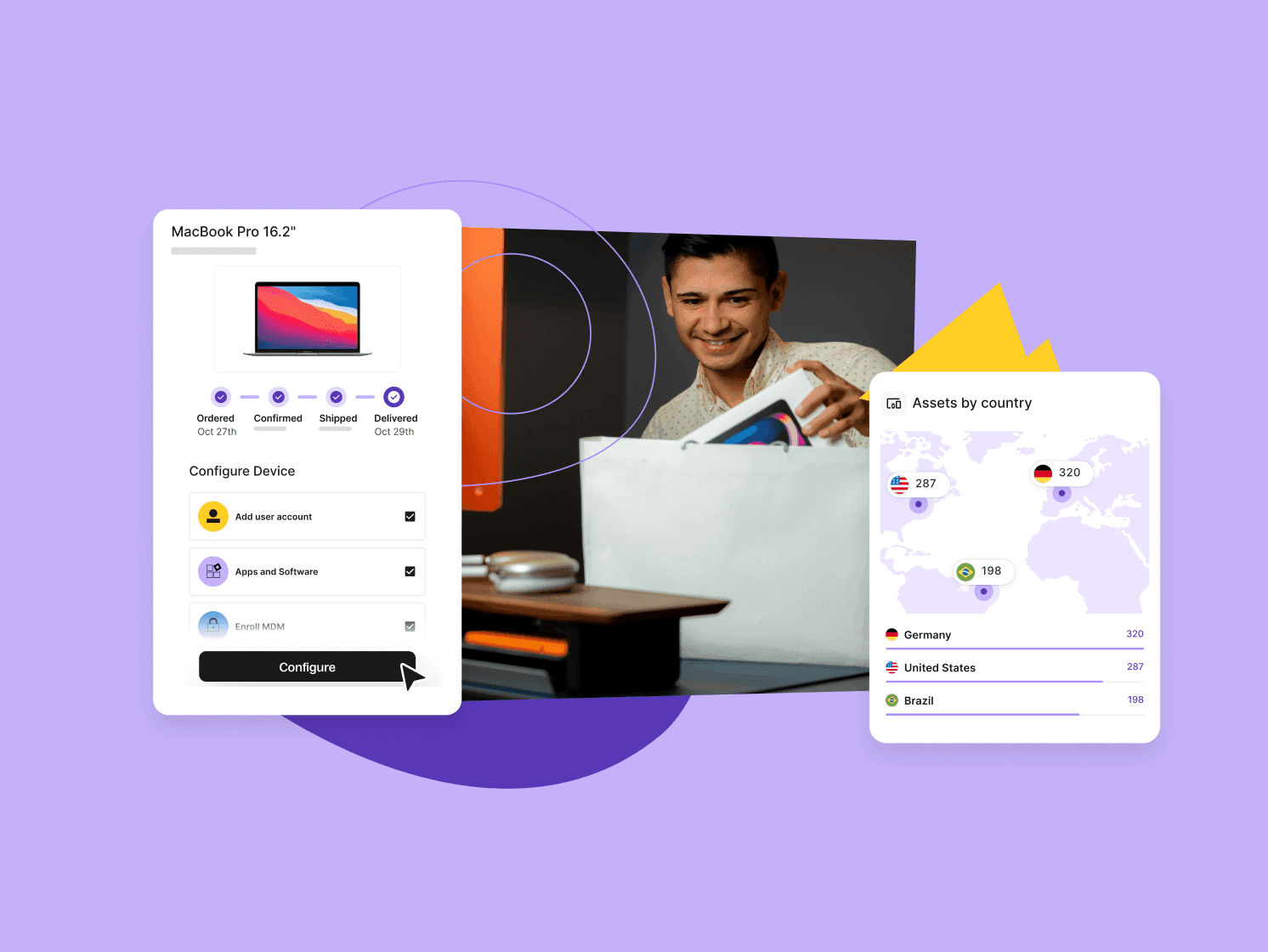
How Deel IT solves this: Deel IT connects IT workflows directly to HR data to automate provisioning and deprovisioning based on employee lifecycle events. Procure equipment from Deel's 240+ item catalog and ship preconfigured devices to 130+ countries with logistics handled, and 99.5% on-time delivery rate.
Read also: How to Manage Remote IT Support for Global Teams with Deel IT
Issue #6: Shadow IT and workarounds
Shadow IT often emerges as a direct result of an after-hours support gap; when employees can’t wait, they find their own solutions.
The scenario: When official systems fail, or support isn’t available, employees turn to unauthorized tools to keep work moving. These workarounds may solve immediate problems but operate outside approved processes and oversight.
The impact: Shadow IT introduces security vulnerabilities, compliance risks, and blind spots in how data and tools are used. Over time, it creates operational complexity, making it harder for IT teams to maintain control and enforce governance across the organization.
The solution: Organizations need more reliable systems, faster support, and better visibility into tool usage, so employees don’t feel the need to bypass IT in the first place.
How Deel IT solves this: Deel IT minimizes shadow IT by centralizing access, improving visibility into assigned applications, and providing reliable support, so employees don’t need to rely on unauthorized tools to keep work moving.
Read: Best 7 MDM Solutions for Real‑Time Security and Compliance
The hidden cost of after-hours IT firefighting
After-hours IT issues don’t just cause isolated disruptions—they create ongoing operational drag across teams.
Productivity loss: Frequent disruptions slow down work, delay deliverables, and reduce overall business velocity
Employee frustration: Repeated blockers lead to disengagement and a poorer day-to-day work experience
IT inefficiency: Teams spend time reacting to issues instead of focusing on strategic improvements
HR and People Ops strain: Onboarding delays and inconsistent experiences increase operational pressure
Rising costs: Reactive support models drive higher costs without improving long-term efficiency
Find out more about how 24/7 IT support builds stronger, safer global operations.
Reduce after-hours IT issues with always-on operations from Deel IT
Deel IT helps organizations move beyond reactive, business-hours IT by providing always-on support, centralized workflows, and lifecycle-driven automation—so employees can stay productive regardless of time zone.
Why choose Deel IT:
Support employees anytime with 24/7 IT support: Built-in global support and ticketing ensure issues are resolved quickly, without relying on local coverage or on-call rotations
Centralize access and permission control: Apply consistent, role-based access across tools to reduce login failures, permission errors, and after-hours lockouts
Turn HR lifecycle events into automatic IT actions: Hiring, role changes, and exits directly trigger provisioning, access updates, and secure offboarding, without manual coordination
Run IT as a single, connected lifecycle: Manage devices, access, security, and support in one system instead of juggling disconnected tools and workflows
Provide shared visibility across HR and IT: Track onboarding, devices, access, and offboarding in one place, so issues can be identified and resolved faster
Deliver and manage devices worldwide: Ship equipment to 130+ countries with logistics handled, ensuring employees are ready to work from day one
Standardize equipment globally: Choose from a vetted 240+ item catalog so every employee receives the right, pre-configured device without ad hoc purchasing
Book a demo to see how Deel IT helps you support a global workforce without gaps.
Deel IT
Automate IT operations in 130+ countries
FAQs
What are the most common IT issues employees face outside of business hours?
The most frequent after-hours IT problems include locked accounts and failed logins, VPN connectivity issues, software crashes, lost or stolen devices, and access provisioning for urgent tasks. These issues are especially disruptive for distributed teams because they often occur when no local IT support is available to respond.
How much does after-hours IT downtime actually cost a business?
The cost includes direct productivity loss from employees unable to work, as well as indirect costs like missed deadlines, delayed client deliverables, and increased employee frustration over time. Security incidents that go unaddressed outside business hours can also escalate quickly, adding potential compliance and data breach risks to the equation.
What's the difference between an on-call IT rotation and true 24/7 IT support?
An on-call rotation means a single technician handles all after-hours requests, often leading to slow response times, burnout, and inconsistent support quality. True 24/7 support means a staffed team is available around the clock, able to handle a full range of issues with the same response times and expertise employees would expect during business hours.
How should companies prioritize IT support for globally distributed teams?
Companies with employees across multiple time zones need support that treats every time zone as a primary business hour, not an afterthought. This means moving away from ticket queues that reset at 9 AM and toward support models that can triage, escalate, and resolve issues regardless of when or where they occur.
Dr Kristine Lennie holds a PhD in Mathematical Biology and loves learning, research and content creation. She had written academic, creative and industry-related content and enjoys exploring new topics and ideas. She is passionate about helping create a truly global workforce, where employers and employees are not limited by borders to achieve success.