Article
6 min read
UK Employee Benefits Trends for 2027: What Employers Need to Plan For
Employee Benefits

Author
Ellen Simmonds
Last Update
November 04, 2026

Benefits budgets for 2027 are being set now, and UK employers are facing change on several fronts at once. Here are the five trends shaping UK employee benefits planning for 2027:
Pension adequacy moves up the agenda
Health cover is near-standard, but access is uneven
The Employment Rights Act 2025 resets the statutory baseline
Employers move towards flexibility and fairness
Cost pressure drives the need for connected systems
Each of these trends points to a decision employers will have to make in the coming months. Statutory sick pay already works differently, the unfair dismissal rules change in January, and the Pensions Commission’s final report is due in early 2027. Meanwhile, cost management is the top priority for most UK employers, so every benefit is likely to be asked what it delivers. Employers who understand these shifts now can set budgets and policies around them, rather than reworking both once the changes have landed.
1. Pension adequacy moves up the agenda
On 19 May 2026, the Pensions Commission published its interim report on retirement saving. It estimated that 15 million people are under-saving for retirement, a figure that could reach 19 million without action. The same announcement reported that 89% of eligible employees now save into a pension. Participation is high, and the debate now centres on whether those savings will be enough. The Commission’s final report, with recommendations, is due in early 2027.
For employers, the auto-enrolment rules are steady for now. The thresholds are frozen for 2026/27, with the earnings trigger at £10,000 and qualifying earnings running from £6,240 to £50,270. The Government has also ruled out changes to auto-enrolment contributions in this Parliament. With the final report landing in 2027, adequacy is likely to stay in the headlines while your budget is being set.
Action
Review who is eligible for auto-enrolment across your UK workforce and how your current scheme settings look. Speak to your pension provider or adviser about what the 2027 debate could mean for your budget.
Benefits Administration
Fast, flexible global benefits
2. Health cover is near-standard, but access is uneven
Hymans Robertson’s Employee benefits 2026 report, published in February 2026, describes health and protection provision as strong but finds that a fairness mismatch persists. Its summary of the findings states that 34% of employers restrict private medical insurance eligibility by grade, so two colleagues in the same company can end up with very different cover depending on their job title.
That gap raises a fairness question. Employees who learn they are excluded are likely to compare their package with their peers, and the comparison tends to shape how they feel about the whole offer.
Action
Map your health cover eligibility rules by grade, location, and contract type. Check whether those rules still reflect how you hire, especially if you are adding UK roles in 2027.
Checklist
Employee Benefits Renewal Checklist
3. The Employment Rights Act 2025 resets the statutory baseline
The Employment Rights Act 2025 is being phased in, and the changes that affect benefits most took effect on 6 April 2026. According to the government’s announcement, employees now receive statutory sick pay (SSP) from their first day of sickness absence rather than the fourth, regardless of how much they earn. SSP is paid at the lower of £123.25 a week or 80% of average weekly earnings, for the 2026/27 tax year (6 April 2026 to 5 April 2027), and it is uprated annually. Paternity leave and unpaid parental leave also became day-one rights from the same date. Statutory paternity pay has its own eligibility rules, so check them separately from the leave right.
Further changes follow. From 1 January 2027, the unfair dismissal qualifying period drops from two years to six months, as Acas confirms. Implementation dates have shifted since the original roadmap, so check the government’s current timetable before you finalise policy wording.
Both sides of the workplace are watching the sick pay change. In February 2026, Acas commissioned YouGov to ask 1,011 senior decision makers and 1,000 employees across Great Britain which three Employment Rights Act changes would have the biggest impact in their workplace. Day-one sick pay was the most commonly chosen reform in both groups, picked by 43% of employers and 36% of employees. A contractual sick pay policy that lags the statutory baseline is likely to draw questions.
Action
Confirm that payroll and your absence policy pay SSP from day one. Review any contractual sick pay scheme that still applies a waiting period, because employees will compare it with the new statutory position.
4. Employers move towards flexibility and fairness
Employers are moving away from one package for everyone and towards benefits that suit different groups of people. Hymans names adequacy, equity, and flexibility as the three themes shaping employee benefits in 2026. Those themes only work if the employer knows what each benefit is for.
CIPD’s Reward survey: Focus on employee benefits 2026, published in February 2026, found that 77% of organisations have objectives for their benefits package and 22% have none. Without an objective, it is hard to judge whether a benefit is doing its job, or whether it should be the first thing cut in the next budget round.
Flexibility also shows up in how benefits are chosen and used. Employees who can pick the cover, savings, or support that fits their life tend to value their package more, and HR spends less time answering questions about what is available.
Action
Write one objective for your 2027 benefits package. Name the employees it is designed to help and the measure you will use to judge whether it is working.
Global Hiring Toolkit
Global Benefits Tool

5. Cost pressure and the need for connected systems
Cost is the first thing employers are watching in 2027. CIPD’s Labour Market Outlook for spring 2026, a survey of more than 2,000 UK employers, found that 58% named cost management as their top priority, ahead of improving productivity (44%) and growing market share (35%). For benefits teams, that means every plan will be asked to justify its cost.
Many teams find cost harder to control when the data is spread across systems. Benefits information sits in one place, deductions in payroll, and enrolment in a separate provider portal. When those records do not join up, cost surprises arrive late, and decisions get made on out-of-date figures.
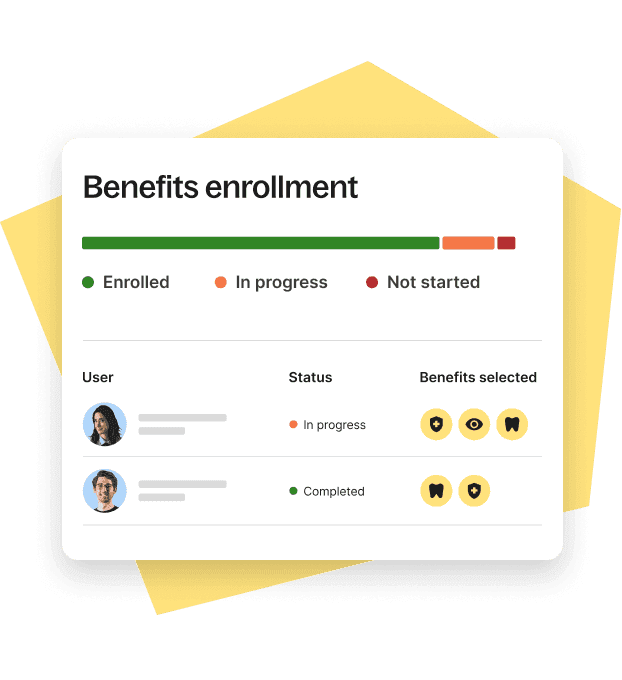
A connected setup changes that. Deel Benefits connects benefits data to payroll, so deductions reflect changes in each pay cycle without a manual file. Employees enrol in one place, in the same app where they already see their payslips. Cost and adoption tracking runs across plans, so HR and Finance work from the same numbers. You can also read more about Benefits Administration.
Action
List every benefit your UK team receives. Mark which ones pull data from payroll and which ones need someone to re-key it. Start with the one that creates the most admin.
What to do now: a 2027 benefits checklist
Review who is eligible for auto-enrolment and how your current scheme settings look.
Map health cover eligibility by grade, location, and contract type.
Confirm that statutory sick pay runs from day one in both payroll and policy.
Update paternity and parental leave policies to reflect the day-one rights.
Write one objective for your 2027 benefits package.
Mark which benefits sync with payroll and which still need manual work.
Ready to bring your 2027 benefits into one place? Book a demo to see how Deel Benefits connects cover, payroll, and enrolment.
Live Demo
Get a live walkthrough of the Deel platform
Ellen Simmonds is a content marketing manager with a decade of experience in tech, leadership, startups, and the creative industries. A long-time remote worker, she's passionate about WFH productivity hacks and fostering company culture across globally distributed teams. She also writes and speaks on the ethical implementation of AI, advocating for transparency, fairness, and human oversight in emerging technologies to ensure innovation benefits both businesses and society.