
Global Work Glossary
- Results for ""
Table of Contents
What digital footprint analysis covers
How digital footprint analysis flags fraud
Digital footprint analysis vs. related fraud detection terms
Digital footprint analysis across the worker lifecycle
Key facts
Detect identity fraud with Deel Security
FAQ
What is digital footprint analysis?
Digital footprint analysis is the process of examining a person's digital traces across the internet to assess whether their claimed identity is genuine. Those traces include email age, social media accounts, online profiles, and device associations, all of which build up naturally for real people over time. Security and HR teams use the analysis to surface inconsistencies that may point to identity fraud, impersonation, or fabricated credentials.
What digital footprint analysis covers
The analysis draws on several types of signals:
Email history: how long an address has existed, its activity patterns, and whether it appears on established platforms
Social media presence: whether accounts match the person's claimed name, employment history, and location
Online profiles: professional networks and public records associated with that identity
Device and Internet Protocol (IP) associations: which devices and networks have historically been linked to the identity
Dark web exposure: whether credentials or personal data tied to that identity appear in known data breaches
No single signal is definitive on its own. Analysts combine multiple data points to build a coherent or contradictory picture of a person's online identity.
How digital footprint analysis flags fraud
Fraud and security teams look for patterns that suggest an identity may be fabricated or stolen:
A thin footprint, where accounts are newly created and there's little online history, could indicate a synthetic identity.
Inconsistencies between claimed attributes, such as a person's name, location, or employer, and what appears online may suggest impersonation.
A footprint that suddenly expands right before an application might indicate manufactured history.
Teams get the clearest picture when they consider several signals together, since any single weak signal may have an innocent explanation, including deliberate privacy practices.
Digital footprint analysis vs. related fraud detection terms
Digital footprint analysis looks at a person's overall online presence, while the methods below each focus on one layer of it:
Device fingerprinting tracks a specific device by its technical attributes. Digital footprint analysis covers a wider set of signals, from social media to email history, though both contribute to the same fraud detection picture.
Dark web exposure checks whether a person's credentials appear in breach databases. It is one input into digital footprint analysis, which also weighs account consistency and social signals that breach data alone doesn't capture.
IP reputation assesses the risk level of the network a person connects from. This network signal feeds into a broader footprint review, though it doesn't capture the account history or behavioral patterns that the analysis as a whole examines.
Threat intelligence provides context about known threat actors and tactics. Teams combine it with footprint data to identify patterns linked to organized or repeat fraud.
Digital footprint analysis across the worker lifecycle
Digital footprint analysis applies at multiple stages, not only during candidate screening.
Before hiring, HR teams may review a candidate's digital presence alongside document verification and applicant tracking system records to check for consistency between claimed credentials and their online history. During onboarding, access provisioning creates new signals that security teams can check against existing footprint data. After hiring, unusual changes in a worker's digital behavior or account patterns could indicate account takeover or identity substitution.
Key facts
Here are some key facts about digital footprint analysis and how organizations use it to detect and prevent fraud.
A digital footprint includes every account, record, and activity tied to a person's identity across the internet over time.
Newly created accounts and little online history together could indicate a fabricated or synthetic persona.
Inconsistencies between online signals, such as mismatched names, locations, or employers, may point to impersonation.
Footprint analysis works alongside identity verification and document review to build a fuller picture of a candidate's identity.
The analysis applies throughout the worker lifecycle, not only during hiring, so anomalies during employment can also trigger investigation.
Because a thin footprint can also reflect deliberate privacy practices, context matters in interpreting results.
Detect identity fraud with Deel Security
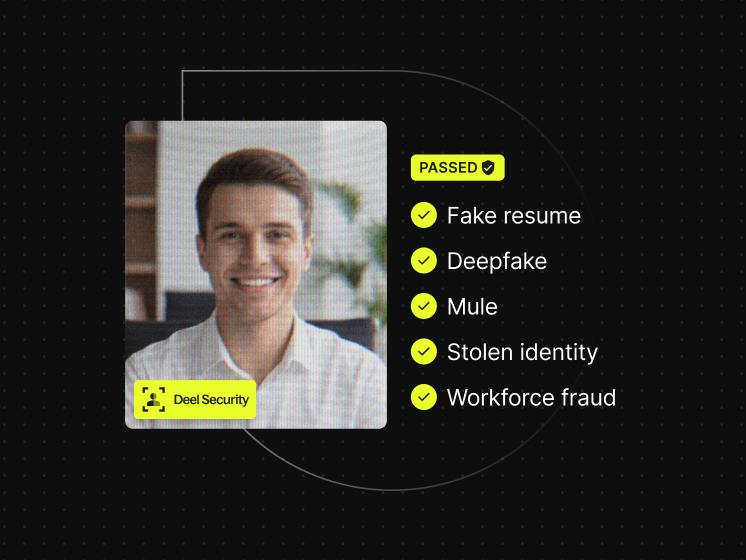
Deel Security helps businesses detect fake candidates, synthetic identities, deepfakes, and impersonation attempts throughout hiring, onboarding, and ongoing employment.
Deel Security works with your existing applicant tracking system (ATS), bringing identity fraud alerts into recruitment workflows for human review. This helps HR and security teams investigate potential fraud, make informed hiring decisions, and reduce the risk of fraudulent hires.
Book a demo to see how Deel Security helps protect your business from identity fraud.
Deel Security
Hire real people, keep fraud out from hiring to offboarding
FAQ
What is a digital footprint?
A digital footprint is the collection of data a person leaves behind through their online activity, including account registrations, social media posts, and device interactions. For fraud detection, it refers to the aggregated record of a person's online identity across platforms over time.
Can someone with a thin digital footprint be a legitimate candidate?
Yes. A thin digital footprint doesn't automatically indicate fraud. Some people maintain strict privacy practices or have limited online presence, so teams get the most reliable results when they combine footprint analysis with other verification methods and interpret the findings in context.
How is digital footprint analysis different from a background check?
A background check typically reviews criminal records, employment history, and references. Digital footprint analysis examines online presence, account history, and behavioral signals across the internet. The two approaches are complementary rather than interchangeable.
How does digital footprint analysis apply after hiring?
Anomalies in a worker's digital behavior during employment, such as a sudden change in account access patterns or a name discrepancy discovered after onboarding, can also trigger investigation. Security and HR teams are not limited to applying digital footprint analysis before hire.
This entry is for general informational purposes only and does not constitute legal, privacy, or compliance advice, so organizations implementing digital footprint analysis practices should consult qualified legal advisers.