
Global Work Glossary
- Results for ""
Table of Contents
What is employment history verification?
How employment history verification works
How employment history verification flags discrepancies
Employment history verification vs. other types of background checks
Key facts
Detect hiring fraud with Deel Security
FAQ
What is employment history verification?
What is employment history verification?
Employment history verification is the process of confirming that a candidate's stated work record is accurate, including previous employers, job titles, and start and end dates. Organizations typically use it during hiring and onboarding to identify falsified credentials before a person joins. This kind of check can also be applied after hiring, when role changes, or changes to access and/or permissions call for an updated check.
How employment history verification works
Employment history verification typically checks:
Previous employer names and contact details
Job titles and seniority levels held
Start and end dates of each role
Gaps in the work history and the reasons given for them
In some cases, general responsibilities and reasons for leaving
Verifiers contact previous employers directly, review supporting documents such as payslips or employment letters, and cross-check the details against the candidate's submitted record. Many organizations use third-party screening providers that specialize in employment verification at scale.
How employment history verification flags discrepancies
Falsified employment history could include fabricated employer names, inflated job titles, or adjusted dates designed to conceal gaps or short tenures. Some fraudsters may list employers that no longer exist or that are unverifiable. Discrepancies between a candidate's curriculum vitae (CV), application form, and professional profile are a common signal that the record may not be accurate.
Human resources (HR) and security teams could also watch for internal inconsistencies: a seniority level that doesn't match the stated team size, or responsibilities described in terms that don't fit the organization type named. Where several discrepancies appear together, they may indicate CV fraud rather than an innocent mistake.
Employment history verification vs. other types of background checks
Employment history verification is one part of a broader background check process. It focuses on the work record, while other related checks address identity, documents, and in-person conduct. For example:
Identity verification confirms that the person is who they claim to be, using government-issued documents and biometric checks.
Document authenticity verification checks whether the supporting documents the candidate submitted are genuine and unaltered.
Candidate impersonation fraud occurs when someone applies or interviews on behalf of another person entirely, so the verified identity doesn't match the person who will actually do the job.
Key facts
Here are some key facts about employment history verification, the risks it addresses, and how organizations use it.
Employment history verification checks job titles, previous employers, start and end dates, and sometimes roles and reasons for leaving, against the submitted record.
Falsified records could include fabricated employer names, inflated titles, or adjusted dates designed to conceal gaps or short tenures.
Verifiers may contact previous employers directly, use third-party screening services, or review supporting documents such as payslips or employment letters.
Verification may apply not only to candidates before hiring but also to current workers when their role or access level changes.
Document forgery can undermine the verification process when a candidate submits altered payslips or fabricated employment letters.
Detect hiring fraud with Deel Security
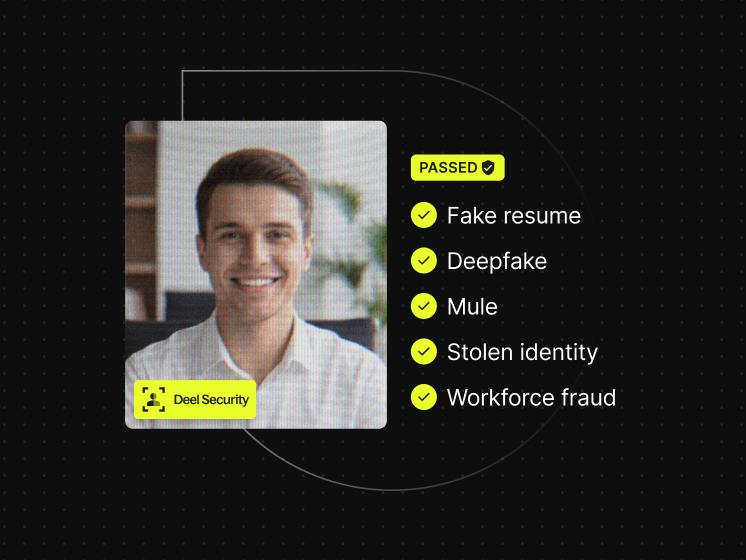
Falsified employment histories can be a warning sign of hiring fraud. Deel Security helps businesses detect fake candidates, synthetic identities, deepfakes, and impersonation attempts throughout hiring, onboarding, and ongoing employment.
Deel Security works with your existing applicant tracking system (ATS), bringing identity fraud alerts into recruitment workflows for human review. This helps HR and security teams investigate potential fraud and reduce the risk of fraudulent hires.
Book a demo to see how Deel Security helps protect your hiring process from identity fraud.
Deel Security
Hire real people, keep fraud out from hiring to offboarding
FAQ
What does employment history verification check?
Beyond employer names and job titles, verifiers may also check gaps in the work record, general responsibilities, and the reasons a candidate gave for leaving each role. Supporting documents such as payslips or employment letters help cross-reference the stated details.
How does employment history verification differ from a full background check?
A background check is a broader process that may include criminal record checks, credit checks, reference checks, and education verification. Employment history verification is one component of that process, focused specifically on the work record.
Can a candidate fail employment history verification?
If a candidate's submitted record doesn't match what their previous employers confirm, the verification flags a discrepancy. How the organization responds depends on its policy. Where synthetic identity fraud is involved, fraudsters may build the entire submitted record around a fabricated identity.
Does employment history verification apply to current workers?
Employment history verification can apply to current workers when their role changes significantly, when they're granted access to sensitive systems, or when periodic rescreening is part of the organization's security policy.
This content is for general informational purposes only and does not constitute legal or professional advice, so organizations should consult qualified advisers for guidance specific to their circumstances.