Article
7 min read
5 PEO Benefits Every Growing US Business Should Know About
PEO

Author
Shannon Ongaro
Last Update
September 09, 2026
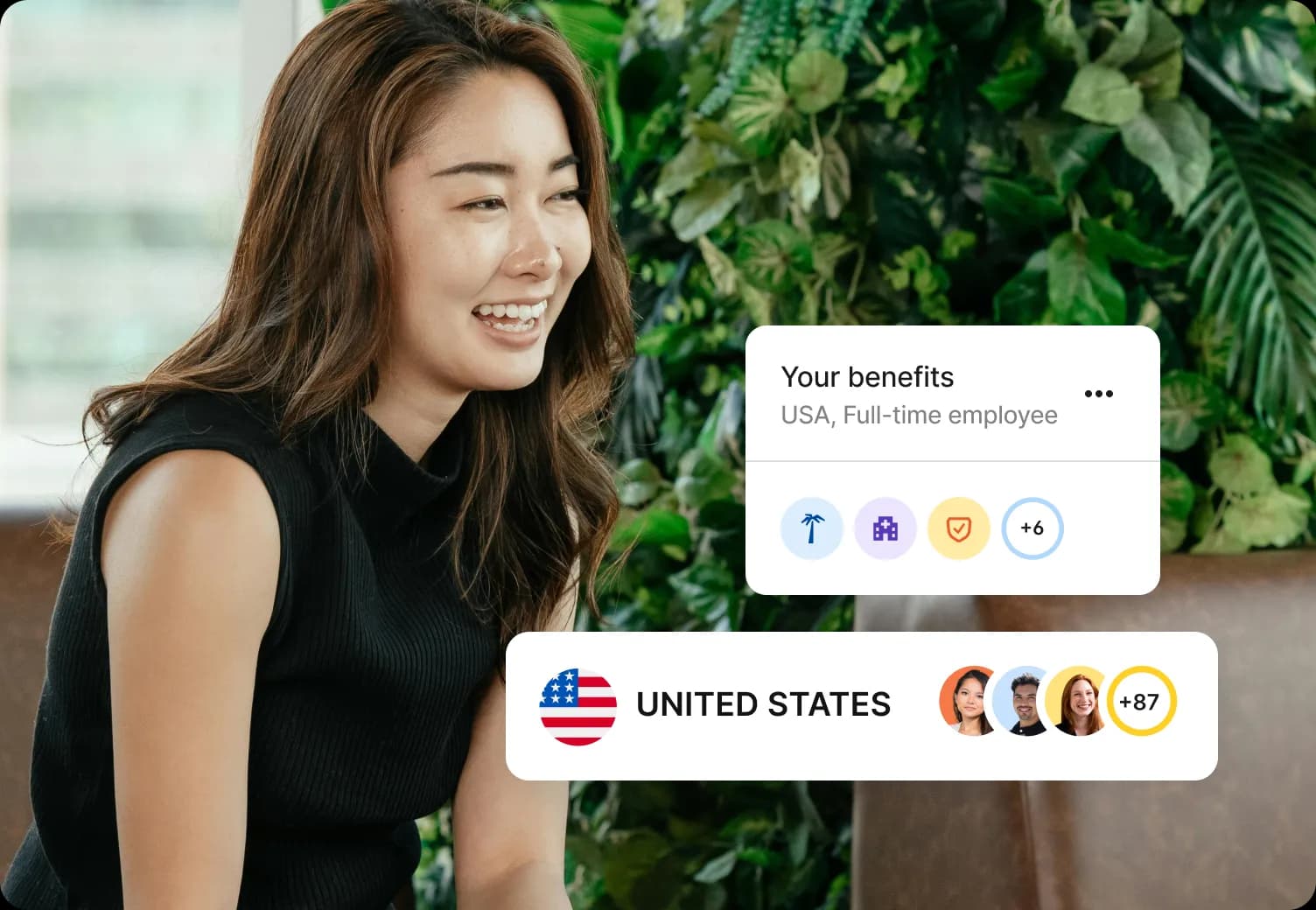
Table of Contents
Understanding what a PEO does (and the co-employment model)
Benefit 1: Offload HR administration and get time back
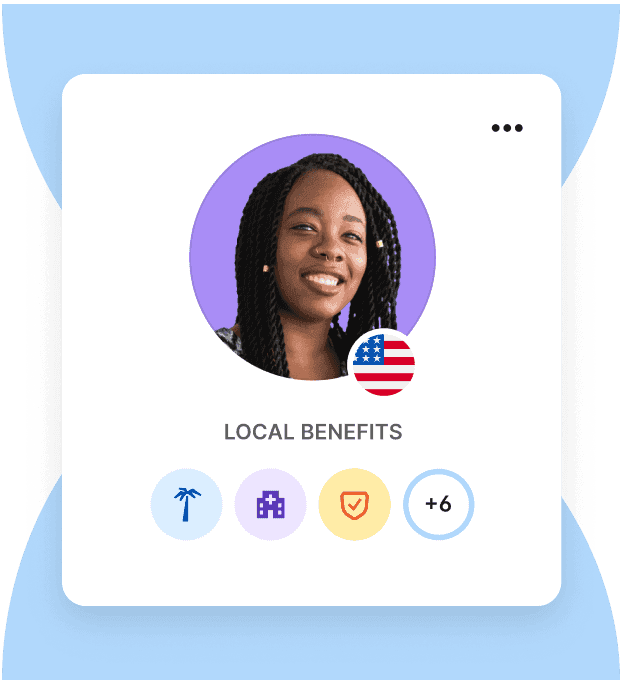
Benefit 2: Access enterprise-grade employee benefits at group rates
Benefit 3: Reduce compliance risk across every state you hire in
Benefit 4: Longer employee retention
Benefit 5: Scale headcount without scaling HR headcount
What to look for when choosing a PEO (and how Deel's PEO measures up)
How Deel's PEO supports your US employment strategy
Key takeaways
A PEO co-employment model consolidates payroll, compliance, and benefits administration under a single shared-employer structure, removing the administrative drag that slows growing businesses.
According to NAPEO research, businesses that use a PEO grow at more than twice the rate of comparable non-clients and are 50% less likely to go out of business.
Deel's PEO delivers all the core PEO benefits, plus the flexibility to manage US and international workers through the same Deel account.
This article is provided for general informational purposes and should not be treated as legal, HR, or professional advice. Refer to your local regulations and consult a qualified professional for specific guidance.
As a company grows, HR work multiplies fast. Multi-state payroll, benefits renewals, compliance filings, and onboarding paperwork all pile up at once. Many businesses reach this point before they can justify a full HR department that handles it all well. Founders and people teams end up doing admin work instead of work that grows the business.
A professional employer organization (PEO) closes this gap through co-employment. The PEO shares compliance liability and takes on payroll, tax filings, benefits management, and HR administration. The business keeps full control over hiring, team management, and daily operations. This article walks through each major benefit a PEO delivers and explains how Deel's PEO is built to support US employers.
Understanding what a PEO does (and the co-employment model)
A professional employer organization is a company that enters a shared employment relationship, called co-employment, with its clients. In this arrangement, the PEO becomes a co-employer of record for specific purposes, including payroll tax administration, benefits plan sponsorship, workers' compensation coverage, and compliance with applicable employment laws.
The client company remains the employer for every other purpose. Hiring decisions, performance management, day-to-day supervision, and strategic direction all stay entirely with the business.
What transfers to the PEO under a standard client service agreement:
Payroll processing and tax filing: The PEO manages payroll tax calculations and applicable filings under federal and state-specific reporting arrangements
Benefits plan sponsorship: Employees join the PEO's benefits pool, accessing health, dental, vision, 401(k), health savings account (HSA), flexible spending account (FSA), and supplemental plans
Workers' compensation coverage: Typically provided through a master policy the PEO maintains
HR compliance support: Including tracking regulatory changes, maintaining employment practice standards, and administering Consolidated Omnibus Budget Reconciliation Act (COBRA), Family and Medical Leave Act (FMLA), and Affordable Care Act (ACA) requirements
What stays with the client:
Hiring, discipline, and termination decisions
Setting compensation levels and job responsibilities
Day-to-day supervision and culture-building
Strategic business operations
The client service agreement defines this division of responsibilities.
Explore our PEO services
The market leader in PEO services for remote teams
Benefit 1: Offload HR administration and get time back
A PEO replaces scattered, manual HR work with a single managed system, so payroll runs, tax filings, new-hire reporting, benefits enrollment, and workers' comp claims stop competing for the same person's attention. As headcount grows across states, this work compounds fast, and without a dedicated HR operations team, it tends to land on whoever has the bandwidth rather than the person best equipped to handle it.
PEO solutions, like those offered by Deel, consolidate that work into one platform. Payroll runs on schedule, new-hire documents are collected and filed automatically, and employees manage tax statements and benefits through self-service tools instead of routing requests through HR. Deel's in-house team also handles state registration where applicable, so a new hire can onboard digitally without manual coordination on the business's end.
The time savings from consolidating this work are measurable. In a Forrester study commissioned by Deel, payroll teams using Deel Payroll cut the time spent processing payroll and fixing data inaccuracies by 60% and reduced time spent on new-hire paperwork, offboarding, and reporting by 50%. Employees also submitted half as many payroll questions once self-service tools replaced manual back-and-forth with HR.
How ChartSquad cut HR admin and improved compliance with Deel
ChartSquad started as a one-person startup and quickly scaled into a national business, serving clients in all 50 states. But as the headcount grew, so did the complexity.
Payroll tools like QuickBooks were too limited. Deel stood out from legacy PEOs like Rippling and TriNet thanks to its tech-forward design and all-in-one experience. With a single dashboard, built-in security, and AI-powered tools, ChartSquad now runs onboarding, payroll, time off, and expenses in one place.
“I’m saving money with Deel, delivering better benefits, and reducing headaches. It’s a no-brainer.” — Chris Carpenter, CEO & Founder, ChartSquad
Benefit 2: Access enterprise-grade employee benefits at group rates
This is one of the most commercially significant benefits of a PEO relationship, and it is frequently underestimated. Health insurance carriers price plans based on group size and claims risk. A company with 30 employees negotiating directly with a carrier faces high per-employee costs, limited plan options, and unfavorable renewal terms, because the carrier bears all the risk on a small, unpredictable pool.
When a business joins a PEO, its employees are pooled with thousands of other worksite employees under the PEO's master benefits plan. The carrier now sees a large, diversified risk pool and prices accordingly. The practical result is access to benefit plans comparable to what large enterprises offer, including broad carrier networks, multiple plan tiers, and supplemental options that may be difficult for a small employer to access independently at comparable rates.
Deel's PEO provides access to 60+ customizable domestic benefit plans, covering:
Medical: Access to national medical plans from Aetna and Kaiser Permanente, plus dental, vision, and life insurance options
Supplemental health benefits: Mental health services, HSA/FSA, fertility benefits, critical incident plans, AD&D, hospital indemnity plans, and personal covverage options
401(k): Fully configured 401(k) through Deel Retirement, connected to payroll, managed on one platform
For companies that already have a preferred carrier or broker relationship, Deel's PEO may support benefit carveout arrangements, keeping an existing plan while Deel takes on applicable administration, subject to plan, carrier, and administrative requirements. The result is lower administrative overhead on benefits, not necessarily a forced migration.
Guide
Step-by-Step Guide to US Payroll
Benefit 3: Reduce compliance risk across every state you hire in
Hiring across states introduces different payroll, leave, tax, and workers' compensation requirements. Each state has its own wage and hour rules, overtime thresholds, required leaves, unemployment insurance rates, and pay frequency requirements. Federal law, including the Fair Labor Standards Act (FLSA), FMLA, and ACA, layers on top of this. Keeping current as businesses add new states, and as regulations change within existing ones, requires dedicated compliance expertise.
A PEO maintains compliance infrastructure across every jurisdiction it operates in. When a business hires in a new state, the PEO helps address applicable state setup, manages payroll-tax filings under the reporting method required in each jurisdiction, and supports relevant employment law requirements from onboarding onward. When a state updates its minimum wage, leave law, or workers' comp rate, Deel's compliance team monitors the change and provides updated guidance, while the client remains responsible for its retained employer and operational obligations.
Deel's PEO operates across all 50 US states with in-house infrastructure for payroll, benefits, and state-specific compliance workflows.
I don't have time to track compliance laws across every state. Every hour I spend on HR admin is an hour I'm not spending on the mission. Deel gives my employees great benefits, keeps us compliant in every state, and costs me almost no time.
—Ari Rosner,
Co-Founder and CEO, Airbase
Benefit 4: Longer employee retention
A strong benefits and HR experience can support retention, and the data at scale reflects this pattern. According to NAPEO's 2024 white paper, businesses that use a PEO have employee turnover rates that are 12% lower than comparable non-PEO companies. The research, conducted by economists at McBassi & Company across January 2023 to January 2024, examined data from thousands of PEO clients compared to non-clients of similar size.
The mechanism is relatively direct. PEO clients can offer benefits comparable to large employers, the same health plans, retirement options, and supplemental coverage, at costs their size would not normally allow. When candidates compare offers, a small business operating through a PEO can put a genuine enterprise-caliber benefits package on the table.
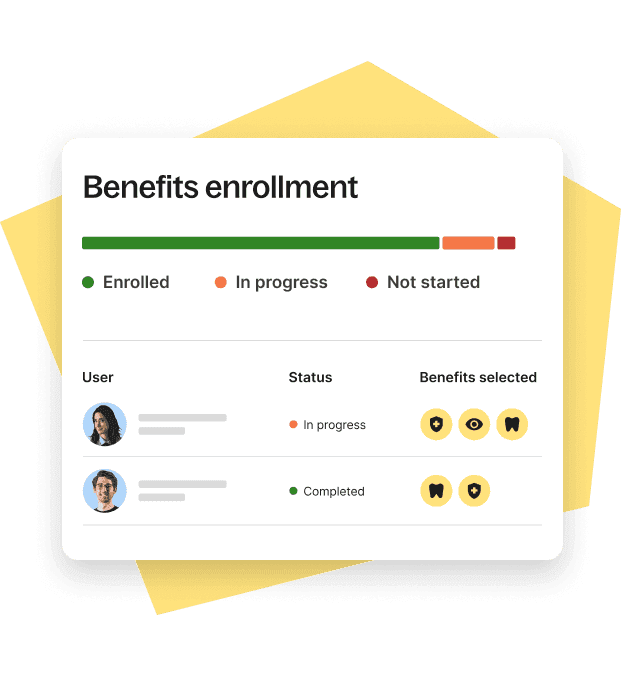
Beyond benefits, Deel's PEO delivers employee-facing tools that can improve the employment experience directly. Employees access onboarding documents, benefits enrollment, pay stubs, and workforce-management capabilities through the Deel platform. Deel's in-house HR Business Partners address HR questions. Deel manages each stage of open enrollment, including guidance for both employers and employees during renewal periods.
Benefits Administration
Fast, flexible global benefits
Benefit 5: Scale headcount without scaling HR headcount
A common inflection point for growing companies is recognizing that their HR capacity, whether a single HR manager or a small team, cannot scale at the same rate as the business. Hiring into a new state may require foreign qualification, payroll-tax and unemployment registrations, workers' compensation coverage, and other state-specific setup. Adding 20 employees means handling 20 sets of onboarding documents, benefits elections, and payroll entries. Each new layer of complexity requires either more HR headcount or more time from the people who already exist.
The co-employment model is designed to support growing headcount without requiring HR administration to increase at the same rate. Adding a new state is a workflow within an established platform, not a new compliance project to run independently. Benefits enrollment for new hires flows through an established system. Payroll cycles remain consistent regardless of headcount fluctuations.
For Deel's PEO clients, this scalability extends to the broader workforce. A company hiring US employees through Deel's PEO and international employees through Deel's Employer of Record solution manages all of these workflows through the Deel platform. Headcount data, payroll costs, and workforce information are available in one account, which matters practically as companies grow beyond their early US-only footprint.
When a PEO makes sense vs. when to consider an EOR
A PEO relationship requires the client to have an existing US legal entity. The business remains the primary employer, with the PEO sharing specific administrative responsibilities. For US domestic hiring where the company already has an entity and wants to retain that direct employment relationship, a PEO is typically the right structure.
An Employer of Record takes a different approach. The EOR legally employs workers on the client's behalf in jurisdictions where the client does not have, or does not use, its own employing entity. The client still directs employees' day-to-day work, but the EOR takes on legal employer status, handling local employment, payroll, and compliance. This is the relevant model for companies hiring internationally where setting up an entity is not practical or justified by headcount.
The table below breaks down the practical differences — for a deeper look, see how PEO differs from EOR.
| Factor | PEO | EOR |
|---|---|---|
| Client has a US entity? | Required | Not required |
| Who is the legal employer? | PEO and client share responsibilities | The EOR is the legal employer, and the client directs day-to-day work |
| Geographic scope | Primarily US-focused | Jurisdictions where the EOR holds entities |
| Day-to-day management | Stays with client | Stays with client |
| Ideal for | Multi-state US hiring | Hiring where client lacks an employing entity |
Deel offers both structures. Companies that use Deel's PEO solution for US employees can use Deel's Employer of Record solution for international hiring without switching providers or rebuilding workflows.
Deel Hire
Planning to expand into the US?
What to look for when choosing a PEO (and how Deel's PEO measures up)
With more than 500 PEOs operating in the US, the surface-level offer of payroll, benefits, and compliance looks similar across providers. The meaningful differences appear when you go a level deeper. When evaluating any PEO, consider these specific criteria, covered in more depth in this buyer's guide to PEO services:
Benefits depth and carrier access: How many plans are available? Are national carriers included? Are supplemental benefits like disability, HSA, and voluntary coverage offered? What happens if you want to bring your existing carrier?
State coverage: Does the PEO operate in all 50 states with genuine in-house expertise, or does it rely on third parties in certain states?
Compliance infrastructure: Who monitors and applies regulatory changes? Is compliance support in-house or outsourced?
Technology and integrations: Does the platform connect with your existing accounting, HR, and business tools?
Pricing transparency: Does the PEO publish its pricing, or does it require a sales call to get a number?
Exit terms: What are the offboarding conditions, data portability rules, and termination notice requirements? This checklist for switching PEO providers walks through what to check before switching.
Where Deel's PEO stands on these criteria:
Pricing: Deel publishes its PEO pricing. It starts at $125 per employee, per month (PEO-sponsored health benefits not included)
State coverage: All 50 US states, with in-house infrastructure for payroll, benefits, and compliance workflows
Benefits: 60+ domestic plan options, Aetna International access for eligible globally mobile employees, and benefit carveout support for existing carrier relationships
Compliance: Built-in, automated compliance coverage (local, state, and federla) to avoid missed filings and errors
Technology: The Deel platform connects PEO, Employer of Record, and contractor management capabilities under one account
Support: 24/7 fast support through chat, email, Slack, and dedicated HRBP, plus built-in AI for instant compliance answers
For a closer look at picking the right PEO partner, this webinar on the PEO experience walks through what buyers should ask.
We chose Deel because it let us centralize PEO, EOR, payroll, and expenses in one place. But it was also the team—everyone treated us like partners, not just a sales target.
—Dario Valiant Casilli,
Operations Manager, Gomboc
How Deel's PEO supports your US employment strategy
Choosing a PEO is a decision that compounds over time. The right structure reduces administrative burden now, improves the ability to compete for talent, and creates compliance infrastructure that scales alongside the business instead of breaking under it. The NAPEO data captures this well. Businesses using a PEO grow at more than twice the rate of comparable companies and are 50% less likely to go out of business, according to the organization's research.
Deel's PEO is built for companies that want those benefits without managing US and international workers on separate platforms. Whether the workforce is entirely US-based or spread across multiple countries, Deel brings hiring, payroll, and workforce-management workflows together, with access to a broad selection of group benefits and in-house PEO infrastructure. See how Deel's PEO works for your team and book a demo to talk through what co-employment looks like at your stage.
PEO
Get full-service HR, payroll, and benefits for your US employees
FAQs
What does co-employment mean for my employees?
Co-employment means the client and PEO share specified employer responsibilities under their service agreement. The client directs employees' day-to-day work, while the PEO administers agreed payroll, benefits, tax, and HR functions. Employees may gain access to broader benefits options and centralized payroll and HR administration.
How much does a PEO cost?
Pricing varies by provider and structure. Some PEOs charge a percentage of gross payroll, while others use a flat per-employee-per-month rate. Deel uses per-employee pricing, starting at $125. Contact Deel for current rates and inclusions.
Can a PEO help me hire across multiple states?
Yes. Supporting multi-state compliance is one of the core use cases for a PEO. Deel's PEO operates across all 50 US states with in-house infrastructure, supporting applicable state setup and managing payroll-tax workflows under each state's applicable reporting method.
What's the difference between a PEO and an EOR?
A PEO is a co-employment model for companies that already have a US legal entity. The business and the PEO share employer responsibilities, and the client directs daily work. An Employer of Record (EOR) legally employs workers on the client's behalf in jurisdictions where the client lacks an employing entity, while the client still manages day-to-day work. Deel offers both through the same platform.
Shannon Ongaro is a content marketing manager and trained journalist with over a decade of experience producing content that supports franchisees, small businesses, and global enterprises. Over the years, she’s covered topics such as payroll, HR tech, workplace culture, and more. At Deel, Shannon specializes in thought leadership and global payroll content.