Article
5 min read
Consolidate Benefits Vendors Across Countries with Deel Benefits
Global HR
Global payroll

Author
Ellen Simmonds
Last Update
November 03, 2026

Key takeaways
Running benefits in multiple countries usually means managing a separate vendor relationship in each market.
Renewal dates give companies the clearest sequence for migrating benefits vendors without disrupting contracts.
Deel Benefits centralizes benefits administration across 100+ countries and connects enrollment directly to payroll.
Running benefits in five countries shouldn't mean managing five separate broker relationships, five portals, and five payroll reconciliations every month. That's the reality for most HR teams who expanded country by country: each new hire destination brought a new local broker and a new way of doing things, and the complexity has compounded ever since.
The operational cost is real. Without a shared calendar or connected systems, enrollment windows slip through the cracks, deductions misfire when benefits changes don't flow through automatically, and employees across countries end up with inconsistent experiences, not because the company chose that design but because it accumulated by default.
The good news: consolidating onto a single global benefits platform doesn't mean scrapping everything you have. This guide walks through three steps to simplify your global benefits operation, with a look at what that process looks like with Deel Benefits.
Why benefits vendor sprawl happens (and costs you)
Most companies don't set out to run ten different broker relationships. They expand, and they default to whatever local broker handles things in each new country. Germany gets its own carrier. Canada gets a local broker. The UK runs through a third. Three years and four countries later, there's no consistent enrollment experience, no single view of spend, and HR is spending hours each month reconciling deductions that didn't sync correctly.
The burden compounds in predictable ways:
Each renewal season triggers multiple disconnected conversations with different brokers.
Employee questions get routed to different vendors depending on the country.
Benefits data lives in carrier portals instead of your HR system.
Mercer's global benefits modernization research identifies vendor fragmentation as the top operational barrier for multinational HR teams. That fragmentation also makes it harder to add new markets quickly without repeating the same problem in a new geography.
Understanding what to look for before you consolidate helps you avoid rebuilding this same patchwork. See ten questions to ask when choosing a global benefits vendor for the evaluation framework.
Benefits Administration
Fast, flexible global benefits
Step 1: Audit what you're running in each country
Before you can consolidate, you need a clear picture of what you actually have. For each country where you offer benefits, document:
Carrier and broker: who provides coverage, and who manages the relationship?
Contract renewal date: when does this country's plan renew, and what are the notice requirements?
Employee portal: how do employees enroll, and how do they make changes during the year?
Payroll connection: is the deduction process manual, semi-automated, or fully integrated?
Coverage gaps: are any employee groups currently uncovered or underserved relative to local market norms?
A simple country-by-country spreadsheet surfaces the duplication and the gaps fast. The audit frequently reveals multiple countries running similar group health coverage through different carriers, with no reason for the split other than historical vendor relationships that predate the current HR system.
The renewal date column is especially valuable. It identifies which countries are natural starting points for consolidation. A plan coming up for renewal in 90 days is far easier to migrate than one that locked in a three-year term six months ago. Renewal dates also support a realistic migration sequence rather than a simultaneous rollout across all markets.
Focus on renewal dates first
Countries with plans coming up for renewal in the next 90 days are your lowest-friction starting points. Track notice periods per country — some require 60–90 days' notice to switch carriers or platforms.
Checklist
Employee Benefits Renewal Checklist
Step 2: Decide what to standardize and what stays local
Not everything should be standardized. The goal is to standardize the administrative layer (enrollment, deductions, and reporting) while keeping plan design local where market norms or regulations require it.
A simple decision framework: standardize what you can run the same way everywhere without a compliance or market-expectation problem. Keep local what the law, the carrier market, or employee expectations genuinely require.
Here's how that plays out for a company with employees in three countries:
The following table shows the distinction between administrative standardization and local plan design decisions.
| Country | Administrative layer | Plan design |
|---|---|---|
| UK | Centralized enrollment portal, automated deductions | Private health insurance standard; plans follow UK carrier market |
| Germany | Centralized enrollment portal, automated deductions | Statutory health coverage is public; supplemental plans are narrower in scope |
| Canada | Centralized enrollment portal, automated deductions | Provincial health coverage means supplemental plans focus on dental, vision, prescription |
The content of each plan reflects local legal and market realities. The enrollment deadline, self-service experience, and deduction accuracy are identical across all three. Mercer's international benefits research finds that high-performing global benefits programs separate these two layers deliberately, rather than treating local variation as a reason to keep everything decentralized.
For guidance on finding a benefits provider who can handle both layers without forcing you to choose, see how to select an employee benefits provider for global teams.
Step 3: Move countries over in phases
A phased rollout is almost always the right approach, both practically and politically. It lets you work through integration and configuration issues at a manageable scale before rolling out to your largest or most complex markets, and it gives you time to bring existing brokers into the transition where employees genuinely value them.
A few principles that help:
Sequence by renewal date. A plan coming up for renewal is the lowest-friction entry point. At the renewal point, you're choosing a different platform rather than breaking any existing contract.
Start with your simplest country. Use a lower-headcount market as a test run. Get enrollment working, confirm deduction accuracy, and collect employee feedback before rolling to your 500-person Germany team.
Keep brokers that employees value. Administrative consolidation doesn't have to mean replacing every local relationship. With Deel Benefits, you can bring your existing broker or carrier relationships while centralizing enrollment and payroll sync.
Connect payroll early. The single biggest source of ongoing manual work in multi-country benefits is deduction reconciliation. Getting the payroll connection right in your first migration sets the template for every country that follows.
For a fuller look at how payroll and benefits connect in practice across different country types, see how to manage international taxes and employee benefits with Deel.
The phased migration checklist
Before moving a country onto Deel Benefits:
Confirm the renewal or contract end date
Document current broker, carrier, and portal details
Verify payroll deduction process for this country
Communicate timeline to employees at least 30 days before enrollment opens
What consolidation looks like with Deel Benefits
Deel Benefits is designed for exactly this consolidation challenge: a fragmented multi-country setup that grew organically and needs to be brought under one administrative layer without replacing every local plan.
Here's what that looks like in practice:
Global coverage. Deel Benefits covers global benefits administration across 100+ countries, with locally underwritten plans across health, life, pension, and disability categories depending on the market.
Bring your own broker or use Deel's. You can keep your existing broker relationships, connect through Deel's carrier network, or mix both. Either way, enrollment and reporting run through one layer, with no requirement to replace local relationships that employees rely on.
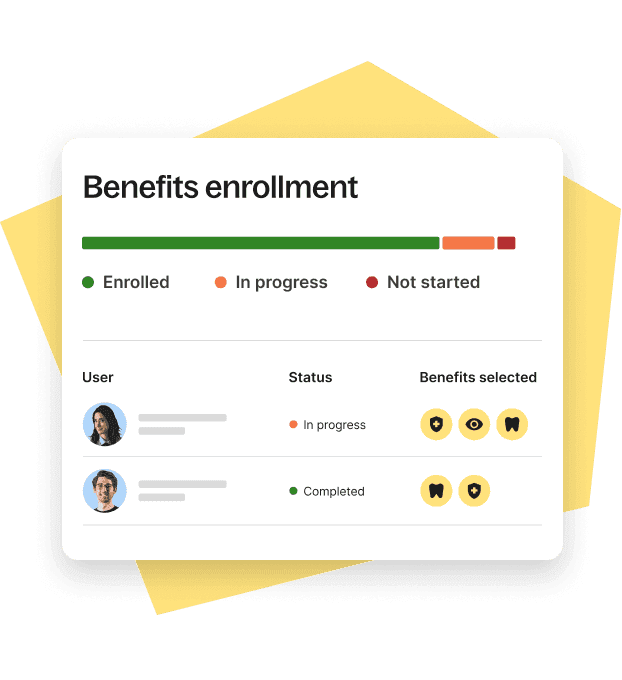
Enrollment and payroll in one system. Employee enrollment elections sync directly into Deel Payroll in real time, so deduction accuracy doesn't depend on a manual transfer or a file export. The Benefits Administration module connects enrollment and Deel Payroll, reducing manual reconciliation by keeping elections and deductions in sync automatically.
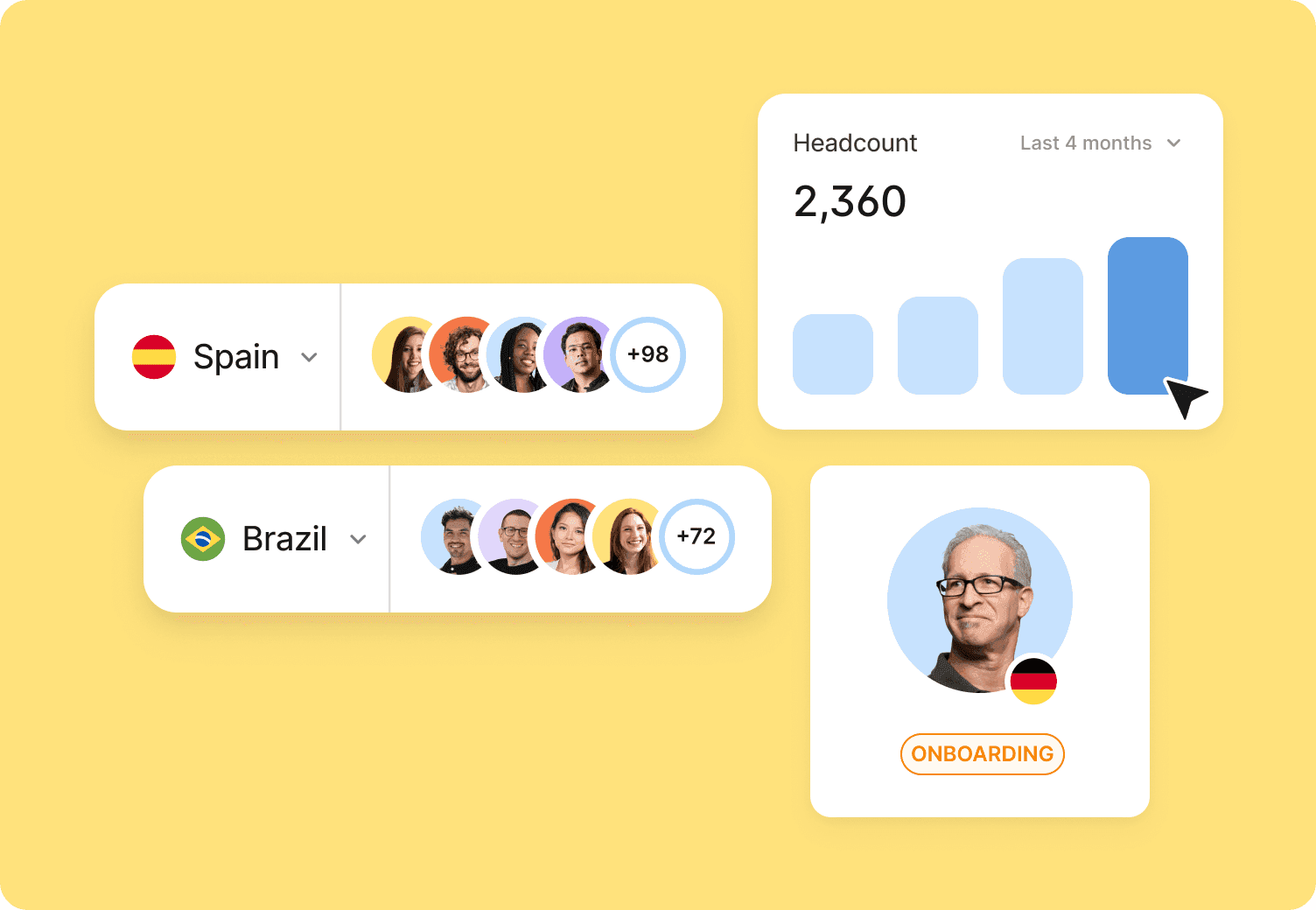
Real-time cost and adoption visibility. HR and Finance get consolidated reporting on benefits spend, enrollment rates, and plan adoption across all active countries from one dashboard. Benefits tracking across countries becomes a straightforward reporting task rather than a quarterly consolidation project.
Works across worker types. Deel Benefits covers EOR, PEO, and Deel Payroll worker types, so benefits consolidation extends to every way you employ people globally, not just those on your owned entities.
Free guide
Scale your global benefits strategy
Get started with Deel Benefits
Managing benefits across multiple countries doesn't have to mean managing multiple vendor relationships. The consolidation path is clear: audit your current vendor setup, decide what to standardize at the administrative layer, and migrate countries at renewal in a sequence that keeps the process manageable.
Deel Benefits makes the phased approach practical. You can start with one country, keep the brokers that matter to your team, and build out as each renewal comes around, maintaining full visibility across the markets you've already migrated throughout. Book a demo to see how Deel Benefits handles your specific country mix and employment models.
FAQs
Can we keep our existing brokers and providers?
Yes. Deel Benefits supports three approaches: use Deel's carrier network, bring your own broker, or mix both. Enrollment and payroll sync run through Deel regardless of who the underlying carrier or broker is.
How does this work for EOR employees?
Deel Benefits supports EOR, PEO, and Deel Payroll worker types. The Benefits Administration module covers EOR employees alongside employees on your owned entities, with no separate enrollment system required.
How does Deel handle deduction accuracy each pay cycle?
Enrollment elections sync directly into Deel Payroll in real time, reducing the need for manual data entry or file transfers between separate systems.
Do we have to roll out all countries at once?
No. Deel Benefits supports a phased, country-by-country rollout based on your renewal schedule. You control the sequence and timing, typically starting with countries coming up for renewal or where the current setup is least effective.
Deel Payroll
Run payroll on one platform, globally

This article is provided for general informational purposes and should not be treated as HR or legal advice. Consult a qualified benefits professional or legal advisor before making changes to your employee benefits programs.
Ellen Simmonds is a content marketing manager with a decade of experience in tech, leadership, startups, and the creative industries. A long-time remote worker, she's passionate about WFH productivity hacks and fostering company culture across globally distributed teams. She also writes and speaks on the ethical implementation of AI, advocating for transparency, fairness, and human oversight in emerging technologies to ensure innovation benefits both businesses and society.